

First Time in Uzbekistan? Everything You Absolutely Need to Know
For someone as obsessed with travel as I am, you’d think I’d be better at getting all the “need to know” stuff down pat before I go. I’ve got a Notion page for every trip: I plot out my itineraries, I make my packing lists, I’ve researched every vegan restaurant, and then somehow I just go completely against type and wing it when it comes to the basics like how to get around a city or how to pay for stuff.
If you’ve landed here, you’re already more organised than me. If it’s your first time in Uzbekistan, here are the handy things you should know before you go. And, if you’re still planning out your itineraries, I’ve just published a 10 Days in Uzbekistan itinerary, covering all the spots I’d recommend to someone visiting for the first time.
Getting Around
Taxis
My first time in Uzbekistan, I landed in Tashkent at an ungodly hour. It was the middle of the night, public transport was absolutely not running, and I had no energy to try and figure out what to do. Thankfully, I’d pre-booked a transfer to my hotel, but the cheapest and standard way most people get around is using YandexGo. It’s a bit like Uber, you register an account with your credit card details, and you can book rides on it.
If you don’t speak Russian or Uzbek, no worries. You can set your app language to English, and you’ll get driver details like you would through Uber. For those of us travelling from Europe or the US, the fares are much, much lower priced than we’d see at home, and its a safe way to get around.
Tashkent does have public transport, but it’s definitely a city built for cars, so you need to download Yandex before you go.
Trains
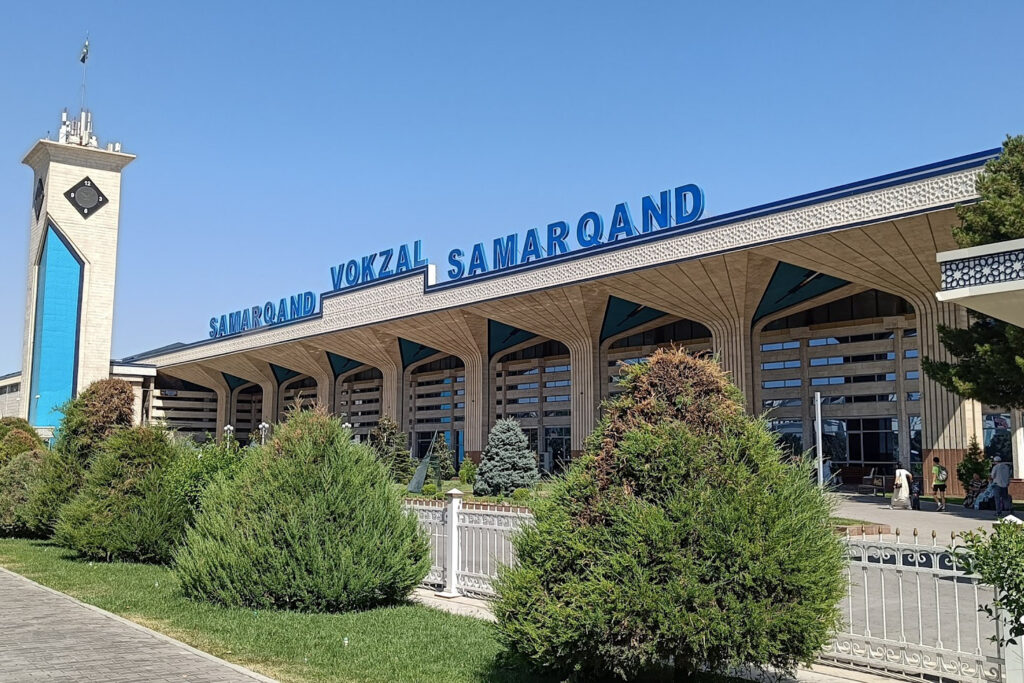
Uzbekistan’s train system is excellent, and I’ve actually written an entire blog post about it here. For your first time in Uzbekistan, you’ll likely hit up places like Bukhara, Samarkand, or Khiva, and the rail network is a great way to get between them all.
There is a trick to making sure you catch the booking window in time, especially if you want to travel on the high speed Afrosiyob trains, which you can learn more about here.
Money
Currency Exchange
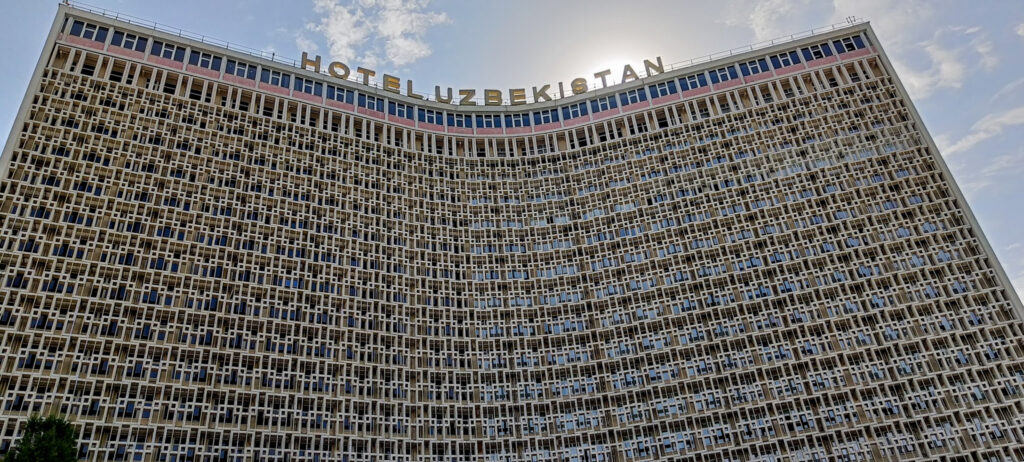
The currency in Uzbekistan is the Uzbek sum. It’s not a currency commonly found at many foreign exchange counters, so you’re best off either bringing cash in a major currency like Euro, GBP, or USD into the country and exchanging it there. If you’re starting off in Tashkent, you’ll find plenty of currency exchanges around the city, including one in the Hotel Uzbekistan lobby.
Alternatively, you’ll find ATMs in every city in Uzbekistan. If you have an account with the likes of Revolut or Monzo, they don’t charge heavy fees for foreign withdrawals.
Paying for Things
Cash is absolutely king in Uzbekistan. You’ll be able to pay for Yandex taxis through the app, and most hotels will take credit cards, but for everything else, always keep some Uzbek sum on you.
Staying Connected
Mobile Data
If your phone supports one, get an e-sim before you travel.
On my first time in Uzbekistan, I was travelling solo, so I needed to be sure I was contactable, in case anything happened. My day-to-day phone isn’t e-sim compatible, so I bought a cheap refurbished Google Pixel from Backmarket.
If you’ve already got an e-sim compatible phone, then you’re all set, and I found the best deal on Airalo. It’s easy to set up, and except for a few remote regions like driving through deserts, I had internet access everywhere I went.
One tip though: Install the e-sim before you get on the plane. It’ll activate once you land in the country. I neglected to do this, and the Wifi in Tashkent airport required an Uzbek phone number to connect to. I had to turn back on my “real” phone’s data and pay some expensive roaming charges to get the details to set up the e-sim.
If you’d rather use a physical SIM card, these are easily available in major cities, and in the airport.
Travel Tip
If you don’t have an e-sim compatible phone, you can find refurbished phones on Backmarket.
I paid less than £100 for my Google Pixel 4, and if you’re in the UK, you can get £10 off any purchase with the code 8203abee29dbc941
Wifi
You’ll get wifi in every hotel you stay in, although in some historic buildings, the connection can be hit or miss. When I was in Khiva, I stayed in the Orient Star Hotel, a gorgeous hotel in an old madrasah. The rooms are former student cells, and the walls are thick. Great for keeping sound out, very poor for getting online.
Outside of hotels, you’ll find public wifi in some parts of cities, and cafes and restaurants will usually have a customer wifi you can ask to connect to.
Honestly though, as much as there is available wifi, I’d still strongly recommend getting an e-sim.
What you’ll need data for
I mentioned earlier that YandexGo is the standard ride hailing app in Uzbekistan. Even though there is public transport in the major cities, the coverage can be a little patchy. When I was in Tashkent, I wanted to go from my hotel to the city’s only vegetarian restaurant. The public transport option meant long walks alongside highways, or, for less than the cost of a London bus fare, a Yandex cab could get me there in 7 minutes. No brainer.
Likewise, you’re probably going to need Google maps to hand as you navigate Uzbekistan’s cities and their sights.
Outside of hotels and tourist attractions, don’t expect everyone to speak English. Download a translation app. If you have Google translate, you can download Russian and Uzbek for offline use.
Finally, I also like to keep the Xe currency exchange app on my phone. One British pound is worth about 15,497 Uzbek sum, so it’s not always a quick mental maths conversion. Having the app to hand helps you understand if you’re really getting a good deal at the bazaar, of if you’ve miscalculated.
Is Uzbekistan Safe?
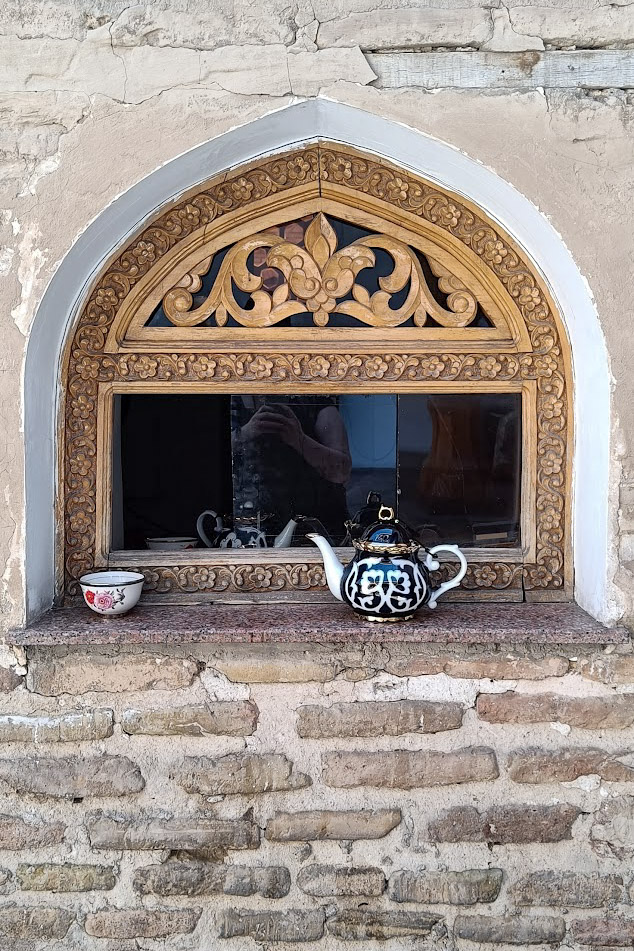
One of the most common questions I get when I mention my travels in Central Asia is whether it’s safe. Based on my own experience both independently and as part of a group tour, yes, I found Uzbekistan to be a very safe country to travel in.
However, I should add some caveats. I’m an experienced solo traveller, and I’m a woman, so I’ve already got some safety-first habits I do when I travel. On top of that, years of living in London have left me with a default setting of mild suspicion whenever anyone gets too close to me or gets too friendly.
When I was in a mausoleum in Samarkand, our guide was explaining the history of the building when I felt someone brush up against me. A woman and a young boy had come up and joined our group. They were standing right beside one of my fellow travellers, whose bag was hanging loosely at her side. My London brain immediately went to “uh oh”, and I quietly moved my groupmate away, convinced she was about to be relieved of her wallet.
Afterwards, I asked our guide whether pickpocketing is something we should be vigilant of in Uzbekistan. He looked at me as if I’d suggested drinking from the toilet bowl. “The boy is probably learning English,” he said, shocked, “he just wanted to listen in”.
Obviously, like everywhere else on earth, crime does exist and you should keep your wits about you. I still kept an eye on my belongings, used YandexGo for cabs, and took the same precautions I would anywhere else. The usual common sense rules still apply: Don’t go around waving wads of cash, don’t accept random taxi offers, don’t get so drunk that you can’t look after yourself.
But overall, throughout my time in Uzbekistan, I never felt threatened or found myself in a situation that made me uneasy. Throughout my trip, I found people to be warm and welcoming towards visitors.
In fact, many of the interactions that would normally get my Londoner antenna up, turned out to be people who were curious about where I was from, wanted to see my tattoos, or wanted to practice a few English phrases. By the end of the trip, I’d gone from wary to posing for photos with a group of elderly women at a service station.
What to wear in Uzbekistan
Another common question is what to pack or wear for your trip to Uzbekistan. I’ve written a complete packing list here, but to give you the brief: It’s a country dominated by desert and it gets hot in the summer, but it’s also a Muslim majority country, and it’s not common for locals to expose a lot of skin.
Advice online tends to veer between “you must be fully covered up” and “wear whatever you want”, but the reality tends to fall somewhere in the middle. In the bigger cities, particularly Tashkent, you’ll see a wider range of clothing styles, while smaller towns and cities tend to be more conservative.
To find the balance of handling the heat and being respectful of the local culture, think long, flowy garments. Loose linen shirts, maxi dresses, long skirts, and loose, light pants are your friend. As a rule of thumb, it’s best to have your shoulders and knees covered when visiting religious sites, and women should carry a scarf to cover their hair if needed. You’ll also have to take off your shoes to enter mosques, so sandals make it easier to slip on and off.
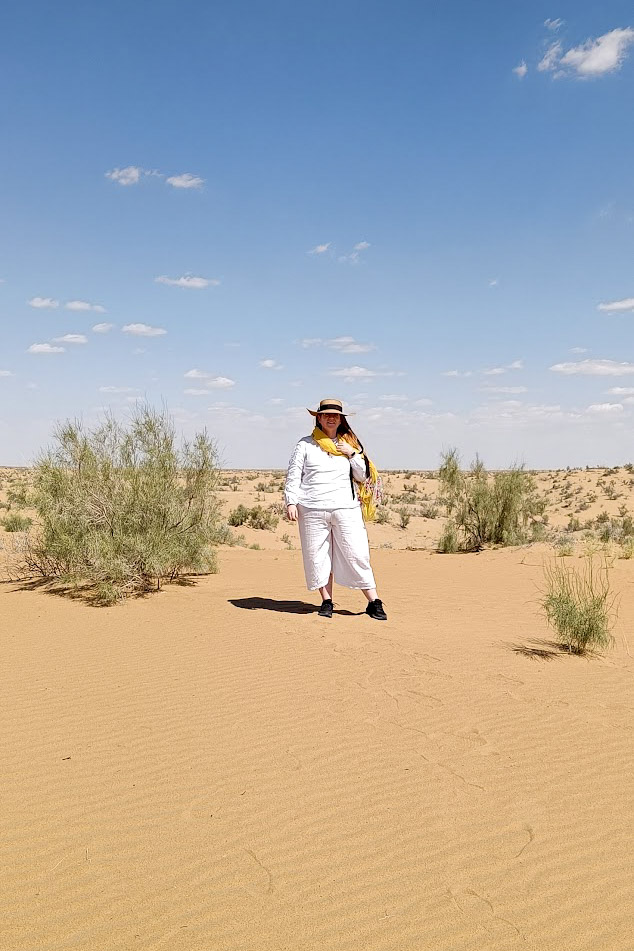
When I was packing for Uzbekistan, my travel outfits were mostly long maxi dresses, and linen pants with loose long sleeved linen tops. Some of my dresses were strappy, so I’d either wear a scarf or linen shirt over my shoulders. I also kept a scarf in my backpack to cover my hair when I needed to, although my local guide said hats are okay at a pinch.
Generally, I’d say avoid shorts, short skirts, and low cut or sheer tops. If you do find yourself unprepared when visiting a religious site, many of them have sarongs or scarves you can borrow to cover up before entering.
You’ll also do a surprising amount of walking around old cities, archaeological sites, and uneven cobbled streets, so comfortable shoes are essential. I tend to pack a pair of Teva sandals and plain black trainers when I travel to Central Asia, and I can promise you, I’ve never needed heels!
How long should you spend in Uzbekistan?
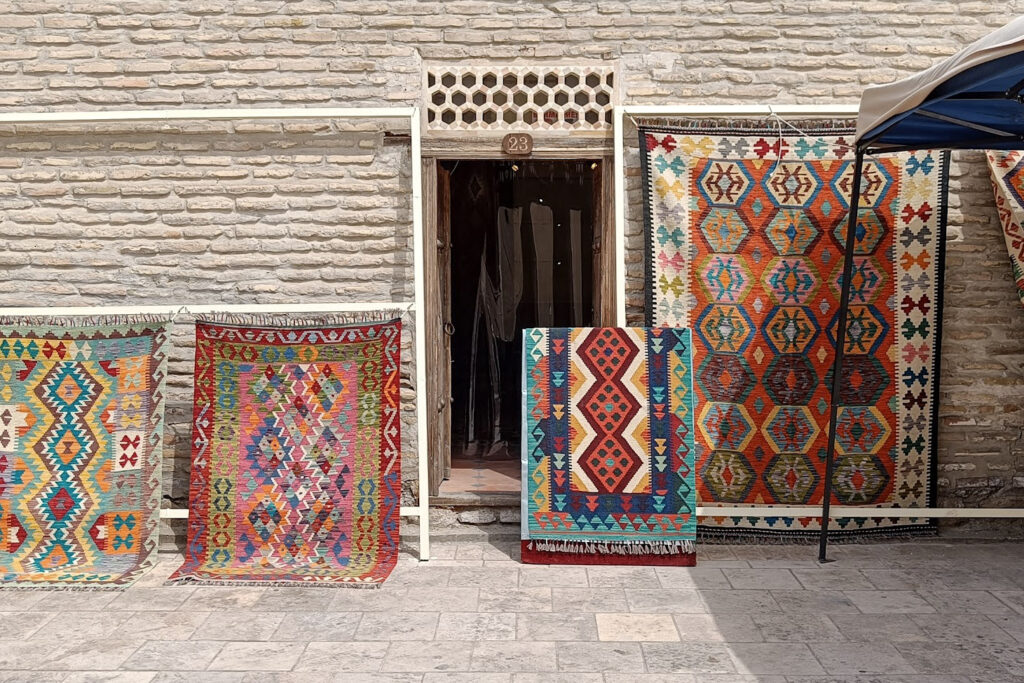
One thing you should know about Uzbekistan: It’s very easy to get around, and you don’t need to rent a car. Uzbekistan has a great rail network, and high speed trains, so you can make your way from city to city easily. Most people start in Tashkent, then go on to visit Samarkand and Bukhara.
That said, I wouldn’t rush your first time in Uzbekistan if you can help it. There’s so much to see, and it’s a far nicer experience lingering over tea in a courtyard or browsing spices at the bazaar than it is trying to rush around ticking everything off an itinerary.
If you’re visiting Uzbekistan for the first time, I’d recommend spending at least a week in the country, and ideally 10 days minimum. My Uzbekistan for first timers itinerary covers 10 days, which is plenty of time to see everything you should.
One Week
If you have 7 days in Uzbekistan, you can comfortably get around the main route of Tashkent, Samarkand, and Bukhara. For me, Tashkent was the least “wow” factor, so I would optimise for your time in Samarkand and Bukhara instead of spending too long in Tashkent.
In one week, you’ll be able to get a good introduction to the country, and see the main sights of the three major cities. I’ve written a 2 day guide for each Tashkent, Samarkand, and Bukhara to help you plan.
10 Days
Read on: 10 Days in Uzbekistan Itinerary.
If you’ve got a bit longer, you’ll have time to do the main route of Tashkent, Samarkand, and Bukhara, and either spend a bit longer in each, or add in Khiva too. If I was to do it all again, adding in Khiva is what I’d pick. It’s a truly beautiful city, and because it’s typically been less visited than its famous neighbours, it’s got fewer crowds.
Two Weeks or More
If you’ve got more than two weeks, you can really take your time in exploring Uzbekistan. I’m currently planning my return visit to Uzbekistan, and I’ll be adding in Jizzakh and Zaamin National Park. If I had even longer, I’d want to visit the Fergana Valley or plan a stay in the mountains.
If you’re on a longer trip, you could even venture into neighbouring countries. There are day trips to Tajikistan from Samarkand (although be warned, it really is a full, long day), or from Tashkent, it’s possible to travel into Kyrgyzstan. That being said, the rest of Central Asia is gorgeous. Kyrgyzstan was one of my favourite trips, and in my opinion, deserves a visit in its own right, not just a day trip.
Whatever you decide to do, if you have two or more weeks in Uzbekistan, you won’t be short of things to do and places to explore. It gives you a chance to slowly travel, and fully soak up the atmosphere of each place. Most of my favourite Uzbekistan memories weren’t ticking off another site on the list, it was just observing day to day life, taking my time over lunch, and really appreciating the fact that I was in this magical country.
For most travellers, though, 10 days is the ideal amount of time for a first trip. It’s long enough to experience Uzbekistan’s highlights properly without needing to take a huge chunk out of your annual leave allowance.
Language
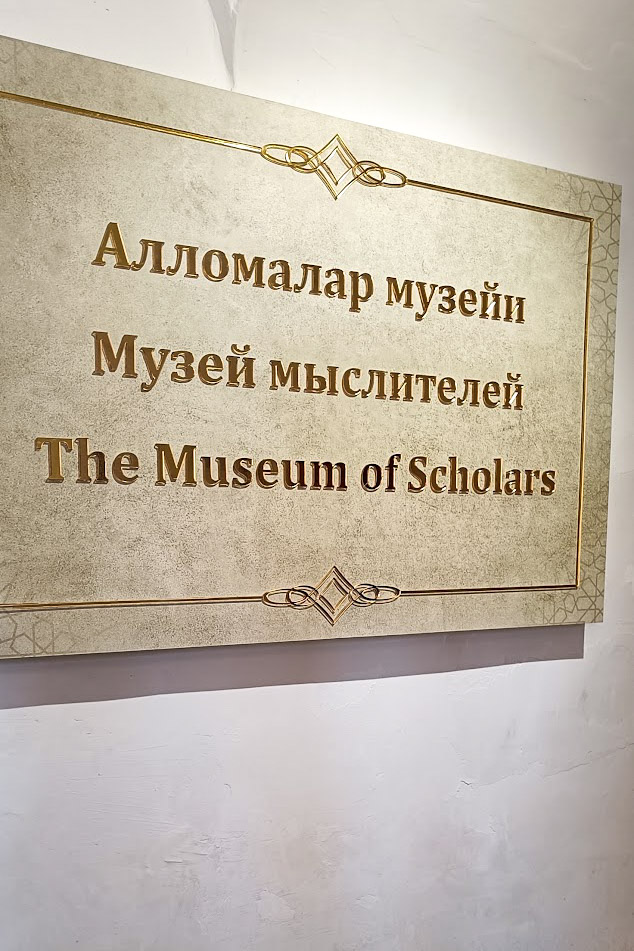
Before visiting Uzbekistan, I was aware that I shouldn’t expect everyone to speak English. Once I got there, I found English was common in hotels and tourist attractions, especially among the younger generations, but I still needed to rely on the translation app and learn a few phrases in Uzbek.
Uzbek is the official language, but you’ll also hear Russian widely spoken, and most signage is in both languages. Russian is especially common with many people who grew up during the Soviet Union era, and it’s still a common language across Central Asia today. In fact, as a European tourist, I found that most people defaulted to Russian with me, rather than English.
I know a little Bulgarian thanks to my husband, and there’s a little overlap with Russian, which helped with reading Cyrillic alphabet signage or translating basic menu items. However, by and large, Google Translate was my best friend. Thankfully, the people I met were more than happy to try communicate this way, and I spent one Yandex taxi ride with the driver and I taking it in turns to speak into my phone so we could chat about our lives.
Don’t worry if you don’t speak either language before you arrive. A translation app and a willingness to smile, point, and muddle through will get you surprisingly far.
What surprised me about Uzbekistan
The Heat
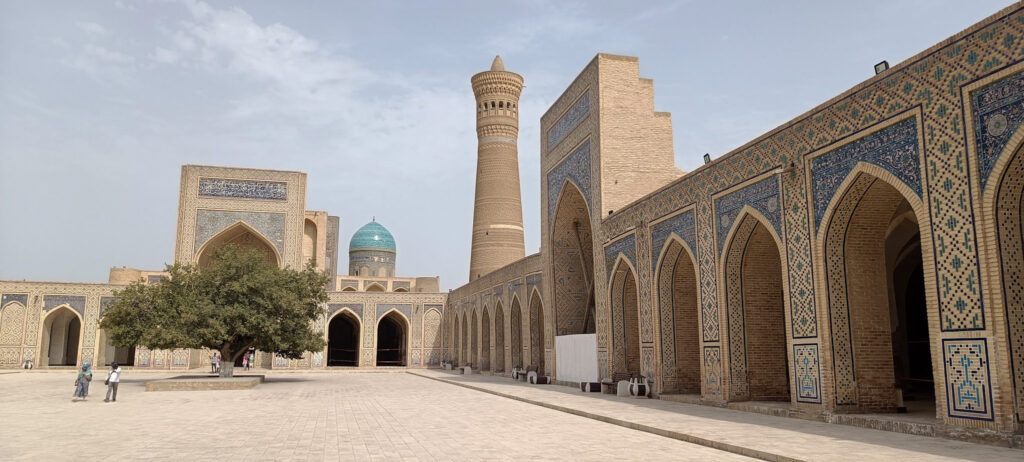
On my first time in Uzbekistan, I knew it was going to be hot, but I just didn’t anticipate how hot. I landed at 3am in early August, and even as I stepped out of the plane, the heat hit me. Granted, growing up in Ireland, I didn’t exactly have a lot of sun exposure, but it’s something to be mindful of if you’re equally as sun-sensitive.
If you’re travelling in summer, try to get to the tourist attractions early in the morning, or after the peak heat of midday (usually by about 3pm it starts to cool down). I’d also advise you to make sure your hotel has air-conditioning, not always a given in smaller inns.
If you’re travelling with a group tour, you’ll usually have transit included so you’ll be ferried from place to place in an air-conditioned bus. If you’re going it solo, whip out the Yandex. Trust me on this one, I tried to take a walk one afternoon in Tashkent. I lasted 20 minutes before giving up, sweaty and disheartened, next to a motorway.
The Tourism
Uzbekistan’s tourism is very much on the rise. In London, I’ve seen ads for Uzbekistan on the Tube, and there’s even a couple of Uzbek restaurants and food festivals that have cropped up.
However, it’s not quite at Santorini or Thailand levels yet. I think we’re at the sweet spot right now where there is a desire for tourism in the country, and the infrastructure is all there, but it hasn’t gotten to the levels of mass influencer photo shoots and intolerable crowds.
We’re still at a point where, when I tell people about my trip to Uzbekistan, I still get a lot of “where’s that?” and “why did you go there?”. Maybe I’m biased thanks to my social media algorithms, but I can see it quickly becoming more and more popular. If you’re going to go, now is probably as good a time as any.
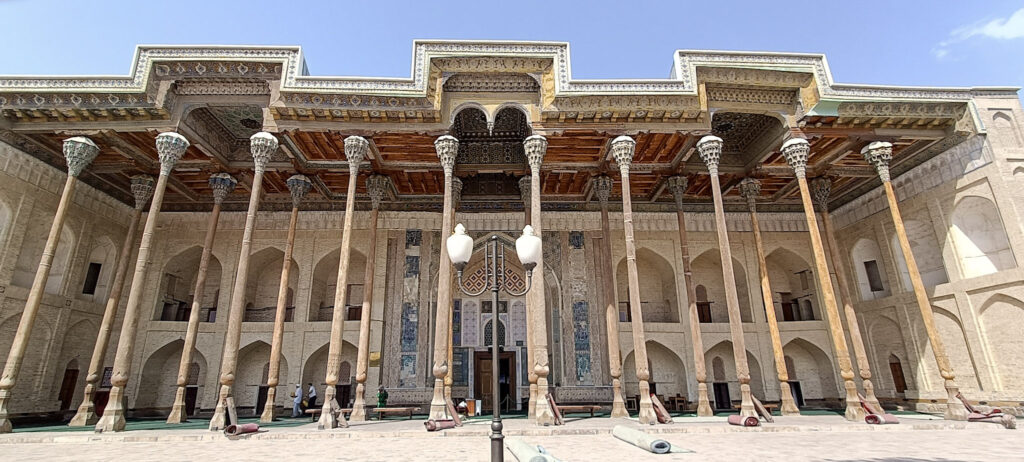
When I went, I found the famous sights like Registan in Samarkand or the old town of Bukhara to be pleasantly bustling, but with enough space for everyone to explore, take photos, and appreciate the space.
The Cost
I’m always a little reluctant to proclaim a country as “cheap”, especially when we consider that I live, and get paid, in one of the most expensive cities in the world. Compared to travel in Europe though, your money will go a lot further in Uzbekistan.
As I write this, the hotel I stayed in in Khiva, the Orient Star, costs £64 GBP for one night in July. This is a historic madrasah turned into a hotel, with the Kalta Minor minaret right outside – a place so famous it’s on the Uzbek 100,000 sum banknote. The same standard of hotel would be easily three or four times the price in Rome or Paris.
The five-star Hyatt Regency in Tashkent is about £130 a night, while its counterpart in London’s Mayfair is easily double that.
If you’re eating out, you can probably expect to spend somewhere between £5-20 on a very good meal. One of my favourites was in the Terrassa Restaurant in Khiva, where a beer and a plate of dumplings was abut £8.
Other than hotel and food, your biggest cost is likely going to be activities, and these can vary. If you go totally self-guided, entrance fees to places like the Museum of Applied Arts in Tashkent is about 25,000 – 30,000 UZS (about £1.50 GBP / $2.00 USD), and in Khiva, there’s an entrance fee to the old town that covers a lot of the fees into the sites around the city.
If you go with a tour group though, this is where it can get more expensive. For me, I decided it was worth it as it took the stress out of planning all the logistics, plus having a local guide gave me more insight into the culture than I’d have gotten on my own.
If you want to do a hybrid approach, operators like GetYourGuide have plenty of activities. The prices are usually around the same as what you’d pay in other parts of the world (maybe slightly lower), like this Tashkent Walking Tour for £14.
The Food
As a vegan, I don’t know if it’s fair to say I was “surprised” by the food, as I knew Central Asian cuisine is very meat-dominated, but I don’t think I was fully prepared for what that looked like in practice. I’ve actually written a separate post about it here, but the TL;DR is that I should have prepared better, and I learned my lesson for Kyrgyzstan the following year and brought Huel as an emergency stash.
If you’ve got any kind of dietary requirements, be prepared for it to be a lot tougher for you. “Vegetarian” and “vegan” don’t always fully translate, and it can mean that you still get food made with animal fats, even if there are no chunks of lamb decorating the top of your plov.
The Travel
I’ve mentioned this throughout this article, and I’ve written a separate article about train travel in Uzbekistan, but don’t sleep on how easy it is to travel independently throughout the country.
I chose a group tour largely because I felt intimidated by navigating taxis, tours, and trains in a part of the world I’d never been to, but I really didn’t need to be. I’m still glad I went on the tour because I met some interesting people, and the local guide, Jonibek, was wonderful, but the logistics are so much easier than you might think.
If you’re travelling independently on your first time in Uzbekistan, you’ve got YandexGo, high speed trains, safe cities, and friendly locals – all of them a perfect recipe for getting around easily.
Final Thoughts
If you’re still humming and hawwing over whether or not to visit Uzbekistan, close this window now and go book a flight. It’s a safe, welcoming, and deeply culturally rich country, and it’s like nowhere else I’ve ever been.
I mentioned it earlier, but I also really do think we’re in the sweet spot of Central Asian tourism right now where it’s easy to get around, there’s plenty to do and see, but it hasn’t become so busy as to be insufferable.
My first time in Uzbekistan was my first time in the region as a whole, and I loved it so much that I went back to visit Kyrgyzstan and Kazakhstan the following year. This year, I’m going to be back in Uzbekistan, as well as visiting Tajikistan for the first time, and I’ve already been talking to friends about Turkmenistan next year.
It’s becoming more common to do a “five Stans” trip and blast through all of the Central Asian countries. I get it from a time off and practicalities standpoint, but if you can manage it, I really think each one of these countries deserves their own trip so you can fully appreciate them. And believe me, they have a lot to offer.
If you need further travel planning help, my 10 days in Uzbekistan Itinerary covers all the highlights for first timers!