

How to Plan a Two Week Holiday Without Any Burn Out
Annual leave (or PTO to our American friends) is precious and it can be hard to know exactly how you want to spend it. Do you want the chaotic energy of a big city, an itinerary packed with day trips, or downtime at the beach?
We’ve all been there: Googling “how to plan a two week holiday”, opening 50 tabs, feeling like the planning is a second job, getting overwhelmed, slamming the laptop shut. Rinse and repeat until you panic book something a couple of weeks out.
I can’t tell you how many draft itineraries I make in a Notion page before I eventually settle on The One, and even then, I still feel like I’m missing something. I’m not going to pretend I’ve suddenly found the key to zen holiday planning, but I have found a strategy that’s worked for the over the years: The 3 Anchor Strategy. When I plan a two week holiday, I pick out the core anchor points of the trip to give it some stability, and then flesh out the details around that.
In this post, I’ll take you through how it works and why I think it’s the best method I’ve found so far.
The “Big Trip” Dilemma

Travel is expensive, and so when we can spend money on travelling, the pressure to get the trip right can be high.
I’m incredibly lucky that I usually get to go on one “big trip” per year with my husband, but even though I know that’s a privilege, I still feel like I need to squeeze every last drop out of the trip. Both of us work intense corporate jobs, so the time we get to spend together on holiday is time that we can just exist and experience a new place together.
We’ve also got different travel styles. I’m a big fan of solo travel and I’m used to having a very independent, action packed kind of trip. For him, he sees holidays as a chance to switch off from work and get some proper rest and peace.
It can also be overwhelming when you’ve got limited annual leave, but don’t want to feel like you missed out on anything in a new place.
The 3-Anchor Strategy When You Plan a Two Week Holiday

I’ve got a lot of North American readers, so I’m going to say right off the bat:
As a European living in London, my perception of travel between countries is warped. Because it’s so easy to travel from London, the idea of catching a train to Paris for a night or two, or getting a cheap Ryanair flight to Rome for a weekend is totally normal to me. It’s kind of like someone in Vermont heading to New York for a weekend.
If I stay somewhere in Europe for four nights, it feels like a long-term trip, because the amount of effort I had to put in to get there was so small in comparison.
So, the first time I planned a big trip to Asia, I tried to apply that exact same European logic. I thought it was totally fine and doable to hop around 6-7 different regions in a two week trip. Thankfully, my husband talked me back down to earth, but our first trip to Japan was still more exhausting travel-wise than it needed to be.
And this is how we came up with The 3-Anchor Strategy. After our first trip to Japan, both of us agreed that the four nights we spent in Kyoto were our favourite part because it gave us enough time to unpack our suitcases, do laundry, find the local grocery store, find a favourite place to eat, and even squeeze in a day trip to Nara.
On our next long haul trips, we used this strategy to pick three places to be our bases for 4-5 days at a time. This gave us stability, but also ended up feeling like we had three holidays in one.
Why 4-5 Nights is the Psychological Sweet Spot

From my own travels, I’ve found that 4-5 nights is the ideal sweet spot to get a proper feel for a place. Sure, you’re not going to become a local in that time, but it’s enough that you’ll have mastered the walk back to your hotel, found a favourite coffee shop, and started recognising the local cats.
There’s actual research to back this up too. A famous study by a Dutch researcher, Dr. Jessica de Bloom, looked into exactly how long a holiday needs to be to maximise happiness. Her research found that health and well-being peak around the eight day, with the positive feelings tapering off after that. She and her colleagues also found that shorter trips around 4-5 days have a positive impact on wellbeing, but the effects are short lived upon returning to work.
If you’re planning a two week holiday, and you break it up into 4-5 day chunks using this 3-Anchor Strategy, you get the best of both worlds. You reset the “novelty clock”, meaning you’re less likely to get the eight day tapering effect, and while you get the positive feelings of the 4-5 day trip, your total vacation time is long enough to give you a proper reset.
In real life, this also turns the two-week trip into a series of smaller milestones. On my most recent trip to Thailand, I was on my second last night in Chiang Mai, a city I absolutely loved. I was feeling sad about that part of the trip coming to an end, when I reminded myself that we still had a whole new area, Koh Samui, coming up. We only got back last weekend, and as I write this, I still feel like I was away for a lot longer than 2 weeks.
There’s also the practical side to consider too: having this stability means you get a chance to unpack your clothes, find the local launderette, take a downtime day without feeling guilty that you’re missing something, and feel a bit more grounded in new environs.
How to Choose Your Anchors
If you’re reading this as you plan your own trip and you’re stressing about what makes the cut for your itinerary, then here’s how I go about it: choose three destinations that offer total contrast. Each one will feel like a completely new experience, and make your trip feel more well rounded.
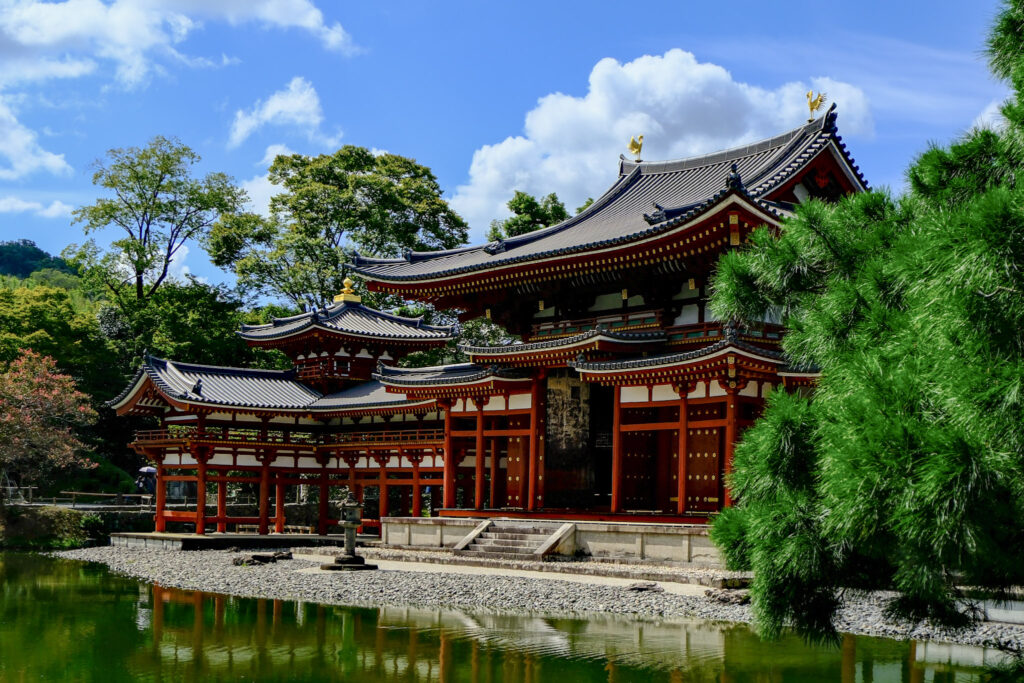
For me, I like to think about what a particular country is known for. For example, on my last trip to Japan, our anchors were Tokyo, Kyoto, and Okinawa. Tokyo has the scale and the ordered chaos, Kyoto has the culture and history, and Okinawa has the beautiful island setting.
It can help to break down the categories of trip style you want, and then try to find the locations that best match it. For example:
- The High-Energy City Hub
- Sensory overload, bright lights, public transport puzzles, endless walking, nightlife, and feeling lost somewhere giant. It’s the part of the trip that gives you a glimpse of how the people in this country live their day to day lives.
- Cultural and Historical Deep Dives
- Where you actively learn things. This is all about temples, museums, ancient ruins, and architecture. It’s the part of the trip that gives you the foundational context for the country you’re visiting.
- Foodie Cities
- The itinerary here revolves around market tours, cooking classes, local specialities, and highly rated restaurants.
- Mountains, Forests and Wilderness
- The complete antidote to the high energy city. Clean air, beautiful views, the absence of traffic sounds, and the visibility of the night sky.
- Active Adventures (Biking, Hiking, Diving)
- This is when you want your holiday memories to include a bit of physical achievement, like the Shimanami Kaido.
- The Rural or Countryside Retreat
- Slowing the pace down and exploring life outside of the big cities. Maybe this is staying in a homestay in a village, or taking a tour of the local vineyards like I did in Valpolicella.
- Beach and Coastal Breaks
- Sun, sand, salt water, and lying for hours with a good book. The goal here is to do as close to nothing as possible, a proper wind down for your brain and body.
- Wellness and Spiritual Retreats
- Intentionally focusing on your own mind and wellbeing. This could be spending time by hot springs like Hakone, yoga spaces or quiet retreats where the only plan is to decompress and unplug from real life.
Planning for Transit

The biggest trap of the 3-Anchor Strategy is not considering how long it’ll actually take you to move between hubs. It’s all well and good if you’ve got three amazing locations picked out, but it takes 8 hours on a sweaty bus to get between each one. In some cases, like a sleeper train in Thailand, the transit could be part of the experience. Otherwise though, you’re losing a full day of your next holiday-within-a-holiday to transport.
To keep the 3-in-1 holiday vibe going, your transit days need to be as low friction as possible. Consider services like Japan’s luggage forwarding, or pick out high speed trains, short internal flights, or easy direct routes.
If you don’t have those options, and you absolutely cannot change your itinerary, consider making that part of the trip a 5 day stay. The stressful travel will feel far less cumbersome if you know you have a good chunk of time to explore the place. Your first night won’t feel like a waste if all you’ve got the energy to do is eat and sleep.
My Real World Examples
I’ve applied this strategy to my two most recent long haul trips, and it was a great way to genuinely feel like I was getting three trips out of one.
Here are my examples, in case it helps you plan your own two week holidays:
Japan:
- Tokyo for the big city energy
- Kyoto for the calm, peace, and beautiful temples
- Okinawa for the beach and relaxation
On this trip, we also did the Shimanami Kaido over two days, as well as a day trip to Uji. Even though we ventured beyond the main bases we’d picked out, having these three “anchors” gave the trip some stability, and a chance to just enjoy each place without living out of a suitcase.
Thailand:
- Bangkok to explore the city and its sights
- Chiang Mai for the history, temples, and amazing vegan food scene
- Koh Samui for a relaxing end to the trip by the water.
Final Thoughts

Obviously, the idea of picking three main spots is hardly revelatory, and it may be something you naturally do anyway when you plan a two week holiday. For me, though, putting it into words and being able to define this as my strategy for my own trip planning has made it so much easier to actually map out my itineraries.
Because I’ve already got constraints in place when I’m planning, it makes it easier to pick my top 3 spots and organise my trip around that.
If you’re in the middle of planning your own trip, hopefully this helps you to narrow down your itinerary, and I hope you have a wonderful time!