
Things to do in Khiva: Discovering the Magic of the Desert City
One of the ancient cities of the Silk Road, Khiva is often the Uzbek city that most tourists miss. Because it’s harder to reach, most travellers to Uzbekistan tend to focus on the “Golden Trio” of Tashkent, Samarkand, and Bukhara. And, if you are planning your full Uzbek adventure, you might find my 10 days in Uzbekistan itinerary helpful.
While Samarkand has the grand scale of the Registan and national monuments, and Bukhara has the desert oasis caravanserai vibe going on, Khiva is a perfectly preserved time capsule of Silk Road culture.
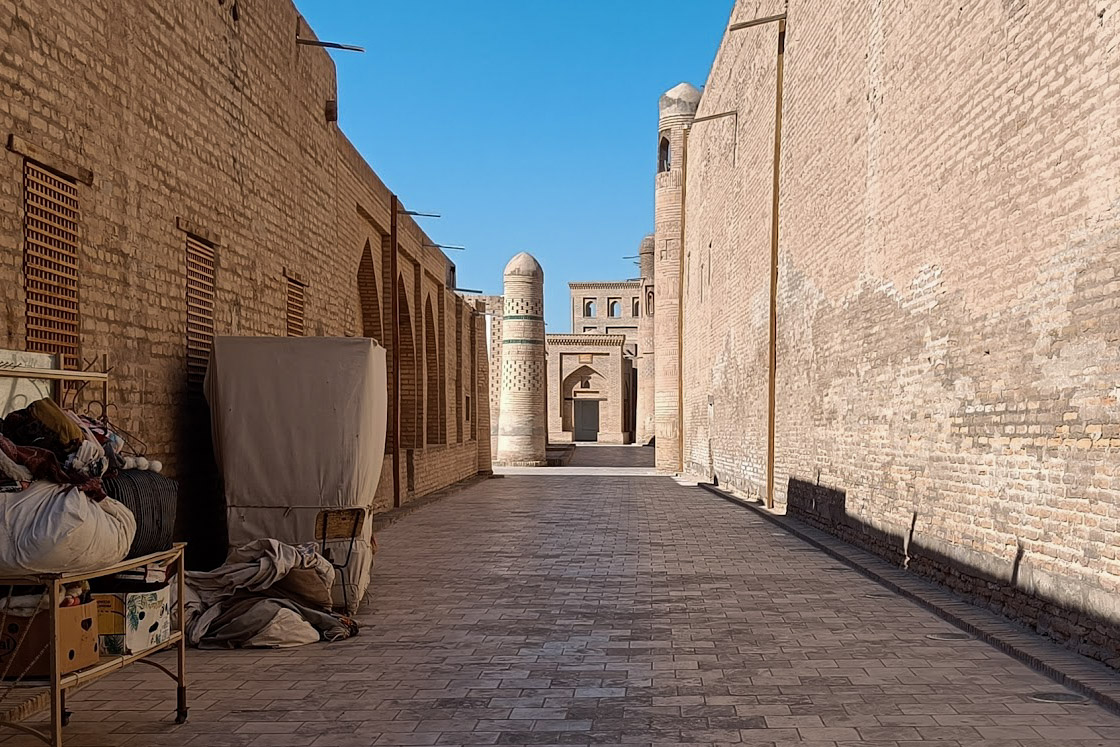
Surrounded by the Karakum and Kyzylkum deserts, the main sites of Khiva sit inside the walled fortress city known as the Itchan Kala. This is where you’ll find narrow, winding alleys home to craftspeople’s workshops, tucked away shops, and a madrasa or cultural site around every corner.
If you’ve found yourself on your way to this labyrinthine city on your Uzbek travels, this post is going to cover the main things to do in Khiva, as well as why they’re worth a visit. In another, upcoming post, I’ll be sharing a Khiva itinerary. If you want something that’s easy to scan and plan your trip, keep an eye out for that. If you want to understand why the “things to do in Khiva” actually make the list, read on.
A Ride to Khiva
For me, the journey to Khiva was just as much fun as the destination itself. Over the course of 6-7 hours, I bumped along the roads through the Kyzylkum Desert, gripping the ‘Oh Jesus’ handles as the van swerved around potholes and barrelled through damaged stretches of tarmac.
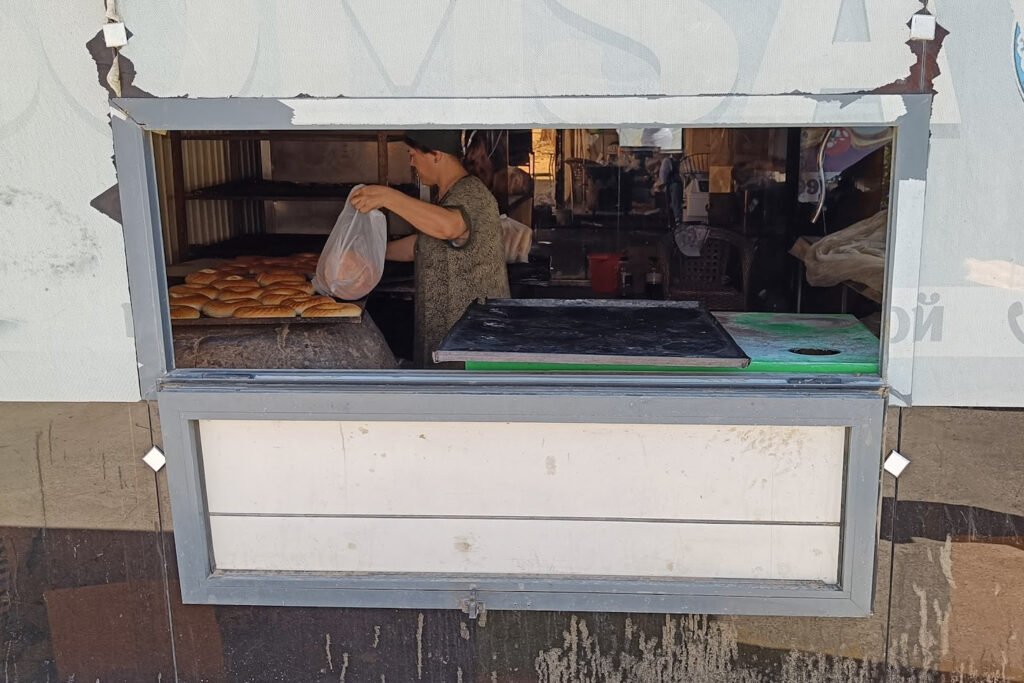
Pulling into a roadside services, I came across women cooking non bread in a stifling hot kitchen, beads of sweat rolling down their faces as they navigated the tandir ovens in the dry August heat. Outside, the men loaded up the boots of cars with the bread, ready to sell to passing travellers or drive on to the bazaars.
A simple public toilet lay behind the bakery. For 2,000 Uzbek som you could squat over a hole while a stern faced woman handed out rations of toilet paper. Next door, there was a small shop selling ice creams that looked like they may have been in the freezer since the Soviet era.

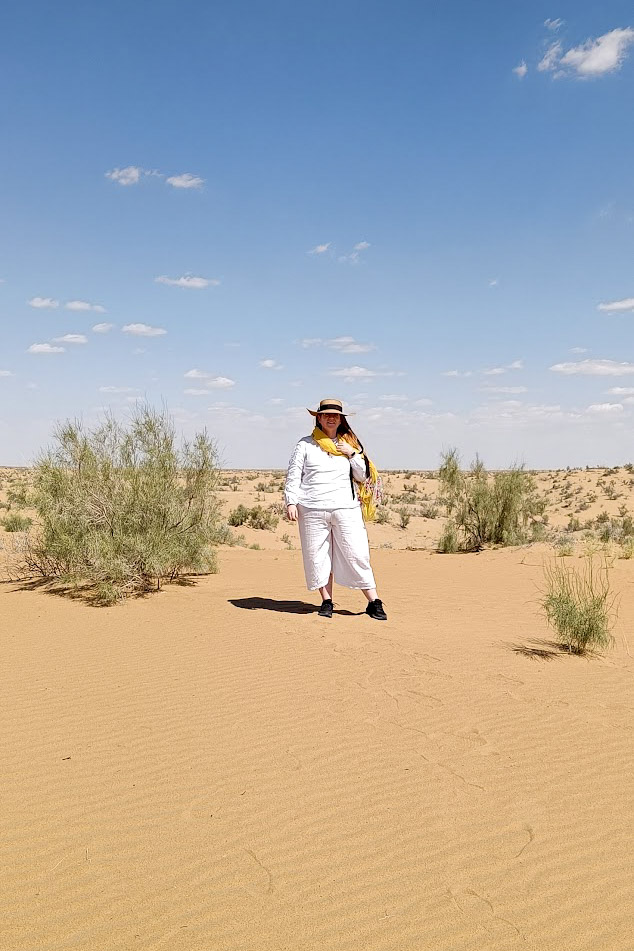
Back on the road, it was back to bumping through the desert, including a very quick pit stop to actually get out into the sand.
Despite dressing like I was cosplaying Richard Attenborough in Jurassic Park, I immediately felt my Irish skin begin to scream in protest. Growing up on a rainy island in the north Atlantic, this was a world away from what I’m used to. I could feel the heat of the sand through the rubber soles of my trainers, and I began to worry that the glue would disintegrate.
For miles in every direction, all I could see was stretches of orange sand. The name “Kyzylkum” means “red sand”, and in this almost Martian landscape, it’s easy to see why.
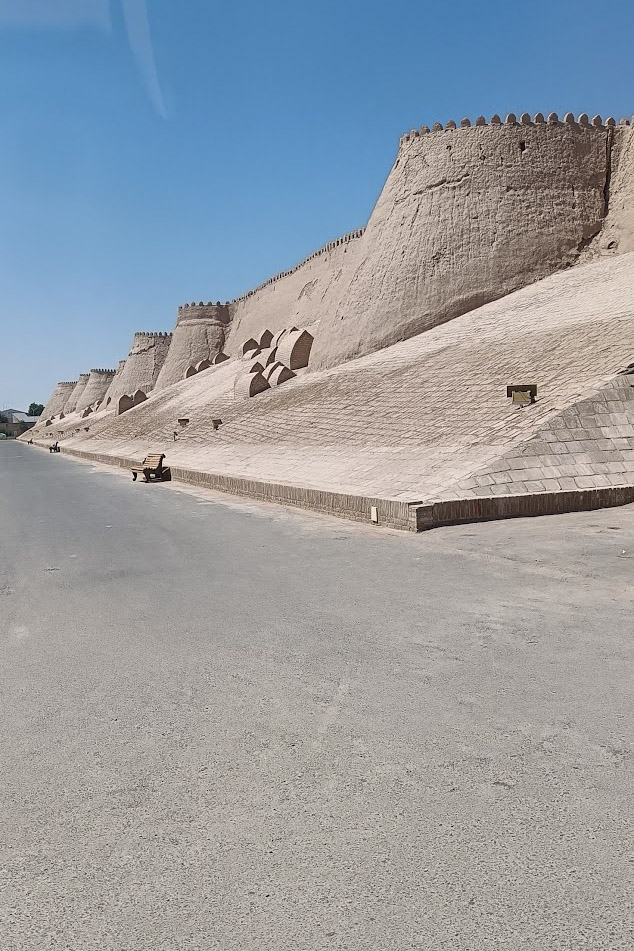
Eventually, the roads started to smooth out as we made the approach into Khiva. If you’re travelling into the ancient city by vehicle, the city walls are as close as you’re going to get. The inner city, Itchan Kala, is pedestrianised and free of cars. Delighted at this news, I jumped out of the van, grateful to have my feet on solid ground, and eager to explore this ancient, open air museum of a city.
If you’re travelling to Khiva yourself, you’ll likely find yourself on a similar journey through the desert. While Uzbekistan has a wonderful high speed rail service, the Afrosiyob, it doesn’t quite extend to Khiva – although that’s due to change later this year, opening Khiva up for even more visitors and easy access.
The Muhammad Amin Khan Madrasah & Kalta Minor
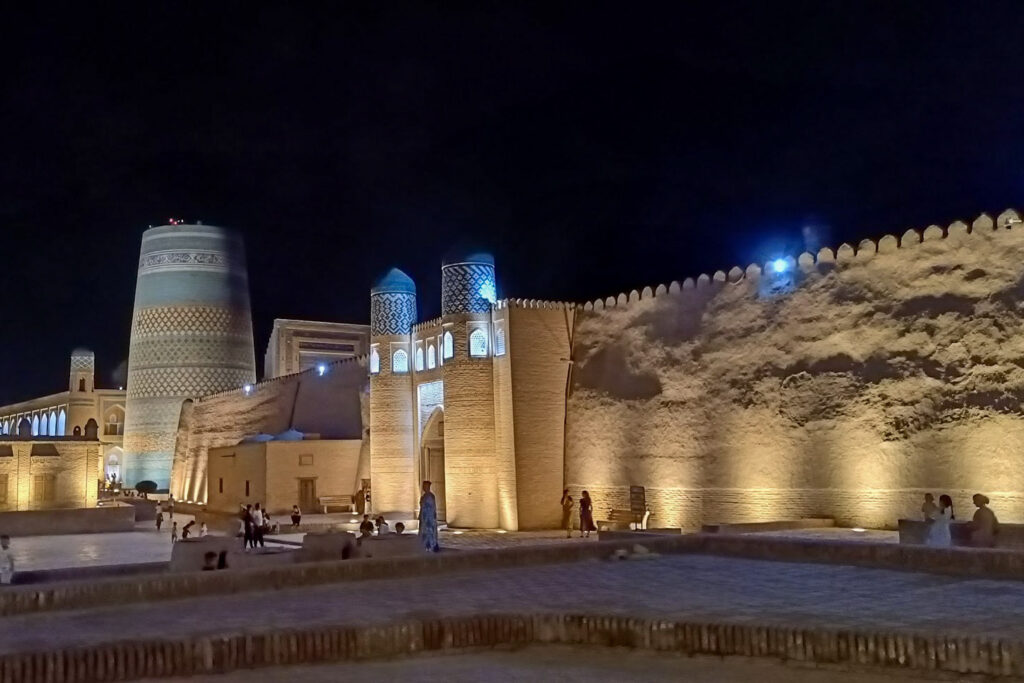
When I arrived into Khiva, it was right by the Ota Darvoza (Father Gate), which serves as the main western entrance to the walled city. Walking through it, you’re immediately faced with one of Khiva’s most iconic sights: the Kalta Minor.
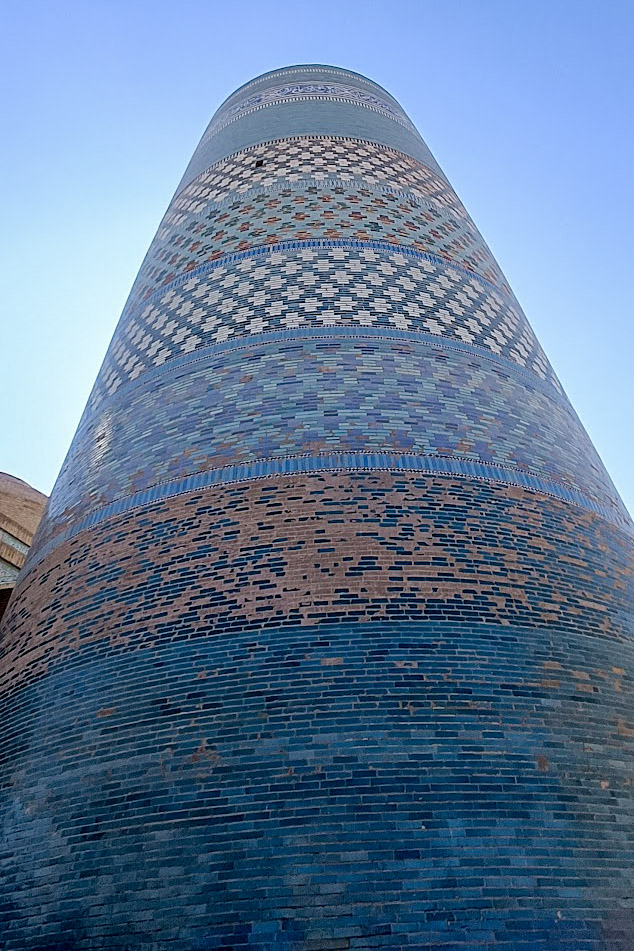
The Kalta Minor was conceived of by the khan of Khiva in the early 1850s. It was designed to be the largest and tallest minaret in the Islamic world, measuring between 70-80 metres tall. Unfortunately, construction on the minaret stopped abruptly in 1855, and never made it past 29 metres.
Even in its unfinished state, the Kalta Minor is still one of the top things to do in Khiva, and there are two local legends that surround it:
Legend 1: Bukharan Betrayal
The most popular legend about the Kalta Minor is that the Khan wanted the minaret to be so tall that he could see all the way to Bukhara, about 450km away. The Emir of Bukhara caught wind of this, and was not impressed.
The Emir secretly approached the architect and offered him a massive pile of gold to build an even taller one in Bukhara once the Khiva project was finished.
When the Khan of Khiva found out, he was raging, and ordered the architect to be thrown from the unfinished tower the moment it was finished. Fearing for his life, the architect did a runner under the cover of night, leaving the tower exactly as it stands today.
Legend 2: The Hidden Harem
The other famous legend about the Kalta Minor is that the Khan realised that if the minaret reached its intended height, the muezzin calling for prayer would be able to see over the palace walls and straight into the Khan’s harem.
In order to protect the privacy of his wives, the Khan halted construction.
Whether either legend is true or not, when you see the tower in real life, you’ll notice how wide it is at its base. It was built to support a height that never ended up happening. Nonetheless, it’s still the only minaret in the world covered in glazed tiles, and it’s a landmark worth seeing all on its own.
The Madrasah
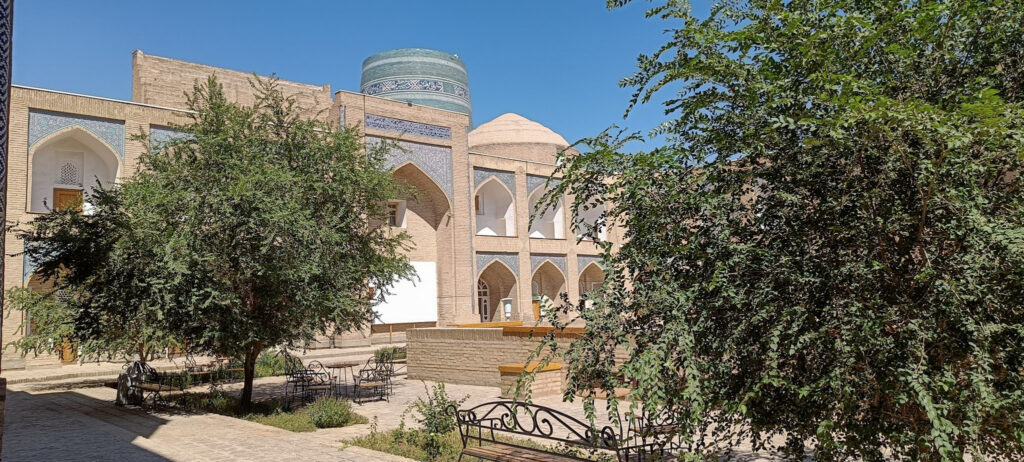
Right next to the Kalta Minor is the Muhammad Amin Khan Madrasah. It was built at the same time as the minaret, and completed in three years. While it originally acted as an Islamic school, today it the Orient Star Hotel, and it was here that my overstuffed backpack and I found ourselves at home in Khiva.
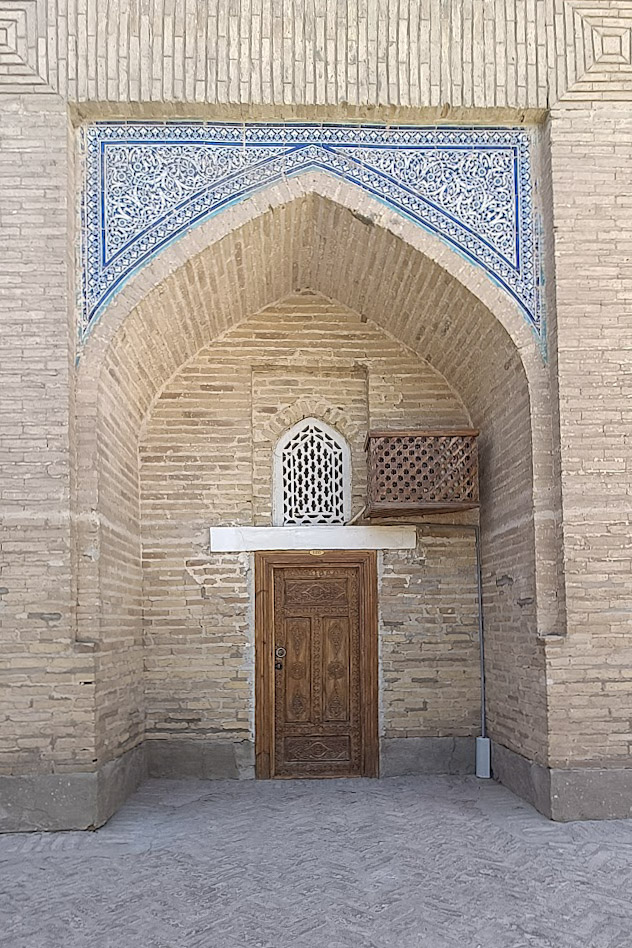
I’ve stayed in some beautiful hotels around the world, but there is something incredibly special about walking into a Silk Road madrasah to lay your head for the night. The former student cells have been converted into bedrooms. They’re simple inside, but as soon as you open your bedroom door, you’re immediately in the courtyard of the madrasa.
The walls are incredibly thick, so you’re not going to be woken by noisy neighbours at night, but you’re also not going to get much of a wifi signal. I had to perch myself in the shade of a tree in the courtyard to get any kind of connection.
While there are other great hotels in Khiva, how often are you actually going to get the chance to stay in a madrasah that features on the country’s banknotes?
The Old Fortress: The Kuhna Ark Citadel
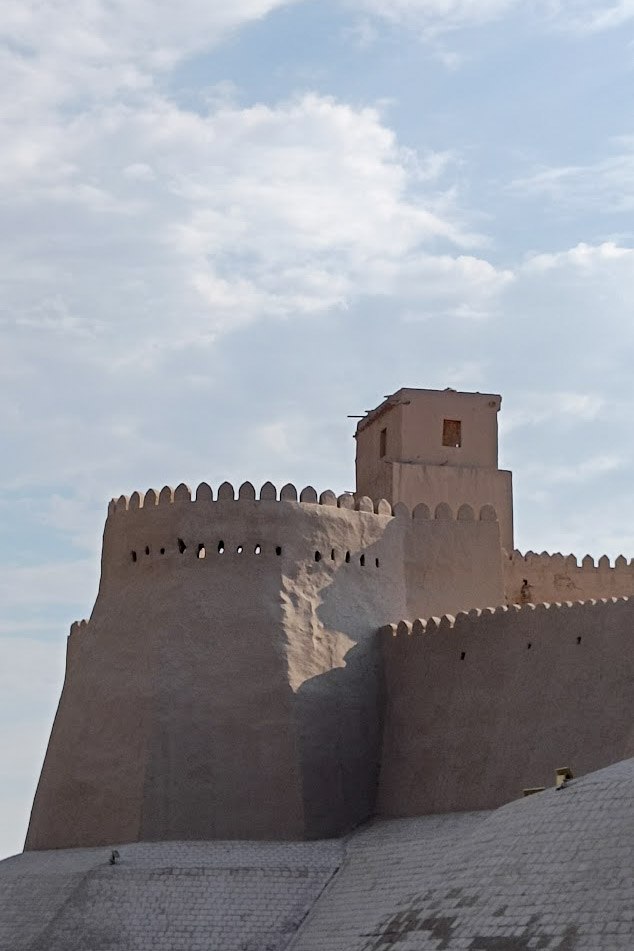
Just across from the Muhammad Amin Khan Madrasah is the Kuhna Ark, which served as the inner fortress and residence for the Khans of Khiva. It’s a city within a city, containing everything from a mint for striking coins to a pretty grim looking jail.
My favourite part was the open air throne room. Given the weather in this desert city, it’s easy to imagine a monarch conducting his state business from a tiled courtyard, rather than in a dark, stuffy hall – although not one to skip measures, the Khan naturally had an indoor version too.
Inside the walls of the citadel, you’ll also find the winter and summer mosques. The summer mosque is an iwan (porch) that’s an open air pavilion with striking blue majolica tilework, and an impressively detailed ceiling. Meanwhile the winter mosque is enclosed, designed for colder weather.
The Pahlavon Mahmud Mausoleum
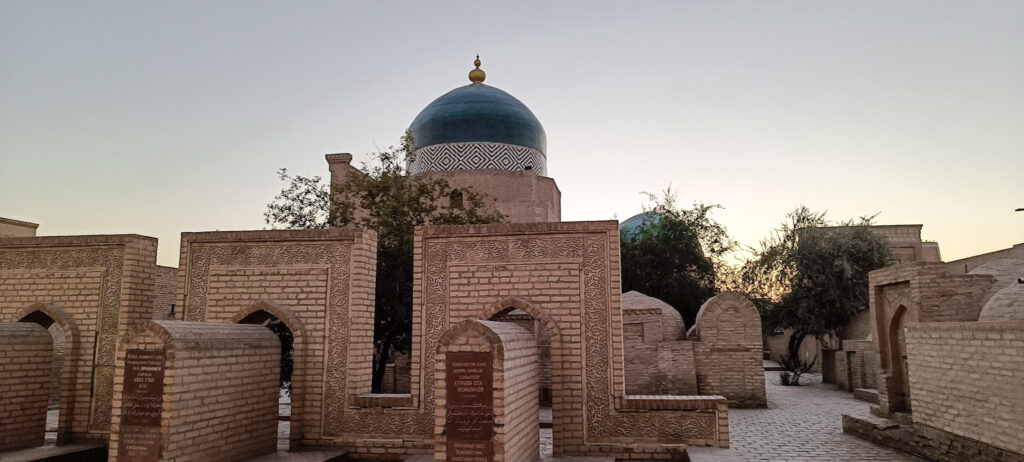
The next on the list of things to do in Khiva is the Pahlavon Mahmud Mausoleum. Dedicated to the patron saint of Khiva, Pahlavon Mahmud lived in the 14th century. He was a furrier by trade, maybe selling some of the fur hats you’ll still see lining Khiva’s streets, but he was also famous as a philosopher, poet, and oddly, an undefeated professional wrestler.
One popular local legend says he travelled to India to compete in a wrestling tournament. When he won, the local ruler told him he could have any prize he wanted. Instead of asking for gold or land, Mahmud asked for the release of his fellow countrymen who were being held as slaves. The ruler agreed to free as many people as could fit inside a sheepskin.
Using his skills as a furrier, Mahmud cut the skin into one long, continuous thin strip, creating a massive loop to wrap around hundreds of people, and successfully bringing them all home.
If you’ve been to Bukhara, you might have heard a similar tale involving the provenance of Bukhara’s Ark and a bull’s hide. Guess the ancient Uzbeks just really loved wrapping things in animal hides.
As a place to visit, the Mausoleum is incredibly striking. I’ve you’ve already been to Samarkand and Bukhara, you’ll already have seen plenty of the iconic blue-tiled domes of Uzbekistan. Khiva, however, is a little bit more low key. The Mausoleum is the only major blue-tiled dome in the city, making it a distinctive landmark of Khiva’s skyline.
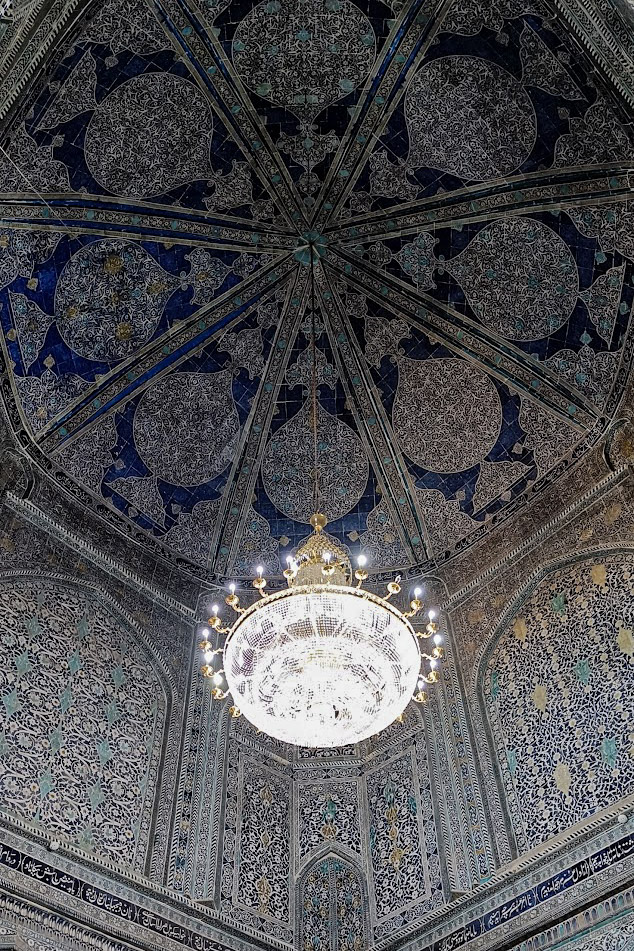
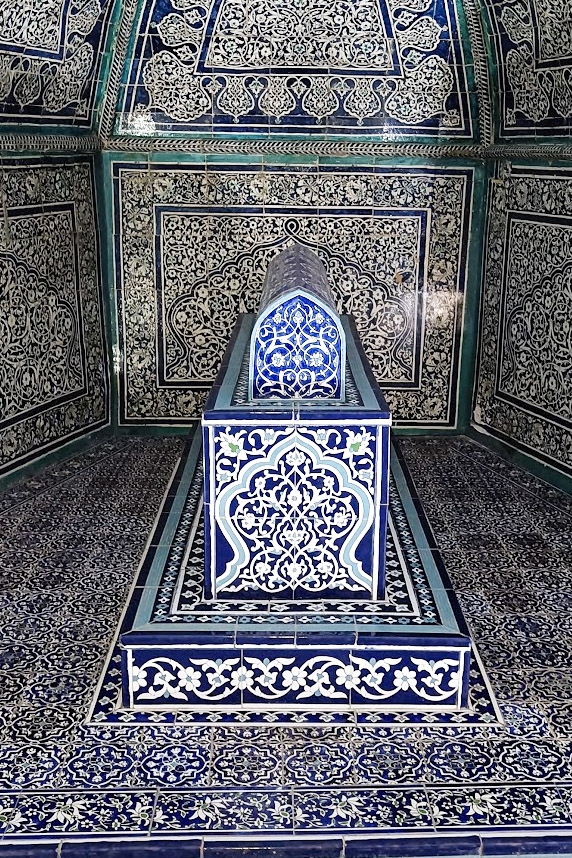
As impressive as the outside is, however, it’s inside that’s the real hidden gem. Every single inch of the walls and ceiling is covered in gorgeous blue, white, and turquoise majolica tiles. It’s often mentioned as one of the finest examples of tilework in Uzbekistan, and being inside it feels like being inside a giant jewellery box.
The Royal Crypts
Although the Mausoleum started as a tomb for Pahlavon Mahmud, the Khans of Khiva eventually decided they wanted to share their final resting place with someone so holy. Over time, it evolved from a humble tomb to a grand family mausoleum, and includes the impressive sarcophagus of Muhammad Rahim Khan I.
The Scholarly Quarter
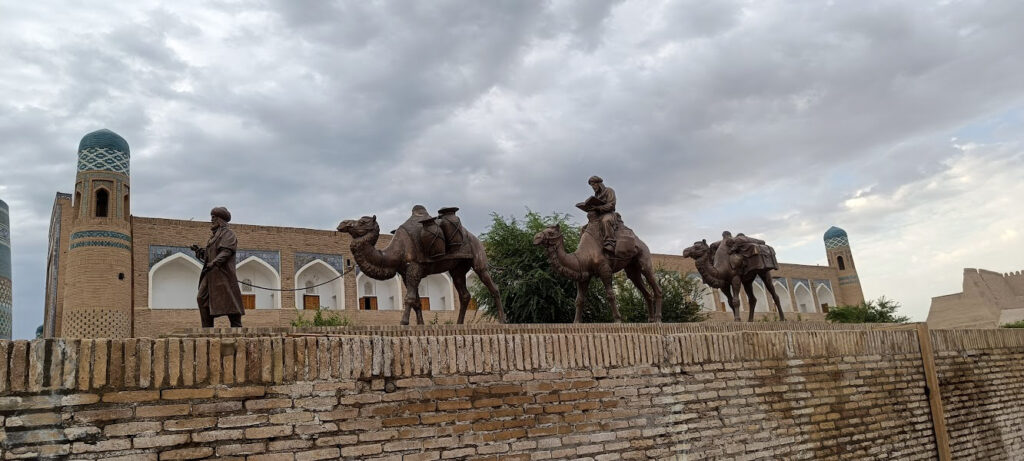
As much as Khiva was a city of warriors and traders, it was also a massive intellectual hub. Walking through the centre of the Itchan Kala, you’ll find a cluster of buildings dedicated to the scientists and brilliant minds that shaped not just Uzbekistan, but the rest of the world too.
If you can only pick a couple of things to do in Khiva, these should be near the top of your list.
Khiva and the Birth of Algebra
I hated maths in school. Like really hated it. I remember being 7 years old and throwing my textbook across the room, and announcing to the teacher “I don’t need to learn maths, I’m going to be an artist”. Well, joke’s on me, because I ended up studying computer science in university. I remember sitting in a maths lecture and suddenly it all clicked into place. Algebra suddenly made sense. It wasn’t just random letters and numbers, it was a logical pattern that made up the building blocks of how code and computer applications work.
It’s this same kind of logic that brings us algorithms. The things that decide what cat videos we’ll see, what targeted ads we’re shown, and even powering the code that’s allowing you to read my writing and see my photos right now.
These concepts go way further back than you’d think, and you’ll find their roots right here in the Khwarazm region, where Khiva lies. A famous mathematician by the name of al-Khwarizmi first presented the concept of linear and quadratic equations. Sometimes called ‘Al-Khorezm’, it’s from his name that we get the word “algorithm”
The Museum of Scholars
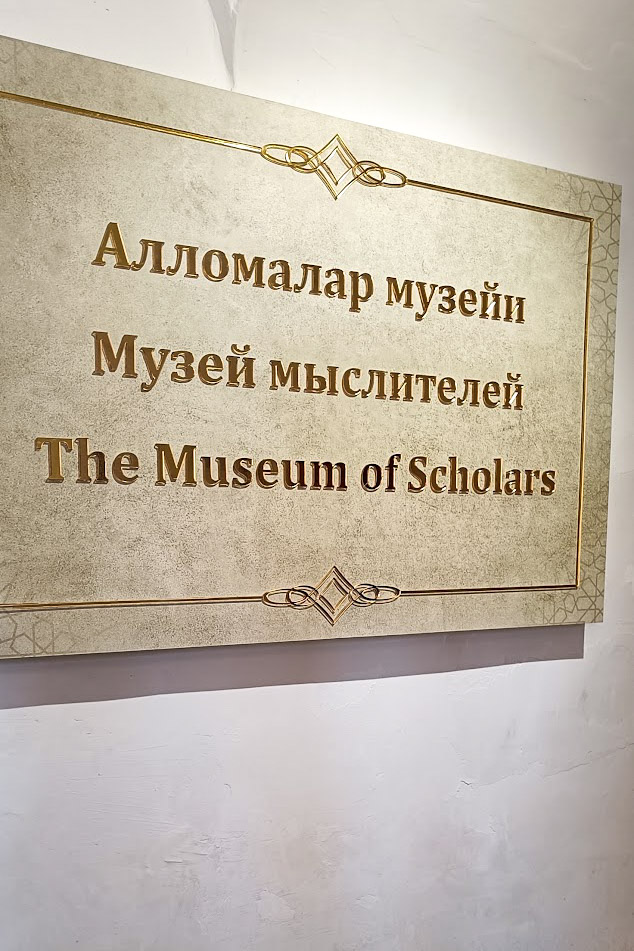
Khiva would be remiss if it didn’t acknowledge al-Khwarizmi and his contributions to modern technology, and it’s in the Museum of Scholars where you’ll find it. It’s a relatively small museum, tucked away in a former madrasah, but it’s a necessary nod to the city’s brightest minds.
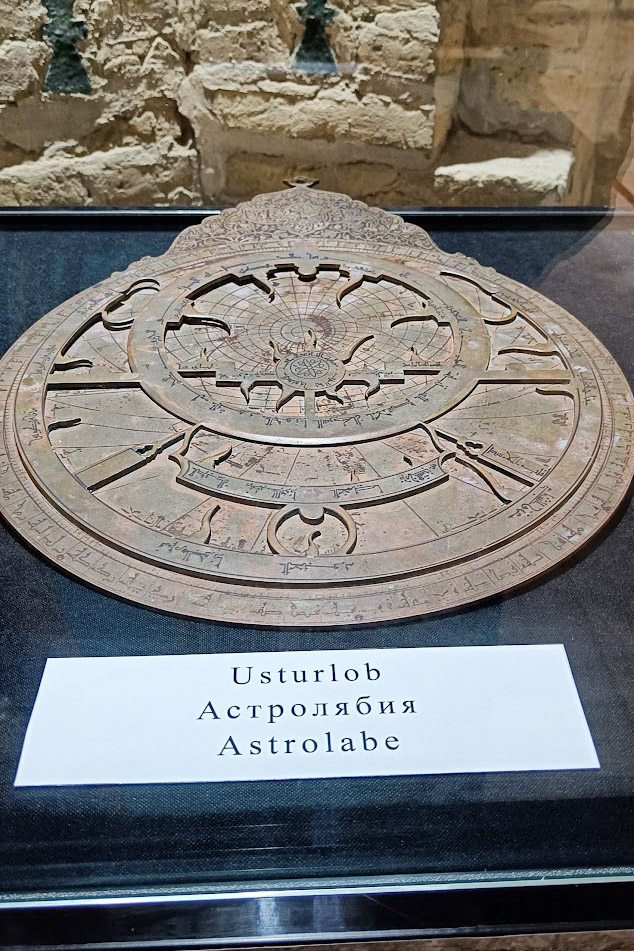
Beyond Al-Khwarizmi, the museum highlights other local legends like Al-Biruni, a polymath who was busy calculating the radius of the earth and pondering the possibility of the earth rotating around the sun, while the rest of us were off still believing the earth was flat.
The displays are what you’d expect from such a museum, glass cases with ancient astronomical instruments, globes and manuscripts. The weight of what they represent, however, is massive.
As you stand amongst the displays, you’re looking at the origins of the concepts and technology that put satellites into space. It’s not just one of the many things to do in Khiva, it’s a reminder that Khiva was more than just a picturesque trading stop on the Silk Road.
Think of it like an ancient Silicon Valley – which is pretty apt given that it’s surrounded by sand.
Muhammad Amin Inaq Madrasah
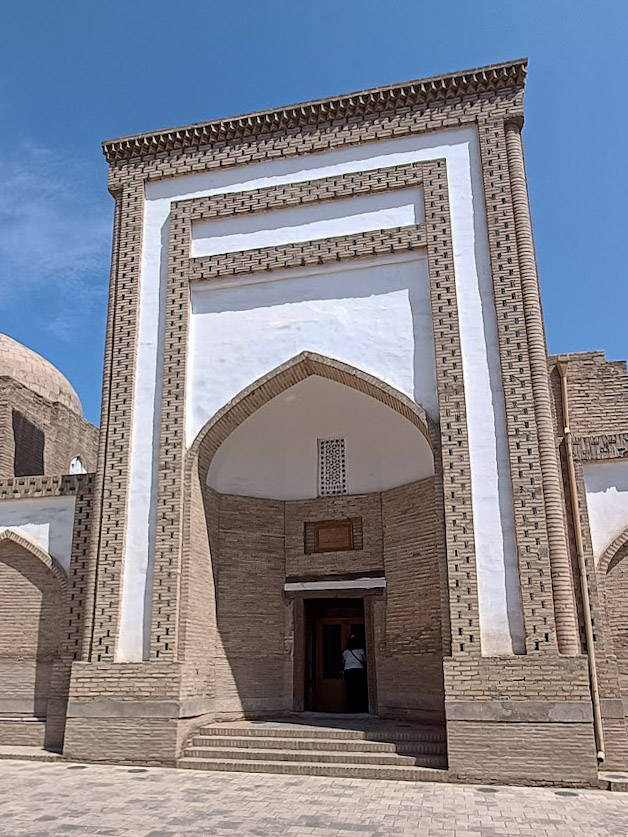
Keeping with the scholarly vibe, one of the things to do in Khiva is visit the Muhammad Amin Inaq Madrasah. Unlike most madrasahs which were schools for Islamic students, this one also contains the tomb of Muhammad Amin himself.
At the time, it was considered a bit scandalous for a school to double up as a tomb – and honestly, still a bit weird today, thinking about it. To get around this, the tomb was tucked away in one of the corner rooms.
As you walk around the 18th century madrasah, you’ll notice it’s two-storied. At the time, this was a bit of a flex. The rest of the city is mostly built up of mud and brick, so keeping buildings low to the ground was the safest option. By building a two-storey building, it signalled the Khans’ wealth and power to visitors.
The Architecture of the East Gate
The East Gate of the city, Palvan Darvoza, is where you’ll find a dense cluster of buildings stacked on top of each other.
Kutlug Murad Inaq Madrasah
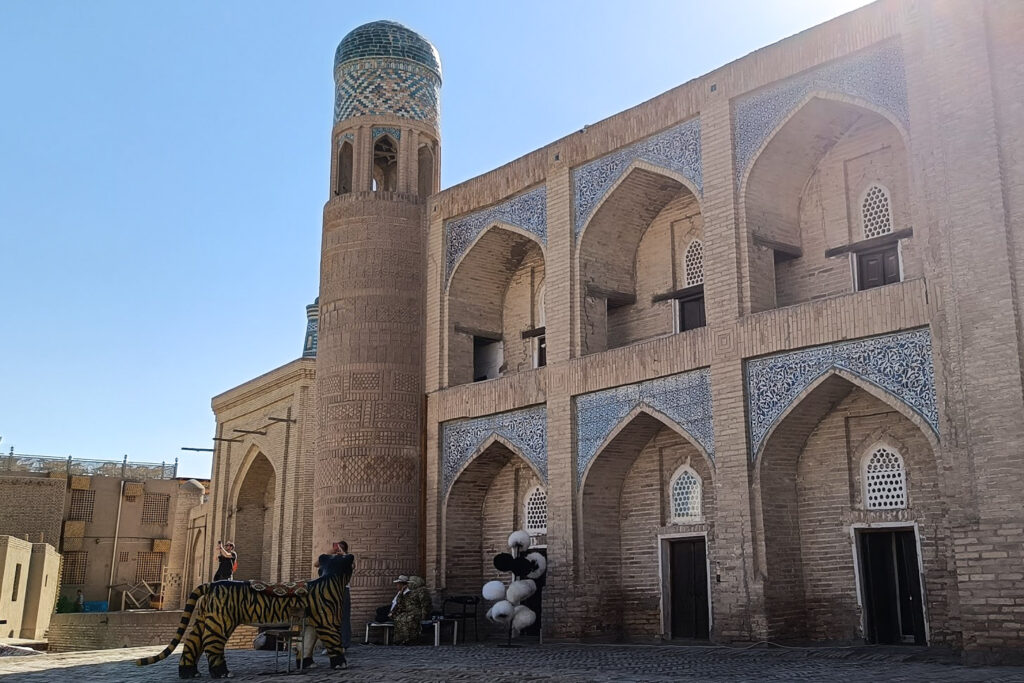
The Kutlug Murad Inad madrasah was the first two-storey madrasah in Khiva, built between 1804 and 1812. The real story here is about the man it’s named after, the Khan’s uncle, Kutlug Murad Inaq.
In his will, Kutlug Murad specifically requested that he be buried inside his own madrasah. However, he had a bit of a problem here. He had the misfortune of dying in the Dishan Kala, the outer city, and according to Khivan law at the time, it was forbidden to bring a dead body through the gates of the Itchan Kala, the inner city.
Rather than break the law, the Khan decided to break the city wall. They literally demolished a section of the massive fortress walls you see surrounding the old city. They carried the uncle’s body back through the gap, into the madrasah, and quickly bricked the wall back up.
Kutlug Murad got his final wish, and he’s buried under the floor of the corridor as he requested.
Alla Kouli Khan Madrasah
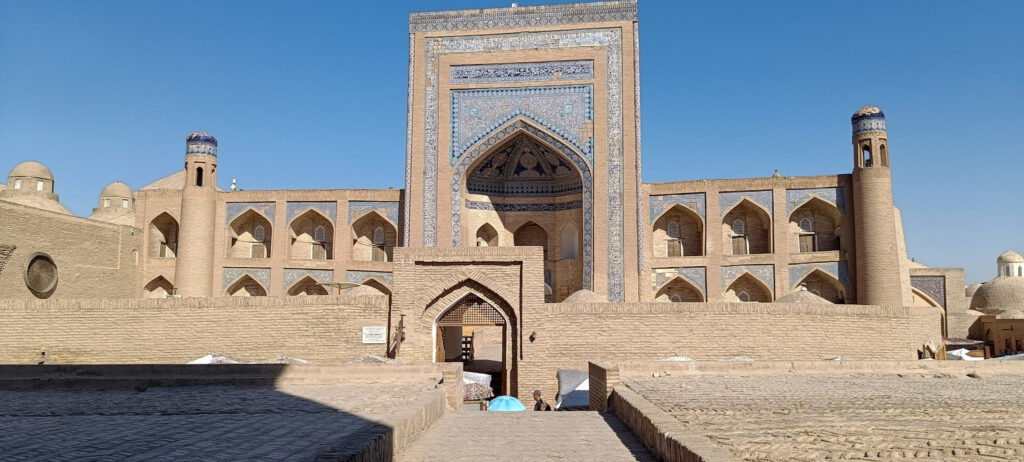
The Alla Kouli Khan Madrasah is right across from the Kutlug Murad Inaq Madrasah, and it was a later addition to the city’s spiritual learning, built in 1835. It’s perched on an artificial hill to make it look taller than everything else.
If you get close to it, you’ll see that the rooms (hurjas) are actually built on top of the domes of the nearby bazaar, and the Palvan Gate itself.
Beyond just a school, this was the city’s premier library. Alla Kouli Khan was a big believer of education, and donated the income from his nearby caravanserai (trader’s hotel) to fund the library and the students – kind of like an Uzbek Carnegie.
The tilework here is also interesting to compare with the nearby Kutlug Murad Inaq madrasah. While Kutlug went for unglazed terractotta, Alla Kouli Khan’s madrasah is covered in the classic Khiva blue and white majolica.
The Toshhovli Palace (The Stone Palace)
The Toshhovli Palace was another contribution by Alla Kouli Khan to the city of Khiva. The word “Toshhovli” literally translates to “Stone House”. It’s a winding labyrinth of over 160 rooms and several hidden courtyards that show the grand tastes of the Khan.
The local legend goes that the Khan was so impatient to move into his new gaff that he executed the first architect for not finishing the project fast enough. It took the work of 1,000 enslaved people and eight years to complete.
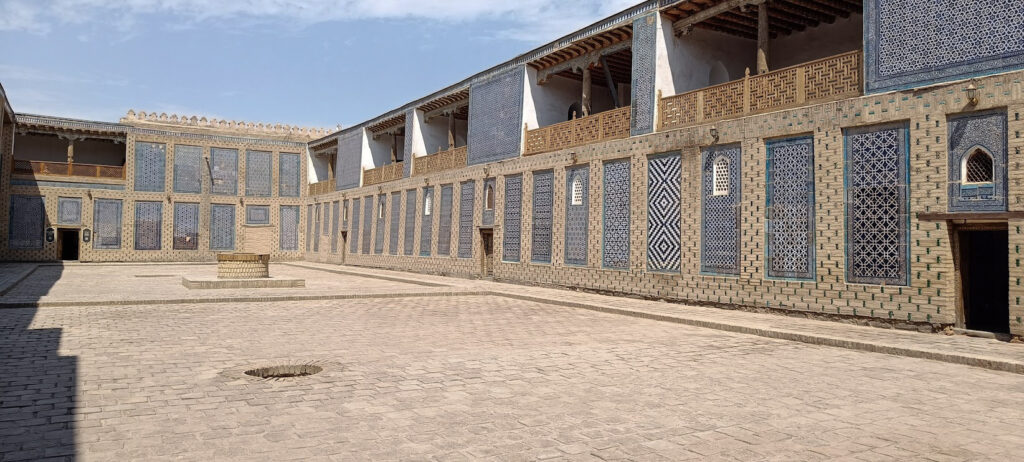
That slave trade is a dark part of Khiva’s history that you won’t often get from walking tours, and it carries on inside the walls of the Toshhovli Palace. The Harem Courtyards are the most architecturally impressive part of the palace, but the history here is dark. At the time, the Khan’s harem was made up of both legal wives and enslaved concubines. The Khan had four legal wives, all of whom were obliged to be free Muslim women. His non-legal wives, however, were enslaved women acquired from slave markets. These women could not be Muslim, as free Muslim women could not be slaves.
The enslaved girls were first given to the Khan’s mother as servants. She provided them with an education to make them suitable for concubinage, and then they’d go through a process of selection to be concubines to the khan. Those “lucky” few that made the cut stayed in the harem until about the age of thirty.
Visitors were generally not allowed into the harem, but Jewish tradeswomen were permitted in to sell goods such as clothes and beauty products to the women of the harem. Today, you’ll still see local tradeswomen selling items like scarves, embroidered pillowcases, or other trinkets, to the tourists wandering the courtyards.
Mosques and Minarets
After the heavy history and architecture of the palaces, heading over to two of the city’s most famous mosques is a much calmer change of pace. Both of these places are quick visits, but should still be part of your things to do in Khiva as they add to the story of the city.
The White Mosque: Ak Mosque
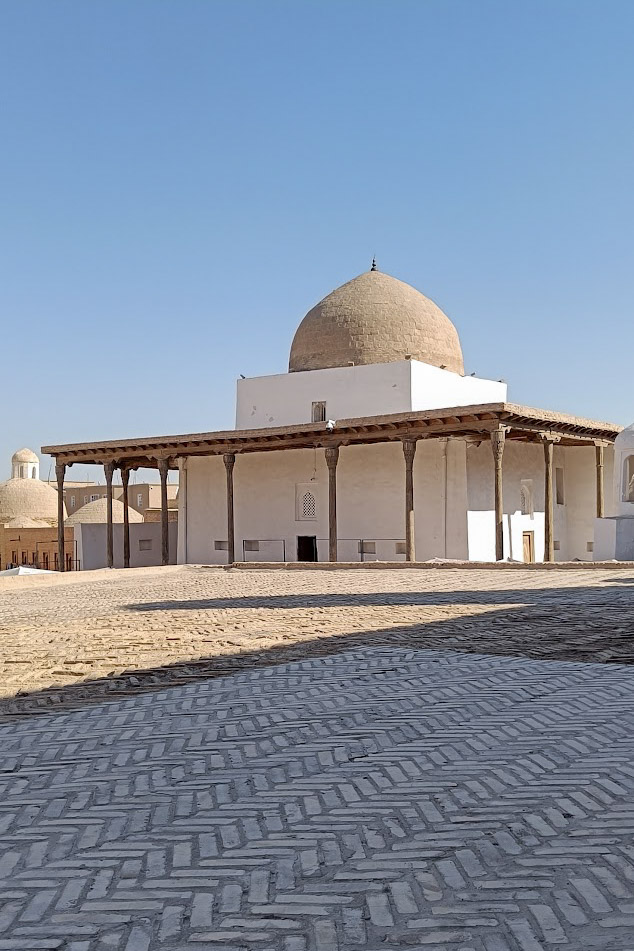
“Ak” means white, and this small, bright building stands out against the sandy-coloured brick that defines the rest of Khiva.
Unlike some of the grand royal mosques you’ll have seen on your travels through Uzbekistan, this was a “quarter mosque”, a place for the local people living in the surrounding streets. It’s a much simpler building than other parts of Khiva, but it’s one of the most beautiful as it shows a real moment in time of medieval Khiva.
The Wooden Forest: Juma Mosque
If you’ve been to Bukhara, you may have visited their Juma Mosque inside the Ark. The word “Juma” means “Friday”, and the Khiva version is one of the main sights of the city. It’s in the middle of the city, on the road that connects the West Gate with the East Gate.
It was first built in the 10th century, and then rebuilt again in the late 1700s. It’s a large one-story brick building with a flat roof. From the outside, it doesn’t look all that spectacular, but on the inside, you’ll find 212 wooden columns.
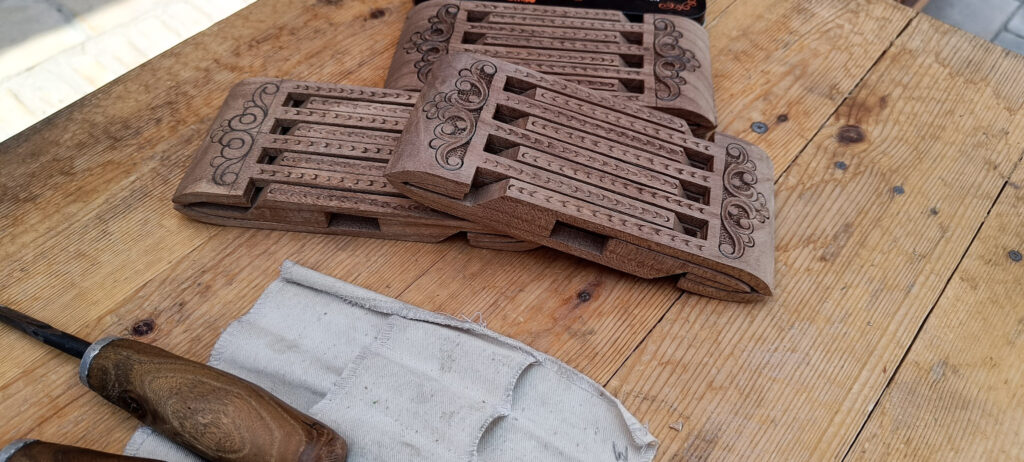
Wood-carving has a long history in Khiva, and you’ll often see craftspeople on the side streets working on items like folding book stands, jewellery boxes, or cutting boards, which tourists can take home as souvenirs.
In the Juma mosque, it’s one of the finest examples of Khivan wood-carving, each one unique and carved by hand.
Climbing the Islam Khodja Minaret
The Islam Khodja Minaret is Khiva’s tallest landmark. It was built by the Grand Vizier (akin to a prime minister) of Khiva between 1908-1910.
It’s connected to the Islam Khodja Madrasah, and both are in the traditional sandy-brick and blue-and-white tile you’ll have come to expect from Khiva.
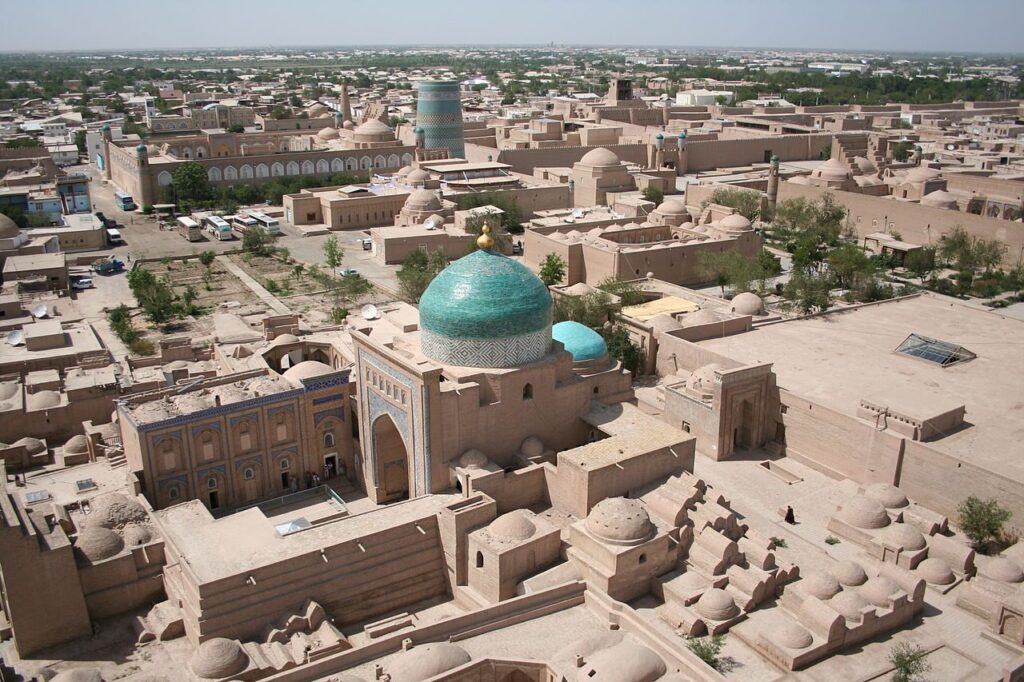
Climbing the minaret, however, is usually up there on the top things to do in Khiva, and it’s where you’ll get a wonderful view out over the desert city. It’s a steep climb, with 175 steps to the top. There’s a fee for this, usually around 100,000 UZS.
Khiva by Starlight
Last on my list of things to do in Khiva, we’re hitting evening time, and my absolute favourite place in the city to wind down the day: The Terrassa Restaurant.
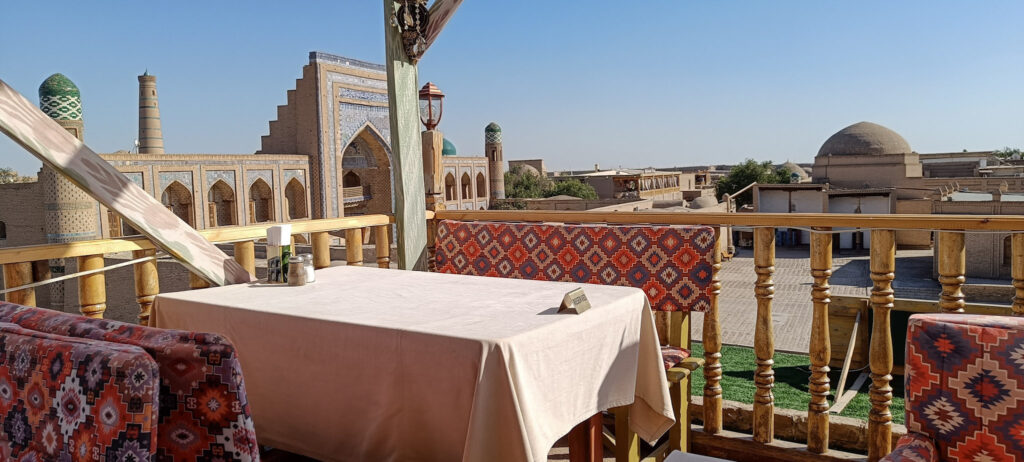
The Terrassa is right in the heart of the old city, overlooking an open square with the Kalta Minor Minaret in front of you. They’ve got an open rooftop terrace, hence the name, or a balcony that overlooks the square, as well as indoor seating. If you go, ask for one of the outdoor seats. The view is gorgeous, and there’s no better way to watch the sun set and wind down your day. Sitting inside, it’s still a lovely place, but not quite the same “wow” factor.
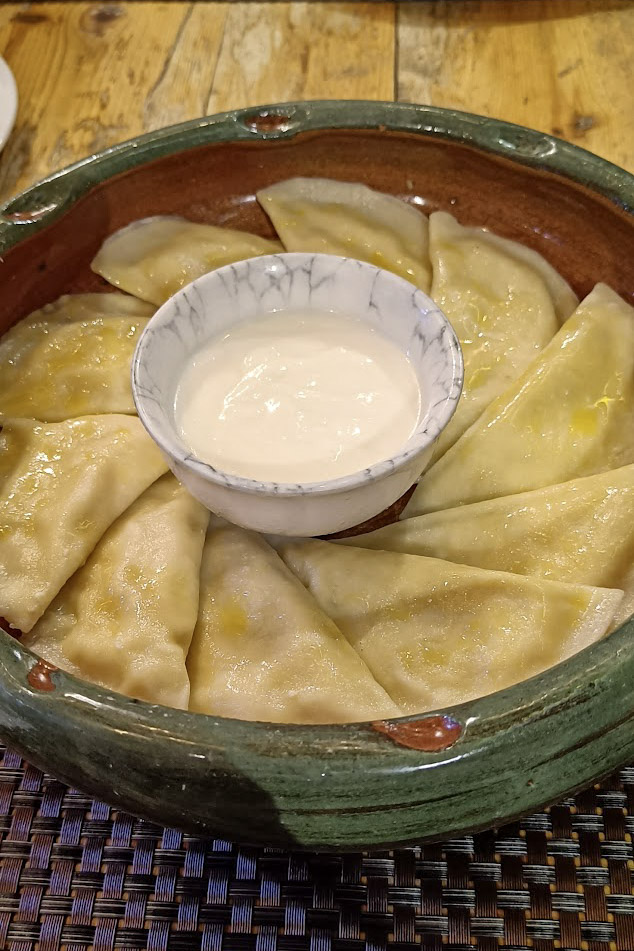
And for my fellow vegans, this is where you’ll get some great plant based manti and Khivan-speciality barak dumplings. (Just avoid the sour cream they usually come with!) If you’re looking for other tips about navigating Uzbekistan as a vegan, I’ve got you covered here.
Likewise if you need a hand planning your entire Uzbekistan trip, check out my 10 days in Uzbekistan itinerary.