
One Day in Hakone: How to Master the Circuit of Transport
On my first trip to Japan, I spent two nights in a ryokan in Hakone, and it’s still one of my Japan highlights. Whether you’re getting the full ryokan experience or just doing a day trip from Tokyo to Hakone, spending one day in Hakone is a wonderful part of any Japan trip.
A friend described the Hakone loop as ‘the circuit of transport’ and that’s hilariously spot on. If you do it right, it’s a seamless journey via pirate ships and cable cars. If you do it wrong, you’re swinging off a bus handle for 90 minutes while trying not to crush a local with your backpack (ask me how I know).
I loved the day we spent in Hakone, but like any traveller, there are things I wish I’d known or things I’d do differently now – so I’ve broken down your One Day in Hakone itinerary to make it easier for you!
Go it Alone or With a Tour Group?
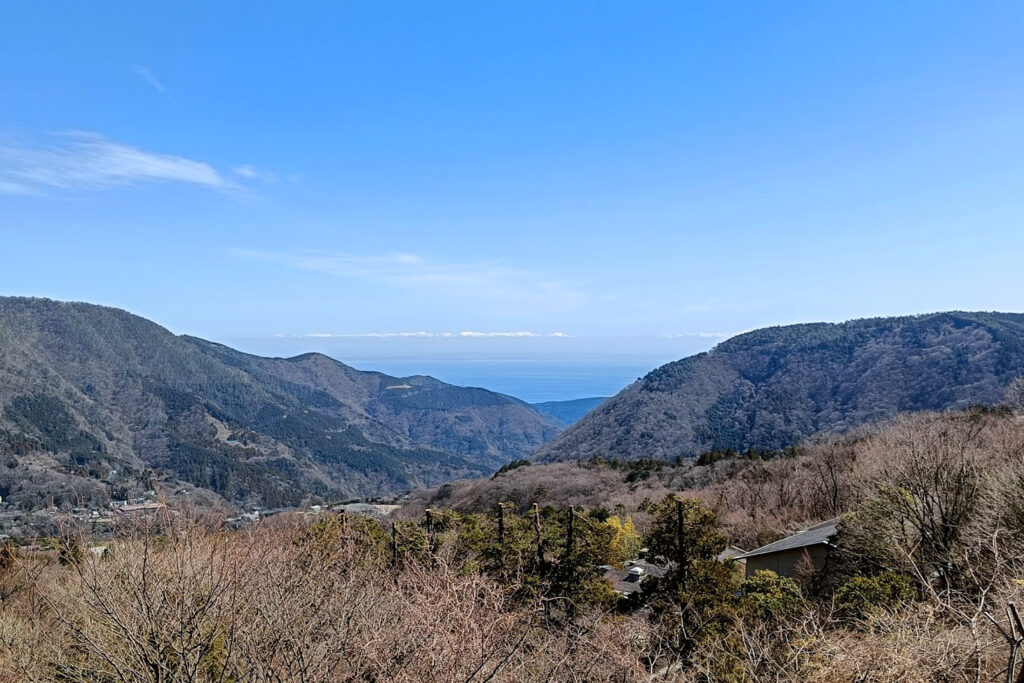
Before we dive into the meat of this post, the first decision you’re going to need to make is whether you want to explore Hakone on your own or as part of a tour group. If you’re planning your day as a day trip from Tokyo and the idea of navigating Shinjuku station at the crack of dawn feels like a lot, I totally get it.
Guided tours do exist and they’ll handle all the logistics for you. You’ll be with someone who knows the area, has taken hundreds of people through Hakone before, and all you have to do is show up and hope the sky is clear enough for a view of Mount Fuji.
Tours to Hakone from Tokyo
- Mount Fuji and Hakone Day Trip
- Starts from Shinjuku or Tokyo stations. Full day trip, including a cruise on Lake Ashi. Reasonably priced at around ¥10,500 (around £50)
- Hakone Tour from Shinjuku
- Similar tour to the above, great guide reviews, and an option to include lunch. More expensive at about ¥18,000 (around £85)
- Hakone Private Tour
- The most expensive option, at about ¥52,000 (around £270), but that’s for a group of up to 5, working out at £54 per person with a full group. It’s the most customisable option, with 5 different pickup locations.
- Includes the Hakone loop, plus a visit to Gotemba Premium Outlets, although the itinerary is customisable for your group.
If you’re more like me and like the freedom of a self-planned day trip, or you’ll be coming from a ryokan already in Hakone, then the rest of this post is for you. Being blunt, doing it solo isn’t that much cheaper than a tour, but the tradeoff is the freedom of choosing your own adventure.
I’ll talk you through exactly how to DIY the “circuit of transport” and get the most out of your one day in Hakone.
The Hakone Freepass: What’s “Free” about it?
The name “freepass” is a bit of a misnomer – it’s definitely not free, but it’s essentially your golden ticket for the Hakone loop. In 2026, the prices have shifted since I first used this, so here’s the breakdown of what you’re actually paying and whether it’s the right call for your Hakone day trip. You can learn more about the Hakone Freepass and purchase one here.
2026 Pricing
The pass comes in 2-day or 3-day versions. Even if you’re only spending one day in Hakone, you’ll still need to buy the 2-day pass as there’s no single day alternative.
| Starting Point | 2-Day Pass (Adult) | 3-Day Pass (Adult) |
| Shinjuku (includes return train) | ¥7,100 (~£37) | ¥7,500 (~£39) |
| Odawara (Hakone area only) | ¥6,000 (~£31) | ¥6,400 (~£33) |
TIP:
If you’ve already got the JR Pass, take the Shinkansen from Tokyo to Odawara and buy the cheaper “Hakone Area Only” pass. Don’t pay for the Tokyo return journey twice!
Should you upgrade to the Romancecar?
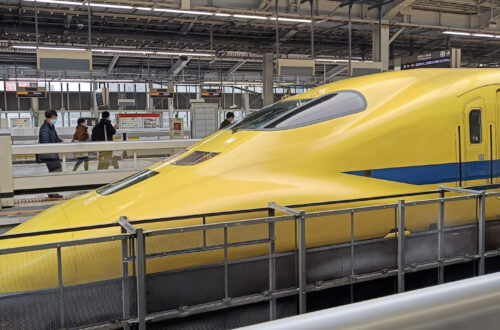
If you’re using the Freepass from Shinjuku, you’ll see two types of trains headed to Hakone: the regular commuter trains and the fancier Romancecar.
Despite the name, it’s not especially romantic and it’s not reserved for couples. It’s a “Limited Express” train, which basically means fewer stops, shorter travel time, and you get a reserved seat.
The Freepass covers the basic fare from Shinjuku, but to sit on the Romancecar, you need a “Limited Express” surcharge ticket. This will be about ¥1,200 if you buy it at the station, or ¥1,150 if you book online.
Is it worth it?
It depends. If you’ve already got a JR Pass, it’s not included. I personally don’t think it’s worth paying extra when you’ve already spent hundreds on the JR Pass.
If you’re currently in trip planning mode and you’re thinking about buying the JR Pass, I’ve written a cost breakdown here to help you figure out if it’s worth it.
On the flip side however, the Romancecar goes direct from Shinjuku to Hakone-Yumoto in about 75 minutes. The regular train takes about 95-110 minutes and usually involves a change at Odawara.
If you don’t already have the JR Pass, I’d say go for it: It’ll be a shorter, more comfortable ride straight into Hakone. If you’ve got the Pass though, it depends on whether you want to prioritise budget or convenience – both are fair choices.
Why you’re buying it
I’ll be working on a more comprehensive budget breakdown for a Hakone trip soon, but in the meantime, here’s what the Hakone loop actually costs if you pay as you go in 2026:
- Hakone Ropeway: ¥2,500
- Pirate Sightseeing Cruise on Lake Ashi: ¥2,220
- Tozan Mountain Railway: ¥460
- Hakone Tozan Cable Car: ¥430
- Typical Bus Journey: ¥1,000
- Total: ¥7,210
Is it worth it?
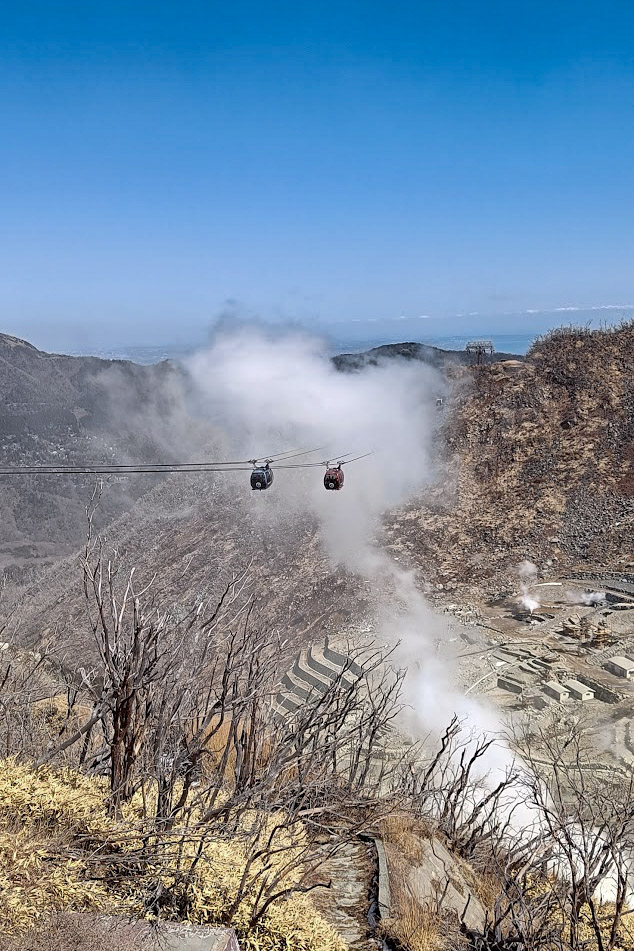
You may be looking at this and thinking “well, I might not want to do all of those things”, and fair point. If I had been doing pay as you go, I may have skipped some of these things myself. Having the Freepass made me feel like I needed to get my money’s worth, and honestly, I’m so glad I did because the whole loop is a complete experience in and of itself.
Each part links seamlessly onto the next, so if I’d skipped parts, I would have had to look up bus timetables, wait around for the next transport to take me onward, and honestly I would have wasted time and saved very little.
You can also see that the total cost is more expensive than the Freepass prices, but even putting that aside, having the pass means you have one ticket to content with – you don’t need to make multiple bookings and figure out what is what.
One Day in Hakone: The Itinerary
Morning: The Ascent
If you can, start early. Most tours from Tokyo set out around 08:00, getting into Hakone and onto the loop by about 09:30/10:00. If you can start your Hakone day out just as they’re leaving Tokyo, you’ve got at least an hour on the crowds.
The Hakone Tozan Railway
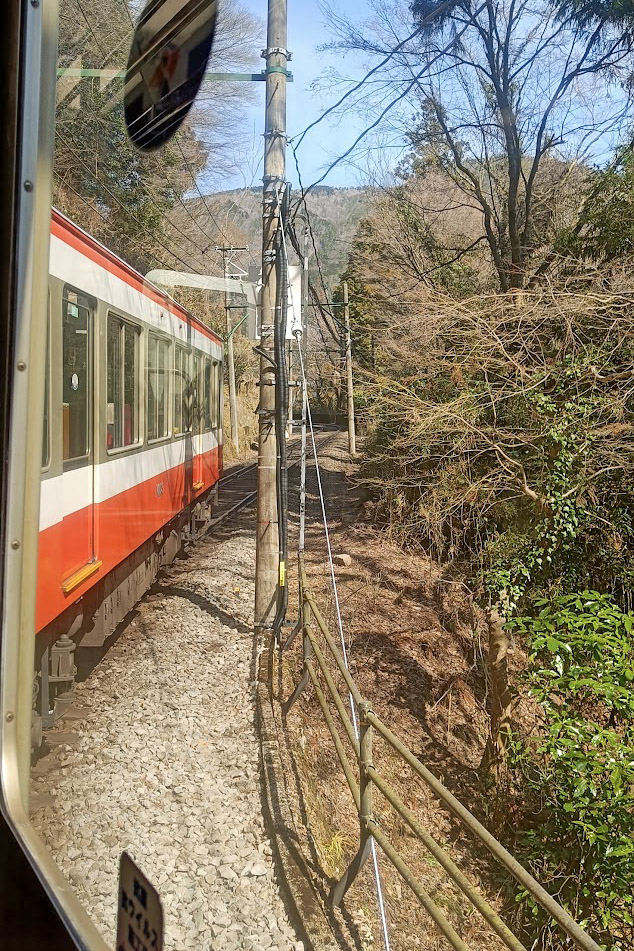
This railway seems like a regular small train, but its both a train and a funicular in one. At one point, it actually zig-zags its way up the steep mountainside. This is Japan’s oldest mountain railway, modelled after the Bernina Railway in Switzerland.
The Route: Hakone-Yumoto to Gora.
The Zig-Zag: To climb the steep 8% gradient, the train uses three switchbacks. You’ll notice the driver and the conductor swap ends of the train while you sit there wondering if you’re going backwards.
The Hakone Tozan Cable Car
While the name “cable car” might bring to mind a bubble hanging from a wire, like the one I’ve written about in my Bolzano posts, it’s actually a funicular, a cable pulled train. It runs in a straight line from Gora to Sounzan.
Once you get off the Hakone Tozan Railway, the platform for the cable car is right next to the station. There are also a couple of small shops selling gifts and souvenirs, and naturally, you can get your fix of little bottles of hot tea.
The platforms are built on a slope, so you’ll be standing on an angle while you wait. It’s only about 10 minutes journey time, but saves you the uphill hike!
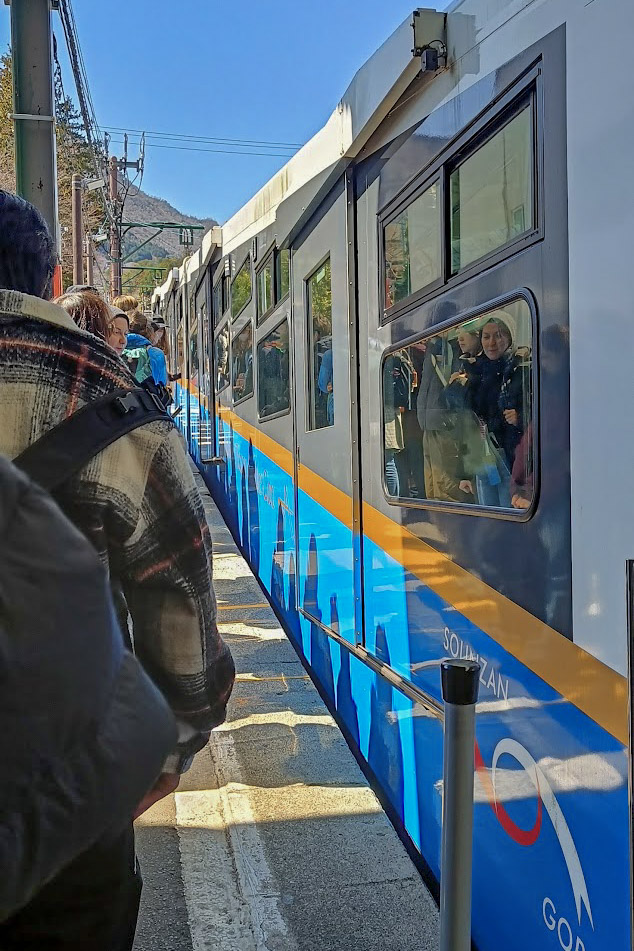
The First Ropeway Leg: Sounzan to Owakudani
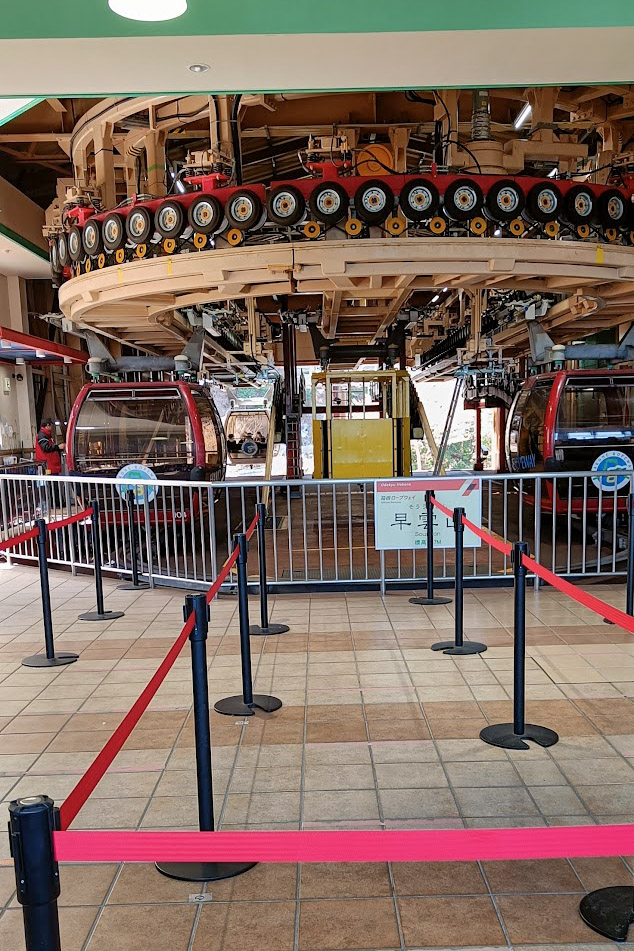
Once you get off the cable car, you’re going to make your way to the gondolas for the ropeway (which, in my opinion, are much closer to what I imagine a cable car to be).
Don’t be put off by the queues, the gondolas arrive every minute and hold about 18 people each. You’re not going to be waiting long!
The Hakone Ropeway actually holds the Guinness World Record for being the most-used ropeway in the world. As you sail away from Sounzan, you’ll see why. The journey only takes about 8 to 15 minutes, but it’ll take you over dramatic, sweeping views.
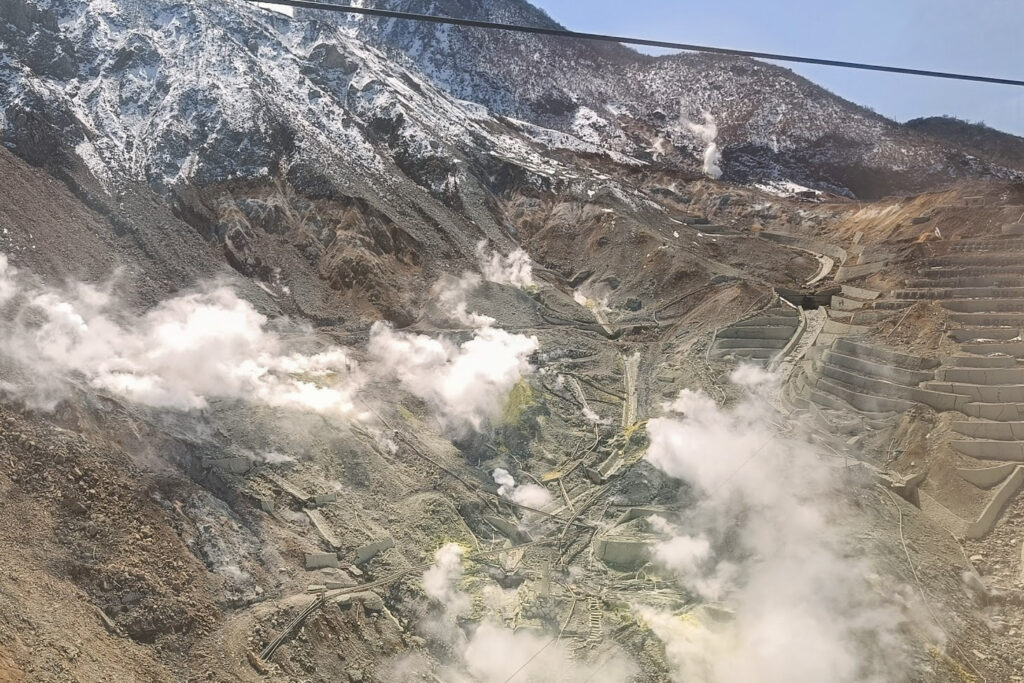
For the first few minutes, you’re flying over green forests, but as soon as you come over the ridge of Mount Kamiyama, the floor disappears and you’re suddenly 130 metres over the Owakudani valley. Here, you’ll see a scorched, prehistoric landscape of yellowing rock and puffs of white steam.
Known as “the Great Boiling Valley”, it’s a volcanic valley with active sulphur vents and hot springs. If the vents are particularly active on your visit, you’ll notice the rotten egg smell of sulphur, and in fact, if gas levels are too high, staff will hand out wet towels to cover your nose.
TIP
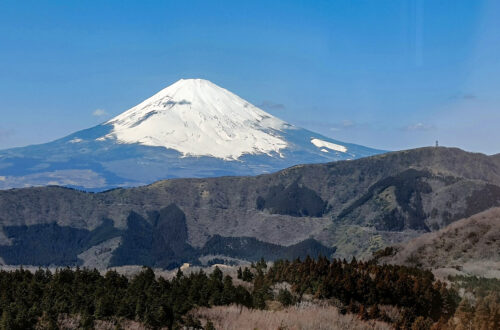
If you want the best views and photos of the valley, try to stand or sit on the right hand side of the gondola, in the direction of travel. As you come over the ridge, you’ll get a great view of the valley floor below. And, if the weather is behaving, a perfect view of Mount Fuji in the distance.
Afternoon: Volcanos and Views
Owakudani Station
Once you’ve climbed off the gondola, you’ll be at Owakudani station. This is the highest point of the loop, and it feels positively sci-fi – you’re surrounded by the volcanic landscape, the smell of sulphur hanging heavy in the air, billowing steam in the distance.
The Black Eggs (Kuro-tamago)
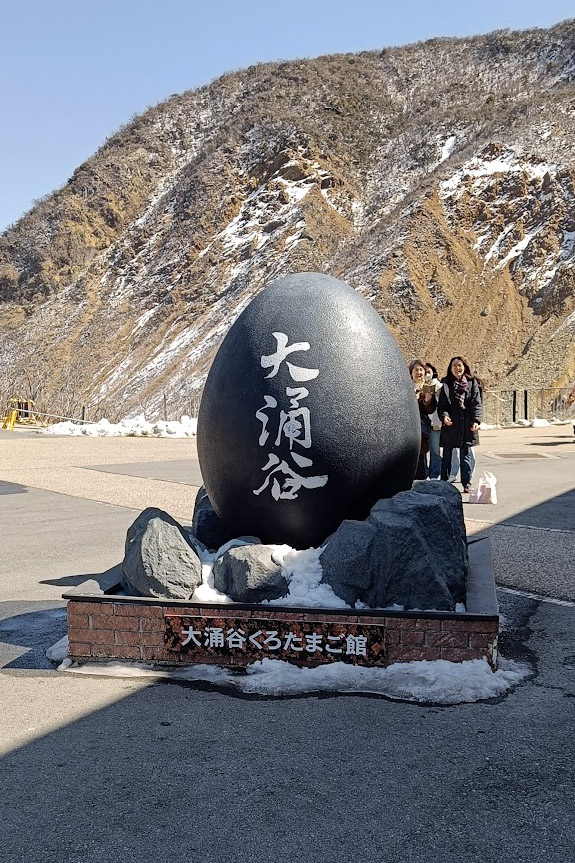
You’ll see a massive statue of a black egg outside the station – this is a nod to the local delicacy of black eggs. Local folklore says eating one egg adds seven years to your life.
They’re just regular chicken eggs, but by being cooked in volcanic water, the sulphur and iron turn the shells pitch black.
Obviously, these aren’t vegan. But for non-vegans, they’re sold in bags of five and you can’t just buy one. If you’re travelling solo, you’re looking at a 35 year life extension and a very high protein lunch that Gaston would be envious of.
Owakudani Station Restaurant
Located on the second floor of the station, this is your main lunch stop on your Hakone loop. They mostly do the Owakudani speciality curry, and the restaurant menu even has a labelled vegan friendly curry!
If you’re bringing a packed lunch, Owakudani is still a great spot to stop, sit and eat for a moment – assuming the eggy smell in the air doesn’t put you off!
The Hakone Geo-Museum
Right next to the station is a small visitor centre. The entry fee is ¥100. Inside, you’ll learn about the “Great Collapse” of Mount Hakone 3,000 years ago, which resulted in creating the valley. You’ll also see real-time monitoring of the gases, which is a bit of a reality check that you’re standing over a volcanic valley.
The Nature Trails
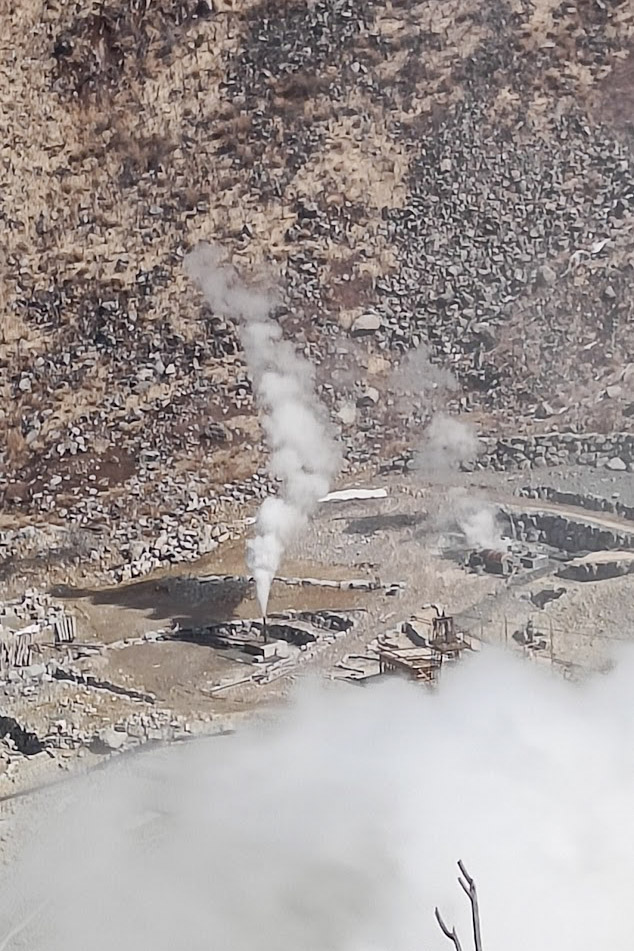
There’s a famous hiking trail that leads up into the heart of the steam vents, ideal if you’re brave or want to work off your lunch.
A word of warning: These are frequently closed due to high volcanic gas concentrations. You’ll sometimes need to pre-book a guided tour to access the Owakudani Nature Study Path for safety reasons.
If the trails are open, it’s a 40 minute round trip. You’ll get closer to the yellow sulphur deposits and the bubbling pools where they boil the eggs. You can check the status at the station entrance before you start walking.
The Gift Shop
Yet again, you’ll see a ton of black eggs. You can buy everything from black egg-shaped sweet cakes to Owakudani curry in boxes to take home.
The Second Ropeway Leg: Owakudani to Togendai
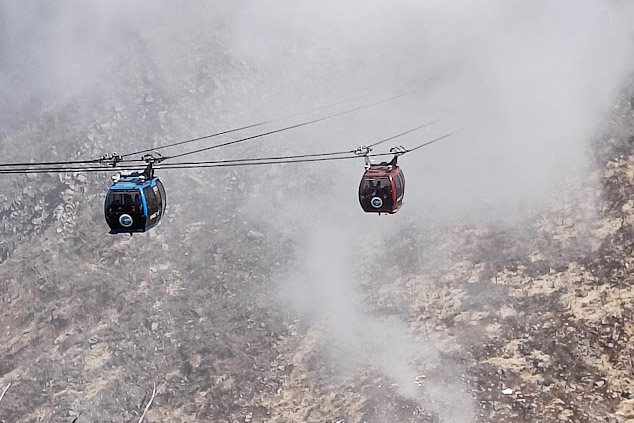
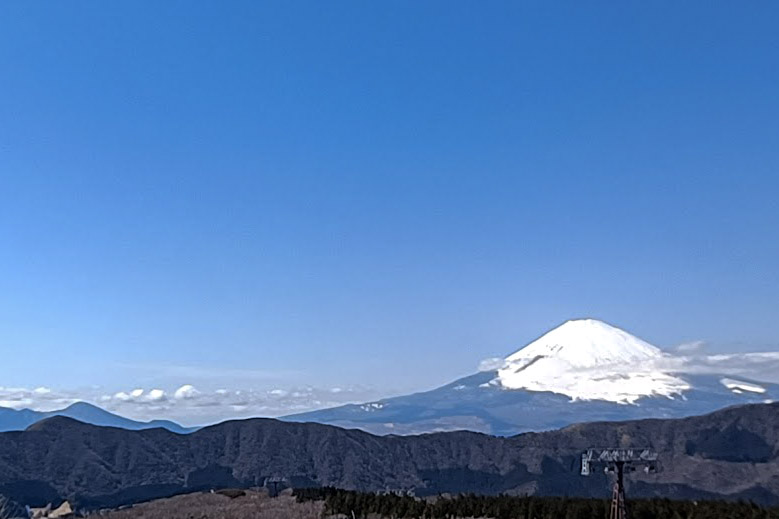
After lunch and a wander around Owakudani, take the second half of the ropeway down to the lake (Togendai). This is usually the best spot for Fuji photos if it’s a clear day. As the gondola comes over the hill leaving Owakudani, look straight ahead: You’ll see Fuji with Lake Ashi at the base, it’s a classic “Japan postcard” view.
The journey time is about 15-20 minutes down to the lake. The ropeway technically stops at a station called Ubako on the way down. Most people stay on, but if you want to escape the crowds for a minute, there are some quiet forest paths and older onsens around here.
A note:
From time to time, parts of the ropeway are closed for maintenance. In 2026, the Owakudani to Togendai leg is closed until February 20th. This leg was also closed on my journey, and the alternative is a replacement bus from the volcano down to the lake. It can be a long wait, and it’s less scenic, but it gets the job done.
Togendai Station
Togendai is the end of the ropeway and the start of the lake. It’s a large building that acts as the main hub for the ropeway, the buses and the cruise ships.
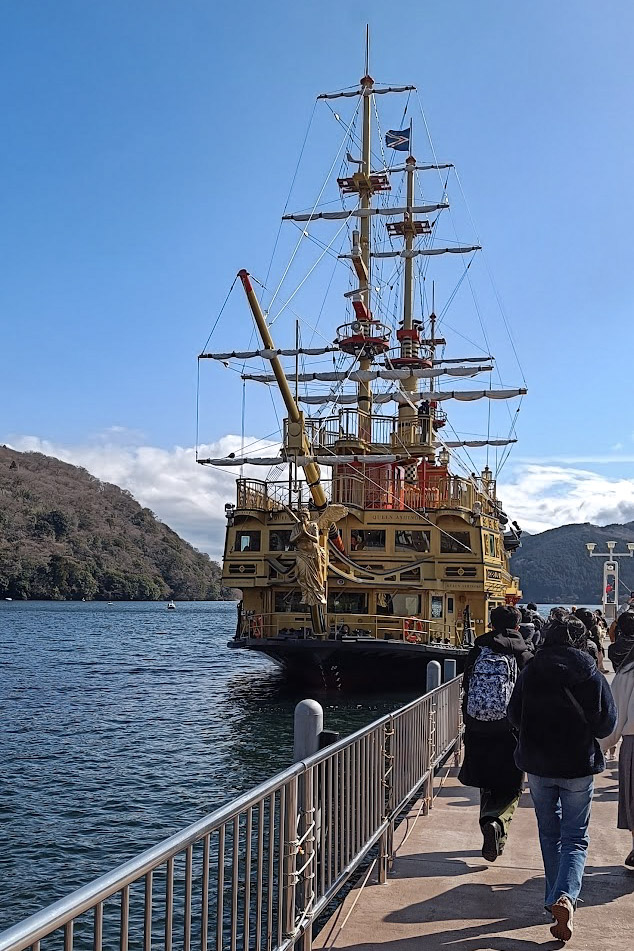
To transfer on to the Pirate Ship, you don’t have to leave the building. You just head downstairs to the basement level which opens up onto the Pirate Ship pier.
If you didn’t eat up in Owakudani, there’s also a cafeteria style restaurant at Togendai with big windows overlooking the lake. The restaurant has a wider selection than the one in Owakudani, but for my fellow vegans, french fries is all we’ve got!
The Pirate Ship: Crossing Lake Ashi
Once you’ve gotten out onto the pier for the pirate ship, you’re onto the final main attraction of your one day in Hakone. Your Hakone freepass covers the standard fare, so just show your ticket or scan your phone and walk on.
It feels a bit ridiculous getting onto a pirate ship in Japan. It’s very touristy and makes absolutely no historical or cultural sense. But in reality, it’s actually great craic. Standing out on the deck in the wind, looking out at Mount Fuji over the water, all I was thinking about was how incredible it was that I was here witnessing this. Well, that, and “could the woman next to me please remove her elbow from my ribcage”.
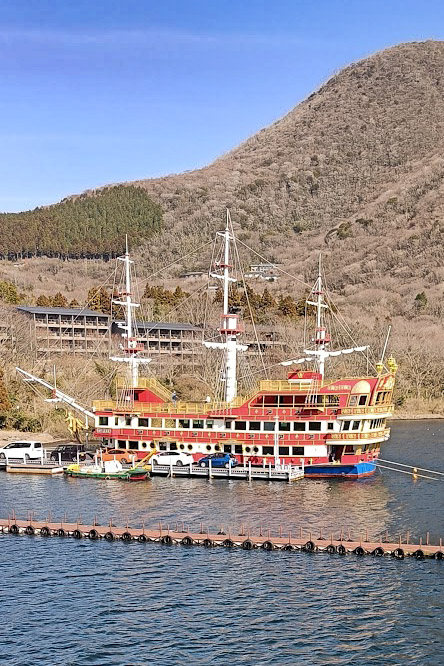
There are usually three ships in rotation: The Royal II (red), The Victory (black) and The Queen Ashinoko (gold). The gold one is particularly fancy inside.
The cruise takes about 25-40 minutes depending on which port you’re heading to.
- The Crowd: As soon as the gates open, there’s a mad dash for the top deck. Try get towards the front of the queue by queuing early, and follow suit. There’s a limited number of seats on the top deck, so if you want the views and the photos, get up there as quick as you can. Once you’ve claimed a seat, be warned: Someone else will sit there if you stand up to take a photo for a second.
- The Wind: It is windy. Even in summer, the winds on the lake are brisk. In winter, it’s icy. Dress warm.
- My tip: Get up to the top for the first ten minutes to get the view of Fuji reflecting in the water. Once you’ve appreciated the view, gotten your photos, and your fingers have gone numb, go back inside to the lower decks. There are large windows and you’ll still get a great view, without needing to elbow a tour group out of the way.
The First Class Upsell
At the front of the ship, there’s a sectioned off area. This is “Special Cabin” (First Class) and costs an extra ¥600 (about £3) to enter.
If the ship is absolutely packed, it could be worth it to pay a little extra. It’s quieter, seats are nicer, and there’s a private deck at the front for better views and photos. If the ship is quiet or you already got a good spot on the main top deck, don’t bother.
What to look for from the water
Mount Fuji: Duh. If the mountain is out, she’ll be towering over the north end of the lake.
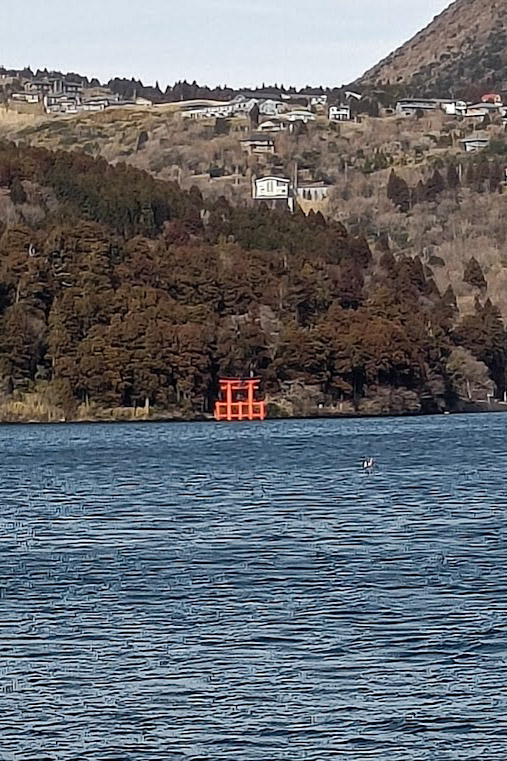
The Floating Torii Gate: About 10 minutes before you dock at Moto-Hakone, look to the left. You’ll see the red torii gate of Hakone Shrine standing in the water. It’s hard to get a good photo from a phone camera because of the distance, so just appreciate the view.
Kuzuryu Shrine: You might see a smaller red gate further along the shore, this is the “Nine-Headed Dragon” shrine.
Where to get off
The ship stops at two ports on the south end of the lake: Hakone-machi and Moto-Hakone.
My Recommendation: Get off at Moto-Hakone. It has the best bus connections back to the start.
Evening: The Descent and the Sweaty Bus
Once you’re back on solid land at Moto-Hakone, you’ve officially completed the scenic portion of the loop, and there’s just one more thing left on your Circuit of Transport: the bus back to Hakone. This part is like doing the dishes after a really great meal: a bit of a chore, but worth it for the experience you just had.
The Hakone Tozan Bus
The bus stops are right by the exit from the Pirate Ship, and you need to look for the ‘H’ or ‘R’ line buses at the terminal. These will take you back down the winding mountain roads to Hakone-Yumoto station where you started this morning.
The bus gets incredibly crowded, especially towards the end of the day when everyone’s leaving the lake at the same time.
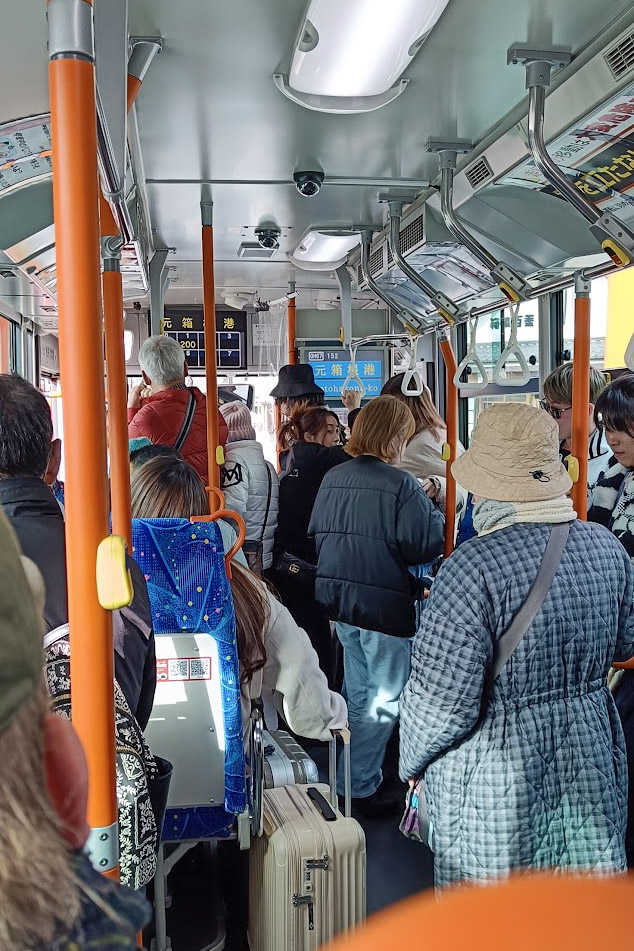
Tip: Get to the bus stop about 15 minutes before you actually want to leave. Being at the front of the queue is the difference between a seat and a 35-minute journey working your core by trying to stay upright around the hairpin bends.
Back in Hakone-Yumuto
Depending on when you set off this morning, you’ll likely be back at the main station between 16:00 and 18:00.
If you’re staying in a ryokan, some offer a shuttle bus from the station. Most ryokans also expect you to be back and ready for dinner by a certain time, so be sure to check this before leaving in the morning.
If you were only spending one day in Hakone and you’re heading back to Tokyo, then your choices are the Romancecar or Odakyu line back to Shinjuku, or getting a JR train from Hakone station on to Odawara and changing there.
Where to Eat
If you aren’t eating in your ryokan, Hakone has a charming main street full of shops. Many of them close surprisingly early, around 18:00, so don’t hang about too long if you were planning on getting dinner in the town. If you’ve missed the dinner window, there are a couple of convenience stores in the town where you can grab a quick bite to keep you going until you get back to your hotel.
For vegans:
Finding a solid vegan dinner in town can be a bit of a mission. I’m currently working on a guide on where to find vegan food in Hakone, so keep an eye out for that or sign up for my mailing list.
Final Thoughts: Is One Day in Hakone worth the Circuit?
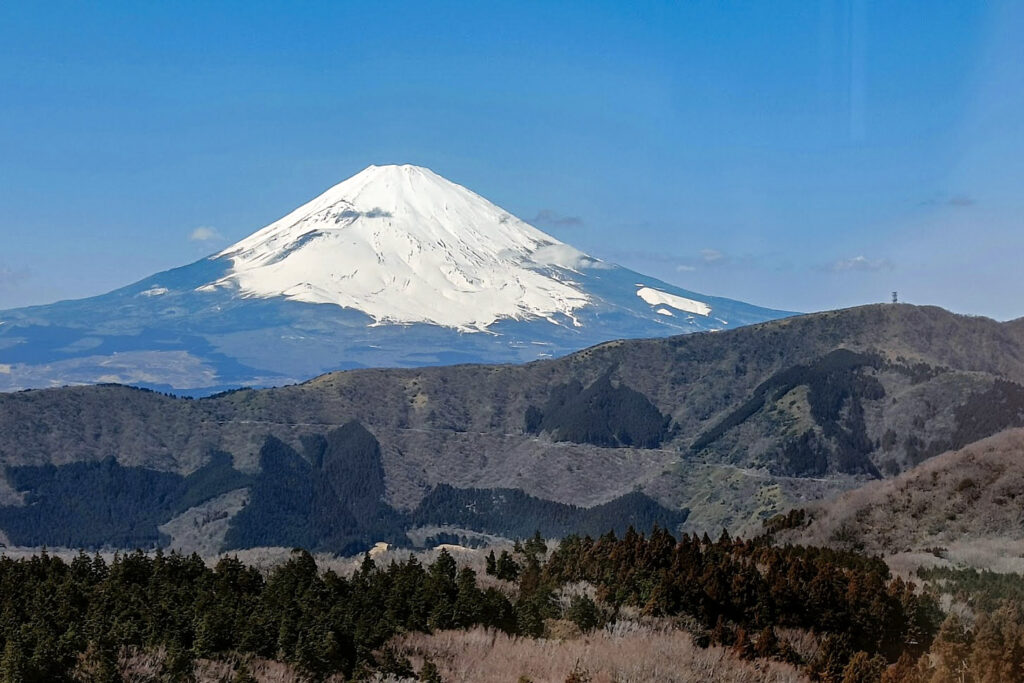
Hakone is often touted as a must-do for travellers to the Tokyo area, and while it is a total tourist trap, it still manages to be pretty magical. It’s busy, but not as crowded as Tokyo, and being out in nature all day is calming and restful. In the town, time moves slowly, and out on the Hakone loop you’ll see a mix of volcano valleys, forest, lake, and Mount Fuji herself.
For many first time visitors to Japan, including me, we all tend to hit up The Golden Route of Tokyo, Kyoto and Osaka. Adding in one day in Hakone can still fit with this itinerary, and adds in a side of Japan away from the neon lights of Osaka’s Dotonbori or Kyoto’s shrines.
For me, it’s not somewhere I would return to on my next visit, but that’s because Japan is a 12 hour flight for me, so I want to fit in new experiences each time. For someone who’s never been though? Absolutely go. It’s a great day out, and a wonderful experience, and worth every penny of the not-so-free Freepass.
If you’re in Japan-Planning mode, I recommend some of my other posts:
- Is the JR Pass worth it?
- The Shimanami Kaido Guide – If you like cycling, this is my absolute top Japan core memory
- The Knot Shinjuku – my go-to hotel in Tokyo
- Luggage Forwarding in Japan – if you’re planning a multi-city trip, this will make your life much easier