
Manner Mode: 10 Japanese Train Rules Every Good Traveler Needs to Know
Everyone knows the stereotype of an Awful Tourist: the loud, boorish figure causing a pile up at the bottom of an escalator, dragging too many bags into rush hour public transport, or speaking English really loudly in the hopes that it magically translates into the local language.
Having lived in London for the last 15 years, I’ve definitely gotten annoyed at tourists standing on the wrong side of the Tube escalators, or getting in the way while I’m trying to get to work. But I’ve also been on the other side: I’ve gotten overwhelmed in a new city, fumbled over the local language, or made a faux pas I didn’t realise was a mistake until later.
One thing I did have to learn on my travels was Japanese train rules. Japan has some of the world’s most densely populated cities, yet it never feels as chaotic or loud as London. This is partly because everyone is conscious of this etiquette that makes living (and commuting) on top of each other easier.
Before we dive into the Japanese train rules, a quick disclaimer: I’m not Japanese. I’ve been to Japan as a tourist, and I think it’s an incredibly special country and culture. Like you, I want to be respectful of that culture. If you’re reading this, you clearly do too. Everything here is based on my own experience and research. If you’re a Japanese resident reading this and I’ve missed something, please do reach out, I’d love to learn more.
Can I talk on the phone on Japanese trains?
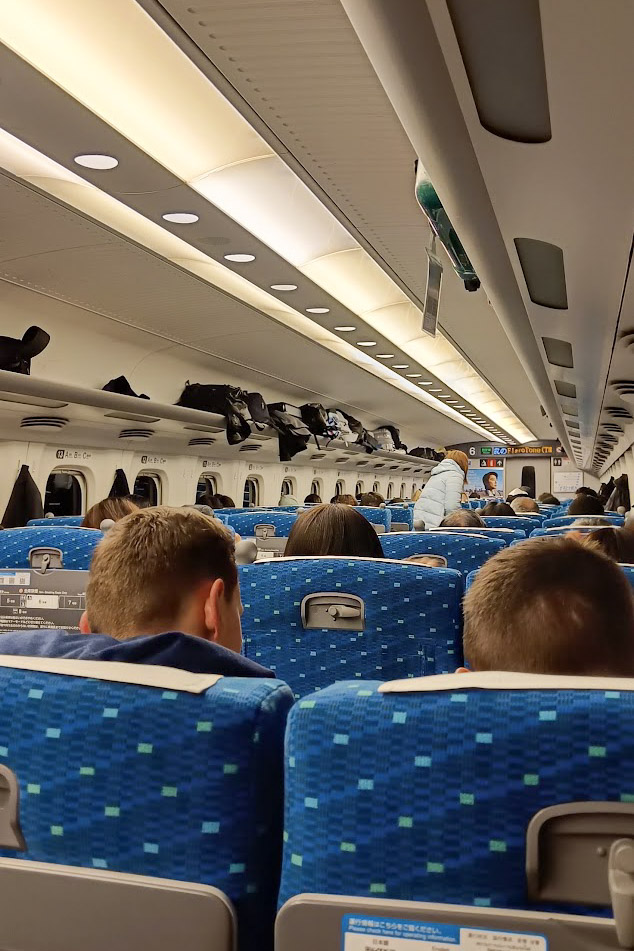
Ooh this is my favourite of all the Japanese train rules. I cannot tell you how much I loathe anyone taking speakerphone calls or playing music out loud in public. It’s rude, it’s unnecessary, it’s feral. And thanks be to Barry’s tea, Japanese train etiquette agrees with me.
Not only can you not treat the entire carriage to the latest TikTok trend, it’s even frowned upon to take regular phone calls (as in the one you hold up to your ear or use headphones for) in the main train carriage.
On longer trains, like the Shinkansen, there’s sometimes a phone booth in between carriages, or you can take your call in the “deck area”, the space between carriages where the exit doors are. Even then, be mindful of how loud you’re speaking. People typically only do this for very quick calls, rather than loud, animated chats.
Most people in Japan keep their phones on what they call “Manner Mode” (silent/vibrate) at all times. If you need to chat, wait until you’re off the train or stick to texting only. Your fellow passengers will thank you.
Can you eat on trains in Japan?
The rules for eating on trains in Japan vary depending on what kind of train it is.
If it’s a local or metro train, then generally the answer is no. Drinking water/bottled tea is fine. If you absolutely have to eat, then pick a small, neat snack like a small handful of nuts or a protein bar. Avoid anything that’s going to leave crumbs all over the floor, or has a strong smell.
If you’re travelling by Shinkansen (the bullet train), then it’s a whole other story. It’s totally fine to bring a meal or snacks with you, and seats even have a tray table that fold down.
The traditional Shinkansen meal is an “Ekiben” (station bento), which you can buy in stations. You’ll often see regional specialities, and you can even get ekiben that have self-heating pads to warm up your food.
However, like any Japanese train rules, you still need to be considerate of your fellow passengers, so avoid any strong smelling foods – best to skip the microwaved fish – and clean up after yourself.
Can I bring luggage on the train in Japan?
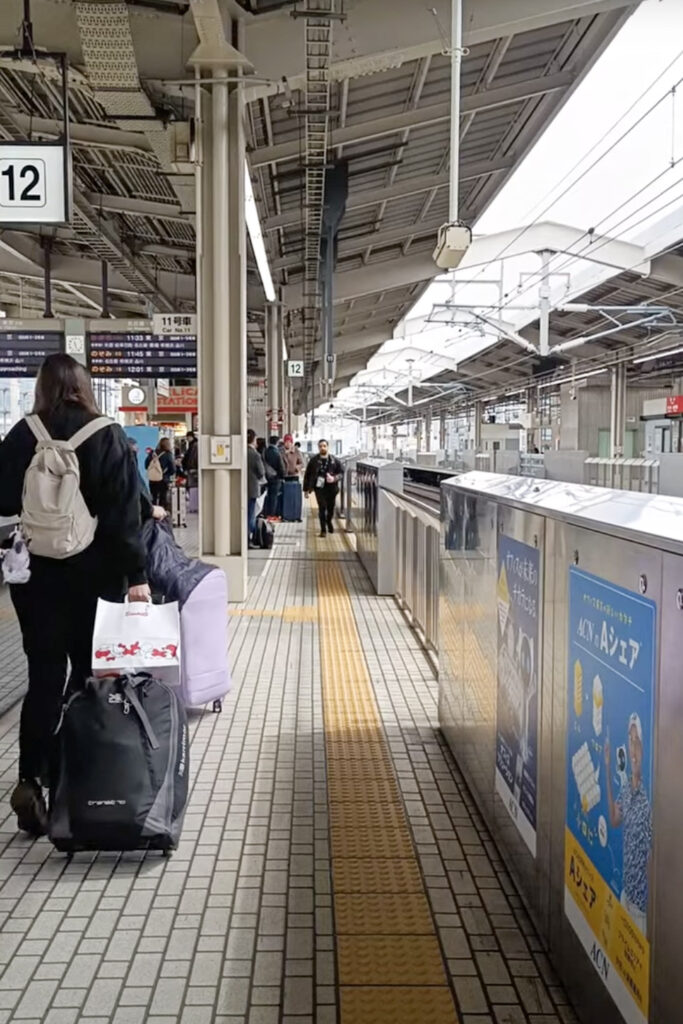
If they’re smaller cabin bags, you’re all good on both metro trains and Shinkansen.
For larger luggage:
On metro trains, avoid travelling at rush hour. It gets extremely crowded, so neither you nor your fellow passengers are going to be having a good time with a massive bag.
On Shinkansen, you can bring luggage that has under 160cm total dimensions – basically a regular suitcase size. For anything larger, you need to book the oversized baggage area. There’s a limited number of spaces for oversized baggage in each car, so do book in advance. I’ve got a further guide to JR train travel here.
How do the “Women Only” cars work on Japanese trains?
In some Japanese train stations, you’ll see markings on the ground indicating where the women-only cars are going to stop. You’re usually able to spot them by the little lady figure you see on bathrooms, or because the signs are pink. On some lines, the “women-only” rule only applies during rush hour on weekdays. Check the sign for times and days – if it’s off peak, any gender is welcome to use the car.
These cars were introduced to make women feel comfortable, lowering the risk of sexual harassment and assault. The earliest female-only cars were introduced in the 1910s, originally intended for schoolgirls in Tokyo.
Then, around the 1990s, groping and sexual assault cases were at an all time high on public transport, leading to groups lobbying for more to be done. In the early 2000s, various rail companies in Japan started adding women-only cars. These days, most lines in Japanese cities have women-only cars during rush hour.
Like a lot of other social norms, the women only cars operate on an honour system. You’re not going to get arrested if you enter one as a man, but when its a system that exists to make women feel more secure, why would you want to breach that?
What are the rules for priority seats in Japan?
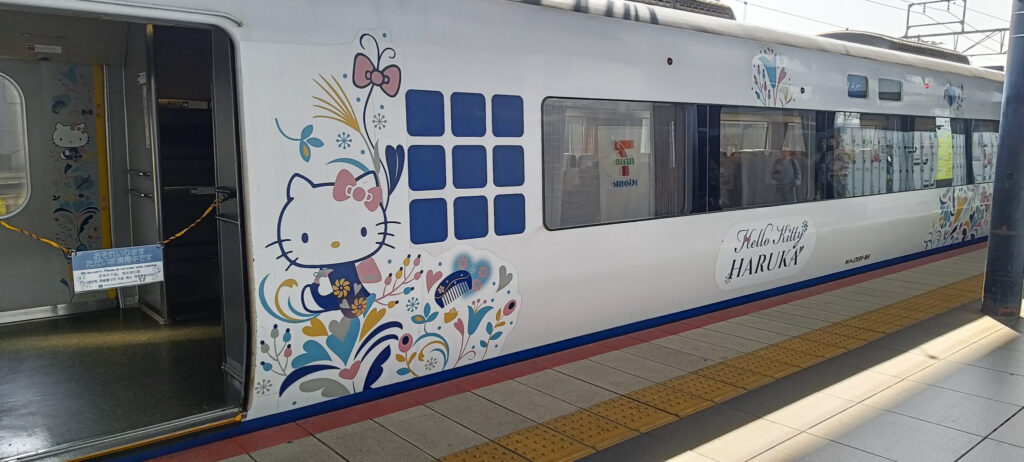
Like a lot of other countries, you’ll see priority seats on trains in Japan. These are usually upholstered in a different fabric to the rest of the carriage’s seats, and they’re clearly signposted in Japanese, English and symbols.
These seats are reserved for the elderly, disabled, pregnant, injured or those with infants.
Like in London or other cities, you can sit in these seats if the train isn’t busy, but if someone who needs the seat boards the train, you need to be ready to offer the seat without being asked. Nobody likes the person pretending to be asleep while someone in need hovers awkwardly near them!
Why is everyone so quiet on the train in Japan?
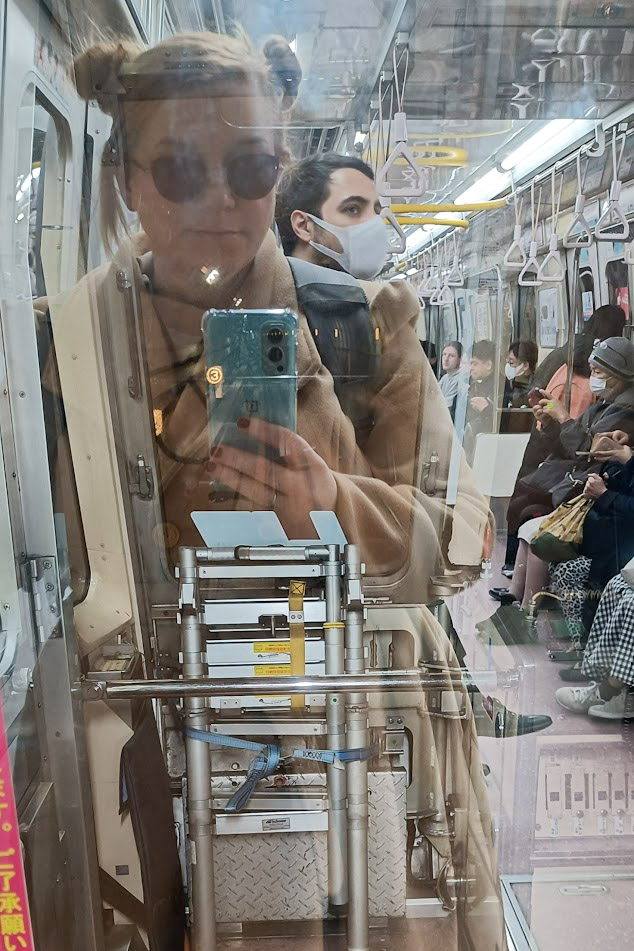
The calm and quiet of the trains in Japan is honestly one of my favourite things about them.
Call me a grumpy old woman if you want, but there are few things more infuriating to me than how society seemed to collectively decide that headphones are optional in public these days. I’m blaming Apple for removing the headphone jack.
Japan, on the other hand, is a dream. Nobody’s arguing with their partner on speakerphone or doomscrolling TikTok loudly. There’s a deep seated cultural value that emphasises respect, harmony, and not disrupting others (meiwaku). Japan is so densely populated that this social conscientiousness helps everyone have a more peaceful life.
How do I queue up on the platform?
In Japan, the queuing system for the trains is incredibly well organised. In many stations, you’ll see markings of numbers or symbols on the floor that indicate where the train car doors will open, and which number car you’re getting on.
Even in busy, crowded stations, people will form orderly queues, standing in the marked spots, to wait for the train.
It might sound like a no-brainer, but stand to the side and let other passengers off the train before getting on yourself. There’s no pushing or queue skipping, even during rush hour. The queue moves quickly and efficiently.
If you’re not sure where to stand, watch what the locals are doing and follow suit. In the Tokyo Metro or other major stations, there are station staff on the platform, who can help direct you.
Can I drink on the train in Japan?
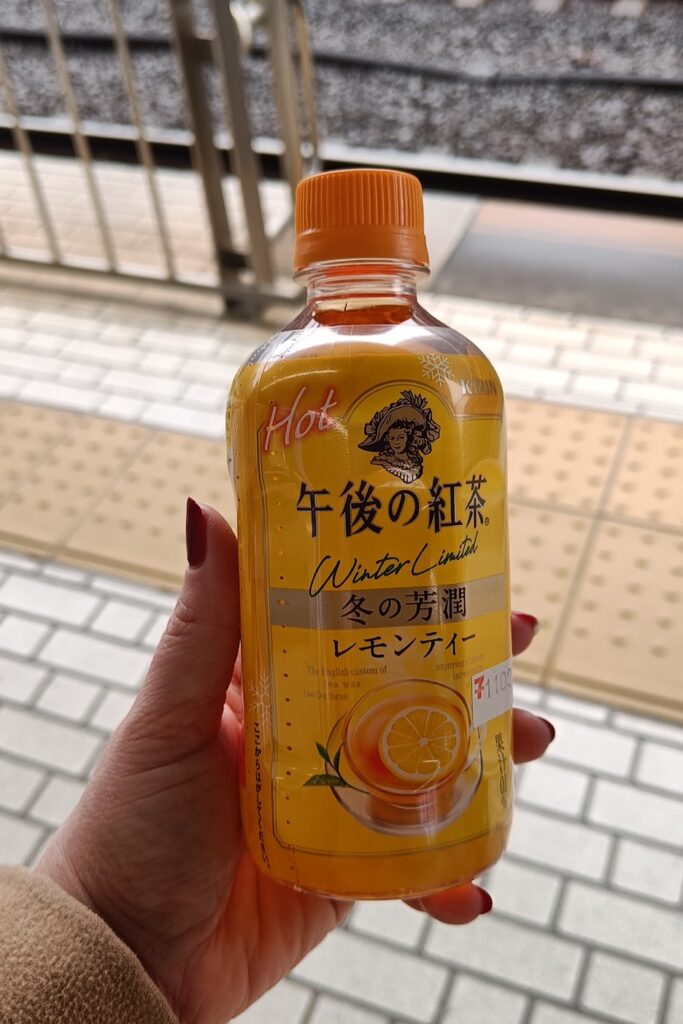
The Japanese train rules for drinking vary. If we’re talking water or tea, have at it.
If you’re eyeing up the cans of Asahi beer in 7-11 and want to bring along some “Journey Juice”, that’s only okay on the Shinkansen. It’s very common to see people sipping a can of beer or a highball while they eat their bento meals. On regular commuter or local trains though, it’s considered very, very poor form to be drinking on the train.
If you are going to drink on the Shinkansen, the same rules apply for every other aspect of Japanese train travel: be considerate of others around you. Don’t get drunk and loud, don’t make a mess, don’t be a nuisance to your fellow passengers.
Why are people sleeping on the train?
People sleeping on trains in Japan is a common sight. There’s a social acceptance of taking a small nap on a train, often called inemuri (sleeping while awake).
Japan’s got an incredibly low crime rate, so people feel safe to fall asleep, knowing their belongings are unlikely to be grabbed. The quiet and the rhythmic rocking of the train helps people drift off, knowing they’ll hear the station chimes and wake up before their stop.
There’s also a high-pressure, long-hour working culture. Many Japanese workers have long commutes and late nights in the office. The calm of the train gives them a chance to catch a quick respite from the day.
What happens if I miss the last train?
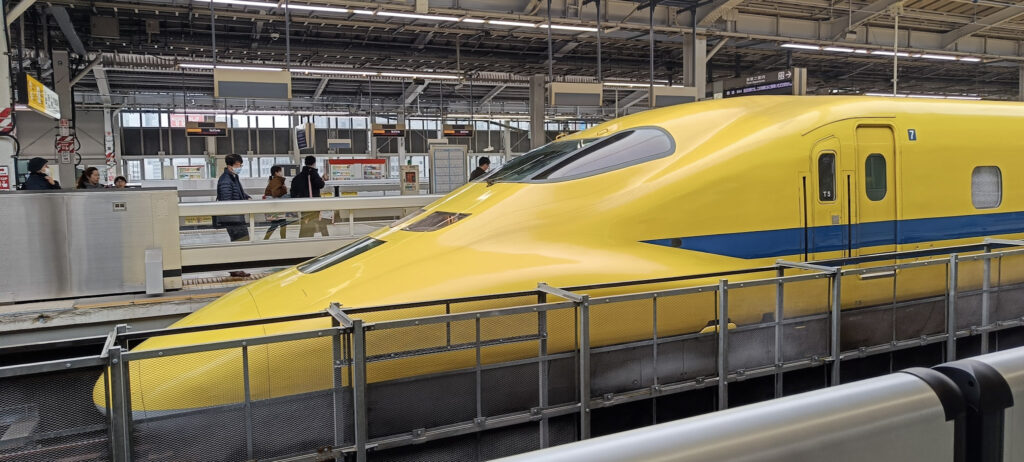
The last train in Japan is usually between midnight and 1am. Service tends to start again around 5am.
In an ideal world, you’d plan well enough to make sure you’re on the platform in time, but if you’ve missed it, your main focus should be on getting somewhere safe and warm. The most common options are:
- Taxi
- This is the easiest option, but it’s naturally going to be the most expensive. Uber exists in Japan, but it’s used as a taxi hailing service for licensed cabs, rather than a ridesharing service – the same way it works in Ireland and many parts of Europe.
- Night buses
- Some urban areas have night buses running until 1 or 2am.
- Capsule hotels
- You’ll find these near major train stations. It’s not the Ritz, but you’ll get a few hours sleep for roughly ¥3,000–¥5,000.
- 24 Hour Restaurants
- Hanging out in McDonald’s or a family restaurant like Denny’s is a common option. You’ll see people killing a few hours there until the first trains start running.
- Karaoke Parlours
- Another common option for those stranded by the last train. You can rent a private karaoke room for about ¥1,500–¥3,000. Once you’re in the room, you can sleep, hang out, or belt out a few Celine Dion hits while you wait for morning to come.
- Manga and Internet Cafes
- These places let you book a private booth, and some even have showers. It’s not unheard of for someone to nab a private booth in a manga cafe, then curl up and get a few hour’s sleep before the first train home.
Final Thoughts and Helpful Links
While Japanese train rules can seem overwhelming at first, they’re part of what helps make travel in Japan so efficient and easy. Most of the societal norms in Japan are based around being considerate to others, and it’s part of what makes Japan so pleasant to visit and travel around in.
For those travelling to Japan, a couple of things helped me get around easier:
- An e-Sim. I can’t speak or read Japanese, so being able to quickly translate something or check train times and routes on the go made my journeys far easier than they would have been otherwise.
- Google Maps: While in London, I usually favour CityMapper, in Japan, I found Google Maps better. They’ll even sometimes give you recommendations of which train car is best to get on, as well as platform information (although always double check).
- A Battery Bank: If you’re using your phone a lot to check routes, maps, timetables, buy tickets, and do translations, the battery is going to drain over the course of the day. Keep a battery bank in your bag so you never get charged.
- The JR Pass: If you’re planning on hitting multiple cities (like Tokyo, Kyoto, and Osaka), check if the JR Pass is worth it for your itinerary. I’ve written a deep dive on how to figure that out here.
- Luggage Forwarding: If the thought of dragging a suitcase through Shinjuku station during rush hour gives you a rash, use a Takkyubin service. I’ve written another post here about how the service works.