
Kinosaki Vegan Ryokan Stays – The Verified List
If you’ve already read my guide to finding a vegan friendly ryokan in Hakone, you’ll know I take absolute joy in finding places that cater to vegan travellers. Ever since that post went live, it’s my #1 most visited page on this site, so clearly I’m not alone in trying to find plant based goodness amidst a sea of bonito flakes.
I spent weeks earlier this year contacting ryokans in Hakone to update my list for 2026, and I’ve been doing the same for Kinosaki vegan ryokan stays. I haven’t made it there yet myself, but as I’m planning my own future travels, I wanted to share my research with you.
I know first hand how confusing all the FAQ pages can be, and filtering reviews by “vegan” or even “vegetarian”. If I’ve already done the work, why not share it with all of you? I reached out to 30 ryokans in Kinosaki to ask whether they could provide 100% plant based meals to vegan travellers, and I’ll be regularly updating this post as I get more information.
As vegans, it can be easy to write off some parts of the world as “not for us”, but trust me, if I can get by in somewhere like Kyrgyzstan, I can sniff out Kinosaki vegan ryokans for all of us to enjoy.
Like I did in my Hakone post, I’ll include a list of all of the Kinosaki ryokans that have confirmed the can accommodate vegan travellers, as well as the ones who can’t so you can save your time. As a side note, every single ryokan I’ve spoken to, whether they can do vegan or not, have been absolutely lovely. Japanese professionalism and hospitality is unmatched, so when I say that somewhere is not for us vegans, it’s simply about the food, and in no way a reflection of the standard or hospitality of their ryokan.
What’s Special about Kinosaki?
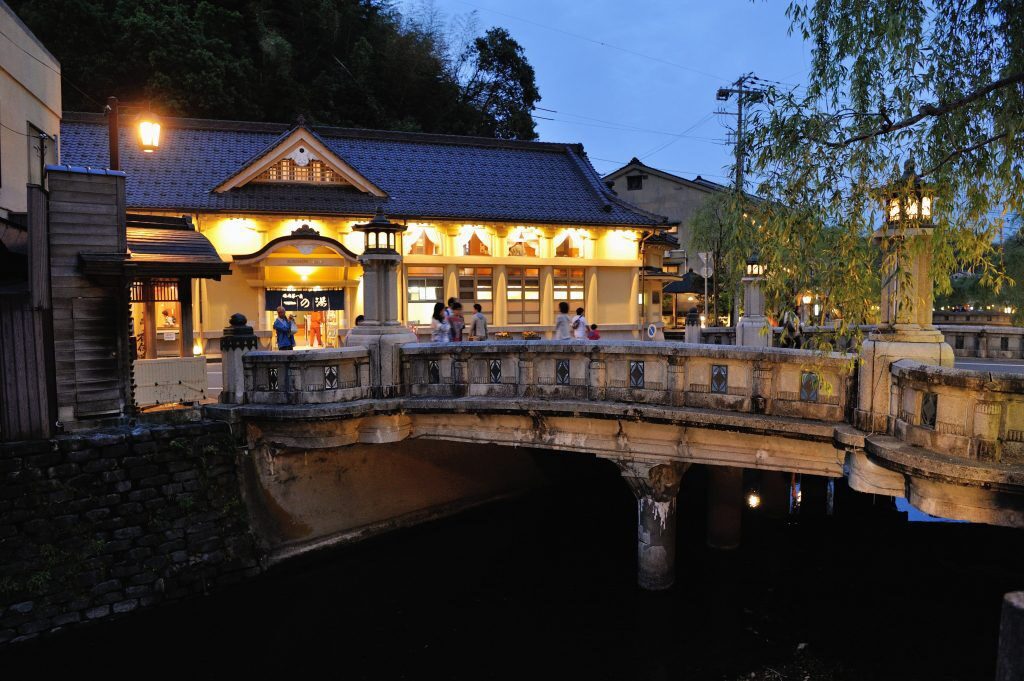
While Hakone is famous for travellers from Tokyo, Kinosaki is more likely to be somewhere you travel on to from Kyoto or Osaka. The town in Hyogo Prefecture has a history going back over a thousand years, and it’s famous for its seven public onsen.
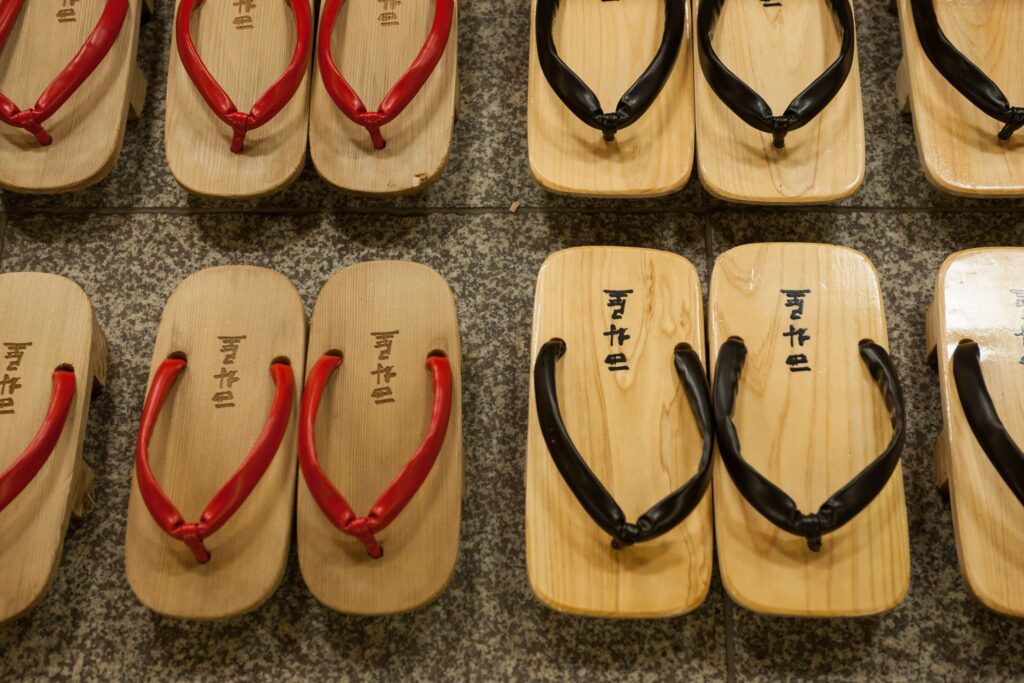
If Hakone is all about retreating into your ryokan for a private escape from the outside world, Kinosaki is more like an outdoor living room. The whole town is like one giant inn. Everyone wanders the streets in their yukata (light cotton robes, like a casual kimono), and you’ll hear the click clack of wooden geta sandals on the paving stones.
The big selling point of the town is the seven public onsen (yumeguri). When you stay at a ryokan in town, you usually get a digital pass that grants you access to all seven public bathhouses.
Each of the public baths has something slightly different about it, whether it’s a “healing property” or an architectural style. One has a waterfall, one looks like a temple, another has a beautiful outdoor view of the mountains. In Kinosaki, you’re basically doing a bath crawl and it looks so fun.
Also, for those of us with tattoos, the 7 bathhouses are tattoo friendly, not always given in Japan.
One of the other main draws of Kinosaki is the Otani River, lined with weeping willows and crossed with stone bridges. At night, with the lanterns glowing and the river reflecting the sky, it looks like stepping back in time.
For me, Kinosaki seems like somewhere that’s like being at a giant sleepover, or let into a museum after dark. It’s long been on my list of places to visit, so knowing that I can also have a Kinosaki vegan ryokan experience is just the cherry on top.
What is a Ryokan Stay Like?
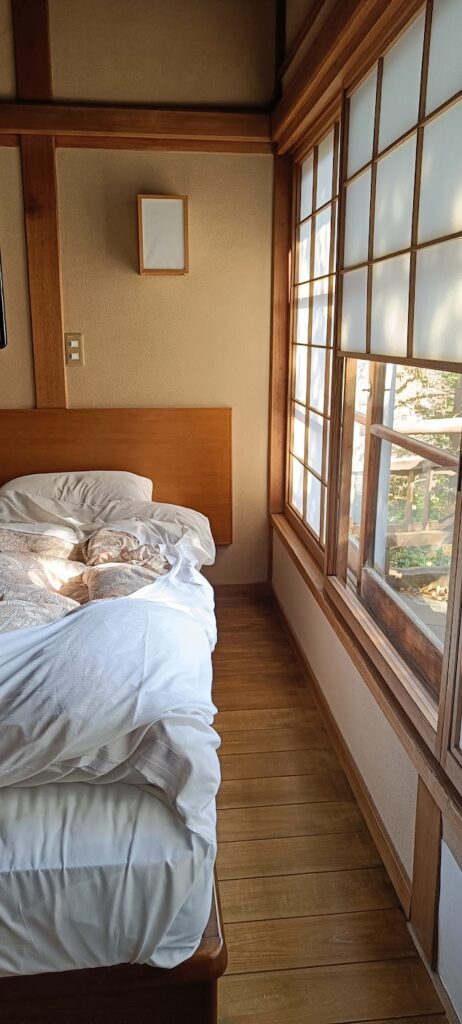
A ryokan is a traditional Japanese inn, and honestly, to anyone travelling to Japan, I’d say it’s a must-do. It’s a complete world away from utilitarian business hotels or some of the cool design hotels of Tokyo.
I’ve written about my own experience in a ryokan in Hakone here, which will give you an idea of what to expect from a traditional ryokan stay. In short though, it’s a world of tatami mats, sliding shoji paper doors, sleeping on futons, and the best hospitality you’ll ever experience.
In Kinosaki, it’s a bit different to Hakone, because it’s much more social. While you’ll still have your own private room and that incredible service, you’re encouraged to spend your time wandering the town. Most ryokans will provide you with a yukata and a small basket for your towel and soap so you can take part in the ritual of wandering the streets and going from bathhouse to bathhouse.
Meals in ryokans can vary too. In some, you’ll have meals served in your rooms, in others, it’ll be in a main dining room. If you see kaiseki on the menu, this is a really traditional part of the ryokan experience. It’s basically a very high end, multi course tasting menu – and it’s surprisingly filling. For us vegans, that’s where things get tricky.
Being an island nation, a lot of Japanese cuisine is fish-based. Even for otherwise vegetarian foods, it’s not uncommon to find that your tofu has been cooked in dashi (fish) broth, or comes with bonito flakes (also fish). While I was researching Kinosaki vegan ryokan stays, I explicitly asked about 100% vegan meals, including no fish flakes, broth, or other animal-based ingredients.
How much does it cost?
It’s also worth talking about the price. A ryokan stay is a whole experience, not just a place to rest your head for the night. And that hospitality and gourmet cooking doesn’t come cheap. My own stay in Hakone was ¥146,884 at the time (approx £720) for a two night stay, and this is fairly bang-in-the-middle average.
My stay was as part of my honeymoon, and we chose a cheaper hotel in other parts of the trip to make more room in the budget for the ryokan stay. If you’re ballin’, have at it, but if you’re watching the budget, this is the type of thing you plan around and choose a ryokan stay as your ‘highlight’ experience but cut back in other areas.
On the bright side, the ryokan price usually includes both breakfast and dinner, and in the case of Kinosaki, entrance to the seven public onsen. Outside of the upfront cost, you’re not going to be spending a lot. And let’s face it, it’s not like you can shove a wallet down your yukata (or can you?).
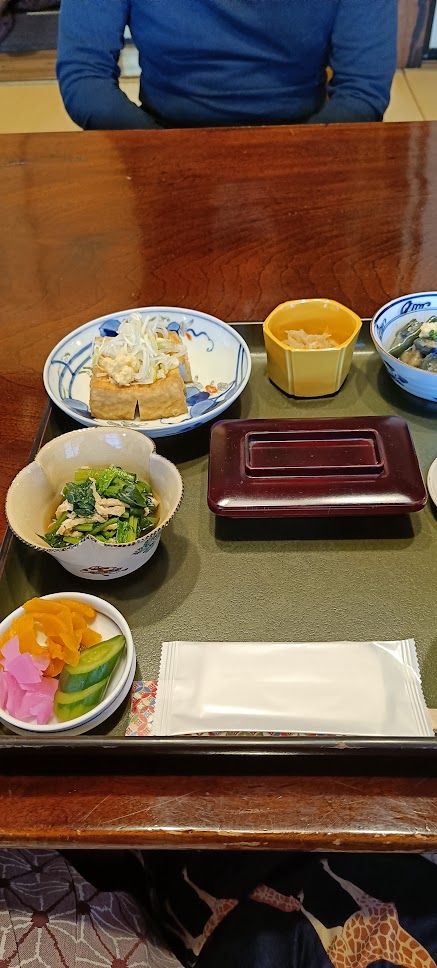
The Verified Kinosaki Vegan Ryokan Stays
As I mentioned earlier, I’ve reached out to 30 properties around Kinosaki to find out who actually offers a 100% plant based experience. During my research, I specified “no meat, fish, dashi, eggs, or dairy”, and asked for any special booking requirements the ryokan may have.
I know how many of you are searching for vegan ryokan stays right now, so rather than wait until all 30 respond to me, I want to get this post out as soon as possible so you can start planning your own trip. As I get more information, I’ll continue to update this post, so if you’re not quite ‘credit card in hand, ready to book’ yet, bookmark this page and come back to it.
A note on booking ryokans
Some ryokans will have specific “booking windows” where they only open their books for the next 3 months or so. Because Kinosaki is a very sought after place, many of these ryokans book out quickly.
If you already have your dates fixed, and the ryokan you like the look of is available, book it as soon as you can – it won’t stay available for long.
Where I can, I’ve provided multiple booking links so you can compare prices and see what’s available. If your dates aren’t for awhile yet, and nothing is showing as available, bookmark this post and set a calendar reminder to check back about 2-3 months before you go.
Morizuya
Booking link here – this is a very popular ryokan so get your room while you can.
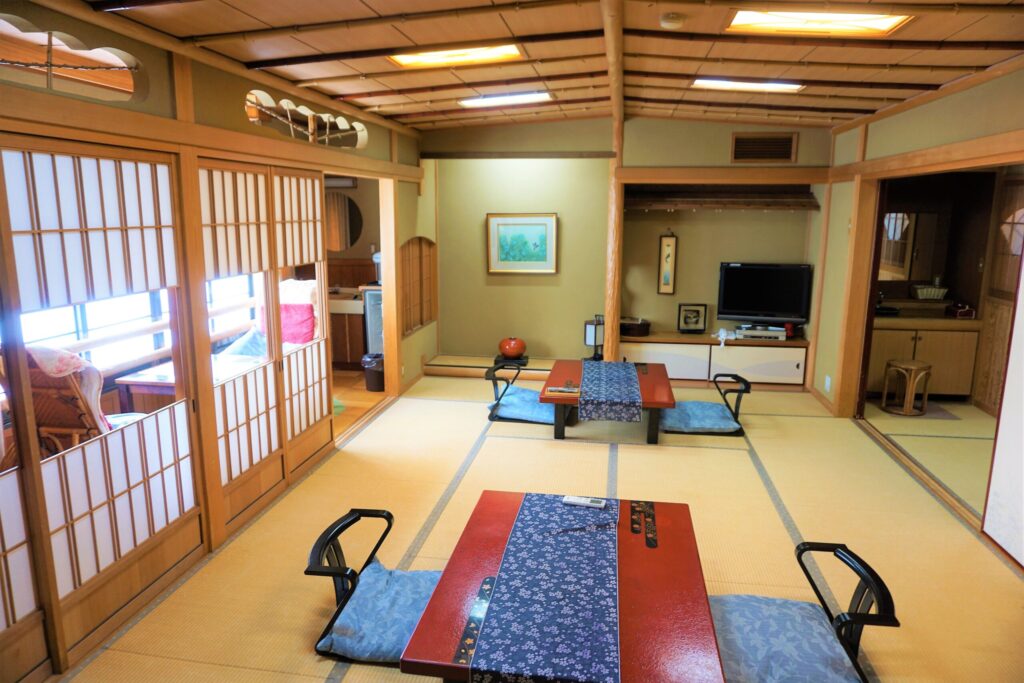
Morizuya faces the central street of the Kinosaki Onsen town and offers traditional Japanese style accommodation. It’s a short walk from the town’s train station, and the reviews for this ryokan are impeccable.
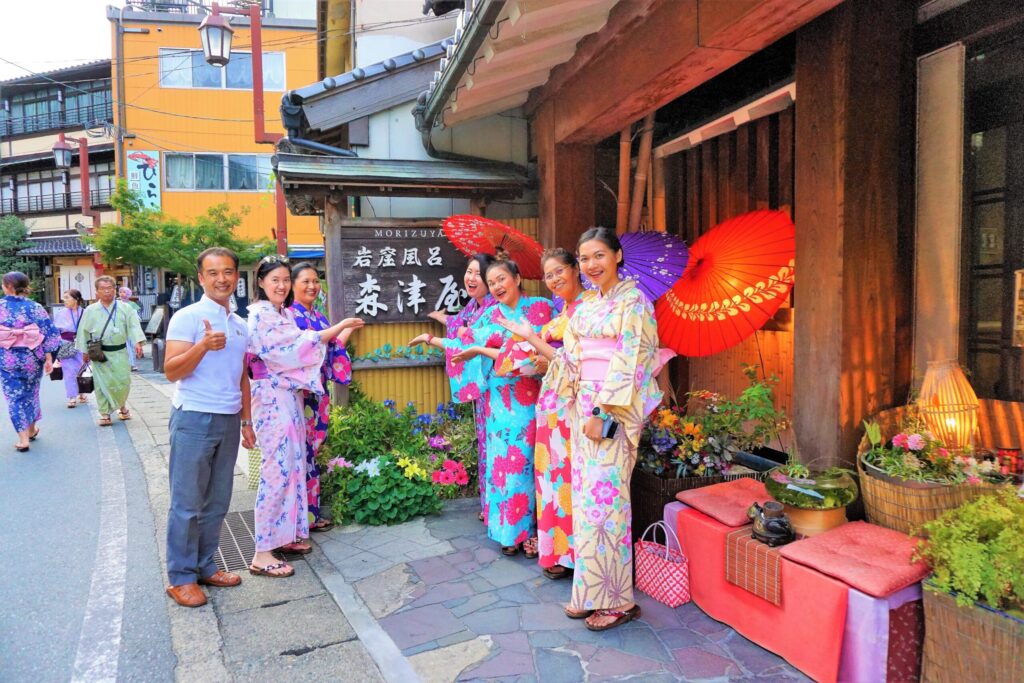
The ryokan offers colourful yukata for you to borrow, and have private baths in the ryokan that you can use until 10:30pm. You don’t need to book them in advance, if the sign says “vacant”, in you go!
When I spoke to the manager of Morizuya, they confirmed that they regularly offer fully vegan meals for their guests. They need 3 days notice for any dietary requirements, so make sure you contact them as soon as you book.
They’re a very popular ryokan, so if you see your dates available on the booking page, grab them while you can.
Separately, as someone who’s been researching their own Kinosaki vegan ryokan stay, Morizuya were incredibly helpful with all my questions. Those good reviews are clearly for a reason, and I’ve had a great impression of their hospitality from my interactions with them.
Kobayashiya
Booking link here– This ryokan has a permanent, dedicated vegan menu
Kobayashiya is one of the oldest ryokans in Kinosaki and it’s located right in the town centre. They’ve got three private baths in the ryokan that you can use without a reservation, as well as a library onsite where you can borrow books to peruse after your bath.
For us vegans, they have a special vegan meal as a permanent part of their menu, and advertise it as “supervised by a vegan cuisine specialist”, so you know you’re getting high quality meals here. When I spoke to the ryokan, they told me about one of their specialities: a fully vegan hotpot course that’s themed around traditional Japanese fermentation practices.
The vegan menu is a multi course feast, and unusually for Japanese ryokans, they can also accommodate gluten free requests with notice.
You can book this ryokan online here, or cross-check prices on this link instead.
Nishimuraya Hotel Shogetsutei
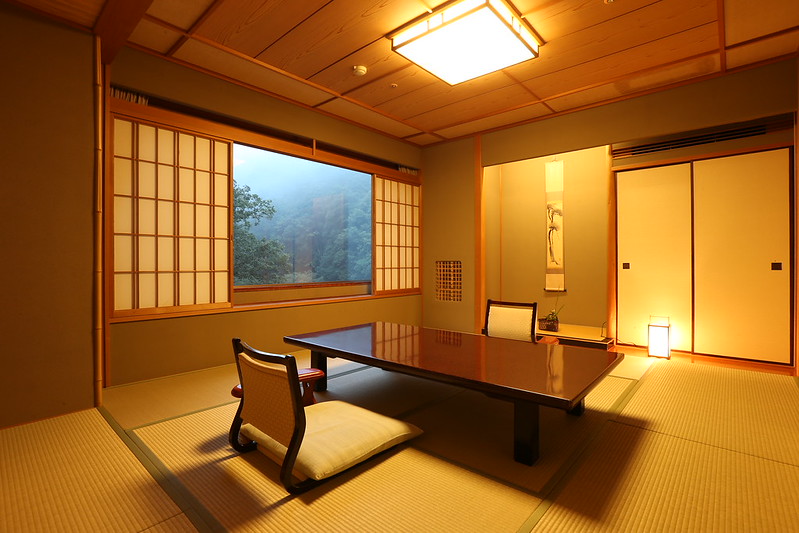
Nishimuraya Hotel Shogetsutei is a modern ryokan just outside the main strip of Kinosaki, giving you a peaceful stay surrounded by hillside. The ryokan provides a mix of Japanese and Western style rooms, with both Japanese and Western style dining available.
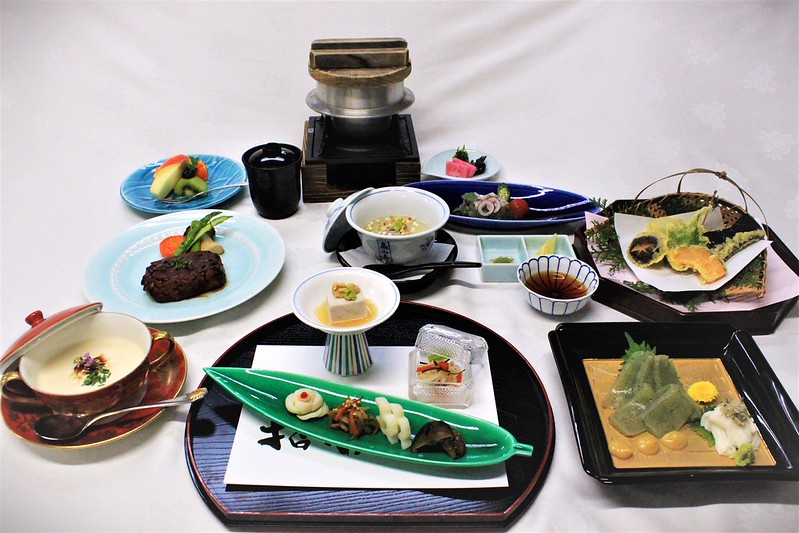
Photo credit: Nishimuraya Hotel Shogetsutei
When I reached out to Nishimuraya Hotel Shogetsutei, they were incredibly helpful with all the information they gave me. For those looking for a Kinosaki vegan ryokan kaiseki experience, you’ll need to order at least a week in advance. The vegan kaiseki is a multi course meal that does not include any animal ingredients. If that wasn’t enough, their onsite Western style restaurant, Restaurant Ricca, also offers a vegan course dinner. This also must be ordered 1 week in advance.
When I reached out to Nishimuraya Hotel Shogetsutei, they were incredibly helpful with all the information they gave me. For those looking for a Kinosaki vegan ryokan kaiseki experience, you’ll need to order at least a week in advance. The vegan kaiseki is a multi course meal that does not include any animal ingredients. If that wasn’t enough, their onsite Western style restaurant, Restaurant Ricca, also offers a vegan course dinner. This also must be ordered 1 week in advance.
If you end up booking last minute, don’t fret – while the kaiseki and multicourse Western meal need a week’s notice, they’re also happy to accommodate day-of requests. This won’t have as many dishes as the multi course menus, and it’s left up to the chef’s discretion, but you’re still guaranteed to get a great dinner and a warm welcome.
The ryokan itself is gorgeous. This is where you want to go for an escape from reality. There’s a private onsen, a spa where you can get a massage, an on-site bar with karaoke, a gym, and even a pool.
Note: Nishimuraya Hotel Shogetsutei has a sister property called Nishimuraya Honkan. The sister property only offers vegetarian kaiseki, and they use fish-based (dashi) broth. If you’re pescetarian, that’s still a wonderful option. If you’re fully vegan, make sure you’re looking at the right property, Nishimuraya Hotel Shogetsutei (the names are similar, so be sure to click the right one!)
You can book your stay here.
Where You Won’t Find a Vegan Menu
The places on this list are lovely spots, but they’re not where you’re going to find a Kinosaki vegan ryokan experience. Some ryokans are adept at removing meat, but will still use fish ingredients, so they may be suitable for some pescatarians. Many ryokans are small, family run places so it’s not a lack of hospitality, it’s just that it simply isn’t always doable to adapt the menu.
I’ve included these places because they’ll come up when you’re searching for ryokans in Kinosaki, but my research has confirmed that they’re not the places to go for a Kinosaki vegan ryokan stay. They’re gorgeous places, just not the right stays for us!
- Mikuniya
- While they may be able to adapt for pescatarians, they use dashi/fish based broth extensively and can’t remove it from the menu.
- Ginka
- This ryokan can make some adaptations for allergies, but they can’t accommodate dietary preferences.
- Kinosaki Yamamotoya
- This ryokan can only accommodate pescatarian diets.
- Tajimaya
- This ryokan cannot accommodate vegan or vegetarian diets.
- Nishimuraya Honkan
- This ryokan can only accommodate vegetarian, although they still use dashi/fish broth, so it’s really more suitable for pescatarians. However, their sister property, Nishimuraya Hotel Shogetsutei, very much CAN accommodate vegans and is listed in the “Verified” section.
- Ooedo Onsen Monogatari Premium Kinosaki
- This ryokan cannot make any dietary accommodations.
- Yamatoya
- This ryokan cannot accommodate vegan requests.
Final Thoughts
While travelling Japan as a vegan isn’t as easy as our omni friends have it, it is still very possible. As you can see from this list, while not every ryokan can cater to a vegan diet, those that do offer a Kinosaki vegan ryokan experience really do. The verified ryokans on this list clearly understand what it means to be vegan, and they go out of their way to make sure we’ve got the same wonderful experience as any other guest.
If you’re considering other ryokan stays in Japan, you might be interested in my Hakone post. If you’re spending time in Tokyo, here are the top ramen restaurants I’d recommend. And, if you’re looking for something particularly special during your Japan trip, Saido is a restaurant that’s stayed with me long after I visited.
One of my favourite things about this blog is getting to share my vegan finds from around the world with others, so if this post has helped you plan your own plant based stay, then I’m genuinely delighted. And, if you have any vegan finds of your own you want to share with me, hit up the contact me page – I always love hearing from fellow vegan travellers.