
Motoyu Kansuiro Review: Vegan Friendly Ryokan in 2026
At a Glance: Motoyu Kansuiro
Location: Tonosawa, Hakone (14 mins walk from Hakone-Yumoto station).
Vibe: 400 years of history, registered cultural property, river views.
Vegan Friendly? Yes, but requires advance notice.
- Booking Link here
When I was planning our honeymoon to Japan, I found myself knees deep in blog posts, reviews, and Reddit threads. There’s so much to see in this incredible country that it’s nearly impossible to decide what makes the cut. A friend mentioned Hakone to me, and I was immediately sold.
Located inside the Fuji-Hakone-Izu National Park, Hakone is the kind of place you go to let your worries drift away in a hot spring. It’s a great escape after being overstimulated by the neon lights and fast paced crowds of Tokyo.
Part of a traditional ryokan stay is experiencing traditional Japanese cuisine, usually served as a multi-course kaiseki meal that focuses on local, seasonal ingredients. As a vegan, my first thoughts were naturally “can I eat there?”. For my fellow vegans, I’ve got a separate post on the verified vegan-friendly ryokans in Hakone here.
Ryokans are known for their hospitality, but they’re not always known for being vegan or vegetarian friendly. Many menus are a haute cuisine smorgasbord of seafood and dashi. After some digging, I found Motoyu Kansuiro. Their website had a small note encouraging guests with dietary requirements to get in touch.
I sent an email, and they quickly replied that they could adapt their menu so my husband and I could get the full ryokan experience.
We booked a Japanese-style suite for two nights, which in 2024 cost us ¥146,884 (roughly £720). It was easily the most expensive stay of our trip, but on a honeymoon to the other side of the world, it was one we could justify.
So how does a 17th century inn actually serve as a modern vegan experience, or is it just a very expensive plate of tofu? From out ill-planned arrival to me surreptitiously passing mushrooms over to my husband, this is my full review of staying at one of Hakone’s most historic properties as a vegan.
A note for 2026 Travellers
I’ve written another post about all the vegan-friendly ryokans in the Hakone area. As part of that, I contacted Motoyu Kansuiro to ask if they still provide vegetarian and vegan-friendly meals. They’ve confirmed that they still offer vegan and vegetarian meals without meat, eggs, fish, dairy or dashi. They are unable to accommodate gluten-free meals.
In this post, I talk about our experience of having meals served in our room. From February 2026, Motoyu Kansuiro have said that all meals will be served in their large hall.
The Journey: How (Not) to Get to Hakone
Getting to Hakone is a bit of a choose your own adventure situation. Unfortunately, I chose the adventure that involved getting sweaty on a bus and trying not to crush a small elderly woman with my massive backpack (Minus 10 tourist points for me).
The Shinkansen Route (if you have a JR Pass)
Because we already had the JR Pass, we took the high-speed bullet train route. We took a train from Shinjuku to Shinagawa, then changed for the Shinkansen to Odawara. It’s an 85 km journey that only takes 25 minutes.
If you don’t have the JR Pass, this is the most expensive way to do it. Since the pass’s price hike in 2023, the JR Pass is no longer a no-brainer for Japan tourists. If you’re still deciding on whether the JR Pass is right for you, I’ve written a separate post about it here.
From Odawara, it’s a bus onward to Hakone. On paper, it’s a 30 minute trip. On the Sunday that we arrived, it took an hour and a half due to weekend traffic.
I spent that entire time standing in a packed aisle with a woman swinging off my arm while I tried not to crush anyone with my massive backpack. It was a good reminder that while Hakone is a well-loved nature escape, everyone else has the same idea on a Sunday.
Tip:
If I could do it again, I would use takkyubin, Japan’s legendary luggage forwarding service. I had no idea this existed before my trip, so if you take nothing else from this post, take this: look into luggage forwarding. I was the bad tourist with a suitcase on a crowded bus, don’t be like me.
The Romancecar (The Easier Alternative)
If you’re starting in Shinjuku or the surrounding areas, the Odakyu Romancecar is the best option to get to Hakone. It’s a limited express train that takes you straight into Hakone Yumoto station, without needing to transfer at Odawara. It costs extra for the seat reservation, but it saves you the headache of the sweaty bus.
It takes about 80 minutes, so it may seem longer than the Shinkansen route, but when you factor in the transfer time and the unpredictability of the traffic, you’re better off.
Getting to Motoyu Kansuiro
If you go the Odawara route, the bus drops you off right at the door of the ryokan.
If you’re coming via the Romancecar, Google maps is a bit misleading with the transport options. You can in theory take the Hakone Tozan Line to Tonosawa station, but Google Maps then conveniently forgets that there’s a walk on the other side.
It’s about 7 minutes walk down the hill from the train station to the ryokan. Otherwise, the walk from Hakone Yumoto station is 14 minutes. It’s a pretty straightforward walk through the town, and then along the river. Parts of the walk are not on a dedicated sidewalk. Instead, you’ll see a white line at the side of the road that you walk inside. I found it a pretty safe walk, Japanese drivers (in my experience!) are polite – honestly, I feel more nervous cycling around where I live in London.
However, for those with baby buggies, wheelchairs or mobility considerations, you’ll find taxis easily outside Hakone Yumoto station and it should be a 2 minute drive.
Architecture and First Impressions
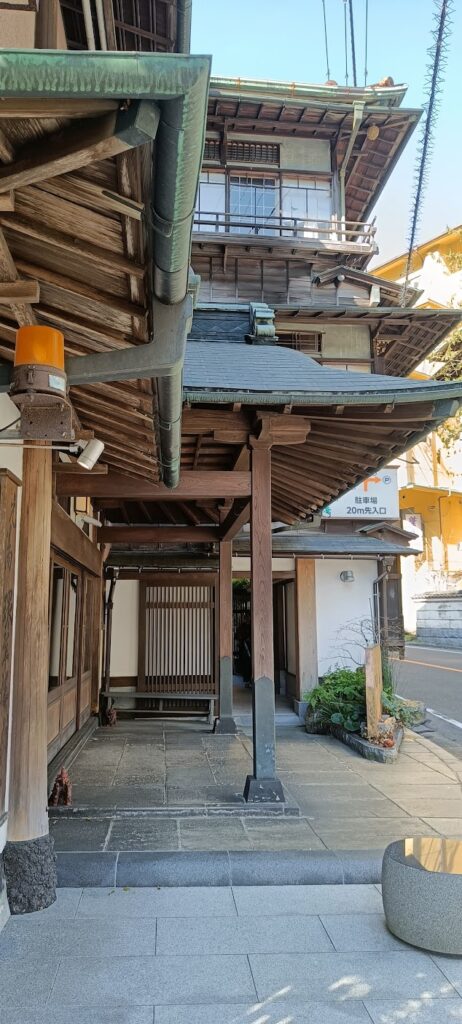
Tumbling off the packed bus from the station, I was incredibly relieved (and a bit sweaty) to finally be standing on the patch of pavement outside Motoyu Kansuiro.
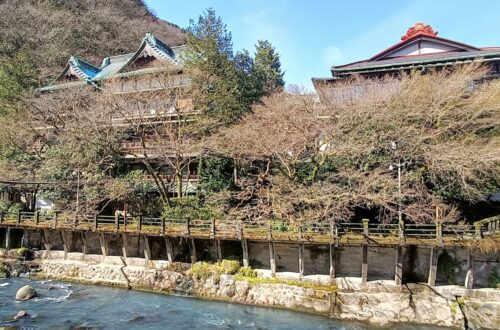
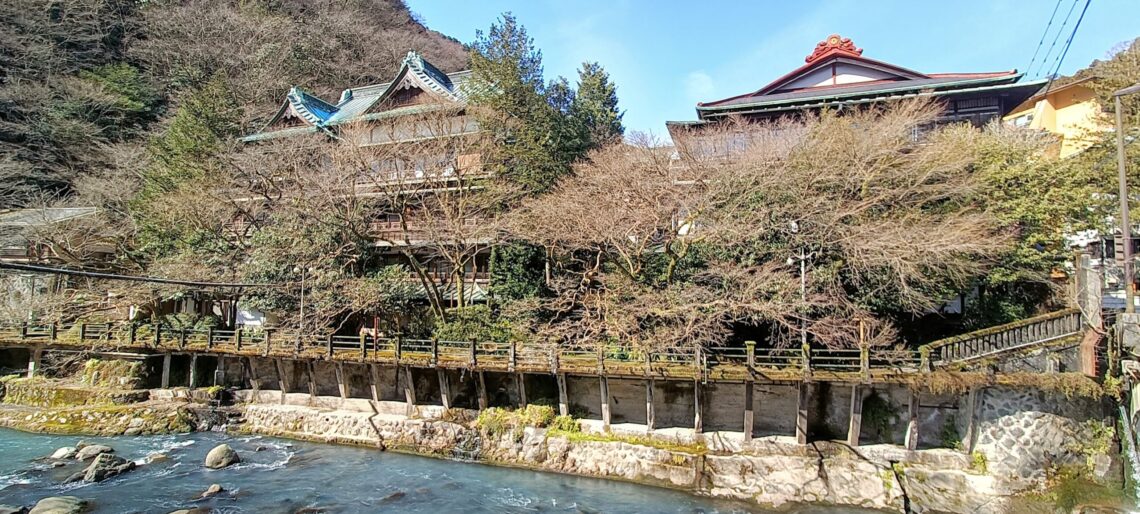
After the high stress crush of the bus, the entrance to the ryokan is unassuming. It’s tucked quietly between the road and the deep gorge of the Haya River rushing below.
Stepping inside, the quiet calm immediately washes over you. The lobby opens into a wide, warm space with gleaming polished wood and a hush that makes you lower your voice. As I stood there in this elegant entryway, painfully aware that I looked like a mess, a member of staff gracefully relieved us of our bags and asked us to remove our shoes. I slipped mine off, surreptitiously checking my socks for holes, and left them on the guest shoe rack by the entrance. We were handed a pair of indoor sandals to wear as we made our way to the check in desk.
As we checked in, we began to learn more about the history of Motoyu Kansuiro. The current building was constructed in 1919, making it a Registered Tangible Cultural Property, but the ryokan itself has been in operation for over 400 years.
There’s a distinct air of heritage and history in the place. The name “Kansuiro” was actually given to the inn by Hirobumi Ito, Japan’s first Prime Minister, who was a frequent guest.
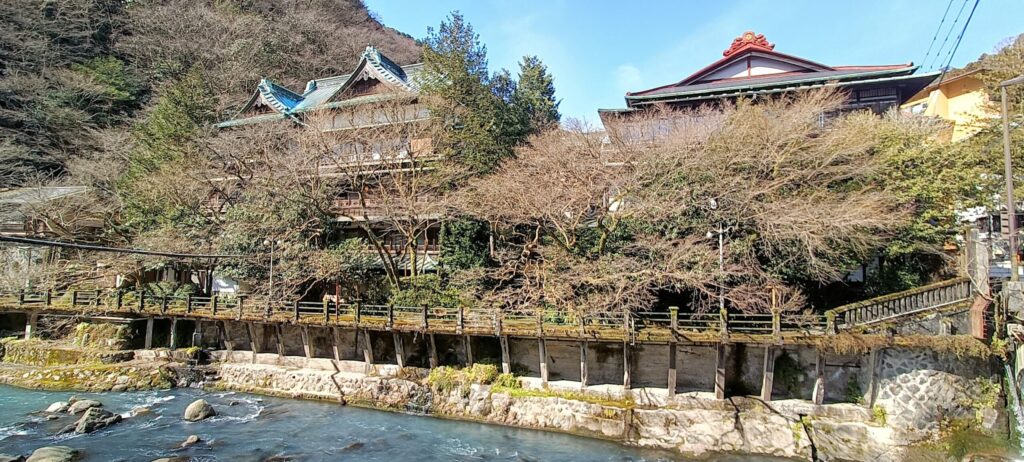
After check-in, one of the ryokan’s staff, Aiyu, walked us to our room. The ryokan is huge: It’s a four story wooden building that sprawls back into the mountainside. From the road, it’s not immediately apparent, but as we wandered through the halls with Aiyu, we could see how easy it would be to get lost in the dark wood hallways that seem to go in every direction.
The sound of the river rushing by outside is ever-present, adding a tranquil white noise as you float through the ryokan.
The Rooms: Tatami and Tranquility
We had booked a traditional Japanese room overlooking the river. When booking, you’ll see an option to book a room with its own bathroom, and without.
Not relishing the idea of stumbling through this cavernous ryokan in the middle of the night to brush my teeth, we went for the “with bathroom” option.
It’s worth noting that in a traditional ryokan, “bathroom” usually means a private toilet and washbasin. The actual washing and bathing are meant to happen in the bathhouse or onsens, which is all part of the experience.
Calling the room a “room” does it a disservice, as it was really more of a suite or small apartment.
We entered through a genkan, the traditional sunken entryway where you leave the outside world (and your shoes) behind and enter the sanctuary of your private space. You swap your shoes at the genkan for slippers, which are provided by the ryokan. If you’re keeping count, we’re now up to 3 pairs of footwear since getting off the bus.
In the entry way, there was a small fridge stocked with drinks, and a card listing the price of drinks. You can help yourself as you please, and then pay for what you had on checkout. Around the ryokan, you’ll find vending machines with hot or cold drinks depending on the season, but having your own stash in your room is always handy.
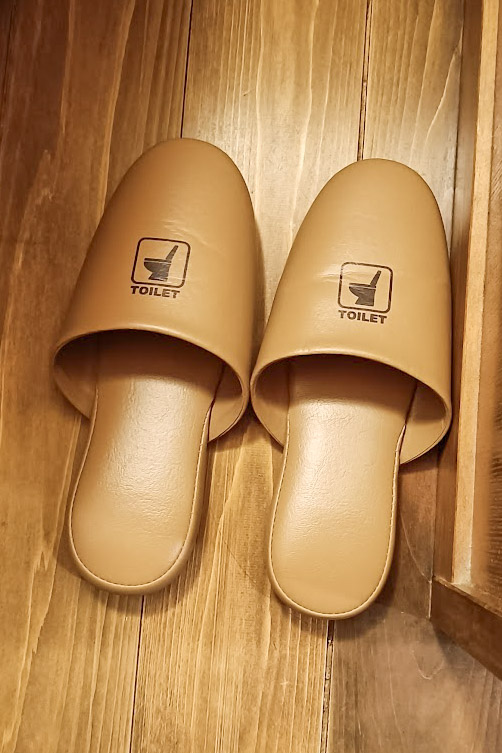
The toilet was in its own dedicated room off the hall. This is where I first encountered toilet slippers (shoe count: 4), which you change into to use the toilet area. They’re hilariously stamped with an icon of a toilet and the word “TOILET” emblazoned on them – can you imagine the shame if you accidentally wore them out? Turns out, these are pretty common in Japan, ensuring your house slippers don’t get contaminated in the bathroom.
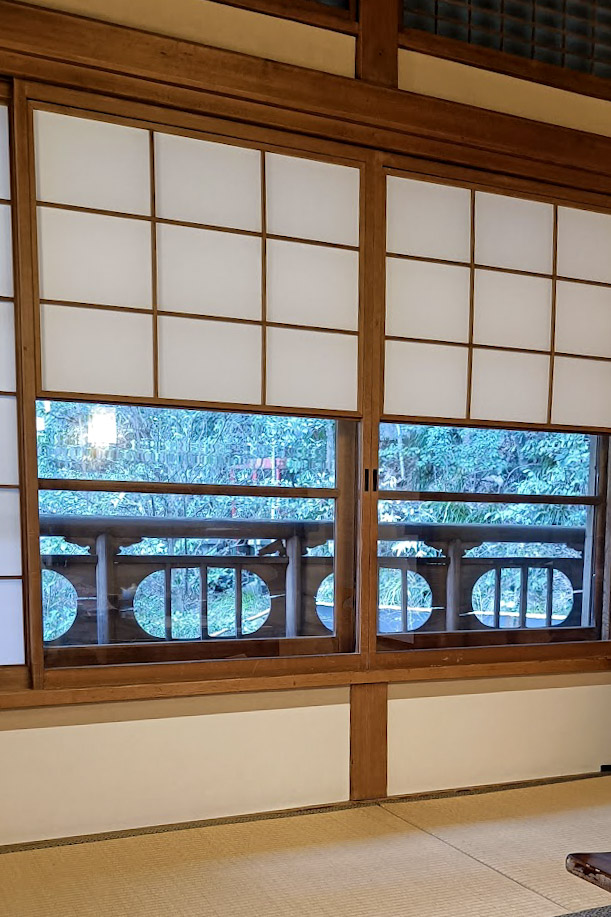
The main living area was a gorgeous corner room, with windows framing the rushing river on two sides. It was large and cozy, with the classic tatami mats and a low chabudai table. This comes with floor seats, zaisu, which are essentially a chair with no legs. Like everything else in the ryokan, this is a traditional part of Japanese interiors, but a heads up for those who have mobility issues and may struggle getting down to and off of the floor.
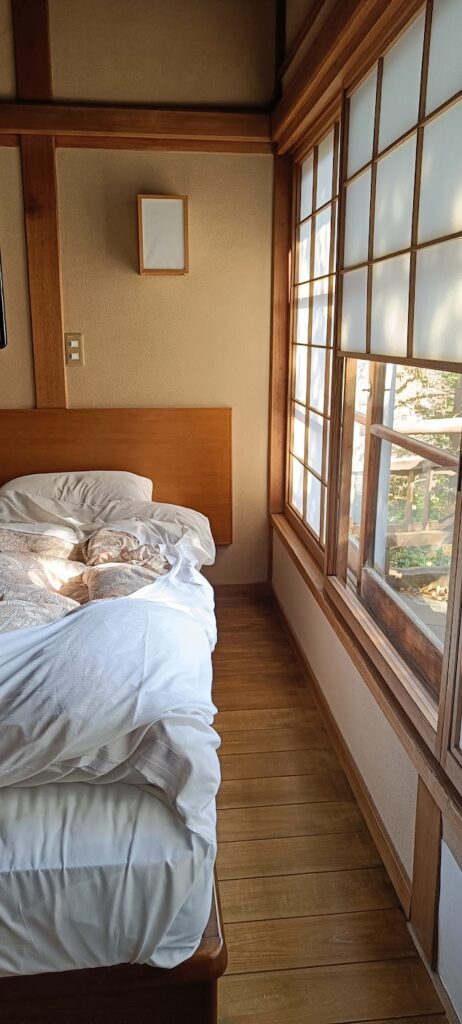
Finally, the bedroom. It contained two single beds with futon-style bedding already prepared. I was expecting floor-level futons, these were closer to Western-style divan beds, with the futon bedding on top. If you’re looking for something similar, keep an eye out for terms like “Western-style Japanese rooms”.
Because the room hangs over the water, falling asleep to the natural white noise of the river meant I slept like a baby. For someone who gets regularly woken by helicopters and London traffic, this was pure bliss.
The Onsen: Navigating Tattoos and Traditions
An onsen (natural hot spring) is the quintessential Japanese travel experience. Even if you don’t stay in a ryokan, you need to try it at least once. Hakone is famous for its hot springs, which is part of what draws so many travellers to the area. At Motoyu Kansuiro, you have a number of bathing options, both indoor and outdoor.
However, if you have tattoos, there is a catch. Like many traditional spots in Japan, the public shared baths are generally a no-go for travellers with tattoos. It’s a cultural carryover from the historical association between tattoos and organised crime. One of my arms has very large, colourful tattoos. While finding a vegan ryokan experience was my #1 priority, being able to use an onsen was a close #2.
Any of the public baths and the outdoor Roten-buro open air onsen at Motoyu Kansuiro are strictly no-tattoos during communal bathing hours. But they’ve got a great workaround: The roten-buro can be booked privately during the hours of 10pm and 4am. During these hours, the usual gender segregation is lifted and guests with tattoos are welcome to use them.
For different-sex couples travelling together, this is also the only time you can bathe together.
In Motoyu Kansuiro there are two open-air baths. Normally one is for men, one is for women. We waited until 10pm one evening (not easy with jet lag, I can tell you) and made our way along the rocky path to the outdoor bath houses. The booking system is simple: If the “reserved” sign is hanging outside, the bath is in use. If not, you hang the sign outside, lock the door, and the space is yours.
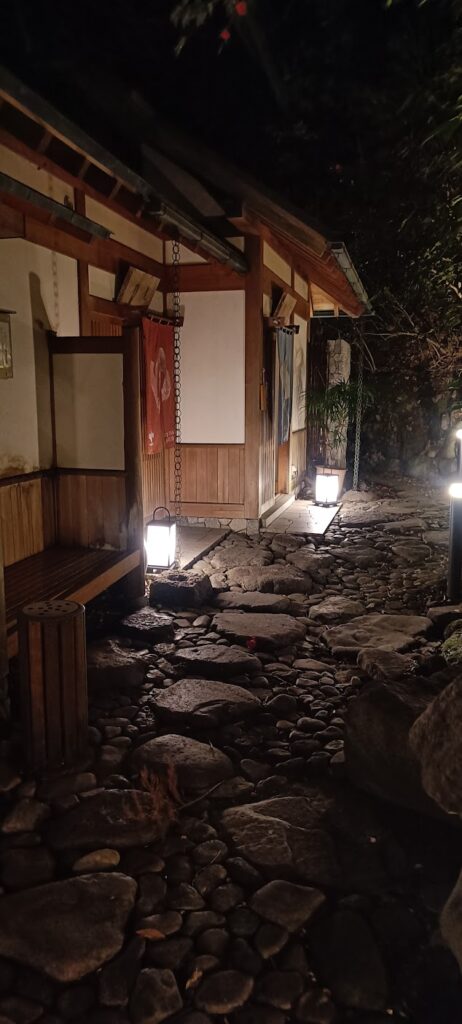
They do ask that you limit your bathing time to 30 minutes to give other guests a chance to use the space. To be honest though, that’s more than enough time in the hot water.
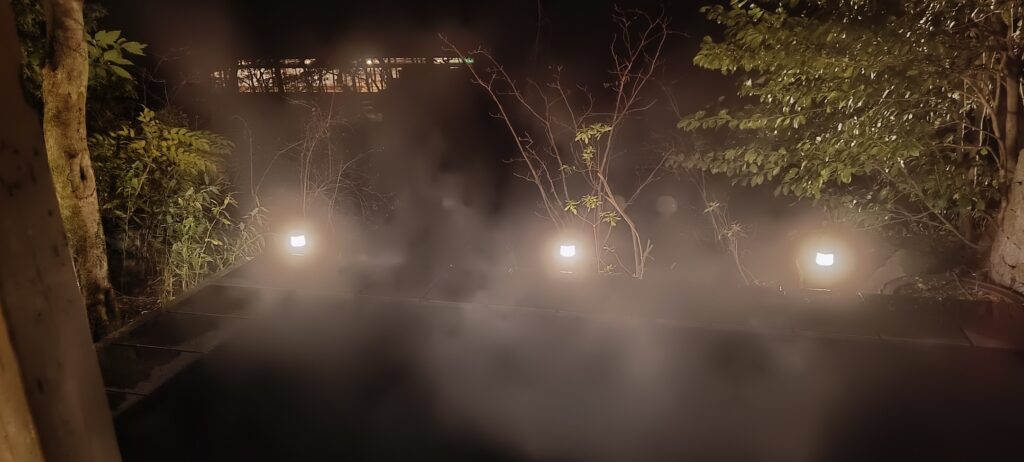
For us, the experience was worth waiting up for. The water was incredibly hot, with steam rising off the surface into the crisp night air. This was late March, so the sky was pitch black, with stars visible for miles. Because the baths are built into the side of the hills, you can look down at the Hayakawa river rushing below, with nothing but trees overhead. It’s an incredibly peaceful, quiet and relaxing way to end the day.
Onsen Etiquette
I’ll be writing a separate post about onsen etiquette in the future, but it’s worth covering a few basics with you now:
- You use the onsen completely naked. Clothing of any kind or bathing suits are not allowed, even when it’s public use/non-private hours.
- This is completely normal in Japan, and in the words of every Irish granny everywhere, “Sure, who’d be looking at you”. It really doesn’t matter what your body looks like, but if the idea of being in the nip with strangers makes you uncomfortable, you’ve still got the private booking option!
- You must wash your body before getting into the water. In Motoyu Kansuiro, the bathhouses have shower gel on hand and outdoor taps with buckets. Use the bucket and the shower gel to wash all of yourself – and I do mean all.
- The ryokan provides yukata, a lightweight garment usually made of cotton or linen and sometimes called a summer kimono. You can wear this to the onsen.
- Inside the bathhouse, there are lockers for you to leave your clothes, towel and any other belongings you’ve brought with you.
- The baths are somewhat small – even if you use it during public hours, they can fit maybe max 8 people comfortably, so you’re not going to be bathing with a crowd.
The Main Event: Multi-Course Vegan Kaiseki
Since our room had a separate living and dining area, our room attendant, Aiyu, asked us to wait there for the main event of dinner. Served promptly at 6pm, Aiyu arrived with the first of many trays and took our drinks order. We went for a bottle of heated sake to really lean into the Japanese dining experience.
The menu at Motoyu Kansuiro changes monthly, focusing on local, seasonal produce. While their standard menu is heavily seafood based, their adjustments for vegans and vegetarians are focused on mushrooms and tofu.
It’s served in a formal, kaiseki style. This is a very traditional Japanese style of dining that’s akin to a haute cuisine tasting menu – think lots of small dishes, perfectly crafted presentation and a focus on balancing flavours, textures and style.
The First Round
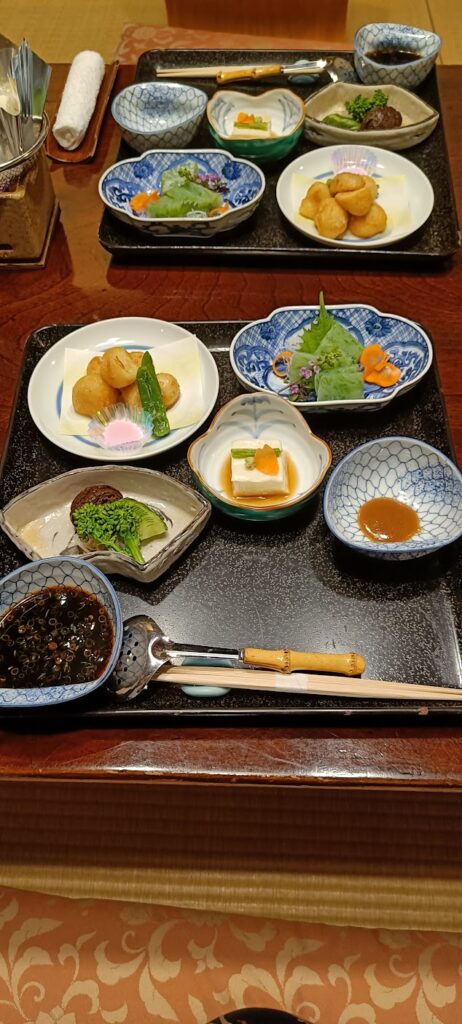
The initial trays that Aiyu brought in showed the skill and attention to detail that the Motoyu Kansuiro culinary staff excel in. We were served roast potatoes in pink salt, a large cube of tofu in a light, savoury sauce, seasonal vegetables with a dipping sauce, and a clear, soy-based soup. There was also a dish of konjac and seaweed jelly – a common Japanese delicacy that’s more about texture than bold flavour.
The presentation and attention to detail was flawless. Every dish featured a tiny, deliberate garnish – maybe a delicately carved carrot or a perfectly placed dot of wasabi.
I thought this tray was the entire meal. I was wrong.
The Second Act
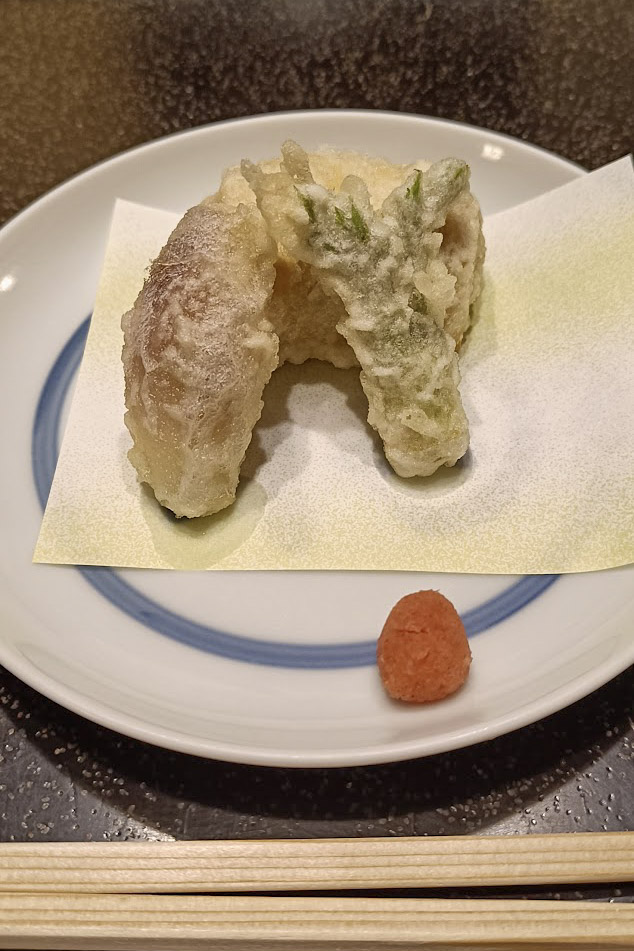
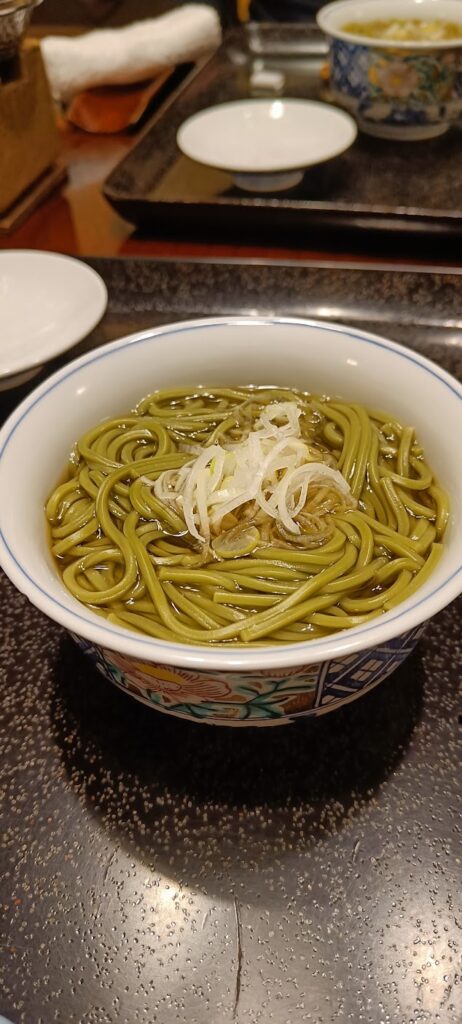
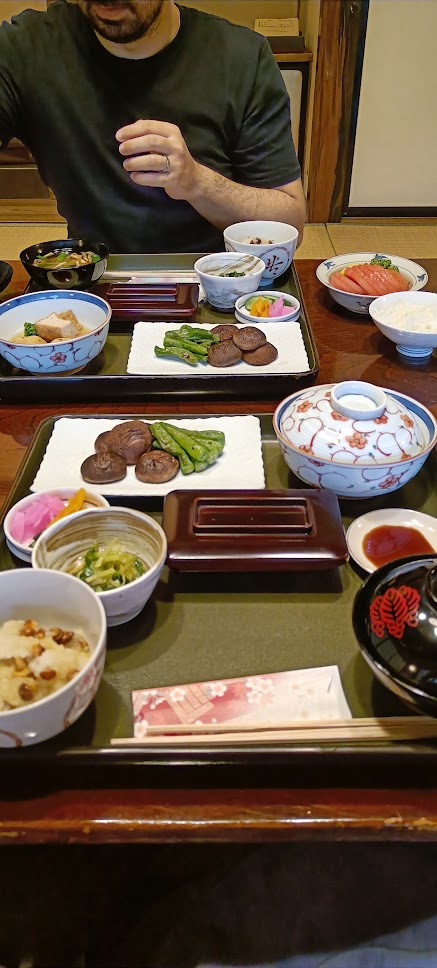
As soon as we finished, Aiyu whisked the dishes away and returned with a second, equally elaborate round. This time, we had: Miso soup with a rice-paper-wrapped tofu cube, green tea soba noodles, crispy vegetable tempura, mushroom skewers, a mushroom-y soup with jelly pieces, and unlimited bowls of steamed rice.
The second night was a similar extravaganza. Incredibly, they change the dishes every night, so long-stay guests won’t eat the same meal twice.
My Mushroom Confession
…And this is where I’ve got a confession to make. I cannot stand mushrooms.
I promise you, I have tried them every way imaginable. I’ve tried, I’ve failed, I can’t. They make me gag.
I know, I’m a terrible vegan. But, I’m also a Dubliner who hates whiskey, so maybe I’m just built to be contrary. Either way, get that fungus away from my plate.
In Motoyu Kansuiro, this was a conflict for me. I deeply appreciated the amount of skill, effort and care that went into creating our meals. I didn’t want to disrespect them by leaving full plates behind. This meant that every time Aiyu left the room, I was frantically passing my mushroom dishes over to my husband.
At one point, Aiyu walked in right after this transfer. She saw my empty plates and delightedly complimented us on our healthy appetites as she laid down yet more dishes. My husband looked at me pleadingly across the table. He’s the most patient man alive, but even he was beginning to crack with eating mushrooms for two.
The Verdict on the Food
Being brutally honest: Some of it was not to my taste. Evidently, given I’ve just written an essay about mushroom-hating. However, this is entirely down to my personal preferences and palate, as the culinary skill at Motoyu Kansuiro is faultless.
Traditional dining in Japan focuses on subtlety and delicate flavours. It’s very different to the bold, complex spices you may find in other Asian cuisines. You’ll encounter unique textures like the rubbery feeling of konjac or gelatinous soup bases that might be unfamiliar to Western palates.
My advice, and what I’d do next time round, go in with an open mind. Appreciate the skill and artistry of the food, even if you do end up passing your mushrooms over to your partner.
A note on Motoyu Kansuiro dining for 2026
I mentioned this at the top of the post, but it’s worth reiterating. While I was writing this post, I contacted Motoyu Kansuiro to confirm they still offer vegan and vegetarian ryokan experiences (they do, yay). In their response, they mentioned that they are no longer doing in-room dining from February 2026 onwards.
All meals now will take place in their main hall, which is still a beautiful space, and you’ll still have the same traditional kaiseki experience.
The Breakfast: A Vegan Feast
Breakfast at Motoyu Kansuiro follows the same courteous but firm schedule as dinner. At exactly 8am, Aiyu returned to our room to transform our dining table once again.
If you’re used to the standard continental breakfast or congealed eggs you usually see at a hotel breakfast, you’re in for a wonderful cultural pivot. Traditional Japanese breakfasts won’t give you and toast and marmalade, but you will get a teishoku (set meal) designed to be hearty, warming and savoury.
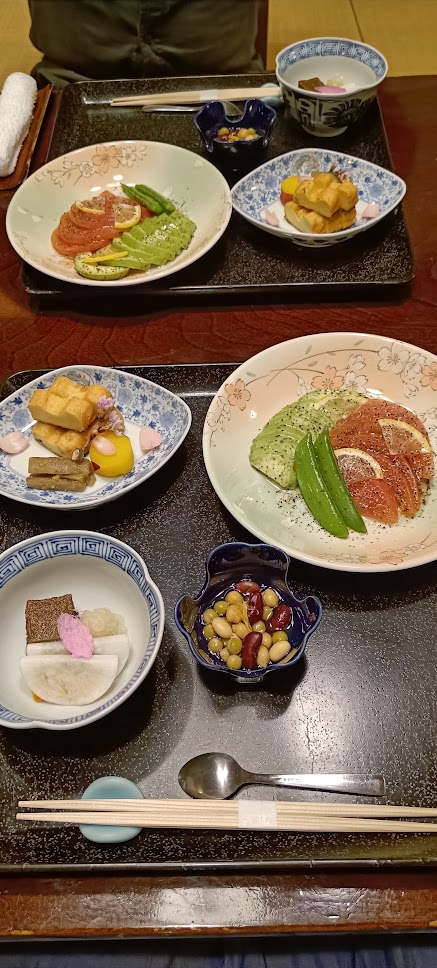
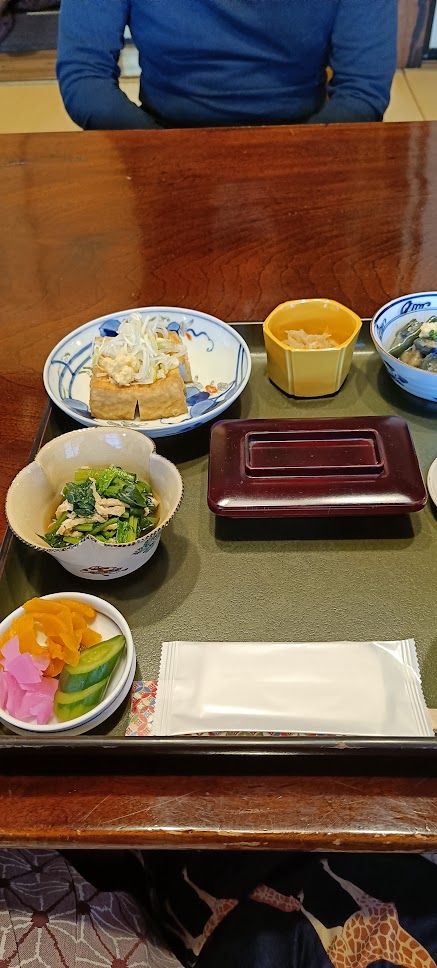
While dinner was a relaxed, leisurely, multi-course affair, breakfast comes on a single, crowded tray. Ours had a beautiful array of small bowls. We had: A lovely warming broth of cabbage and silken tofu; protein the form of blocks of fried tofu and a rich miso soup; sides of fluffy white rice, local pickles and a crisp pumpkin salad; and finally a bowl of seasonal fruit to finish it all off. All of this was washed down with hojicha, my absolute favourite, a toasted green tea.
On our second morning, the spread was the same in volume but had different seasonal tweaks. You can expect the kitchen to change out the specific vegetables and pickles, but the core pillars of tofu, mushrooms and miso are constants for vegan ryokan guests.
It’s a clean way to start the day – it left us feeling fuelled and ready for our day, without the heaviness that comes with a carb-heavy pastry breakfast.
Just be conscious: Even though it’s a smaller meal than dinner, breakfast is still an event. It’s not a quick bite you eat on the go, you’re still expected and encouraged to sit and appreciate the meal.
The Verdict: Is a £700 Splurge Worth It?
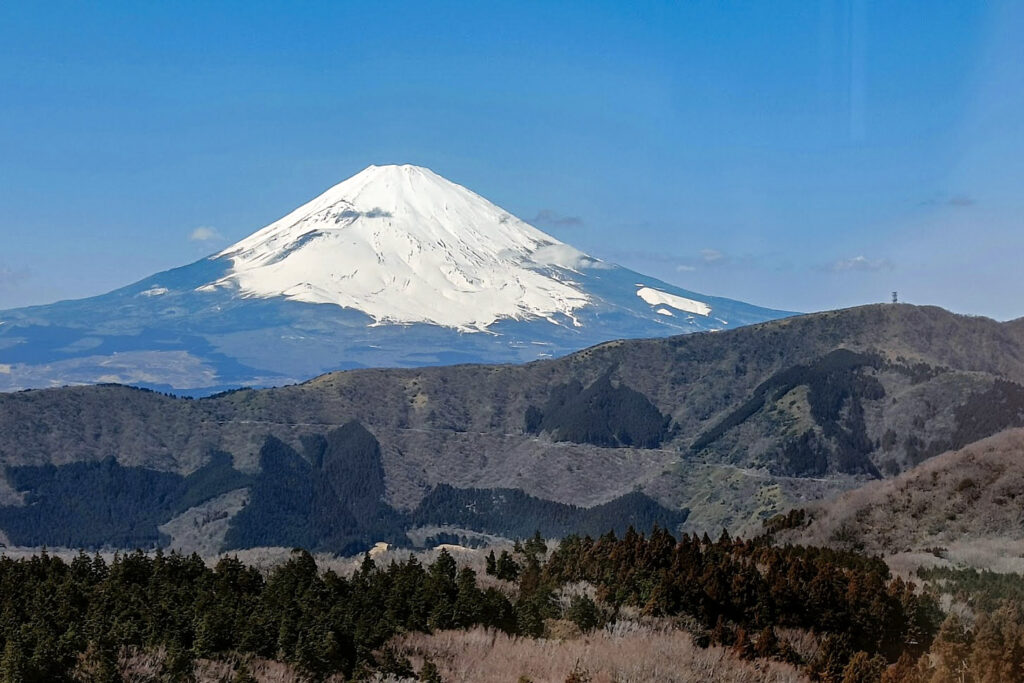
When we arrived in Hakone, we were stressed, jet-lagged, laden down with bags, and still reeling from having our internal organs squashed on the bus. As soon as we stepped through the doors of Motoyu Kansuiro and swapped our shoes for slippers, the tension melted away.
The ryokan experience is fundamentally about stillness. I am not a still person, I once got stressed in a meditation class that I wasn’t meditating hard enough. In a ryokan though, you don’t have much choice but to be still. The decor is elegant yet cosy, and the quiet calm that permeates throughout the place seeps into you.
There’s a gorgeously quiet luxury in having a multi-course fine dining meal served right in your room, even if it feels a bit uncomfortable at first. The service is also outstanding. While we interacted mostly with our room attendant, Aiyu, every staff member we encountered was kind, welcoming and helpful.
As for the food: while I might still go for a bowl of ramen on a normal day, getting to enjoy the full kaiseki experience as a vegan was truly a gift. As a vegan, it’s common to feel like an afterthought – I’m sure we’ve all felt that frustration when you’re paying full price for something that just has meat removed, or seeing yet another “Plant Burger” as the lone option on a menu. At Motoyu Kansuiro they truly went above and beyond to make sure that a vegan ryokan stay wasn’t just an “adjustment”, it was the full service.
Finding a vegan-friendly ryokan isn’t easy, but Motoyu Kansuiro went out of their way to make sure we didn’t miss out on anything. Holding a hot cup of hojicha, listening to the Hayakawa river, and watching the early signs of spring on the mountainside gave a rare moment of peace, and some of my most beautiful memories of the trip. At the time, I was in a job I didn’t enjoy and trying to figure out my next life move. Being cocooned in the still refuge of Motoyu Kansuiro was exactly what my soul needed.
Was the Splurge Worth It?
Even now, as I’m updating this post in February 2026, nearly two years on from our visit, my mind can effortlessly float back to the feeling of the onsen water on my skin, the golden sunlight in the morning in our corner room, the smell of the tea served in tiny cups.
For me, it’s an easy yes. It was the most expensive stay on our trip, but it was a stay that still has such fond memories, and an experience I’d never have gotten otherwise.
For all of us, “worth it” is subjective. Let’s look at the numbers: At ¥146,884 at the time (approx £720), this was more expensive than our Tokyo hotels or Kyoto Airbnb. However, that price included:
- Four high-end, multi-course vegan meals (two breakfasts, two dinners)
- Access to the onsen, including for me and my tattoos
- A large, multi-room suite
- Incredible service, including thoughtful touches like hot tea and sweet mochi waiting for us after a day of sightseeing.
Because this was our honeymoon, spending some of our budget on a unique, stress-free experience was worth every yen. As vegans, we’re used to opting out of certain traditions, so finding a place that allowed us to fully participate was truly special.
That said, I see this a “bucket list” type experience. On our recent return trip to Japan, we prioritised other adventures and experiences (like the Shimanami Kaido, a very different vibe) over another high-end ryokan stay.
It’s a memory I treasure, but not necessarily something I will do every visit. I live in London, so a trip to Japan is a 12 hour flight and months of saving and planning. It’s a lot more inaccessible for me than the places I love in Europe (like the places in Italy that I love), so each time I go back, I want to get the most out of my trip and that usually involves seeing new places.
The bottom line: If you’re looking for a safe, luxurious and authentically Japanese plant-based ryokan stay, book it. You won’t regret it.
Ready for your own Hakone escape?
If by now you’re ready for your own 8am tofu and midnight onsen soaks, here’s all you need to know:
- Motoyu Kansuiro Booking
- Why book now? This is a historic, small-scale ryokan. Rooms (especially the river-view suites) sell out months in advance.
- For my fellow vegans: Don’t forget to let them know ahead of time about your vegan or vegetarian dietary requirements. The ryokan cannot accommodate gluten-free dishes, but for all other requirement, ask them – they’re lovely.
- Full 2026 Verified Vegan Friendly Ryokan list here
- Outside of the ryokan, some vegan-friendly restaurants
- And if you need inspiration on how to spend a day exploring Hakone, I’ve got you covered too