
Shimanami Kaido Cost Breakdown: Your Budget for Your Cycle Trip
Cycling the Shimanami Kaido is an incredible experience, and it doesn’t need to break the bank. In this post, I’ve broken down the Shimanami Kaido cost: from bike rentals to accommodation, and what you can expect from the journey.
Every traveller’s style will be slightly different, so while I’ve done the maths on a couple of options, including drawing from my own experience, these are just guidelines to give you an idea of what to anticipate.
As a foreign traveller to Japan, when I did the Shimanami Kaido, I needed to factor in accommodation and rental bikes, so I’ve laid the same out here. If you’re a local, or visiting friends or family, then your mileage will vary.
Fixed Costs: The Non-Negotiables
Let’s start with the fixed costs. These are the nonnegotiables, the bills that every cyclist is going to need to factor in, regardless of your travel style.

Bike Rental
I’ve gone more in depth in the Shimanami Kaido bike rental guide here, but your choices essentially boil down to two options: public rental or private.
Public is the cheaper option, while private comes with a higher price tag for more premium gear.
For a standard city bike in the public system, you can expect to pay about ¥3,000 per day. The public system also has electric bikes, which will run you back about ¥4,000 per day for the battery assisted model.
For a more premium, private bike, a basic city bike starts at about ¥3,800, up to around ¥17,160 per day for a premium road bike.
Tolls and Ferries
While there are tolls on the bridges for vehicles, an initiative to boost tourism along the Shimanami Kaido means that cyclists can ride for free.
If you choose to take the ferry from Onomichi to Mukaishima, as most cyclists do, the fare will be about ¥100 for you, and another ¥10 for your bike (accurate when I visited in September 2025).
Transit to and from Onomichi and Imabari
This is where you’ll see the most variation. If you already have the JR Pass, you can plan your trip to make use of this, avoiding extra charges.
Without the JR Pass, the cost will depend on the mode of transport and where you’re travelling from. The tables below give you an idea of what to expect from some of the transit hubs around Japan. They’re non-exhaustive, I’ve picked the most popular transit hubs and the most convenient modes of transport.
To and From Onomichi
Each of these options is covered by the JR Pass, prices are a rough estimate for the cost without a pass – always check up-to-date pricing.
| To/From | Transit mode | Rough cost |
| Hiroshima | JR Local Sanyo Rail | ¥1,500 – ¥2,000 |
| Hiroshima | Shinkansen to Fukuyama, then local train | ¥3,000 – ¥4,500 |
| Osaka | Shinkansen to Fukuyama, then local train | ¥11,000 – ¥13,000 |
| Kyoto | Shinkansen to Fukuyama, then local train | ¥12,000 – ¥14,500 |
To and From Imabari
Some of these options are covered by the JR Pass, prices for trains are a rough estimate for the cost without a pass – always check up-to-date pricing.
| To/From | Transit mode | Rough cost |
| Hiroshima | Bus | ¥3,800 – ¥4,500 |
| Osaka | Shinkansen, covered by JR Pass | ¥12,000 – ¥14,000 |
| Matsuyama | JR Train | ¥1,200 – ¥1,800 |
Luggage Forwarding
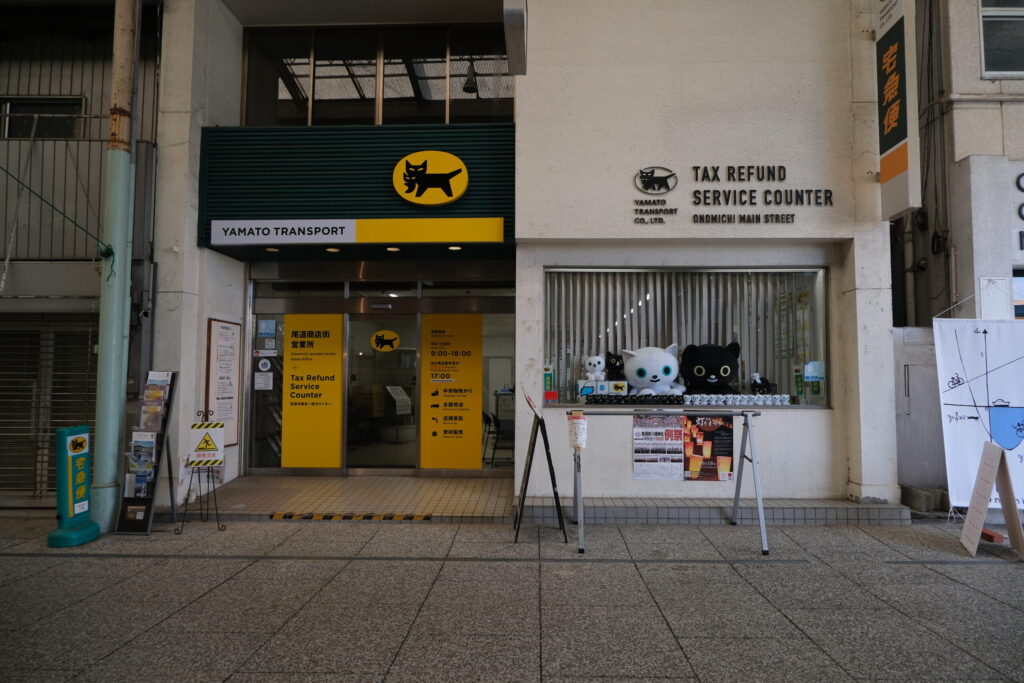
This is another non-negotiable Shimanami Kaido cost if you’re doing the cycle over multiple days, with a stopover. I’ve written a more complete guide on overnight stops here.
Carting big luggage is neither fun, or in some cases, possible on a bike ride over 75km, so you’re going to need to factor in luggage forwarding to your budget. I’ve written a more in-dept guide here, but to give you a rough idea of cost:
For me to send one large suitcase, and two wheely carry-on style suitcases from Kyoto to Imabari, the total bill was ¥6,240.
Depending on the size of your bag, expect to pay about ¥2,800 – ¥5,800 per bag.
Total Non-Negotiable Costs
| Item | Rough Cost |
| Bike Rental | ¥3000 – ¥17,000 |
| Ferry Fee | ¥110 |
| Transit to/from Onomichi | ¥1,500 – ¥14,500 |
| Transit to/from Imabari | ¥1,200 – ¥14,000 |
| Luggage forwarding (per bag) | ¥2,800 – ¥5,800 |
| Running total | ¥8,610 – ¥51,410 |
Variable Costs: Accommodation
The next part of your planning, your accommodation strategy, is where the biggest variability is going to come in. If you’re a budget traveller who’s no stranger to a shared hostel dorm, or someone who’s perfectly at home sleeping under the stars on a campsite, your Shimanami Kaido cost is going to be very different to someone who wants a luxury hotel experience to rest up at the end of a long day.
Likewise, the length of your trip is going to impact how much you spend on accommodation – a two day cycle will naturally be cheaper than a three day, while someone braving a one day cycle isn’t going to need accommodation at all.
The Budget Options
The absolute cheapest option you can take on the Shimanami Kaido is camping. There are a number of campsites along the route, and assuming you already have a tent, this is the best way to keep the costs down. Some of the campsites are free to use, or charge a nominal fee for use of the facilities.
- Tatara Campsite, Imabari – ¥1,360 if using your own tent, includes campsite fee.
- Michikajima Campsite:This is a free campsite on the tiny island of Michikajima. There is no running water and facilities are limited. This would be a good spot for any cyclists doing a 2 day cycle, as it’s roughly halfway through the route.
- Secretbase Hakata: a basic campsite with no running water, costing about ¥2,500 per night. Another halfway-ish spot. The website is all in Japanese, and the reservations only seem to run for part of the year. I stopped right by this place while on Hakata island, and from my viewpoint, it was a nice, simple campsite right near the bridge to the next island
If camping isn’t your style, then there are some hostels and affordable guesthouses available on the islands, for example:
- Ohana Guesthouse on Omishima Island, with male and female dorms available, setting you back about ¥14,970 per night.
- Hanaguri Guesthouse on Hakata Island, going for about ¥10,200 per night for a private room with shared bathroom.
- Cycle Guesthouse Shiokaze on Ikuchijima Island, around ¥10,200 per night for a double room
Mid Range Options
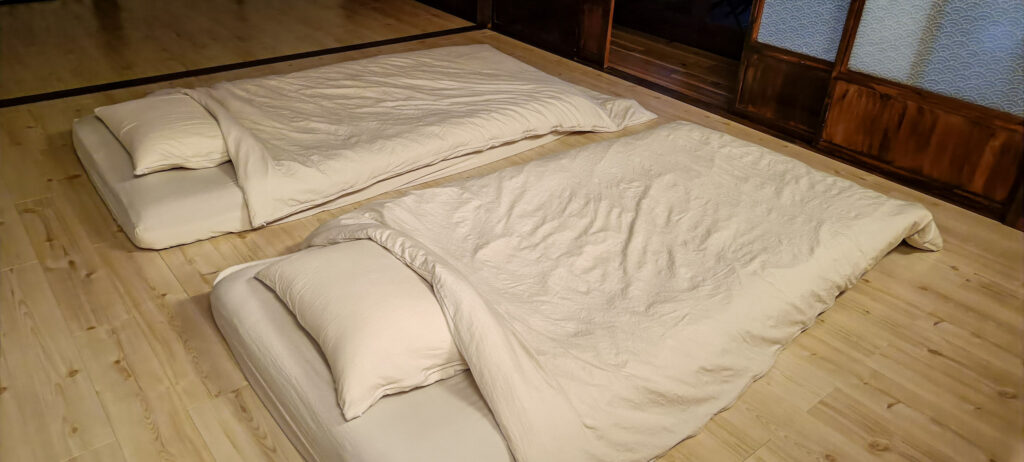
Midrange is where you’ll find most Airbnbs and standard guesthouses along the Shimanami Kaido. To give a personal comparison, we stayed in this Airbnb on Omishima Island, and paid about £120 (around ¥24,510). We opted for an Airbnb due to the laundry and kitchen access, especially as we’re vegan travellers – you can read more about this on my Vegan Shimanami Kaido Guide.
Some other examples of mid-range options are:
- A two-bedroom house rental on Omishima Island, about ¥28,600 per night.
- A traditional style house, Benton Guesthouse, on Omishima Island, about ¥32,700 per night.
- Airbnb Cottage near Sunset Beach on Ikuchijima Island, about ¥29,620 per night.
Luxury Options
If you’ve got the budget and luxury or high end stays are your priority, then they sky is the limit really, but the cost reflects that. Because Shimanami Kaido is mostly visited by cyclists, the majority of accommodations along the route are budget, or simple options as most people only stay a night before moving on. However, there are some truly gorgeous higher-end options, such as:
- Lemon Farm Glamping, on Ikuchijima Island – about ¥46,980 per night.
- Incense Beachfront Villa on Omishima Island – about ¥61,300 per night.
- Glampdome Glamping on Ikuchijima Island – about ¥102,000 per night.
Daily and Food Costs
Once you’ve got your accommodation and fixed items sorted, the next thing to consider for your Shimanami Kaido cost breakdown is the daily spend. Again, this will vary depending on how much you normally eat and drink (and hydration is important!), and what kind of attractions, museums and other extras you may want to do or include.
For vegans, I’ve covered the vegan food strategy in my Vegan Guide.
However, for all of us, vegan or not, costs are naturally going to be lower if you’re able to make packed lunches, stock up in supermarkets, or make use of accommodation cooking facilities instead of eating out.
Hydration
You’ll be cycling for hours, hopefully in good weather, and the climate around the inland sea is humid. This means you’ll need to budget for constant water and electrolyte replacement.
While you’ll find info online about water fountains around the cycle route, I actually didn’t see a lot of them on my journey. At some cycle rest stops, you’ll find them, so it’s handy to have a reusable bottle (I love my Chilly’s one).
Otherwise, a bottle of water from a vending machine or a convenience store costs about ¥180. If you’re travelling with someone else or a group, it’s cheaper to buy a big bottle of water and refill your individual bottles from that. Plus, if you have an insulated bottle, it’ll keep it cold for longer!
Electrolyte tablets are also a good idea. I brought these ones with me from home (about ¥1,021 for a pack), or a bottle of Pocari Sweat from a convenience store is about ¥180.
Either way, if you’re cycling for about eight hours, you’ll probably need to buy about 4-6 drinks throughout the day, totalling about ¥600-¥1,000 per person per day.
Snacks
Protein bars, bags of nuts, or other quick snacks are handy on the go and readily available from convenience stores. You can expect to budget about ¥400-800 a day for snacks, assuming you make one or two stops.
Food Strategy to Save on Cost
Obviously eating out is a huge part of travel. Trying the local cuisine and discovering small, independent eateries is a great way to immerse yourself in the local culture. Because the yen is quite weak at the moment compared to my local GBP, eating out is very affordable in Japan for a lot of Western tourists.
However, if you’re looking to keep your Shimanami Kaido costs down, then planning ahead for your meals and self-catering is the easiest way to keep costs down. I’ve already mentioned this in the vegan guide, but vegan-friendly restaurants are scarce, so if you’re a fellow plant based cyclist, then self-catering might actually be your only option for a good meal.
Konbini Meals
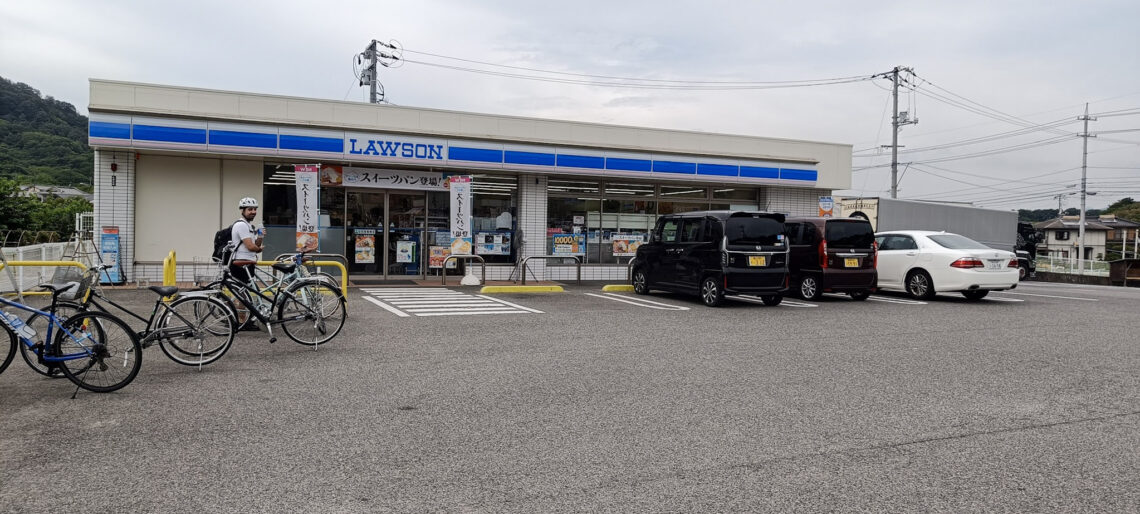
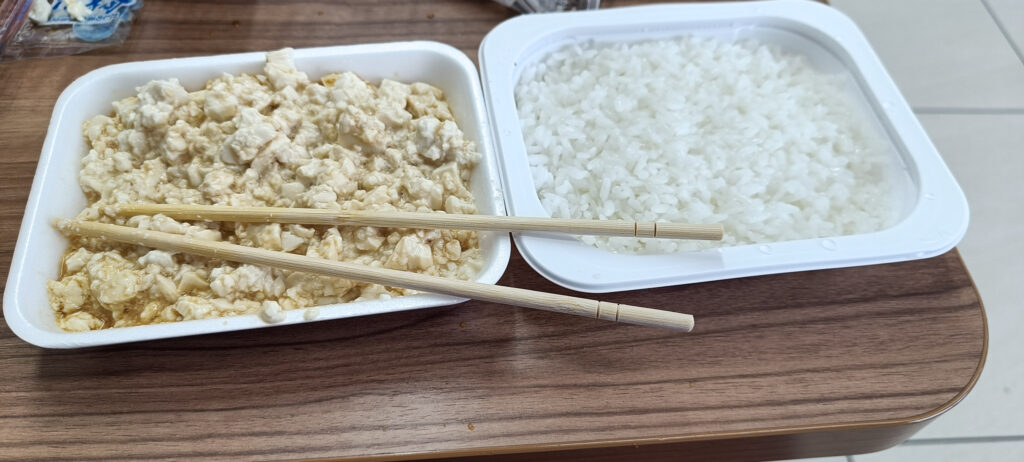
Most convenience stores have pre-made meals such as katsu curries and rice, or salads. You’ll also find handy grab and go food items like onigiri or sushi. For one of our lunches, I got some silken tofu and microwaveable rice in the konbini and used their microwaves to heat it up. A Konbini lunch will cost you about ¥600-1,000.
Many konbini have microwaves and hot water available to heat your food or prepare cup ramen. Bigger konbini may also have seating areas where you can sit and eat your lunch. There is a slight surcharge for eating in, so do let the staff know when you’re at the checkout. You can also request chopsticks at the counter.
Self-Catered Meals
If you’re staying in an Airbnb or other accommodation with a kitchen, you can save more by preparing food at home. By going to a supermarket, you can stock up on rice, vegetables, and proteins and make your own food.
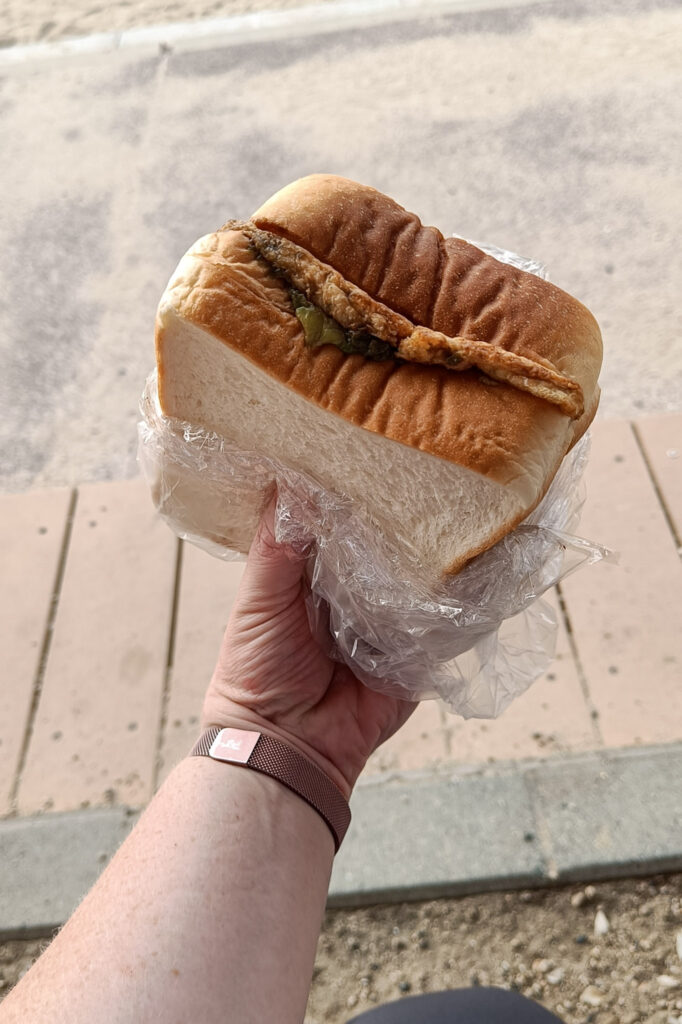
On our stay, I made a couple of tofu stir fries for dinners, and had the leftovers for breakfast. Then for food on the go, I’d bought bread, avocado and abura-age to make sandwiches with.
My tip? Check what the accommodation has before you go shopping. Some will have oil or soy sauce available that you can use to cook with, and others may have cling film, tinfoil or other wrapping. Use the supplies available to inform what you’re going to cook and bring with you.
This is going to be a hugely variable cost, but you can grab ingredients in a supermarket or grocery store to make a decent meal for about ¥800-¥1,500.
Money-Saving Tips: Lowering Your Shimanami Kaido Cost
The Public Rental System is Your Friend
Your choice of bike rental system can be a big factor in how expensive your Shimanami Kaido trip is going to be. I’ve broken the different systems down in more detail in my Bike Rental Guide, and sticking with the public system of bike rentals can significantly lower your expense.
If you need speed or comfort, use the savings from the public rental and use it to upgrade to an E-Bike within that system.
Prioritise Self-Catering
For multi day trips, your accommodation strategy can help you keep costs down if you prioritise cooking and self catering.
When booking a place to stay, optimise for stays that include kitchen access. Whether you’re starting at Onomichi or Imabari, you’ll have access to bigger supermarkets, with a wider choice and lower prices. Plan your meals out in advance and make use of the kitchen in your accommodation to cook your own dinner and make packed lunches, making your trip far cheaper than if you’d eaten out. My vegan Shimanami Kaido guide breaks all of this down, and the same tips can be applied to non-vegans who want to self-cater too.
Be wary of booking ryokans. Their dinner and breakfast plans are usually built into the cost of the stay, adding extra cost. They also may not cater easily if you have any dietary needs.
Carry Cash
The islands are remote and not all shops or cafes will accept digital payments or cards. To avoid ATM fees, withdraw enough cash at a major ATM or Japan Post offices in your starting city. Make sure you’ve got enough to cover your daily food, drink and ferry expenses. Paying in cash also helps you avoid transaction fees, and ensures you’ve always got a few yen to grab a drink from a vending machine!
Pack Smart
A good packing list can help with budget control. On my own trip, we got caught in the rain. I had a waterproof jacket, but my husband didn’t. He ended up needing to buy a rain poncho from a convenience store (and it was too long, so I had to do some roadside tailoring with my tiny Swiss Army knife).
Planning your packing list even before you get to Japan makes sure you’ve got everything you need with you, avoiding paying inflated prices at tourist shops along the ride. Think about things like padded cycling shorts, phone mounts or the aforementioned rain gear – it’ll almost always be cheaper to buy them at home or in big cities and pack ahead of time.
On the flip side of this, avoid overpacking. If you’re prioritising for stays with a kitchen, check if there’s a washer/dryer too – if there is, and there’s detergent included, you can do what we did and wash your clothes, leaving them to dry overnight.
My Experience
For my own Shimanami Kaido cost, it’s hard to calculate exact figures as I didn’t calculate every bottle of water and bag of seaweed potato chips (they’re addictive, okay?). To break it down roughly, based on two people sharing on a 2 day cycle:
| Onomichi Airbnb | ¥20,000 |
| Omishima Airbnb | ¥24,510 |
| Bike Rental | ¥12,000 |
| Ferry fee | ¥220 |
| Water and snacks (estimate) | ¥2000 |
| Groceries in Onomichi (estimate) | ¥2,500 |
| Groceries in Family Mart Omishima (estimate) | ¥2,100 |
| Hotel in Imabari | ¥19,750 |
| Luggage forwarding | ¥6000 |
| Total | ¥89,080 |
This brings us to a total of about £432.39 GBP / $565.77 USD for two people over a two day cycle.
Could we have done it cheaper? Totally.
We could have been smarter about groceries, buying everything in Onomichi instead of making the Family Mart and Lawson stops on the way. We could have picked hostels over Airbnbs. We could have skipped the last night in Imabari and headed on to our next destination.
I could go on, but you get the point: the Shimanami Kaido cost is so variable, based on what your priorities are.
For my husband and I, we needed places with kitchens to make sure we could cook vegan meals, and this meant paying for Airbnbs over guesthouses. We also prioritised packing as light as possible, so this meant a limit on how many groceries we could reasonably bring with us from Onomichi. (Also, I’m an idiot and unnecessarily brought my laptop to Japan, so that took up space in the backpack.)
Final Thoughts
The total Shimanami Kaido cost is determined more by your planning choices than by the distance you cycle. Hopefully you can see from my own examples above and the options I’ve outlined in this post that there are so many different ways of planning and budgeting for this trip. Whether you’re a boujie traveller, or someone who’s happy keeping it simple and cheap, there’s a way to get what you want.
Use this guide, not to give you a to-the-yen total, but to give you a realistic expectation of what this bucket-list adventure is likely to cost you.
Regardless of whether you go luxury or budget, the core part of the experience is the cycle. Hauling yourself up those hills, cycling over the water, feeling the freedom of your bike speeding downhill, and the endorphins and joy you get pushing yourself just that little bit further – all of that is priceless.
This post is part of a series on the Shimanami Kaido.