
Choosing the Perfect Shimanami Kaido Stopover
Cycling the Shimanami Kaido is an awesome adventure, and it’s best enjoyed at your pace, not rushed. While many people do cycle the whole route in a single day (and honestly kudos, my backside could never), doing a multi-day trip gives you the time to enjoy the islands, stop for breaks and do some sightseeing at your own pace.
Part of doing the route over more than one day means you’re going to need to choose your Shimanami Kaido stopover points. Since towns are small and cyclist accommodations can be limited, this is best planned in advance rather than leaving to chance. Getting your accommodation strategy right is important; it dictates where your forwarded luggage ends up, and makes sure you have the necessary amenities.
This guide will walk you through the factors to consider and what you need to know for booking a comfortable and well paced Shimanami Kaido stopover.
Pace Yourself: Why the Shimanami Kaido Stopover Matters
The Shimanami Kaido is about 70-80km long. While that may seem manageable, the effort of climbing steep hills to the bridges between islands and cycling for long periods with all your worldly possessions on your back will take its toll.
Choosing your Shimanami Kaido stopover is an important part of the trip planning. It determines how many kilometres you’ll need to do each day. Most cyclists who do the Shimanami Kaido do it over two days, and that’s the option my husband I took when we did our cycle in September. However, some people do three days, giving you less cycling each day but more time to see the sights on each island.
2-Day Plan
The two day plan is the most popular option and the recommended itinerary for cyclists doing an overnight. It balances the physical challenge of the route with time for sightseeing, photo stops, snack breaks, and rest.
The pace of this option means you’re cycling roughly 35-40km each day.
This was the option I went for, and I’m going to write about my personal experience in an upcoming post, but I found that I was exhausted by the end of the day – but in a good way!
3-Day Plan
If you’re planning on making the most of the sights, travelling with a mixed-ability group, or just want a more relaxed pace, then a three day cycle might be the way to go.
You’ll have two overnight Shimanami Kaido stopovers, and this pace means you’ll cycle about a quarter of the route each day. Allowing for detours to temples, museums or other sights, the amount of cycling per day will probably be about 25km, give or take.
This option gives you more time for longer stops, sightseeing, and breaks up the number of bridge climbs across the days.
Because you’ve got more flexibility with your stopovers, you might choose to stay on Innoshima (Island 2) and then Omishima (Island 4) to break up the journey.
There aren’t many Airbnb options on Innoshima island, but there are hotels, such as the Hotel Innoshima.
Key Stopover Islands
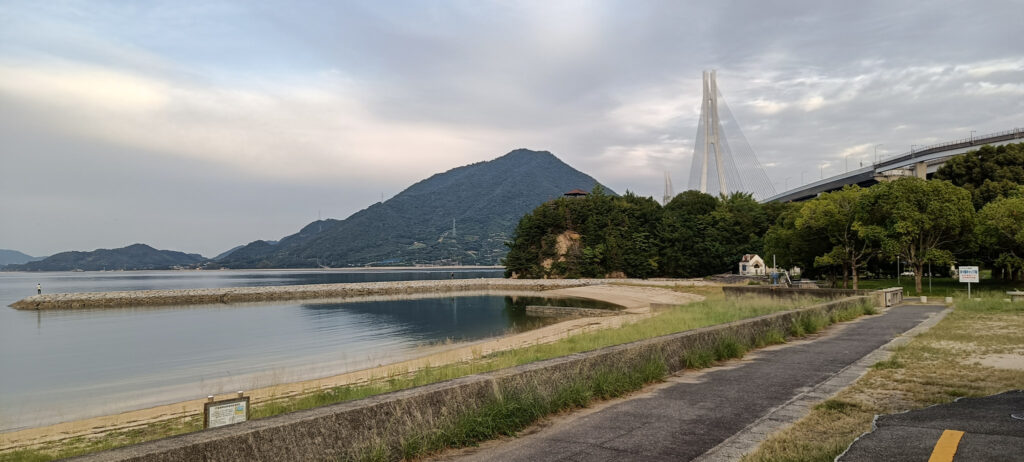
There are two main Shimanami Kaido stopover islands, each one sitting about half way along the route. Choosing the right one for you depends on your priorities and whether you’re going for a two or three day cycle. I’ve covered the islands of the Shimanami Kaido more in depth in this post, which will take you through what to expect from each island, including key points to see.
Here, I’ll talk about which island is the right port of call for you to rest your head for the night on your cycle.
For Two Day Cycles
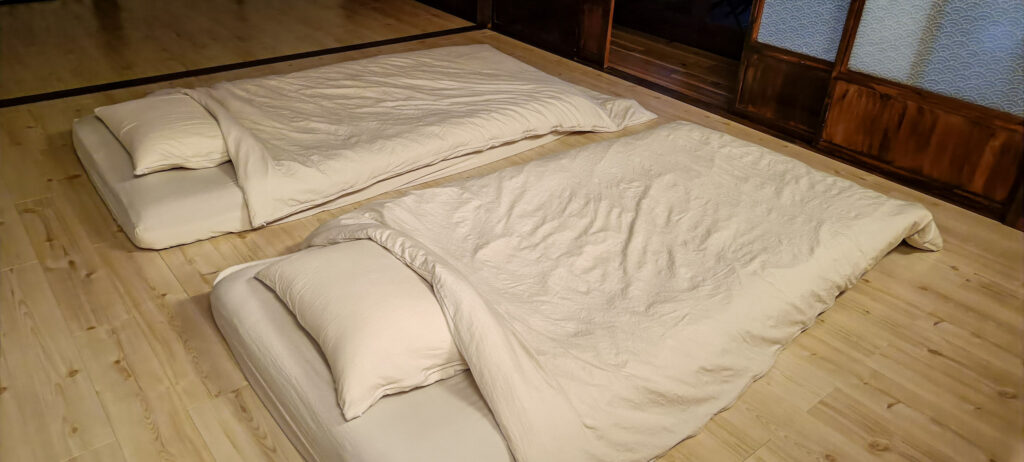
For those on the more common two day cycles, the most popular overnight stops are Ikuchijima or Omishima islands. Both islands sit around the midway point, with Ikuchijima being closer to Onomichi, and Omishima closer to Imabari.
Ikuchijima
Ikuchijima sits right in the middle of the Shimanami Kaido, making it a great option for an overnight stay.
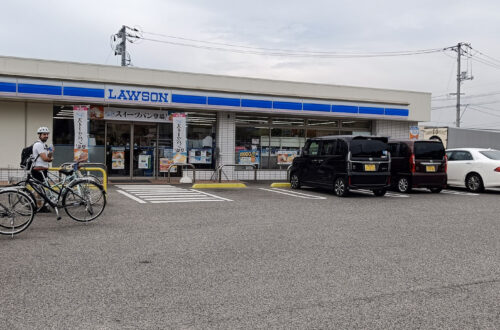
The island has plenty of amenities, like convenience stores and a dedicated cycling terminal, which is helpful if you run into any issues or want to end your cycle journey at this point.
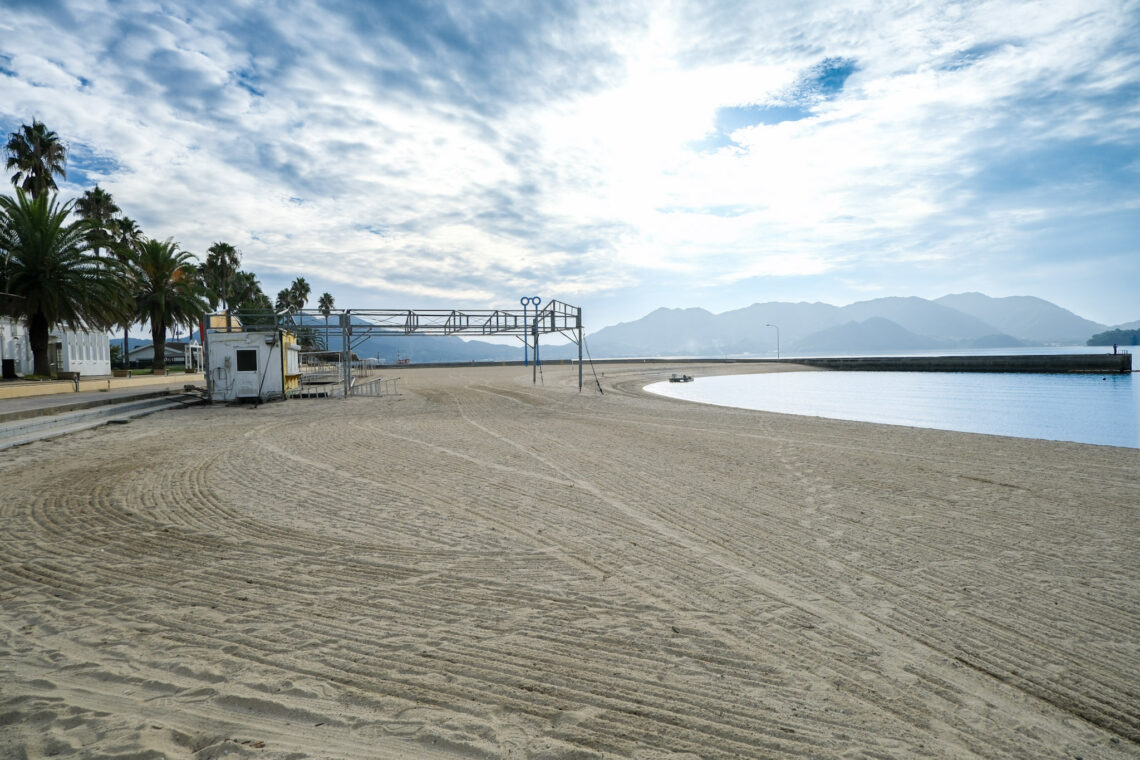
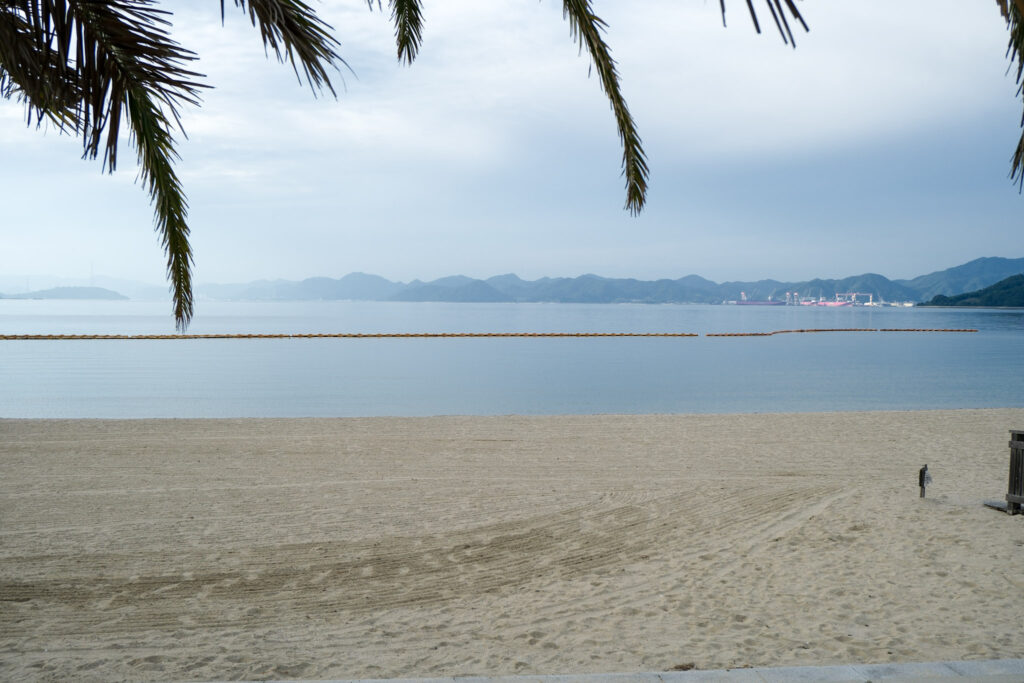
Ikuchijima is also home to Setoda Sunset Beach, which is a beautiful place to stop and take in the scenery. If you spend the night on Ikuchijima, you could always squeeze in a quick morning swim before setting off the next day!
Accommodation Options:
- Airbnb: There are plenty of Airbnb options on the island, ranging in price. Airbnb is a great option if you want cooking facilities, especially if you’re a fellow vegan traveller.
- Glamping such as Glampdome
- Hotels such as Takumi Hotel
- Traditional Ryokans such as the Suminoe Ryokan. If you’re a vegan traveller, a ryokan may not be the best option for you – I’ve covered this more in depth here.
Omishima
Omishima sits a little closer to Imabari, and if you want to front-load the bulk of the cycling onto Day 1, this may be a better option. This is what we did on our cycle, doing about 40km on Day 1, and about 35km on Day 2.
Omishima is a quieter island than Ikuchijima, and there are fewer amenities than its bigger neighbour. There is a convenience store right after the bridge onto the island, so it is possible to do a quick stock up, but from my own experience, I’d advise others (especially vegan cyclists) to load up on supplies earlier in the route.
The island itself has plenty to offer, from shrines to the Mare Gracia onsen – if you’re making good pace, or you’re on a three day trip, this could be a lovely way to rest and recuperate after a day in the saddle.
Accommodation Options:
- Airbnb: Like Ikuchijima, Omishima has plenty of Airbnb options.
- When we booked, it was about a month out from our trip and a lot of the airbnbs were already booked out. We did find this one, and had a great stay there. If you’re going the Airbnb route, make sure you book in advance, especially if you’re cycling during the high seasons.
- Hotel options:
- WAKKA is near the Shimanami Kaido route, and advertises having vegan breakfast options.
- Budget friendly options:
- Ohana is a guesthouse that has male and female dorms. It’s on the opposite side of the island from the Shimanami Kaido, so it’ll add a few kilometres to your journey, but the price is reasonable and it’s right by the Oyamazumi Shrine.
For Three Day Cycles
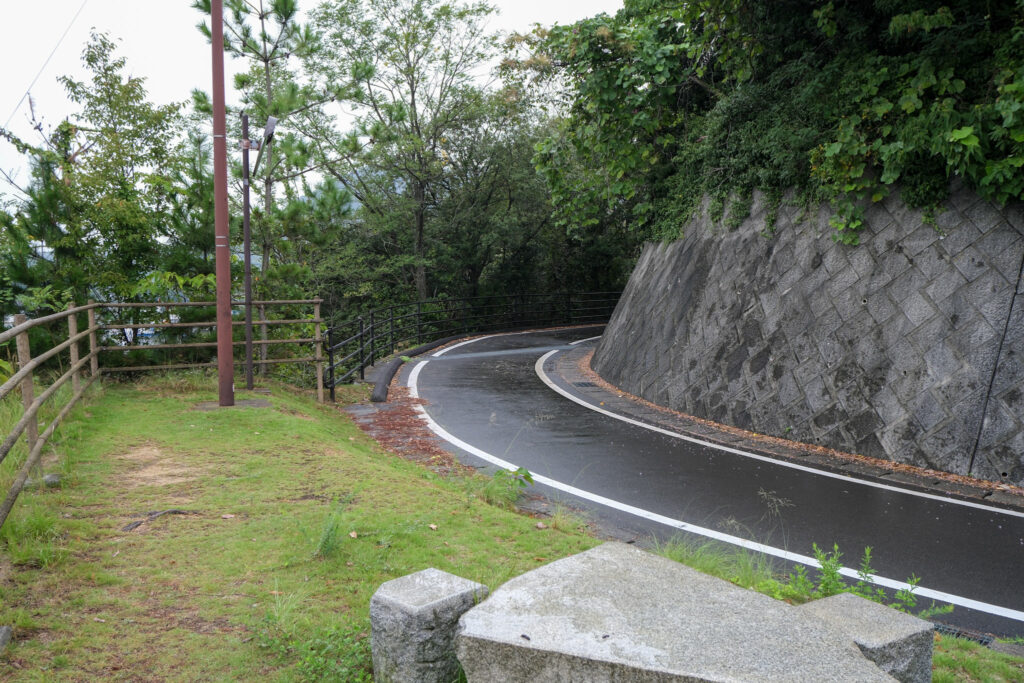
On a three day cycle, you’ve got more time to play with, so you may want to split up your ride fairly evenly. I’ve covered more about each island of the Shimanami Kaido in this post, but to spread out the journey, I would suggest:
- Day 1: Set off from Onomichi, spend the night on Innoshima Island.
- There are hotel options on Innoshima, such as The Hotel Innoshima, or traditional inns like this one.
- Total cycle distance: About 20-25km
- Day 2: Cycle from Innoshima to Omishima, spend the night.
- Hotel options include Omishima Space, along the cycle route, or budget-friendly options like the Tomarigi Hostel
- Total cycle distance: About 20-25km
- Day 3: Cycle from Omishima to Imabari
- Total cycle distance: About 30km
This route breaks up the cycle fairly evenly, although it does mean you’re doing the majority of your cycling on the final day. If you want to make the last leg even shorter, you may choose to stay somewhere like this guesthouse on Oshima island, leaving you only 20km from Imabari.
If your starting point is Imabari, you can simply reverse the above itinerary.
Which to Choose?
The best Shimanami Kaido stopover depends on your travel style and what’s important to you after a long day on the road.
Choose Ikuchijima if your priorities are:
- Amenities: there are more on Ikuchijima and more dining options, plus a dedicated cycle terminal at Sunset Beach.
- Art and culture: You want to visit the Kosani Temple or the museum of art, and stay nearby
- Beach: You want the option to visit the Setoda Sunset Beach for a swim or the chance to relax by the sea at the end of the day.
Choose Omishima if your priorities are:
- Front-loading distance: If you want to push further on Day 1, leaving a shorter, easier ride for Day 2, go with Omishima.
- Spiritual History: The Oyamazumi Shrine and its treasure hall full of samurai armour are on the island.
- Quiet and relaxation: Omishima is a quieter, less touristy atmosphere. The island also has the Mare Grassia onsen.
Essential Planning and Checks
Before you finalise your accommodation bookings, thinking about a few essential pre-checks ahead of time will make your journey smoother and more relaxed. The only thing you should be thinking about on the road is where to stop for a snack or a photo!
Bike Storage
- Always confirm: Before booking any accommodation, confirm that they allow safe and secure indoor bike storage. Japanese inns and homes are very clean, and some will prohibit items like bikes from entering common areas. As the Shimanami Kaido is largely visited by cyclists, many places do offer storage, but check ahead of time!
- Avoid outdoor storage: Never assume you can leave your bike unattended outside. Although Japan is incredibly safe, you will be responsible if anything happens to your rental bike.
Food Options and Cooking
- Traditional Inns: If you’re staying in a ryokan or traditional inn, many include dinner and breakfast. If you have dietary restrictions, you must notify them weeks in advance and check if they can cater to them at all.
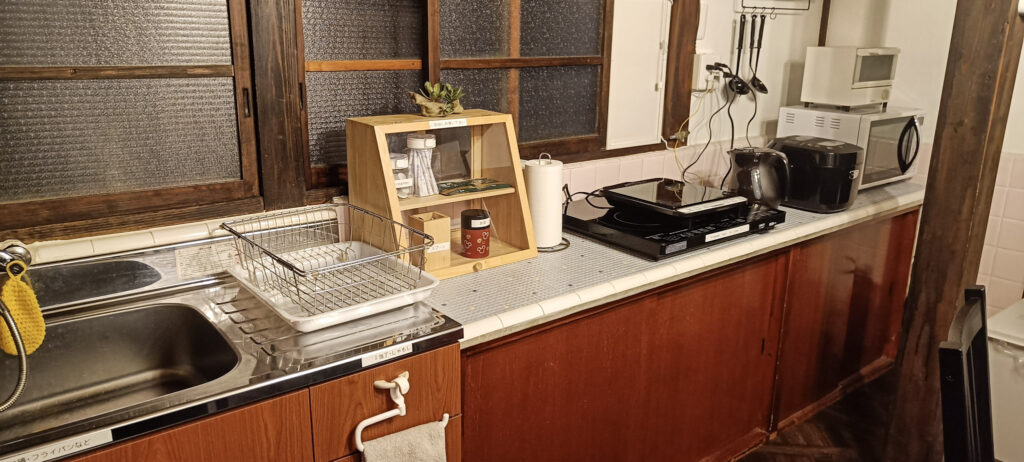
- Self-Catering: If you’re going for an Airbnb or a rental with a kitchen, plan your cooking carefully. Groceries on the islands are often limited to small shops and convenience stores. Stock up ahead of time to make sure you have food to cook dinner!
- Convenience stores: On quieter islands, local restaurants may close early or have days that they’re closed. Your only late night food option may be a konbini (convenience store), so factor this into your plan.
- For vegan travellers:
- I’ve written a guide to Shimanami Kaido for vegans here.
- Be aware that not all ryokans can cater to vegans. I’ve written more about this here.
Laundry and Packing
I’ve written a Shimanami Kaido packing guide here, with a downloadable packing list.
If you choose an Airbnb or self catered route, check ahead of time whether there is a washer/dryer, and if laundry detergent is available. This means you can cut down on the amount of clothes you bring in your backpack, saving you space and weight on the bike.
When we booked our own accommodation, this was a priority for us. We didn’t have any plans to go out for dinner, so I only brought one outfit for the two day cycle. I washed our clothes in our Airbnb on Omishima as soon as we got in, and they were clean, dry and good to go again the next day.
Luggage Forwarding
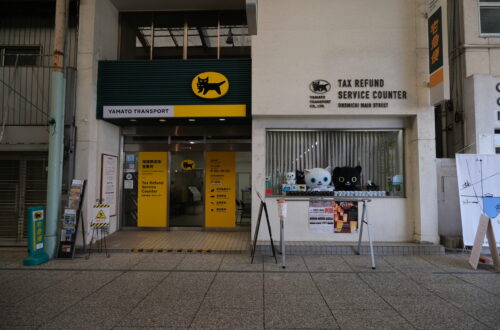
If you’re travelling from overseas with large luggage, making use of Japan’s wonderful luggage forwarding service is a must. I’ve written a guide to luggage forwarding here.
It’s an incredibly reliable and affordable service, and makes the trip not only easier, but possible. Trust me, I saw a guy getting onto his bike with a suitcase awkwardly propped up in the basket and it did not look fun.
Final Thoughts
Cycling the Shimanami Kaido is an incredible experience, and as much as I admire those who have done it in one day, if you truly want to experience the islands and the route itself, planning an overnight stay is the way to do it. Even as I’ve been writing this post and the accompanying island guide, it’s made me want to do it all over again, maybe even for longer next time!
Whatever accommodation options you go for, make sure you plan it well in advance. Accommodation books out quickly, especially during the peak seasons of Spring and Autumn. Remember to confirm bike storage before you book, and make use of the Takuhabin luggage forwarding services. When we got to our final hotel in Imabari, our luggage was already there waiting for us – and believe me, I was glad of some clean, dry clothes at that point!
If you’re reading this in advance of your own Shimanami Kaido trip, then please know I’m incredibly envious of you, and wish you an incredible journey.
This post is part of a series on the Shimanami Kaido.