
Shimanami Kaido Bike Rental Guide
Completing the Shimanami Kaido cycle route in Japan is an incredible experience, but for most of us foreign travellers, we’re not going to have our own bikes with us. Luckily, because it’s such a popular and well known cycle route, renting a bike is super easy and there are plenty of options available. I did the cycle on my most recent trip to Japan, so I’ve put together this guide to Shimanami Kaido bike rental to make it easier for you to plan your journey too!
In this guide, I’ll cover the types of bikes, where to rent them from, drop off points and other useful pointers to make it easier to plan your ride.
Rental System Breakdown
Shimanami Kaido bike rental falls into two systems – public and private. Each one has its benefits and tradeoffs, so knowing which is right for you makes it easier to choose and book your bike ahead of time.
Public Bike Rentals
This is the system managed by the official Shimanami Kaido Cycling Terminal. It’s designed for maximum accessibility and tends to be the cheapest option.
Drop off freedom
The benefits of this option is the drop off flexibility. They have about 10 rental stations across the route, located on different islands. For most bike types, you can drop your bike off at any of these terminals, giving you more flexibility if you want to cycle to one island and get on a bus or ferry to the next, or who need to bail due to bad weather or any other reason.
Cost
This is the cheapest option, costing about ¥3000 (about £15) per day for a standard bike. E-bikes and tandems are available at some stations, and these will cost more. Each bike rental comes with a helmet, which must be worn during your ride.
The Tradeoff
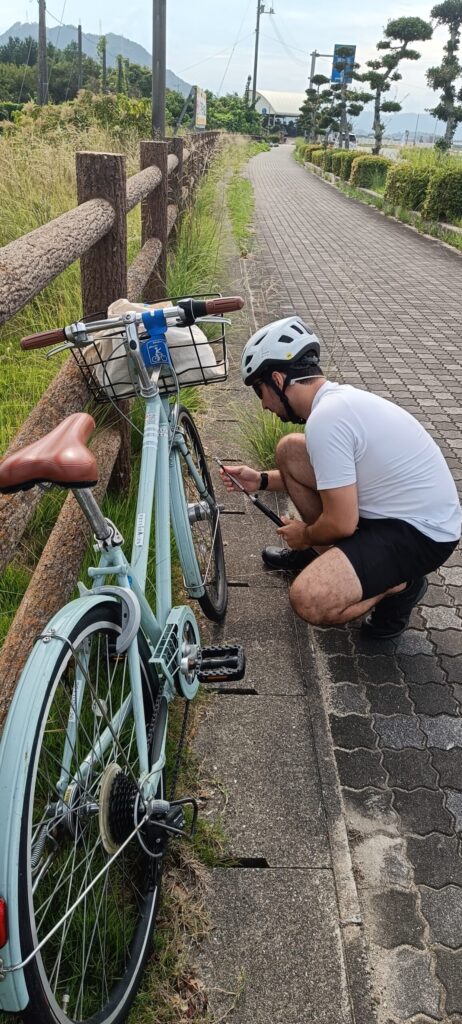
The quality of the bikes are good, but basic. The bikes are mostly standard city bikes: sturdy, heavy and reliable, but not built for speed or performance. For casual cyclists like me, they’re perfectly fine for the cycle and it was one of these bikes I used for my own ride. If you’re a seasoned cyclist or someone who’s used to a higher-spec cycle, going for the private option may be more comfortable for you.
Likewise, selection can be limited, especially for very tall or short riders. Again from my personal experience, I’m 5’2″ (about 1.58m), and I found the standard bikes fine. Granted, I’m also used to riding around London on Lime bike rentals that seem to have pedals as optional accessories, so do with that information what you will.
If you’ve got your eye on an e-bike, these are high demand and limited supply with the public system. You absolutely need to reserve these in advance. We showed up to the terminal in Onomichi at 8:10am, and the e-bikes were already all spoken for. E-bikes are one day rentals, meaning you need to complete the cycle on the same day and drop the bike back during the terminal’s operating hours. Battery assisted bikes can be rented for multiple days. You can see the bikes available and make a reservation here.
Private Bike Rentals
These are shops like Giant or local, independent stores like The Red Bicycles in Onomichi. These are more expensive options than the private, with basic city bikes starting from about ¥3,800 (about £18.50), and higher spec bikes going for up to about ¥17,160 per day (around £84).
The Tradeoff
While these bikes are a higher cost option, the quality and performance of the bike reflects that. This is where you go for high performance bikes that are usually lighter than the public city bikes.
Private bike shops also prioritise the fit of the bike. Stores like Giant will offer specific models for certain heights or have women’s bikes available. Giant also include a bike pump and spare inner tube when you set off, in case you run into trouble on the road.
Things to note
Private rentals usually have a fixed drop off and pickup location, and in some cases don’t allow one-way bike rides. If you’re planning on cycling from Onomichi and Imabari, for example, check ahead of time whether this is possible. You also most likely won’t be able to drop the bike off at a stop along the way if you’ve already committed to a certain end point, so it comes with less flexibility than the public bike rentals.
Which System to Choose?
- Budget traveller: Public rental.
- It’s the lowest cost option, and the bikes are still good quality.
- Inexperienced or casual cyclists: Public rental.
- Gives you more flexibility for unexpected changes, and you likely don’t need a high-performance bike.
- Travelling with kids: Public rental.
- Again, the flexibility of drop off terminals means you can bail at any point, and the public rentals do have children’s bikes available.
- Mixed ability group: Either system has its pros and cons.
- A public rental gives you the flexibility to change plans and has different types of bikes available, but a private rental has a wider selection meaning everyone gets the right bike for them.
- Serious and experienced cyclists: Private rental.
- Choosing a private option for your Shimanami Kaido bike rental means you have access to high performance bikes, including lightweight bikes to cover the 70km comfortably. If you’re someone who’s used to high spec bikes or you’re planning to complete the route in a short amount of time and care about speed, this is your best option.
Choosing Your Bike
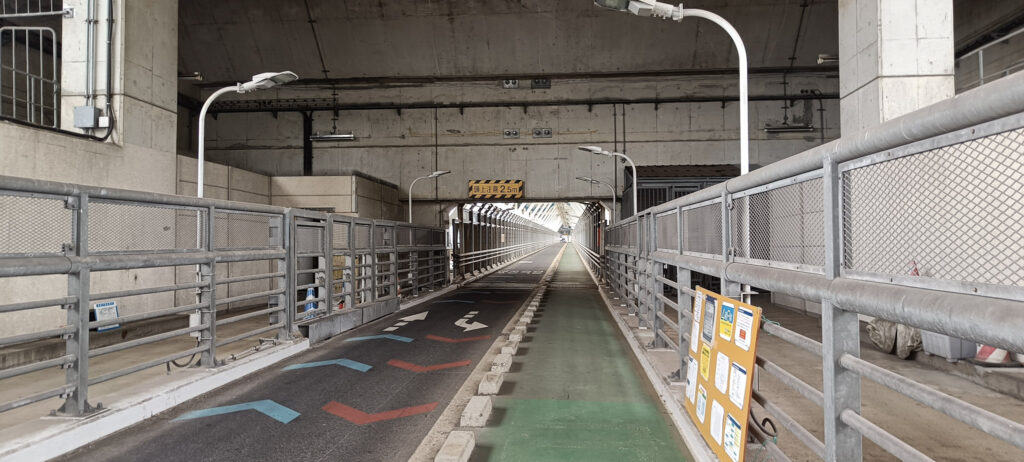
This is the most important decision you’ll make for your Shimanami Kaido bike rental as it’ll impact your pace, comfort and how much energy it’s going to take you getting up to those bridges. We did our Shimanami Kaido ride on standard city bikes over two days. It was doable, but the bridges were tough going. We met a Swiss family on the route who’d rented e-bikes, and said it made it so much easier.
Like everything else, there’s tradeoffs, so let’s get into it.
The E-Bike
E-bikes are available from both public and private rentals, but there are fewer of them than city bikes or road bikes, so reservation is essential. We booked our bikes about a month out, and the e-bikes were all gone for the two days of our cycle, so get in early if you want one.
E-bikes massively speed up the climbing and cycling time, but the tradeoff is that the rental policies are more restrictive. Some can only be rented for one day, or the pick up and drop off location must be the same. Check with your provider and plan your cycle accordingly.
Who it’s for:
- Mixed-ability groups.
- If one person is a keen cyclist while another is a casual or nervous cyclist, using an E-Bike helps keep the pace consistent and makes the ride easier.
- Heavy packers.
- If you didn’t use luggage forwarding, you’ve got heavy bags, or a food stockpile, the assistance of the E-Bike on hills will give you a big boost.
- Time conscious riders.
- E-bikes really cut down on the climbing time of hills and help speed you along. If you’re trying to complete the cycle in one day, or you’re trying to make good time for onward journeys or other plans, an E-bike may be the best shout.
- Mobility issues.
- For people who may have concerns about knee or hip strain, the E-bike takes that away and means less stress on your joints.
Things to Note
E-bikes are the most popular choice for Shimanami Kaido bike rental shops, and the availability is limited, especially in the public system. You absolutely must reserve these well in advance, especially during spring and autumn which is peak cycling season.
It’s also worth checking the battery life with the rental shop. If you’re on a multi-day cycle and are on a public rental, most of the terminals will allow you to swap your battery for a fully charged one. Otherwise, you may want to consider when you use the battery assist (those hills!) and when you save the power.
The City Bike
This is the default bike from the public rental system and the most widely available model across both systems. They usually come with fairly comfortable seats and a basket in front. This is the type of bike that we did our cycle on, and it absolutely did the job.
Who it’s for:
- Casual cycle tourists.
- If you’re planning to take it at your own pace, stop whenever, and are focused on enjoying the scenery or taking your trip over a couple of days, this is a good option.
- Budget travellers.
- This is the lowest cost option from both public and private rentals, making it the most affordable way to do the Shimanami Kaido.
- Single day riders.
- If you’re only planning to do a short section of the route, you probably don’t need high performance gear and these bikes are perfect for that.
- Two-day itineraries.
- Because these are the most common bikes, they’re also typically the most flexible in drop off points or allowing one-way rides. We chose these for our two day cycle because we could pick up in Onomichi and drop off in Imabari.
- Flexibile Itineraries.
- If you’re not sure where you want to end your ride, the weather is looking unpredictable, or you’re cycling with kids or others who may want to end earlier than planned, then the standard city bikes are the most flexible in terms of drop off locations.
Things to Note
These bikes are heavier than road bikes. You’ll definitely feel the weight on the hills up to the bridges, which are usually about 1km long, following a spiral pattern. I’ll be real with you, towards the end of our cycle, I stopped bothering to even attempt the hills, and just hopped off and pushed each time we approached a bridge. If you’re doing a single day ride, this can get exhausting quickly.
The Road Bike
Road bikes are lightweight, fast and are mostly found at private rental companies. These are the higher performance bikes and typically reflect that in their rental prices.
Who it’s for:
- Experienced cyclists
- If you regularly cycle over 50km+ and want speed and efficiency, this is your bike.
- Two-day itineraries:
- If you need to cover significant ground each day and want to add in sightseeing stops along the way, these bikes are lighter than the city bikes and will take less physical effort.

Things to Note
Road bikes require a certain riding posture, given the position of the seat and handlebars. This can be uncomfortable for less experienced or casual cyclists, as well as those who have back pain or issues with their core muscles.
The seats are also usually built for speed and aerodynamics, and as such, are narrower than those you’ll find on city bikes. If you’re not used to this, it’ll be far less comfortable, even with some padded cycling shorts.
They’re also the most expensive option, going up to about ¥17,000 per day for the highest spec models.
Comfort and Accessories
Regardless of which bike you choose, you’ll need some items to make sure you have a comfortable, safe and fun ride.
- Saddles
- Some bike shops allow you to swap the saddle for a wider, more cushioned one if you ask. Private rentals are more likely to offer this, and it’ll depend on availability. We did ask for this on our public rentals, and were told no.
- Panier or rear rack
- If you’ve got a lot of bagged with you, check whether the bike comes with a rear rack or basket to hold your bag. Riding with a huge bag on your back for 8+ hours is not the dream.
- Basket
- City bikes tend to come with baskets, which can be very handy. I had my small backpack on, but kept a tote bag in the basket of things I wanted to reach easily, such as water, phone and camera.
- Helmet
- Confirm whether helmets are included in the price, and check they fit comfortably. Public rentals all include helmets.
- Phone mount
- The Shimanami Kaido path is so easy to follow, and is marked by a blue line on the road the whole way, but having a phone mount can help with navigation and keeping time.
Logistics: Pick Up and Drop Off
Your pick up and drop off options are predetermined by which system of Shimanami Kaido bike rental you choose. You need to know this information before you go, and plan your route and time accordingly. Getting it wrong can lead to headaches or unexpected changes mid-ride.
The Starting Gates: Onomichi and Imabari
The Shimanami Kaido officially runs between two main points, Onomichi on the Honshu side, and Imabari on the Shikoku side. I’ve written another post about getting to and from the Shimanami Kaido, to make it easier for you to plan.
Onomichi sits on the northern side, on Japan’s main island of Honshu. Most cyclists choose to start here, as it’s slightly easier to reach by train. It’s also a little easier to cycle, as the winds of the Seto Inland sea tend to be southward, meaning they’ll be at your back.
Imabari is the typical end point, but some cyclists may also choose to start here and work their way up.
Whichever one you choose, both are the main hubs for the Shimanami Kaido so you’ll find plenty of bike shops, restaurants and accommodations in both.
Public Rental Drop Off
If you go for the public rental system, the drop off logistics are so easy, and this is one of the main selling points of this bike rental system.
There are about 10 terminals across the islands, and you can drop your bike off at any of them within working hours. This is great if you’re not sure of your route, fitness level or weather. If you get tired or run into trouble or want to bail early, you can drop off the bike and then take a bus, train or ferry to your final stop.
There is generally no charge for dropping off the bike at one of these intermediate stations, and you can see a map of the locations below:
Private Rental Drop Off
Private rentals are more restrictive in their drop off locations. There are typically fixed end points and you must return the bikes to the branch specified. This is usually the bike you rented it from, and you cannot use the public terminals to return private rentals.
If you decide to end your ride earlier than planned, you’re responsible for getting the bike back to the agreed end point. This can mean getting a private transfer or navigating ferries with the bike.
Some bikes from private bike shops can be dropped off in a different location to the pickup, and this is something you’ll need to confirm with them well in advance of your ride. Some shops will charge an extra fee for a one-way journey.
Reserving Your Bike
I’ve already mentioned this multiple times in this post, but I cannot stress it enough: Book your Shimanami Kaido bike rental well in advance, especially if you want an E-bike or a specific model.
Some rental points, especially the public rentals, have a handful of bikes available for on the day walk-ins but they’re not guaranteed. If you’re reading this blog post, then chances are you’re already thinking about how to plan your trip, so start looking into the rental options now too.
If you do decide to wing it and try your luck on the day, then more power to you, but do be prepared to have a back up plan for your day just in case!
Bike Rental Links
- Public bike rentals
- Private rentals:
Final Advice
Bumps in the Road
Cycling for such a long distance can mean that you get a puncture, flat tyre or run into other issues.
If you’re on a public Shimanami Kaido bike rental, you can get help at any of the ten terminals along the route, or call them for assistance. Their number is listed on their website, and you can confirm this at the pickup spot.
On our own cycle, my husband got a flat tire and the pump he’d brought with him was the wrong one for the type of tire. A couple of Shimanami Kaido workers were driving by and stopped, coming over to help. A man appeared out of nowhere with a pump, like some kind of angel of cycling, sorted out my husband’s bike and then disappeared to wherever he came from.
For private bike rentals, you’re usually expected to manage flats and punctures by yourself, and they give you a spare inner tube and kit for this reason. If you use the kit on the road, you may get charged for it at the drop off point.
All along the route, you’ll see signs with phone numbers for help if you were really stuck, and most convenience stores you pass will have pumps and places to fix up your bike.
Comfort is Key
Make sure your saddle height is right before you leave your starting city, and remember that you can ask for wider saddles (subject to availability).
I also strongly recommend packing as light as possible to keep as much weight off your back as possible, or consider a panier bag/rack if necessary. My Shimanami Kaido packing list is a resource you can use to make sure you only pack the essentials, or read up on Japan’s wonderful luggage forwarding service.
Bike Security
Most bike rentals will come with a lock, whether that’s a built in lock or a separate one. Check that this works or ask about it when you’re picking up your bike. Even if you’ll be in the saddle most of the day, you’ll need to lock up your bike when you pop into the shop, or if you’re on a two-day cycle or longer.
Likewise, if you are doing the Shimanami Kaido over multiple days, you’ll need to check your accommodation has a safe place to lock the bike. On our own stay, we checked with the Airbnb whether we could bring the bike inside the property, so do find out beforehand. I’ve written another post on choosing your Shimanami stopover here, if you need ideas.
Last Thoughts
Choosing your bike and rental method is probably the most important decision you’ll make as it impacts your comfort, speed and even route for your cycle. To make sure your trip is as stress free as possible, decide early whether you want the flexibility of the public Shimanami Kaido bike rental, or if the performance of the private bikes are your priority.
Once you’ve secured your ride and planned your route, you’re good to go! Happy cycling!
This post is part of a series on the Shimanami Kaido.