
The Islands of the Shimanami Kaido
Mukaishima Island
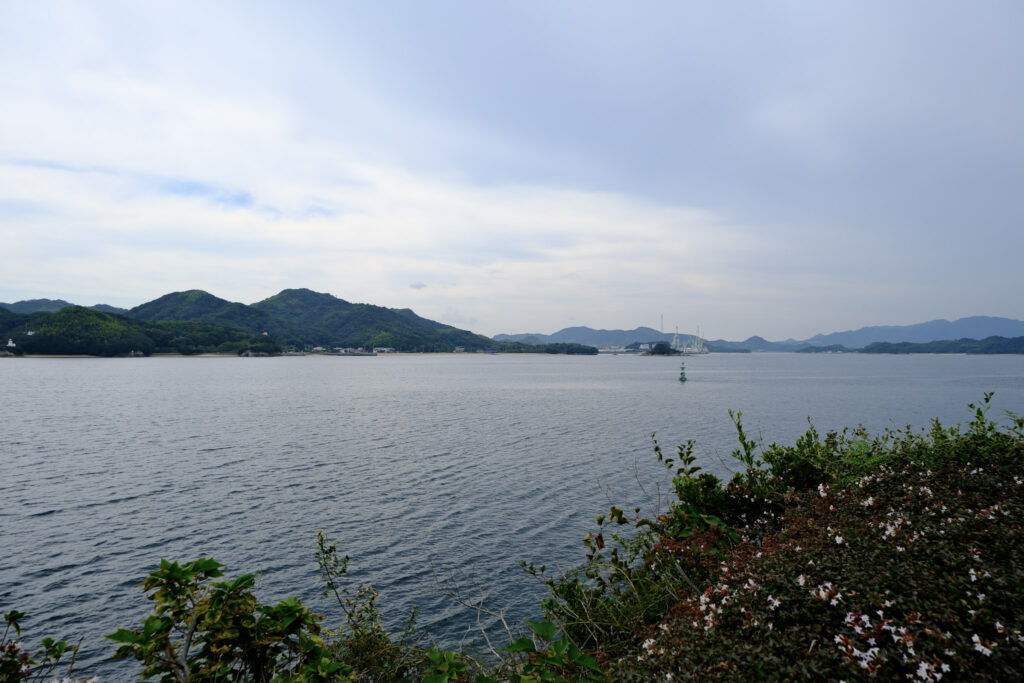
Mukaishima is the closest island to Onomichi, and the first of the Shimanami Kaido islands after leaving Japan’s main island of Honshu. There’s a ferry available from Onomichi to Mukaishima, which allows bikes on board. A ticket, including bike passage, costs about ¥110. Many cyclists choose to take this ferry to start their Shimanami Kaido, skipping the bridge that connects Onomichi to Mukaishima. This is generally the advised option, as the official cycling route does not use the Shin Onomichi Bridge, which is a large vehicle bridge and less safe for bikes than the rest of the bridges on your journey. The official start means either using the ferry, or taking a detour inland (which most people do not do).
The terrain on this island is pretty flat, making it an easy start to the cycle journey. There are a couple of scenic stops on the route, including one just before the Innoshima bridge off the island. This is a common first stops for cyclists wanting to grab a couple of photos before continuing onward.
The cycling distance from Mukaishima to Innoshima is about 9.4km, and a full loop of the island is about 20km. Beyond the cycling trail, you could head up to the viewpoint on Mount Takamiyama, or visit the local chocolatier, Ushio Chocolatl.
Innoshima Island
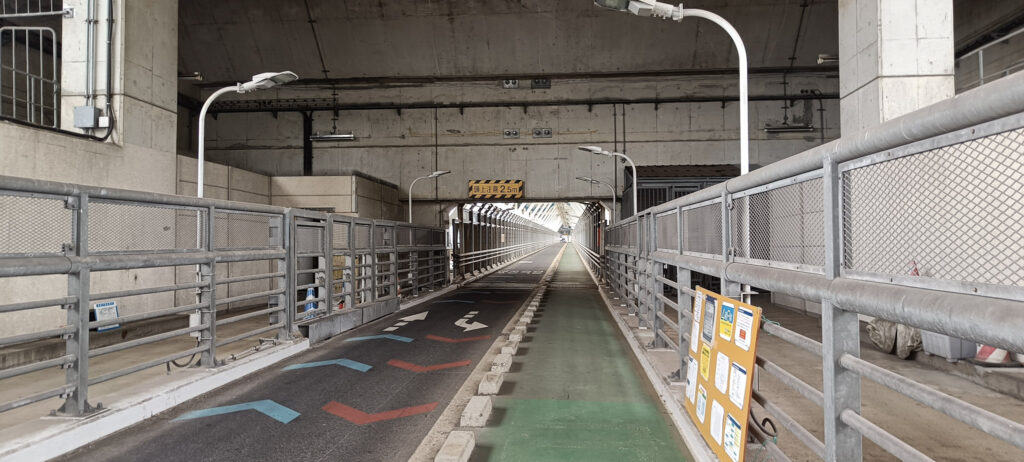
The next of the Shimanami Kaido islands on the route is Innoshima. This island is well known for Innoshima Suigun Castle, a reconstruction of one of the bases of operation for a pirate group about 500 years ago. You could also make your way up to the Shiratakiyama Observation Deck, with a view out over the Seto Inland Sea.
Oyama Shrine on Innoshima is known as the “cyclist’s shrine”, with services to bless cyclists and their bikes, plus amulets and charms for sale.
If you’re planning a three-day Shimanami Kaido cycle, Innoshima is a good option for your first stopover. There are hotels on the island such as the Hotel Innoshima which has a bathhouse to help rejuvenate you, while Airbnb options look a little sparse.
As a stopover point, Innoshima has plenty to offer, with restaurants dotted around the islands as well as in the main town.
The Shimanami Kaido through Innoshima covers about 10km.
Ikuchijima Island
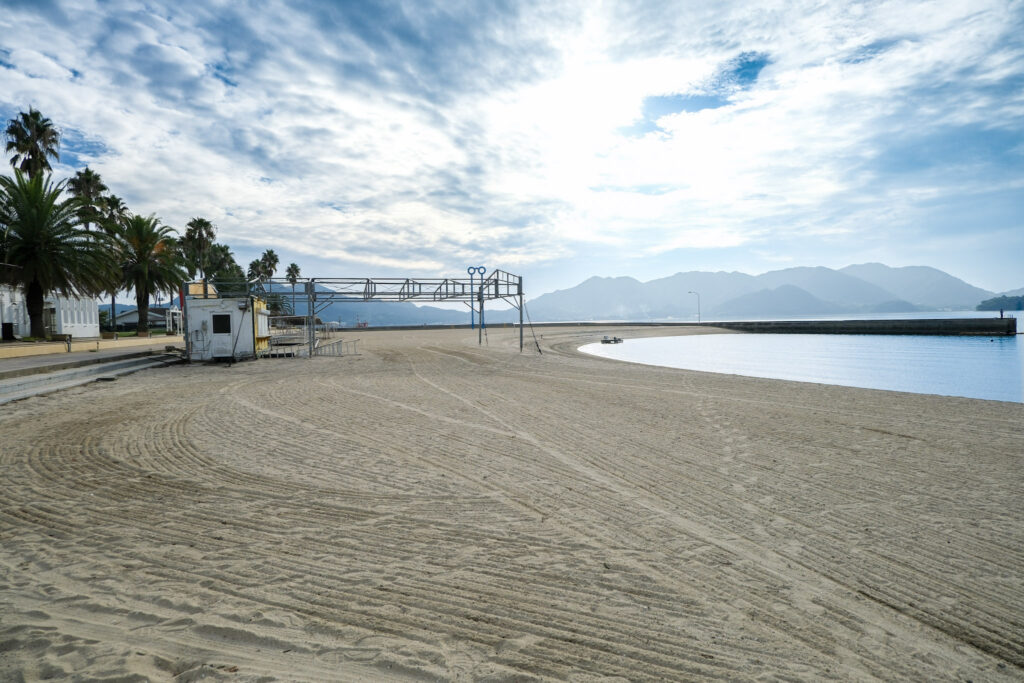
Ikuchijima is famous for its art, and is home to the Hirayama Ikuo Museum of Art. Named for the Japanese artist, Ikuo Hirayama, the museum houses many of his works as well as work from local artists.
Keeping in the artistic vein, the island 17 art works installed around the island, with many around the Setoda Sunset Beach area.
On the spiritual side, Kosanji Temple blends traditional Japanese architecture with modern art, especially its centrepiece, the Hill of Hope.
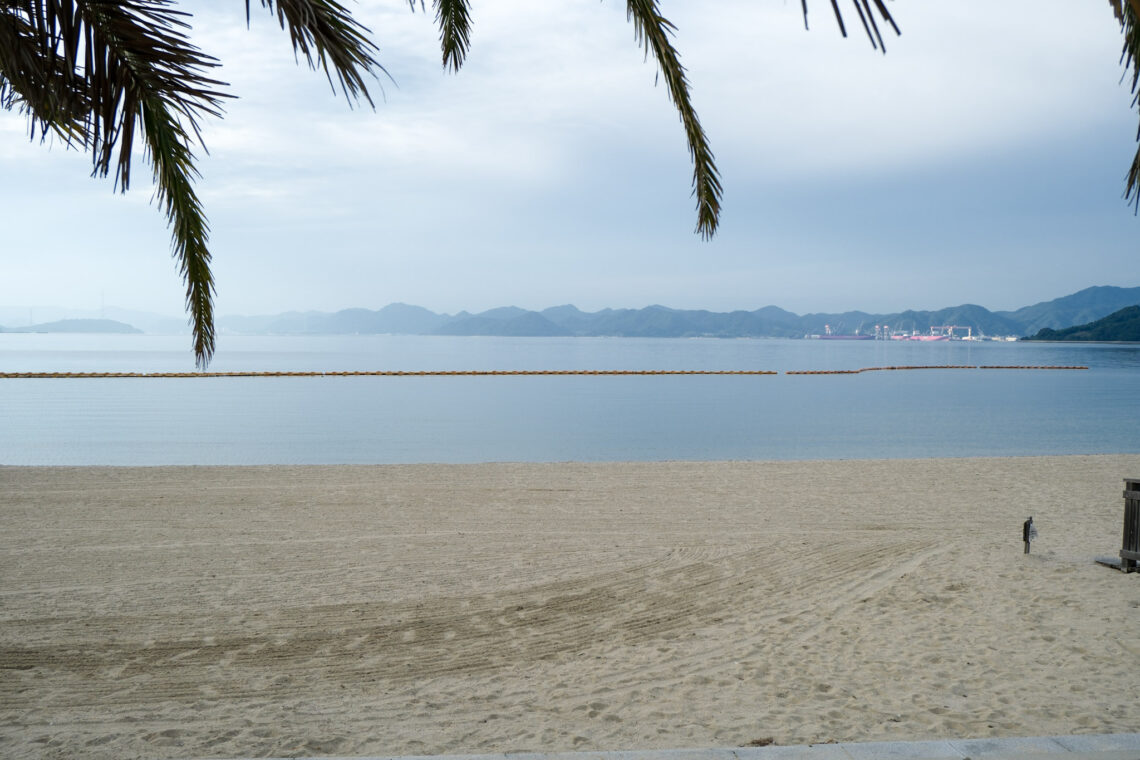
Sunset Beach is also a wonderful place to stop for a break along the cycle route. You can go for a quick dip in the blue waters, or sit for a moment and enjoy lunch with the sound of the waves in the background.
For shopping, Shiomachi Shopping Street is a pretty street near Setoda Port, with small, local shops and places to grab a bite.
The Shimanami Kaido through Ikuchijima is about 12km.
Omishima Island
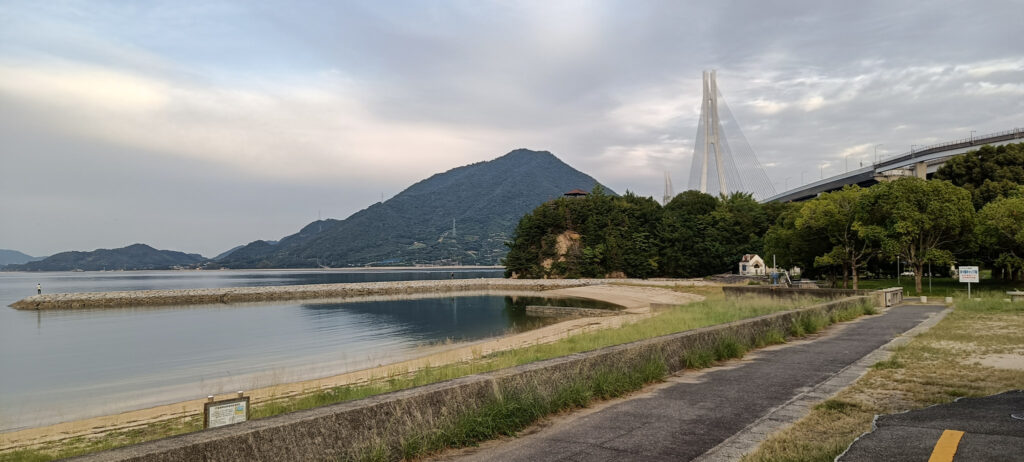
If Ikuchijima is the island of art, its smaller neighbour, Omishima, is often referred to as the “Island of the Gods”. Omishima is home to Oyamazumi Shrine, dedicated to the god of the sea and mountains. Traditionally, this shrine was visited by warriors, and today you can visit the treasure hall to see displays of samurai arms.
The Shimanami Kaido only takes you through a small stretch of the island, but if you have the time to spare, you could take your bike off the cycle route to see more of the island or visit museums such as the Toyo Ito Museum of Architecture, or the modern art museum of Tokoro Museum Omishima.
Omishima island is also known for its hot springs bathhouse, Mare Grassia Omishima Onsen. If you don’t have time to stop at the onsen, the roadside station of Tatara Shimanami Park sells local goods such as the Mare Grassia bath salts.
The major bridge here is Tatara bridge, often called “the Harp Bridge” for its cables.
The Shimanami Kaido through Omishima is about 7km.
Hakatajima Island
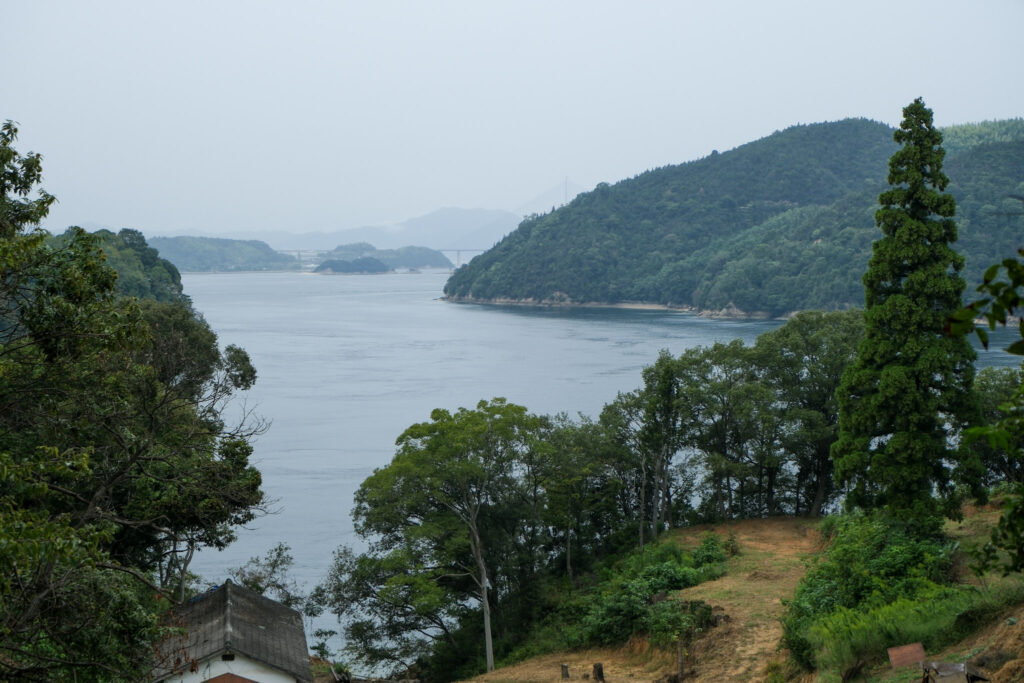
Hakatajima island is the shortest Shimanami Kaido islands section. It’s typically not somewhere people spend the night although there are campsites and a couple of guesthouses, and instead is a great spot to stop for a snack or a swim.
It’s known for its production of salts, Hakata Salt. Today, most of the salt production is done off the island, but traditionally, it was produced on Hakatajima using traditional methods. Today, its one of the most popular souvenirs on the island, and salt is used in local dishes like Hakata Salt Ramen.
Much of the island is a national park, and on top of Mount Hirakiyama, you’ll find Hirakiyama Park. This is one of the most popular places to see the cherry blossoms in the springtime, with over 1,000 trees blooming in sakura season.
The Shimanami Kaido through Hakatajima is about 3km.
Michikajima Island
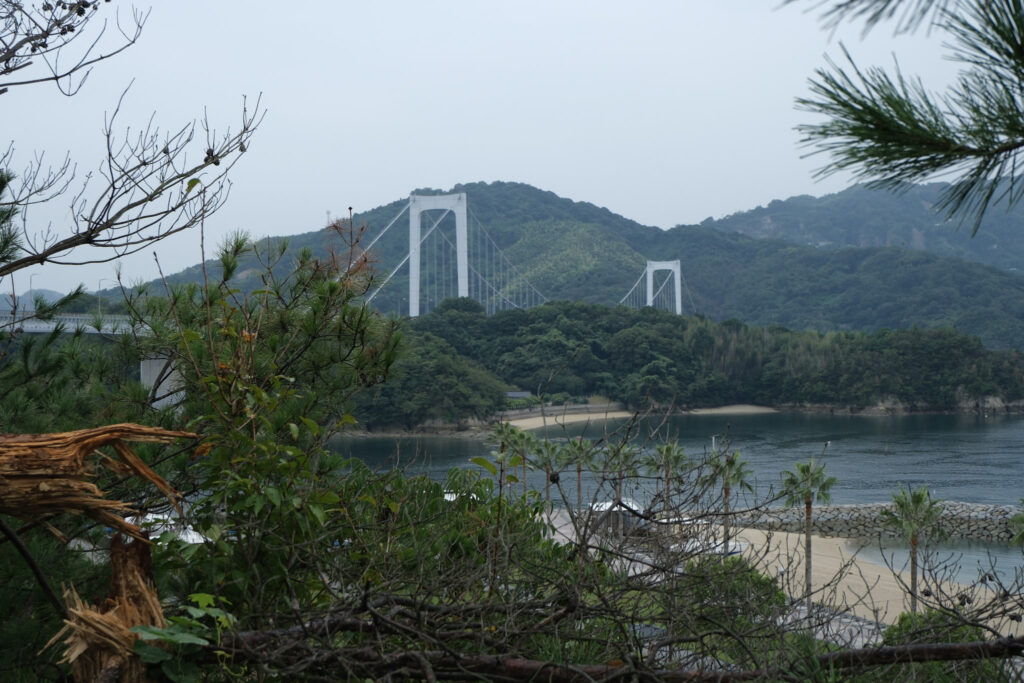
Also called Mishima or Michika island, this tiny island isn’t technically part of the cycle route. This part of the Shimanami Kaido is all bridge – the bridge passes over Michikaijima island, with exits to get onto the island itself.
It’s a tiny island with a small campground for travellers who truly want to stray off the beaten track. This is a free, no-reservation campground with basic facilities such as a toilet and cooking area, but no running water or shops.
Oshima Island

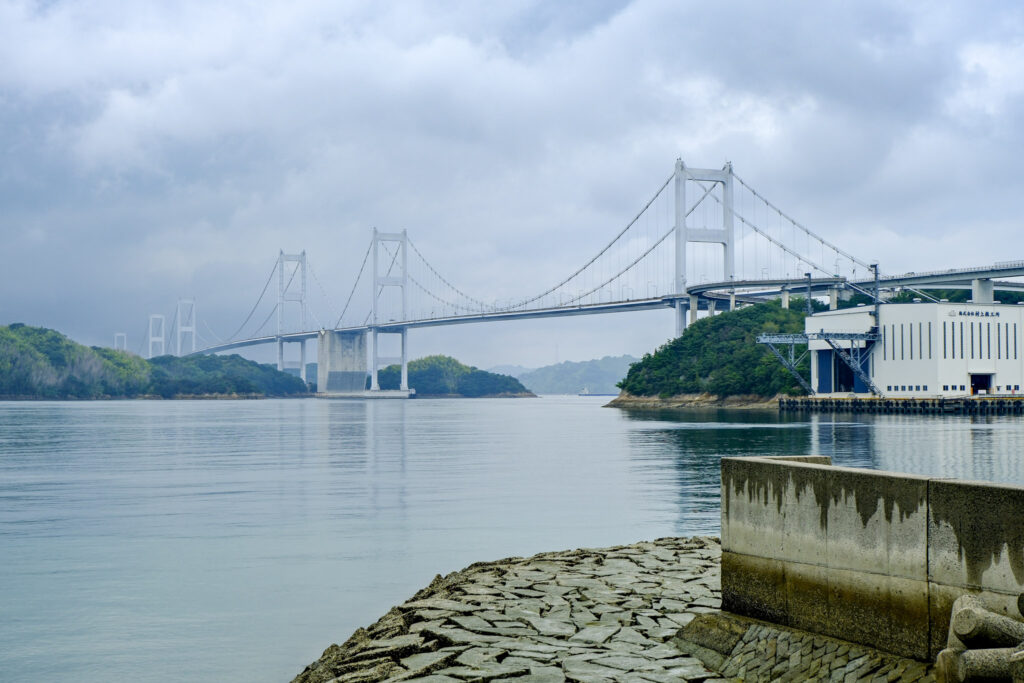
Oshima is the final of the Shimanami Kaido islands before Imabari, and its famous for the Kurushima Kaikyo Bridge – the final bridge of the Shimanami Kaido. The bridge itself is 4km long, and I remember cycling over it, soaked to the skin, cranky and tired, and just feeling this sudden elation. Here I was, on this massive suspension bridge, with the sea around me, and the satisfaction of having nearly done the whole Shimanami Kaido.
Many cyclists, especially one-day cyclists, try to pace their ride to reach this bridge by sunset to take in the incredible views that see them onward to Imabari.
But let’s not get ahead of ourselves. Before this final boss, the rest of the island has plenty to offer too. Likely at this point in your journey, you’re tired and ready to call it a day. However, if you’re starting from Imabari, or you’ve got the energy to explore it, there’s plenty to see here too.
There are boat tours from the island, and plenty of restaurants dotted about too. This island also has more convenience stores than previous islands. It was actually in the Lawson on Oshima that we stopped for our final lunch of the Shimanami Kaido.
If you’ve got the energy to make your way up to Kirōsan Observation Park, you’ll get a gorgeous view out over the suspension bridge and the Seto Inland Sea. Be warned, the climb up to the observation park is steep and strenuous. We gave it a miss on our trip because of flagging energy levels, but it’s one for a return visit!
The Shimanami Kaido through Oshima is about 13km before you get to the final bridge to take you into Imabari.
Final Thoughts
Cycling the 70+ kilometres from Onomichi to Imabari is an achievement in itself, and even if you don’t wander off track on the islands, the views along the route are truly incredible. However, if you have the time and the pacing to be able to explore some of these islands, you’ll discover sights and experiences that many miss.
From the pirate history of Innoshima to the artistic vibes of Ikuchijima, each one of the Shimanami Kaido islands has its own history, culture and personality. The distance through each island is short, but taking time to explore further gives you a chance to really experience the journey.
The bridges between each of the Shimanami Kaido islands are incredible works of engineering, but they’re also emotional benchmarks, signalling your progress and giving incredible views that make the steep climbs (almost) feel worth it.
Whether you’re looking for art, temples, shrines, views or just the elation of physical exertion, the Shimanami Kaido islands give you a chance to experience all of that and appreciate the heart of coastal Japan.
This post is part of a series on the Shimanami Kaido