
A 2026 Guide to Vegan-Friendly Ryokans in Hakone: The Verified List
Introduction
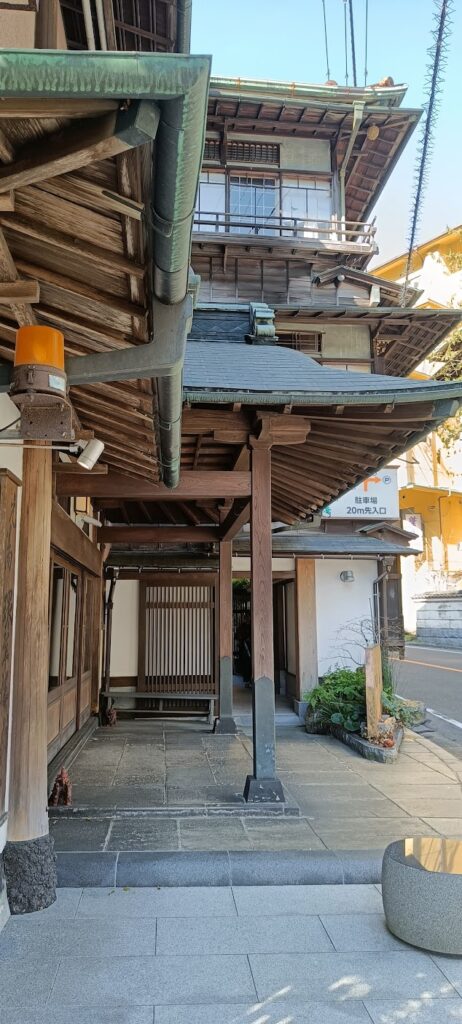
A traditional part of Japanese culture, ryokans often come up on lists of recommendations and itineraries for any Japan trip. But for plant-based travellers, is it even possible to find a vegan friendly ryokan that gives the same authentic, kaiseki experience?
On my honeymoon to Japan with my husband, I found a fantastic option in Hakone that managed to accommodate our diet, and gave us a wonderful experience that you can read more about here.
This then ended up becoming one of my first posts on this blog, and to this day, it’s still one of the most popular – clearly finding a vegetarian or vegan friendly ryokan is no mean feat, so let me help you out.
Further down in this post, you’ll find the list of ryokans who have confirmed they can cater to vegans, as well as those who have said they cannot – it’ll save you the legwork of doing the same!
2026 Update and Verification
I reached out to 20 different ryokans around Hakone in February 2026 to ask each one the same question: can you cater to vegan travellers?
I’ve included all of the responses in this post, and I’ll continue to update as I get more information.
I’ve also updated and moved my review of my own ryokan stay into its own, dedicated post.
All links and information is accurate as of February 2026.
What is a Ryokan?
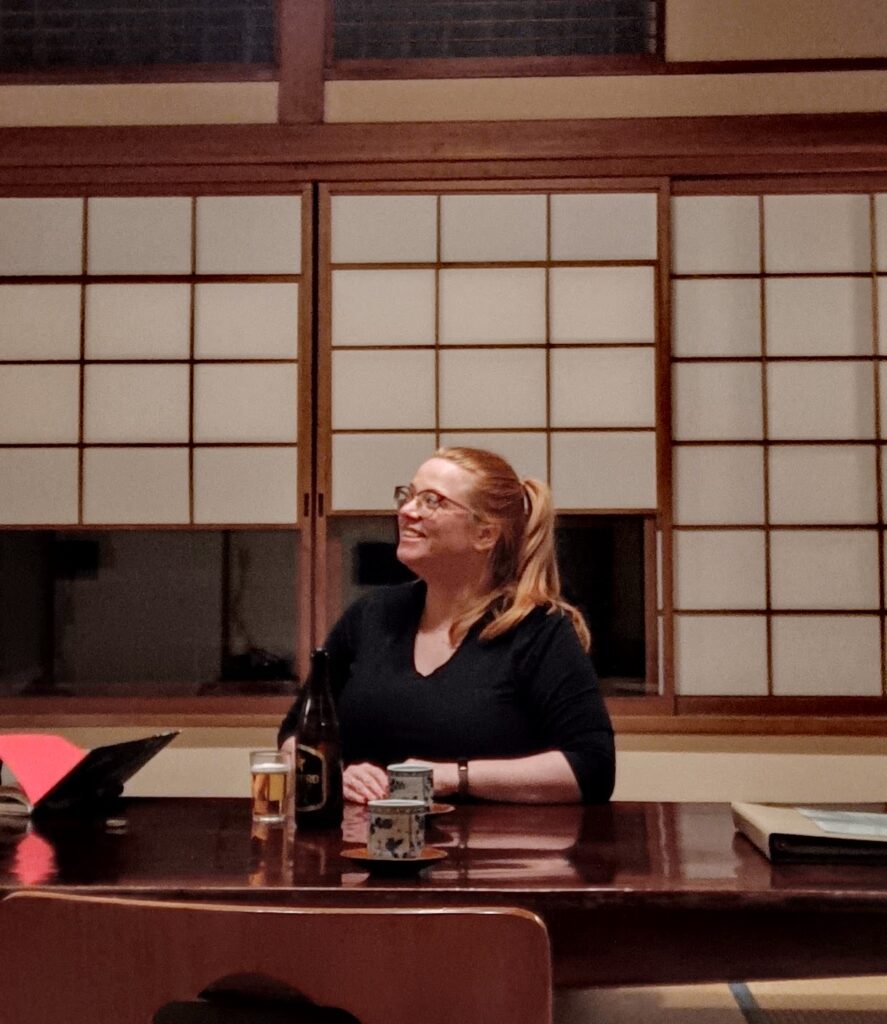
A ryokan is a traditional Japanese inn. Typically, they’ll have tatami-matted rooms with futon to sleep with, and often an onsen to soak in at the end of a long day.
Usually they serve kaiskei, a multi-course dining experience featuring traditional Japanese dishes.
They’ve existed since the 8th century, and the oldest hotel in the world is actually a ryokan in Yamanashi, Japan.
What to Expect: The Vegan Ryokan Experience
If you’ve never stayed in a ryokan before, think of it less like staying in a fancy Western hotel and more like being a guest in a very classy, traditional home. It’s a full cultural immersion that typically includes the kaiseki dining experience and relaxation in an onsen.
As soon as you arrive, you’ll feel yourself start to slow down. There’s a serene stillness at a ryokan, it’s a place for you to rest and relax, not just a bed for the night. As soon as you come through the front door, you’ll swap your street shoes for indoor sandals or slippers, telling your body “we’re home now”.
Most ryokan rooms are decorated in the traditional Japanese style, with tatami mats and futon beds. If you’ve booked one room, during the day, those futons are usually folded away to transform the room into a living space with a low table and floor chairs.
At night, it turns back into a bedroom, ready for you to get a hopefully blissful night’s sleep.
You’ll often find yukata, a light kimono-like garment, in your room for you to wear around the ryokan and to the onsen. The staff are usually incredibly kind, courteous and offer non-intrusive yet incredible service.
The Vegan Kaiseki Dining
For most of us who stay in a ryokan, the multi-course kaiseki dinner is the main event. This is usually a presentation of multiple small, artfully presented dishes that focus on local and seasonal flavours and produce. In a vegan friendly ryokan, the kitchen will adapt its menu to make sure you still get the full multi-course sensory experience.
The flavours may be different to what you’re used to, and I’ll admit, my own palate was not fully prepared for it. Instead of bold, complex spices like you’ll find in many other (delicious) Asian cuisines, the Japanese kaiseki is focused on subtle, delicate flavours and consider texture as much a part of the experience as the taste.
Dinner is a slow affair, sometimes served in your room or in the main dining room of the ryokan, depending on their facilities. They’re served on a schedule, so if your ryokan tells you “dinner is at 6”, you’ll need to be ready to eat at 6. Even though the dishes are small, you’ll be surprisingly full by the end.
If you want to get a glimpse of what this looked like in real life, you can find my own ryokan stay post here.
The Onsens
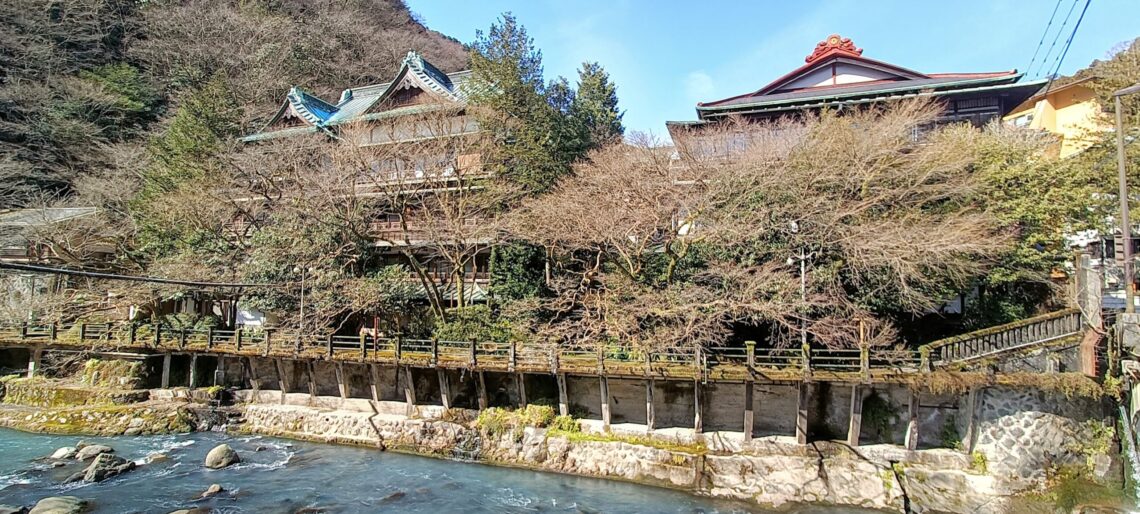
Hakone is famous for its hot springs, and many ryokans will have their own onsen or bathhouses. In the one I stayed in, Motoyu Kansuiro, there was an open-air onsen, rotenburo. Soaking in the hot water in the cold night air was one of the highlights of my trip.
Traditional onsens require you to get fully naked, and they’re segregated by men and women. If the idea of bathing in the nip with strangers makes you uncomfortable, look for a ryokan with “kashikiri” (private) baths or an in-room onsen.
The most important rule you should know before using an onsen, whether that’s a private or public one, is to wash your body. You need to wash and rinse all of your body before ever touching the bathwater. Every onsen will have a row of small stools, buckets and/or showers for this purpose.
What Every Vegan Should Know Before Booking
Many ryokans around Hakone and other hot springs areas are small, family run guesthouses that have set menus that work for the size of their kitchens and staff. If, like me, you don’t speak Japanese, it adds a layer of complexity in trying to discuss the menu.
Some common ingredients to watch out for:
- Bonito flakes. These are fish flakes and a common feature in Japanese cuisine.
- Dashi. Traditionally, dashi is made with katsuobushi (dried bonito or fish flakes). Even if a dish looks like a simple block of tofu, sometimes it may have been simmered in fish stock.
- Ask for kombu dashi (seaweed based stock).
Additionally, most places are going to need a few days’ notice to prep the kitchen and the menu, so make sure to book well ahead of time. Ryokans’ rules will vary, but I advise at least 2 weeks’ notice.
Finally, it’s worth noting that not all ryokans can accommodate adaptations. This isn’t down to a lack of willingness, it’s usually because of the size of their staff, their facilities, or the available ingredients. On the same note, it’s very rare to find a ryokan that can offer a gluten-free menu (whether vegan or omni) – ingredients like soy sauce and miso play a huge part of the kaiseki cuisine, neither of which are suitable for those with gluten allergies or intolerances.
The Best Vegan Friendly Ryokans in Hakone (2026)
As I mentioned at the top of this post, I reached out to 20 different well-rated ryokans in Hakone to save you the legwork. To my great delight, I got very quick responses, and I’ve split the ryokans into The Verified List and The No-Go’s.
In each email I sent, I asked the ryokans this exact question:
Could you please confirm if your kitchen is able to provide a 100% vegan Kaiseki dinner and breakfast (no meat, fish, eggs, dairy or dashi) if requested in advance?
Many ryokans operate with small kitchens and limited staff. When they cannot offer a vegan menu, it is simply lack of resources rather than lack of willing in most cases. I’ve listed the No-Go’s just to save you time filtering them out, not because I think they’re “bad”!
I will continue to update this post when I have more vegan friendly ryokans to add to the list.
The Verified List
These ryokans have all either explicitly confirmed they can provide a fully vegan kaiseki menu or have an explicit statement on their website confirming this. Each one has a slightly different vibe, but each one will give you the vegan ryokan experience you deserve!
A note on booking ryokans
Because these are some of the only ryokans in Hakone that truly get what a great vegan experience looks like, they often book out once their booking windows open. If you see your dates available, I recommend grabbing them now – some of these links offer free cancellation if your plans change, and I’ve included links to both hotels.com and booking.com so you can compare.
Motoyu Kansuiro
Best for: History and architecture lovers, stressed out workers, those who want to feel like they’ve stepped back in time.
| The Vibe | The Vegan Verdict | The Onsen |
| A historic Registered Cultural Property with peaceful wooden halls and the sound of the river lulling you to sleep. | Confirmed 2026. High end kaiseki, served in the main dining hall this year. Note: They cannot accommodate gluten free diets. | Absolutely gorgeous outdoor rotenburo hot springs baths, overlooking the river. Available for private booking after 10pm, when tattooed guests may use it. |
Check availability here.
Also available on Booking.com.
Note: You can read my review and experience of my own stay here.
Kinnotake Tonosawa
Best for: Couples, honeymooners, and anyone who wants a more modern Scandinavia-meets-Japan aesthetic. This is one of the more expensive options on the list, but for anyone who values privacy and indulgence, this is for you.
| The Vibe | The Vegan Verdict | The Onsen |
| Chic and secluded. It’s accessed via a suspension bridge over a gorge. Children under 12 are not allowed. | Confirmed 2026. Requires at least 3 days’ notice. While they do an excellent vegan kaiseki menu, they cannot guarantee a gluten free menu. | Each room has a private open air hot springs bath on a terrace, overlooking the bamboo forest. |
Also available on Booking.com.
Matsuzakaya Honten
Best for: History fans, wellness seekers, and those who want an all-inclusive, high-end experience
| The Vibe | The Vegan Verdict | The Onsen |
| Founded in 1662, this ryokan has hosted the Imperial family and samurai leaders. It’s an all inclusive stay with a lounge for drinks and snacks, all included with your stay. Adults only. | Confirmed 2026. Requires at least 3 days’ notice. They offer a dedicated kaiseki for vegans. They cannot accommodate gluten free requests. | This ryokan is well known for its natural emerald green spring water. They boast “skin beautifying” water and have even been awarded a certificate to prove it! As well as public baths, there are five private baths which can be reserved at the front desk. |
Also available on Booking.com.
Fukuzumiro
Best for: Architecture lovers, literary aficionados, and those seeking an old world atmosphere.
| The Vibe | The Vegan Verdict | The Onsen |
| Built in 1890, this is a 3-story beauty of a building, famous for its intricate bamboo work. They’re proud of their heritage of hosting a large number of writers, calligraphers, and artists throughout their history. Traditional Japanese rooms, often with a shared bathroom. | Confirmed 2026. They can accommodate individual food preferences and will ask you for specifics (eg. “do you eat eggs”), and if every member of your party wants a vegan or vegetarian meal. | Features unique circular wooden baths made from pine logs. Private “family” baths are available to reserve at check-in. There are no restrictions on tattoos at this hotel’s onsen. |
Also available on Booking.com.
Mount View Hakone
Best for: Budget-conscious travellers who still want the ryokan experience.
While Mount View is a little bit further out of the town than some of the others on the list, it’s a cheaper option that allows you to still experience the vibe of a ryokan for less.
| The Vibe | The Vegan Verdict | The Onsen |
| Friendly and relaxed. It’s a more laid back “hot spring hotel” feel than a traditional high-end ryokan. It’s in Sengokuhara, outside of Hakone town, near the Venetian Glass Museum. | Confirmed 2026. One of the few ryokans that can cater to vegans/vegetarians and those with allergies, although you’ll need to let them know in advance. | Mount View Hakone has milky-white nigori-yu hot springs. There are separate open-air baths for men and women, and private baths that you can book for a small fee. Baths are open 24 hours. |
Also available on Booking.com.
Tip For Booking Ryokans
If you’ve clicked on the links in this post and see “no availability” for your dates six months from now, don’t panic.
Many traditional ryokans operate on a 3-to-6 month booking window, and often don’t release their dates online until they are 90-180 days out. I’ve also given you options of booking links in this post, so you can compare prices and availability on each.
If you’re planning your trip for the end of this year or start of next, bookmark this page, set a calendar reminder, and come back to it closer to the time. If you can, avoid Golden Week (early May) and New Year’s – these are the times that rooms truly do sell out a year in advance.
The No-Go’s
As I mentioned, these are beautiful properties, but as of 2026, they have confirmed they cannot cater to a strict vegan diet. Listing them here saves you the hassle of asking yourself, or worse, finding out the hard way.
If you’re travelling with non-vegans who want the full, omni kaiseki, then my recommendation is Fukuzumiro (mentioned in the verified list) who can accommodate different requests in one party.
- Shiunso
- From the ryokan: “Unfortunately, our hotel does not offer vegan meal options.”
- Seikansou
- Their website explicitly states they cannot accomodate vegetarian requests.
- Hakone Onsen Ryokan Yaeikan
- From the ryokan: “We are extremely sorry. Our hotel is small so we cannot prepare food individually so cannot take meal requests.”
- Musashino Bekkan
- From the ryokan: “We can accommodate minor changes, but we are unable to provide vegan meals or meals that are completely free of seafood, dairy products, and eggs.”
- Yoshiike Ryokan
- Their website explicitly states they cannot make changes to the menu, and cannot accommodate allergies or vegan meals.
- Yama No Chaya
- From the ryokan: “It is with deep regret to inform you that we are not able to serve vegetarian or vegan meals. Pescatarian meals can be accommodated”.
- Ryuguden
- The Ryokan responded to my email and confirmed they are not able to provide vegan meals.
Exploring Hakone
While you’re in Hakone for the ryokan experience, you’ll probably want to see the sights of the area. Most people do this by buying the Hakone Freepass, which covers the main transit loop of attractions, including a mountain railway, a volcanic ropeway, a pirate ship across Lake Ashi, and if it’s a clear day, a gorgeous backdrop of Mount Fuji.
I’ve written a one-day Hakone itinerary here that will talk you through how to buy the pass and make the most of a day out sightseeing in this National Park.
Eating Vegan Outside of the Ryokan
I’ll be brutally honest with you: outside of the ryokans on this list, Hakone is not the easiest place to find good vegan options. I’ve got a real pet peeve with restaurants saying they’ve got vegan options and it turns out to just be bread and salad, and unfortunately, in a lot of places around the area, that might be what you’re looking at.
There are, however, a few places around that offer some vegan options. I’ve written a separate post about them here. If any of them look appealing to you, I’d advise planning your day accordingly – a lot of places close early around town, or might need a little bit of logistic work to build into your route!
However, even without a wealth of vegan-friendly restaurants, you really will eat so well at your ryokan that you may only need a snack while you’re out exploring.
Getting to Hakone from Tokyo
There are a number of ways to get to Hakone from Tokyo, and which one works best for you is going to depend on how much you want to spend, and what part of Tokyo you’re coming from.
From Shinjuku, the Romancecar will take you straight to Hakone-Yumoto.
We had already bought our JR passes, so we decided to go the shinkansen route – took a train to Shinagawa from central Tokyo, and from there the bullet train to Odawara. If you’re still deciding on whether the JR Pass is right for you, I’ve written a separate post about it here.
From Shinagawa to Odawara is about 85km, and only takes 25 minutes on the bullet train. The tradeoff is that it is more expensive if you don’t have the pass. There are also cheaper options using regular local and regional trains, which will take about an hour and a half.
From Odawara, it’s a bus onward to Hakone. If you buy the Hakone Freepass, which I’ve mentioned above and cover more in my one-day itinerary post, the bus is included in the price of your ticket.
The bus from Odawara from Hakone is supposed to take 30 mins. On the day that we arrived, a Sunday, it took an hour and a half due to traffic into Hakone. The bus was incredibly crowded, and I spent that full hour and a half with a woman swinging off my arm, while I tried to stay upright and not crush anyone with my backpack. I’d strongly recommend any other travellers look into luggage forwarding – I wish I had!
The Cost: Is the Splurge Worth It?

Whether the cost of a high-end ryokan stay is “worth it” depends entirely on your budget and expectations.
For us, it was a honeymoon splurge, and having a multi-course fine dining meal served directly in our room was the kind of luxury and relaxation that made this part of our trip feel incredibly special.
It also makes more sense when you think about the fact that the price includes four meals (two dinners, two breakfasts), access to the onsen, a large suite, and impeccable service that included thoughtful touches like a hot pot of tea ready in our room when we came back from a day of sightseeing.
If you want to dig in more to what the whole trip is likely to cost you, I’ve written a Hakone budget breakdown here, with options for all budgets.
As vegans, there are naturally going to be some traditional cuisines and experiences we can’t fully take part in, so finding a vegan friendly ryokan that let us fully enjoy the experience was really special.
As for you, if finding a safe, luxurious, and authentically Japanese plant-based experience is a bucket-list priority, then go – you won’t regret it!
Final Thoughts and Tips
If you’ve made it this far, I’m sure by now you can tell that this was a really special, calming experience for me. And if you’re reading this, it’s probably an experience you’d like to have too.
The last things I’ll leave you with are a couple of things that I wish I’d known or that I want to share with other travellers:
Transport and logistics
- For the love of god, use luggage forwarding. We were idiots and dragged our suitcases with us on trains and an incredibly packed bus. Services like Yamato let you drop your luggage at one place, and collect it at another. If you’re only staying in Hakone for a night or two, pack the essentials into a daypack or backpack, and send your luggage on to your next destination.
If I could change anything about our own stay, it’d be this. - If you are coming directly from Tokyo, prioritise the Romancecar, even with the extra fee. It eliminates the transfer and avoids the crowded buses and severe traffic delays we experienced.
- Hakone is full of Ryokans and the checkout time is all around the same time. We opted for the 9am bus back to Odawara to beat the 10am checkout rush, and it was a smart move – the bus back to the station was painless.
Finding a vegan friendly ryokan was a special part of our first Japan adventure, and I hope this guide helps you find your own moment of peace in a ryokan that can deliver you the kaiseki of your dreams.