
10 Best Things to do in Tashkent, Uzbekistan’s Capital City
For many visitors to Uzbekistan, the capital city of Tashkent is the first stop. It’s often the transit hub: somewhere to land and spend a day or two before the real adventure begins. And sure, it might not be as striking as Registan in Samarkand, or as beautiful as the old, winding streets of Bukhara. However, there are still plenty of things to do in Tashkent to help introduce you to everything Uzbekistan has to offer.
When I first touched down in Tashkent, it was 3am by the time my foot hit the tarmac at the airport. Even at that time of night, I was struck by how warm the early August air was. Like many other travellers, Tashkent was just my first stop on a tour of the country.
Truth be told, I was more excited for the rest of the trip than the first few nights in the capital. As I checked into my the Ateca suites hotel, tired and ready to go to bed as the sun rose, I thought my days in Tashkent would be the low-key, unexciting ramp up to the rest of the adventure. I was wrong. Turns out, Tashkent is more than just the gateway; it’s a destination in and of itself.
As a city, it’s an incredibly interesting mix of history: from the mosques that have stood for hundreds of years to the Brutalist architecture left behind by the Soviets to the modern metropolis it’s becoming today. It’s the perfect capsule of Uzbekistan’s history, wrapped up in one city.
If it’s your first time in Uzbekistan, read on for a great ‘intro to Tashkent’ itinerary. By the time you head onwards on the Afrosiyob train, you’ll leave knowing that you covered all the highlights of the Uzbek capital.
Morning: The Soul and the Spices of the Old city
To start you off on your list of things to do in Tashkent, we’re going to start early in the morning. In Uzbekistan, tourism is on the rise, so if you can get out and about early, before 10am, you’ll already have a head start on the tour buses. If you’re travelling in peak tourist season of summer, you’ll also thank yourself for this when you’re done and dusted before the peak midday sun!
Hazrati Imam Complex
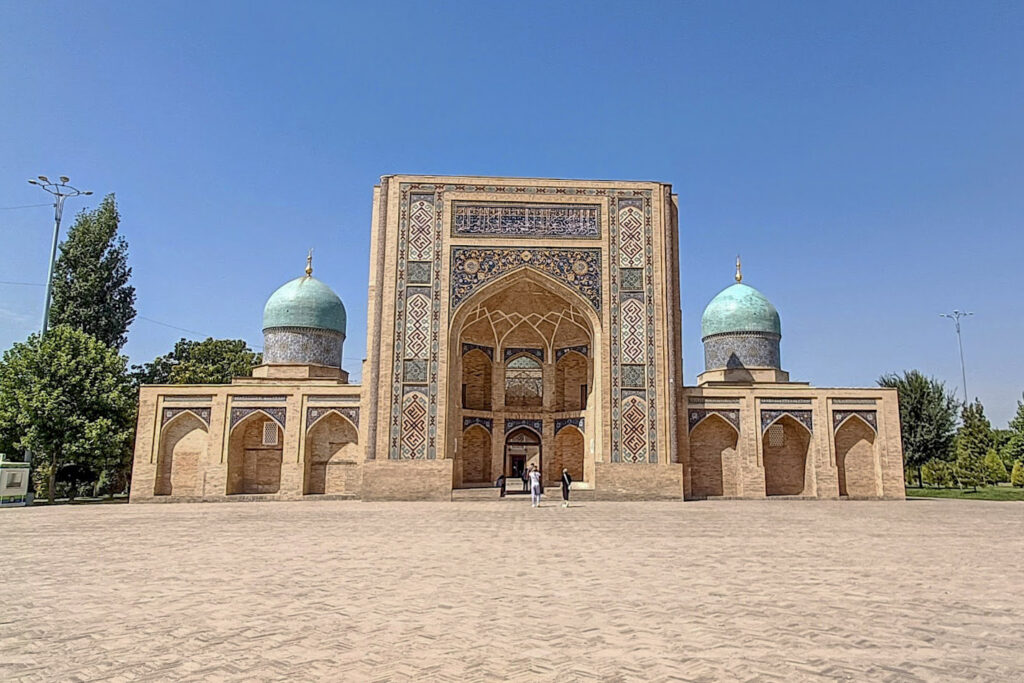
The Hazrati Imam Complex is where you should start your day to beat the heat and the crowds.
The complex goes back to the 16th Century, and consists of the Hazrati Imam mosque, the Mo’yi Muborak madrasa, and the Qaffol Shoshi mausoleum, among others.
Named after the first imam-khatib (an Islamic religious leader) of Tashkent, the complex was build near his grave and stands in the spiritual heart of the Old City.
The complex is large, but is surprisingly serene and refreshing, despite the large tourist crowds it can draw. Some of the historical structures that make up the complex are:
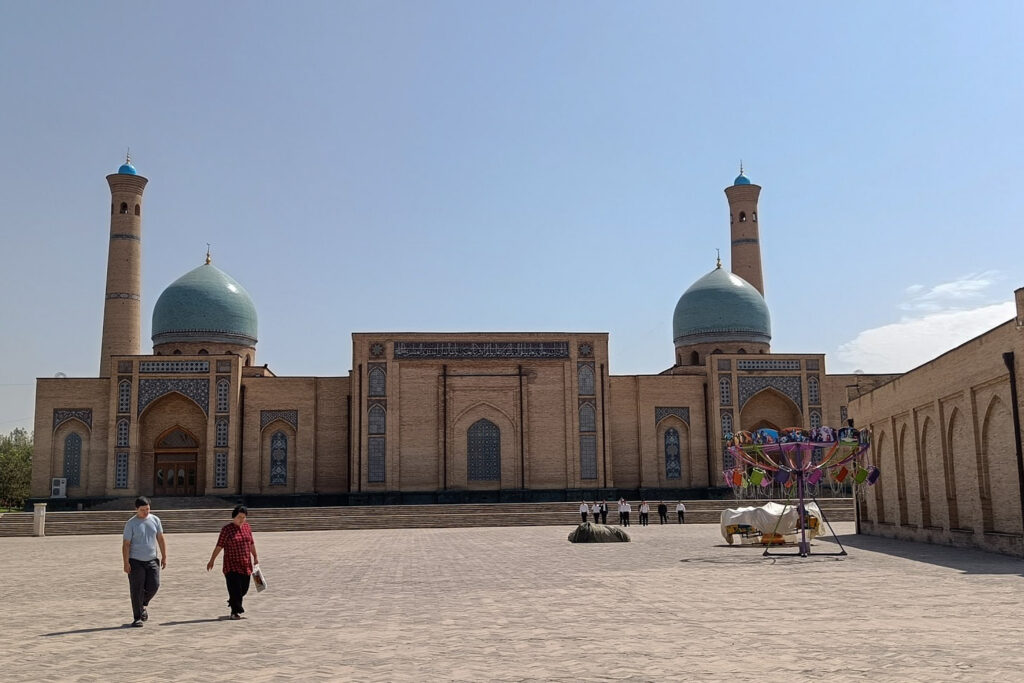
Mo’yi Muborak Madrasa:
This is often the most significant building for visitors as it’s where you’ll find the famous Uthman Quran. The 7th-century manuscript is written on deerskin, and is thought to be the oldest Quran in the world. Taking photos of it is forbidden, and it’s preserved behind glass in a special room, however there is a replica outside that tourists can take photos of.
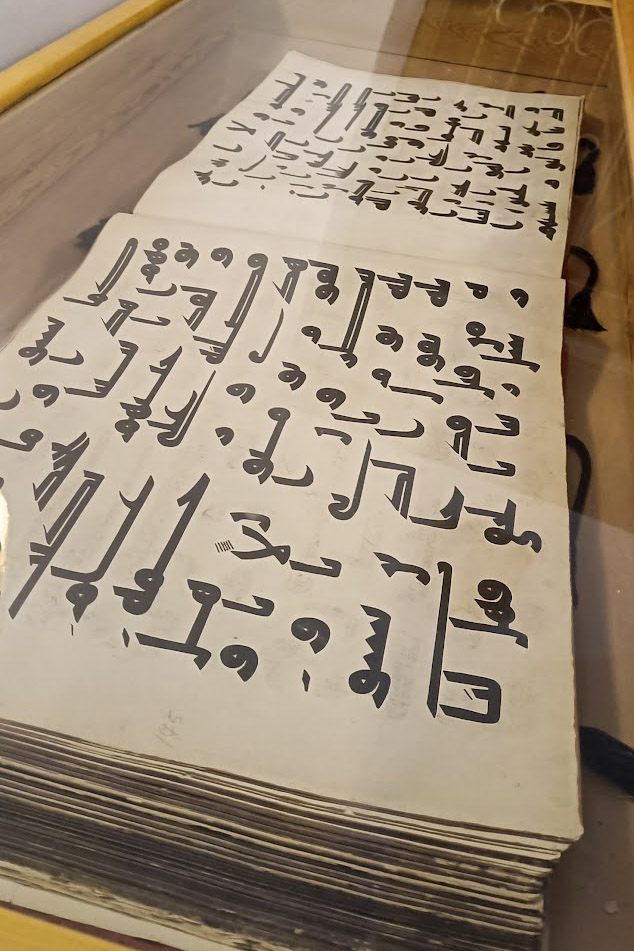
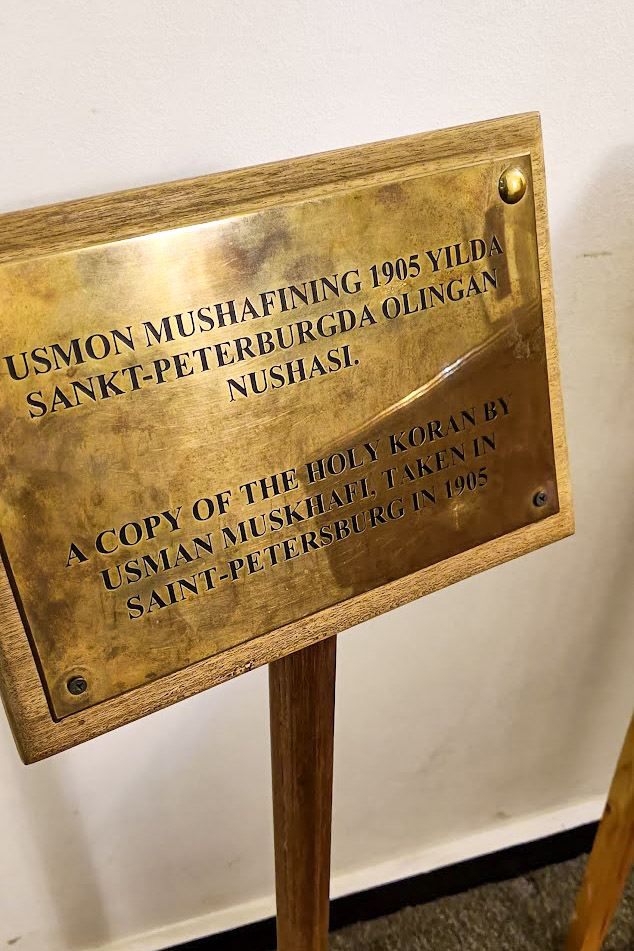
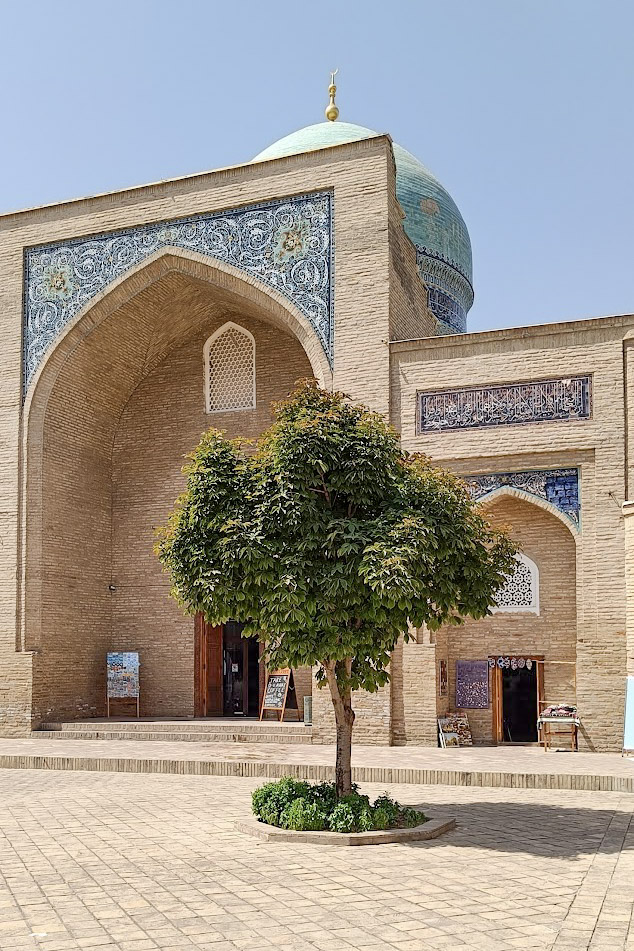
Baroqxon Madrasa:
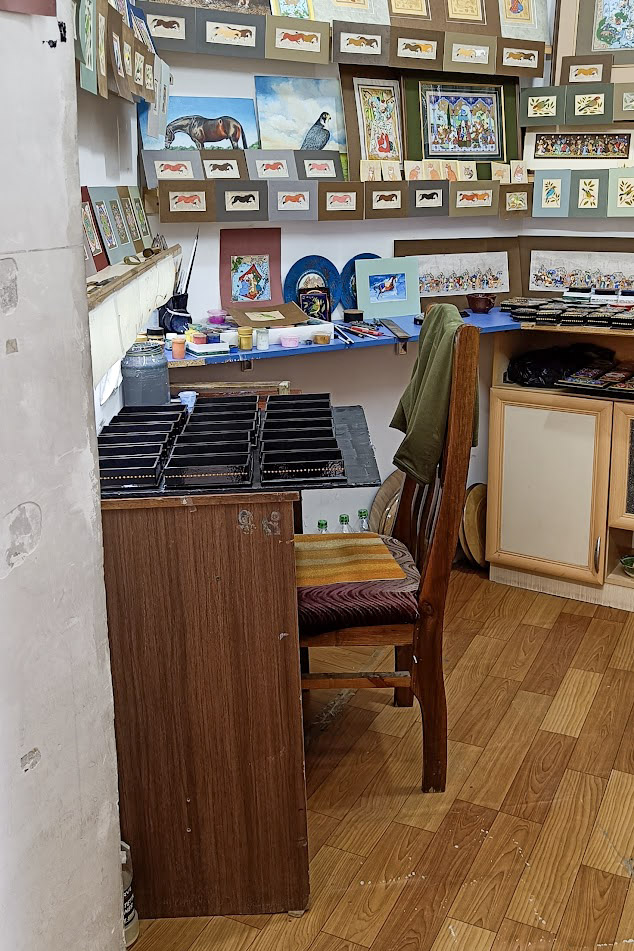
A 16th century madrasa, with the traditional Uzbek turquoise domes. It’s a truly gorgeous structure, and was originally home to religious students. Their former cells have been converted into artisan workshops where you can watch craftsmen at work and buy traditional souvenirs. They’ve been quite careful to curate the artisans that are now resident in the cells, and you’re not going to find any Temu tat here.
Hazrati Imam Mosque:
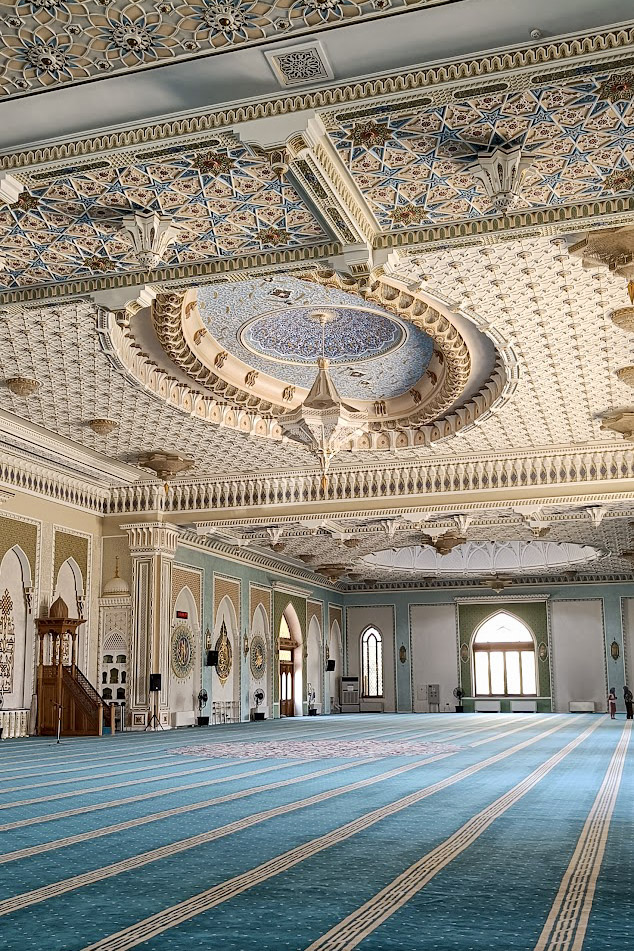
For someone who was raised in 1990s Catholic Ireland, I absolutely love mosques. I love the artwork, I love the craftsmanship, and even as someone who’s not religious, I love that there’s so much beauty given to something so many find meaningful.
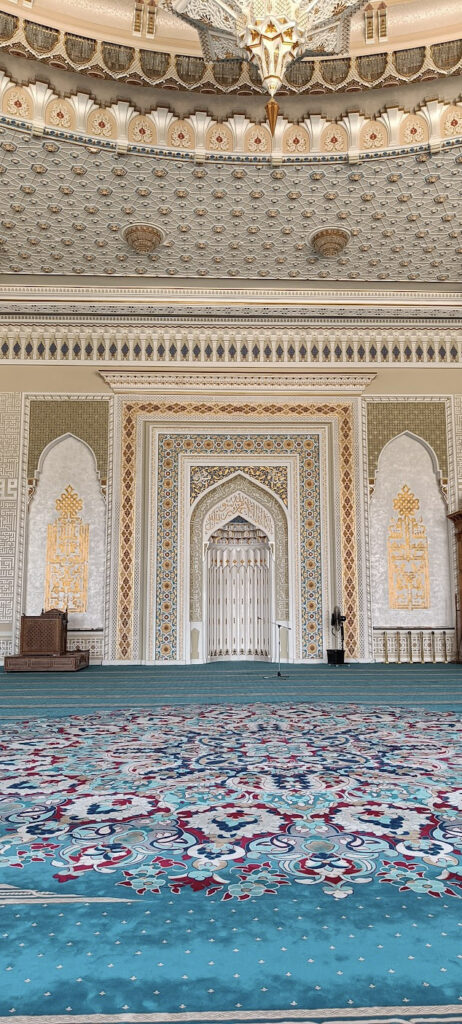
Even with my predisposition towards mosques, Hazrati Imam mosque is breathtaking – and I really do mean that literally.
I stood there on that incredibly soft blue carpet, my eyes trying to take in every inch of the sandalwood columns, the intricately carved walls, the domed mosaics of the ceilings. Everywhere I turned, there was something to look at, and it all comes together in this peaceful, beautiful scene that just makes you sigh.
Qaffol Shoshiy Mausoleum:
This is the oldest structure in the complex. The original tomb that once stood there did not survive, and the current structure was build in 1542 in its place.
After Uzbekistan gained its independence, it went through renovation and reconstruction from 1995 to 2010 to restore its 16th century appearance. It’s most recently undergone more renovation work in 2025 as part of a broader, ongoing initiative to preserve the entire complex.
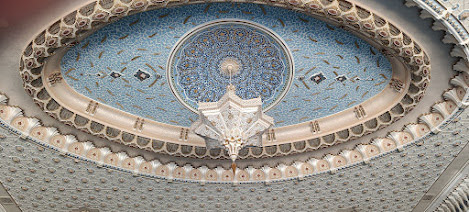
Compared to the busy streets of Tashkent, wandering around the complex feels like hitting the pause button on modern life for a little while. The spiritual nature of the complex means that it’s not exactly a hotspot for lads on tour, and tourists tend to wander around quietly, appreciating the history and the beauty of the place.
Entry to the main square of the complex, and most of the buildings, is free, but there is a small ticket fee to enter the museum to see the ancient Quran.
Dress code:
This is an active religious site, so modest dress is required. For any gender, this means shoulders and knees must be covered. Women should cover their heads inside. I kept a lightweight scarf in my daypack for this reason, although my tour guide did say that a hat was fine.
If you’re entering the mosque, you’ll also need to remove your shoes. There’s a bench outside to sit and take off/put on shoes, and a rack to leave them on. When I was there, I saw some other tourists using shoe covers. This is technically allowed, as the shoes aren’t touching the actual floor of the mosque, but it doesn’t look great – a worker ran over, frantic, and it took a little bit of back and forth to explain the shoe covers. If you can, it’s just easier, and more respectful, to leave your shoes outside.
Kukeldash Madrasa
As you walk from the serenity of the Hazrati Imam complex towards the bustle of the bazaar, you’ll pass by the Kukeldash Madrasa. It’s one of the few buildings that survived Uzbekistan’s 1966 earthquake, and its yellow-brick facade is striking.
Being brutally honest, after the majesty of the Hazrati Imam complex, you may be a bit madrasa’d out by now, and there’s bound to be plenty coming up on your trip. It’s a great spot for a pause to appreciate the architecture, and a quick photo op, but don’t beat yourself up if you’re ready to head straight onward to the bazaar.
Chorsu Bazaar
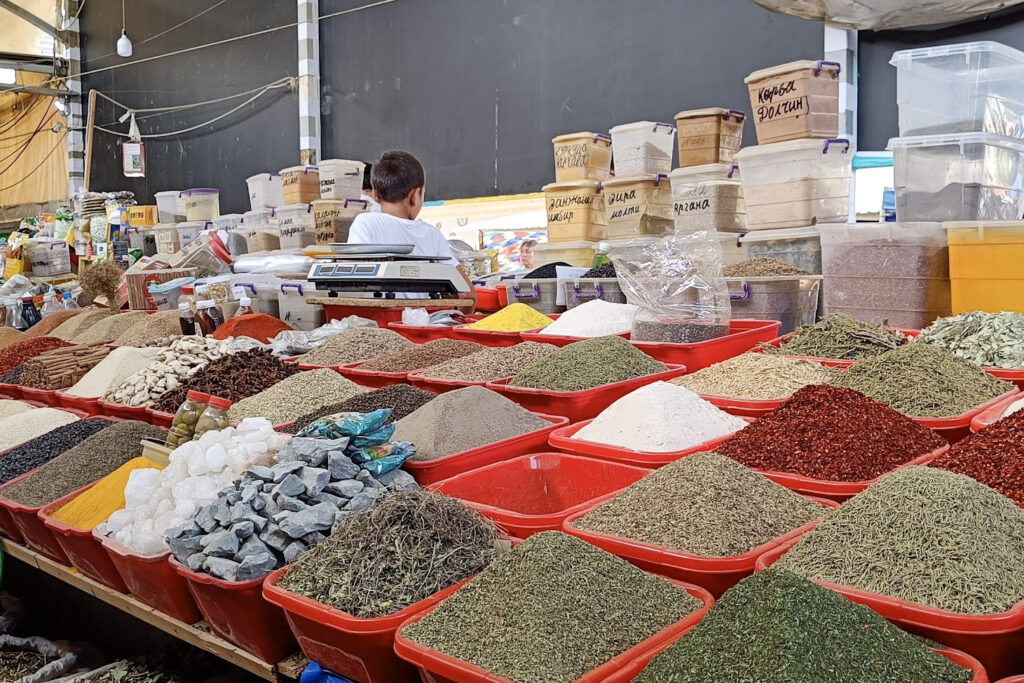
Chorsu Bazaar is a really interesting place. From the outside, it looks a bit like a spaceship, and reminds me of something an architect with Celtic Tiger money in 1990s Ireland would have dreamed up. In reality, it’s a little bit older than that, designed in 1980 in a Soviet modernist style.
This is where tourists and locals alike come together to browse the stalls piled high with spices, dried fruits, nuts, and all kinds of daily necessities. It’s more focused on edible and home goods than clothes, although you will still find some stalls selling pieces, mostly for tourists.
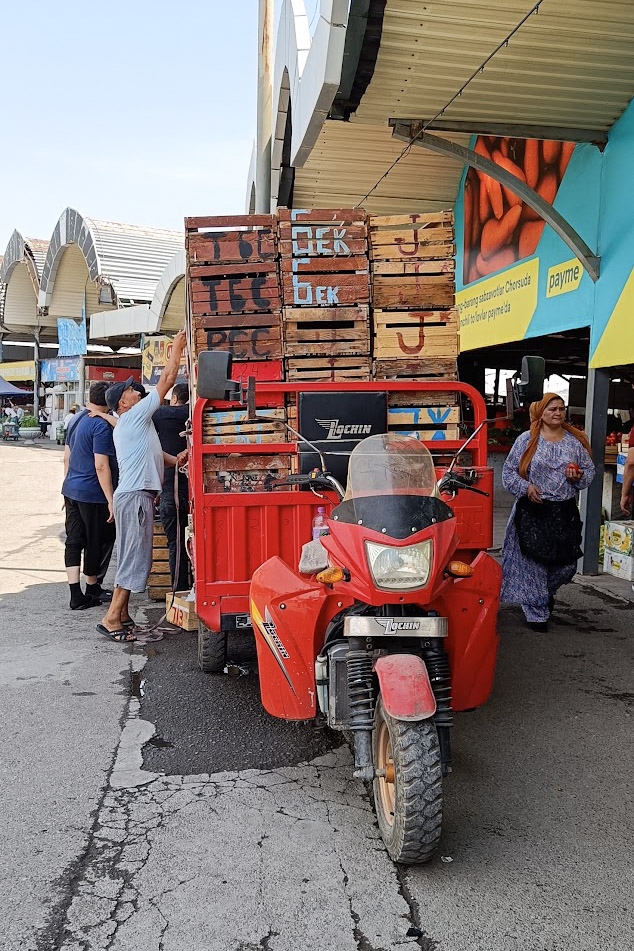
It’s a total gear shift from the spiritual vibe of the mosque and madrasas, and you’ll be hit with a wall of sound from taxis, bakers slapping bread into ovens, and the voices of vendors ringing out as they try to tempt you with their wares.
Inside the dome, you’ll notice it’s a huge, open space without a single central pillar, which allows the air to circulate through the market. The market has grown since it first opened, and you’ll find alleys off the dome made up of stalls.
Here, you can wander for hours. You’ll hear constant cries of “where are you from?” and vendors trying to engage in small talk. Haggling is expected, smiling is inevitable.
The main floor is dominated by meat, and the smell is exactly what you’d imagine. As a vegan, I beelined towards the back of the dome and found myself in a much happier place, surrounded by a rainbow of spices.
If you wander further, follow your nose to the smell of yeast and the warmth of the tandir ovens, and you’ll find yourself on “bread street”. This is where you’ll find Uzbekistan’s traditional non bread being baked.
Bread in Uzbekistan is sacred, and the bakers are incredibly proud of their work. If you pause to take a photo, they’ll likely rearrange their bread or hold up a loaf to show off its good side.
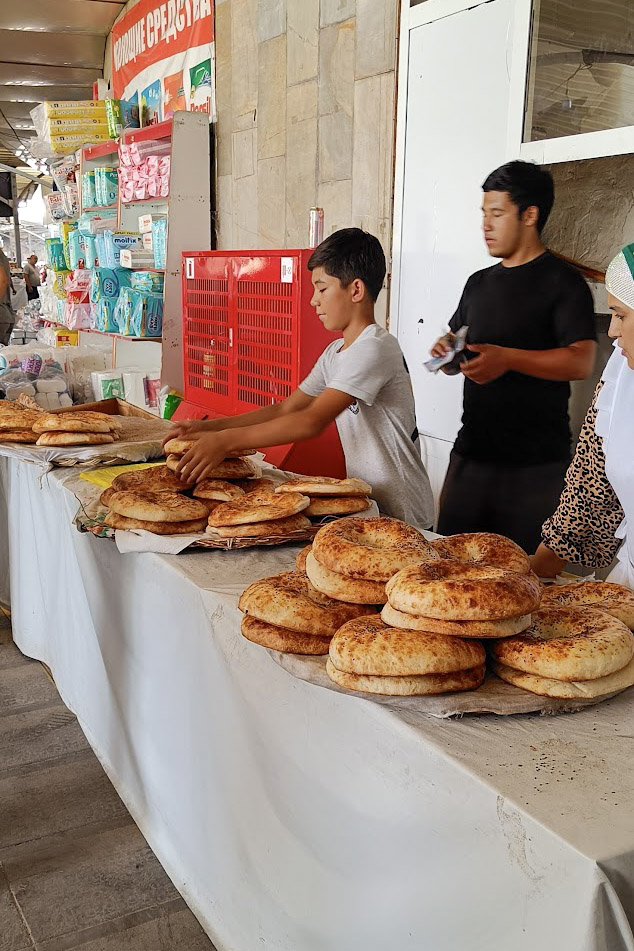
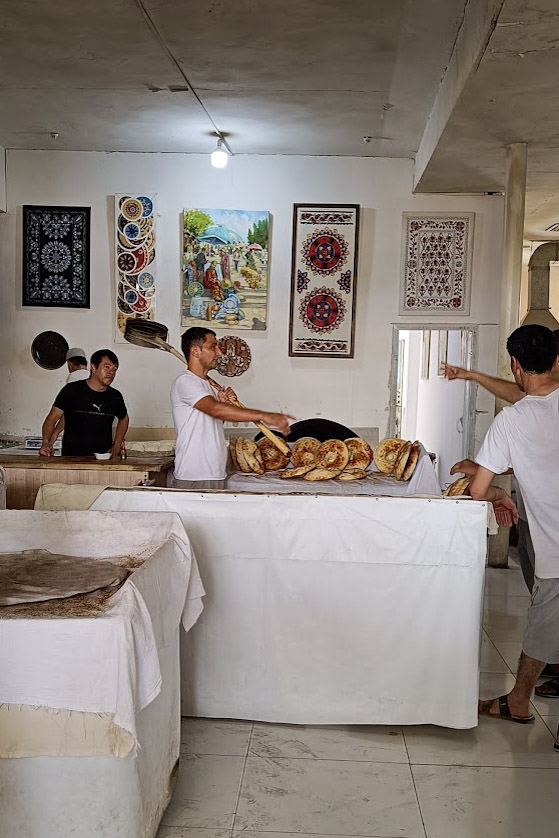
I was caught taking a photo of some bakers at work, and they immediately ushered me into their kitchen to proudly show me the bread in the oven, gesturing at me to get a better photo of the flames at work.
You’ll also notice that the bread is intricately patterned. Each baker has their own distinct style, and the centre of each non is stamped with a ‘chekich’. They’re often for sale at the bazaar, and they’re a fun, small souvenir to bring back!
If you’re travelling Uzbekistan as a vegan, I’ve covered some of the snacks you should pick up in my vegan Uzbekistan post here.
If you’re buying goods to take home
- Check what you’re allowed to bring back into your own country. I know Australia and New Zealand have quite strict rules about what you can bring back, and you’ll know your own country’s rules better than I will! Always best to check so you’re not leaving bags of spices at the airport.
- Bring a reusable shopping bag or tote bag.
- If you’re buying any spices, nuts, fruits etc, bring some collapsible containers along with you. They’ll hold up much better than the flimsy plastic ones they give out.
A friend once told me about a bag of fish sauce that exploded all over everyone’s luggage on a coach in Vietnam and the thought haunts me – don’t be the fish sauce guy.
Afternoon: The Art of the City
After you’ve stocked up on your goods at Chorsu Bazaar, and maybe paused for a spot of lunch somewhere on the way, it’s time to move onto the next part of your day. If you’re looking for things to do in Tashkent in the afternoon, especially in the height of the summer, it’s best to aim for activities that will bring you a bit of shade.
Your first stop is literally going to be a stop: The Tashkent Metro.
The Tashkent Metro
The Tashkent Metro is a tourist destination in its own right. Built during the Soviet era in 1977, it was the first metro in Central Asia. Each station has its own theme, usually based around the station name.
Until 2018, it was illegal to take photos inside the Tashkent metro as it also worked as nuclear bomb shelter. Thankfully, today you’re free to take photos to your heart’s content, and just as well because these stations are gorgeous. Each one has its own style, but it’s common to see beautifully decorated ceilings, mosaics, columns, and even the odd chandelier. Hey, it wouldn’t be Uzbekistan without some seriously ornate mosaics, right?
If you’re coming from Chorsu bazaar, the closest station is the Chorsu station.
Stations you need to see:
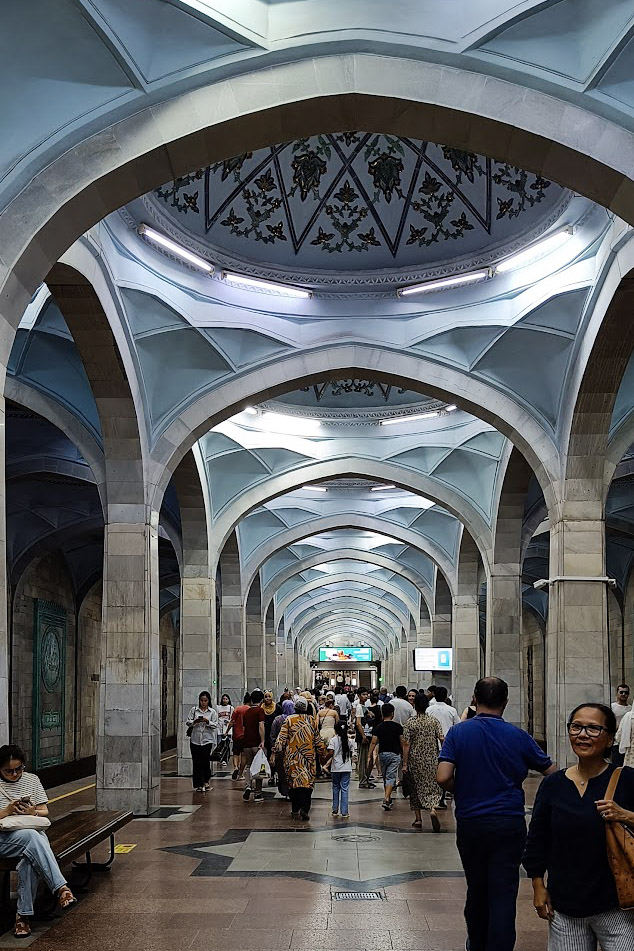
Alisher Navoiy
This is often called the most beautiful station in the city. It’s named after the famous 15th-century poet and looks more like a museum or a palace than a public transport stop. Look up at the ceiling it’s a series of domed cupolas with intricate blue and gold patterns. You’d be forgiven for getting so caught up in the architecture that you miss your train.
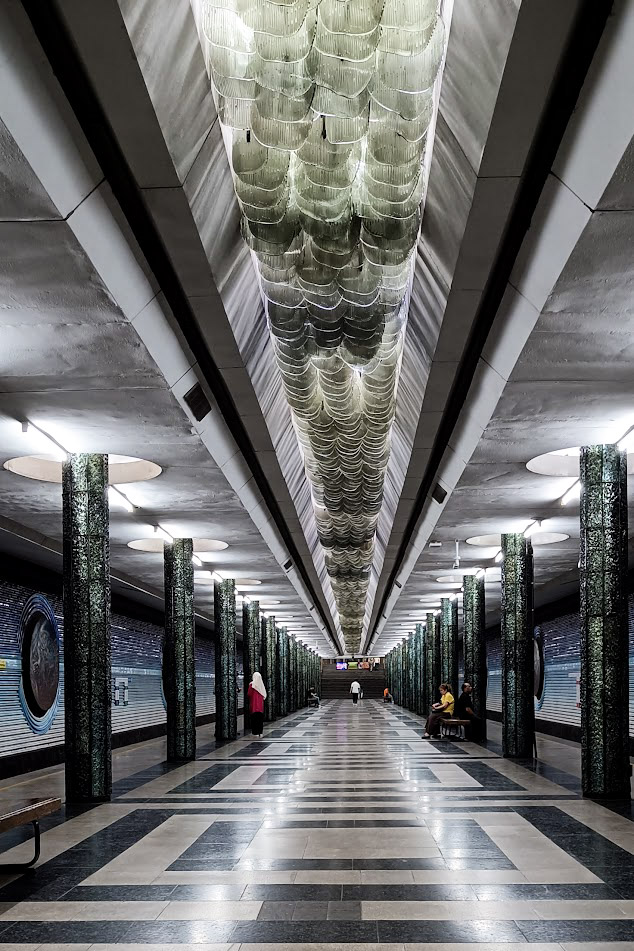
Kosmonavtlar (Cosmonauts)
This is one for the space fans. It’s a tribute to the Soviet space program, with a moody blue and black gradient on the walls that give off the feeling of being in deep space. The walls are decorated with panels featuring portraits of famous cosmonauts, including Yuri Gagarin and Valentina Tereshkova. It’s futuristic, atmospheric and feels miles away from the ancient madrasas above ground.
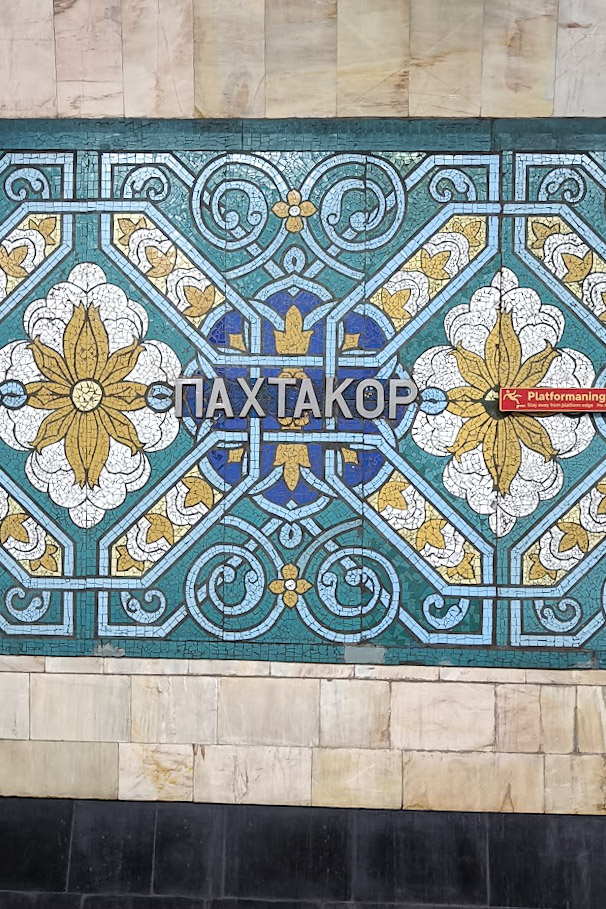
Paxtakor (Cotton picker)
Cotton is a huge part of Uzbekistan’s heritage, one that’s complex and layered with both pride and resentment. At a time, Uzbekistan was the world’s largest producer of cotton, and is still a vital cash crop for the national economy. Equally, under Soviet rule, there was so much pressure placed on increasing the cotton production that it left a harrowing environmental impact, the most notable being the loss of the Aral Sea due to unsustainable irrigation.
The Paxtakor station is a tribute to the country’s history with cotton. The walls are covered with blue and green mosaics of cotton bolls. It’s a great example of the Soviets using everyday industry in artwork.
Taking the Metro
A ride on the metro is incredibly cheap by Western standards – about 2,000 UZS (around 12p), far better value than the £6.50 it costs me to commute to work, and the only artwork I get to see is graffiti declaring that “Nat has herpes”.
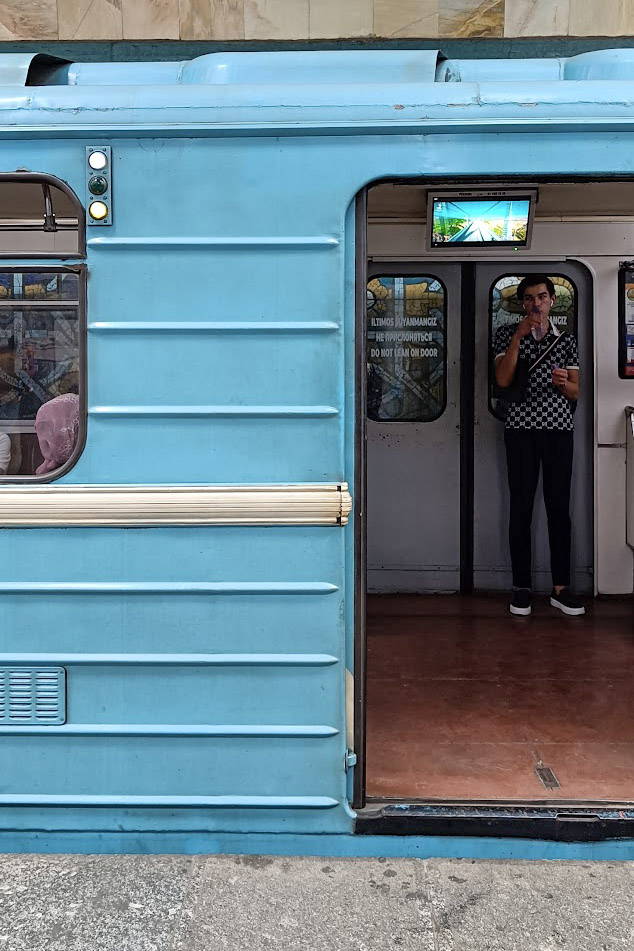
When I took the metro in Tashkent, I found it very safe. Obviously, like in any city, you should keep an eye on your stuff, and the trains themselves are quite old, but overall, it’s a clean, safe mode of transport to get you around the city.
To buy tickets, you can get a paper QR code ticket at the glass booths, or you can just tap your contactless bank card or phone at the turnstile.
You’ll see a fair amount of police at the entrances. Don’t be alarmed if they ask to x-ray your bag. It’s totally normal, and takes a few seconds before you’re on your way.
Honestly, you could spend a pleasant couple of hours just riding around the metro and jumping out at different stops. If you are going for the photos, wait until the train departs to get an emptier platform to get a photo of.
If you’re heading on to your next stop on your Tashkent itinerary, The Museum of Applied Arts, get out at Kosmonavtlar (the space themed station), and from there, it’s a 10 minute walk.
Museum of Applied Arts
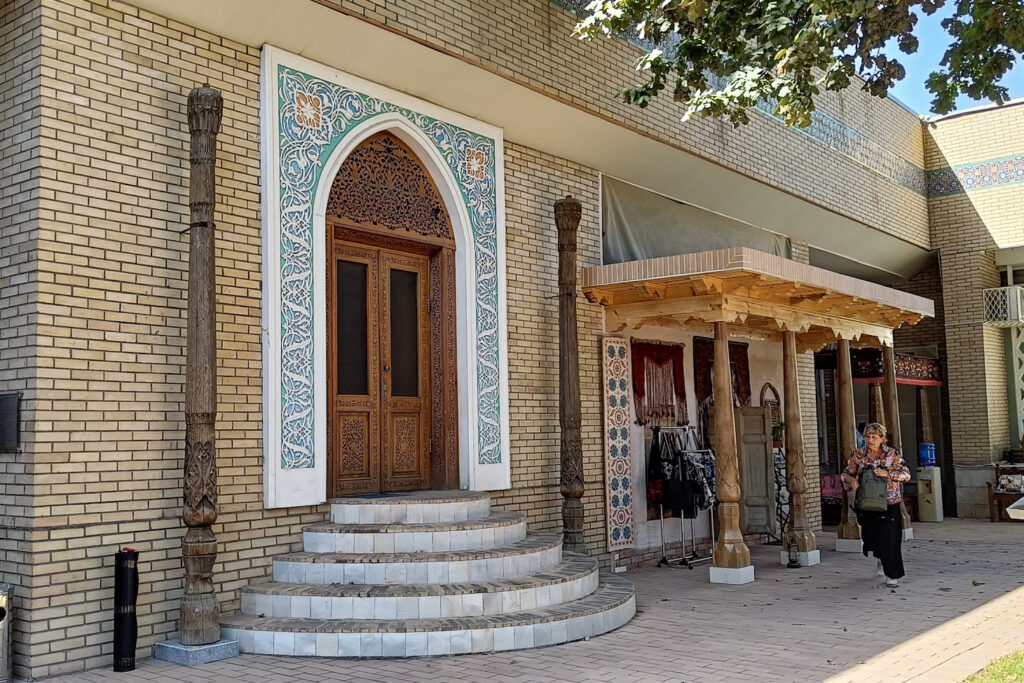
Once you emerge from the moody blue depths of the Kosmonavtlar station, it’s a short 10 minute walk through one of Tashkent’s leafier, quieter neighbourhoods to reach the Museum of Applied Arts.
Even if you’re not usually a museum person, this one is worth a stop as it’s a great way to get an introduction to the art of Uzbekistan. By now, you’ve already seen that art in action in the mosque, madrasa, bazaar, and metro stations. Wandering through the museum, you’ll see how the national art style and motifs have lasted or evolved throughout the years.
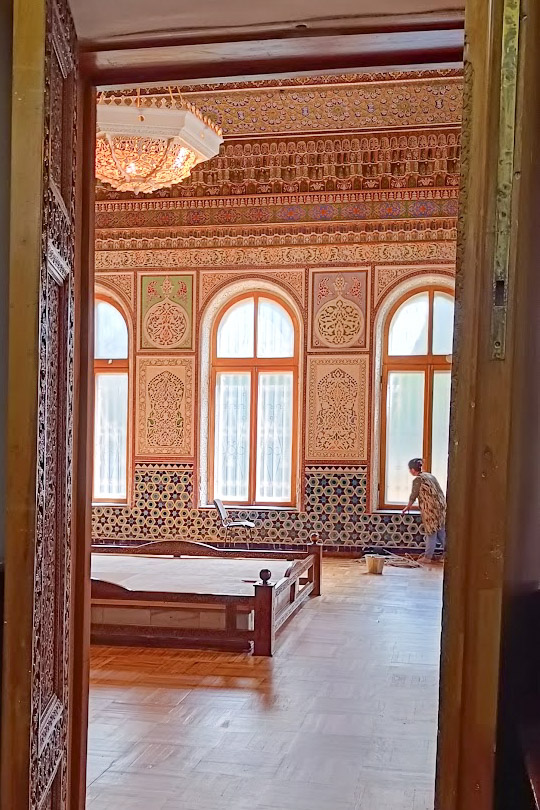
The museum is housed in the former residence of Alexander Polovtsev, a 19th century Russian diplomat. He loved Uzbek design so much that he turned his home into a live-in gallery. He hired the most skilled craftspeople from around the country to decorate the interior, and the result is exactly what a museum of applied arts deserves.
It’s a small museum, and you won’t need a massive amount of time here, unless you want to linger over the carvings and the art pieces.
The museum will walk you through techniques like ganch (intricately carved plaster), ikat (vibrant, blurred, silk weaving you’ll start to notice at every market) and suzani (hand-embroidered wall hangings).
There’s about 7,000 objects on display, but the carved wooden pillars and painted ceilings of the house are artworks of their own. It feels like wandering through the house of a very wealthy, tasteful aunt.
The courtyard out the front of the museum is a quiet sanctuary, giving you a place to sit for a moment while you check your map or take time out from a busy day.
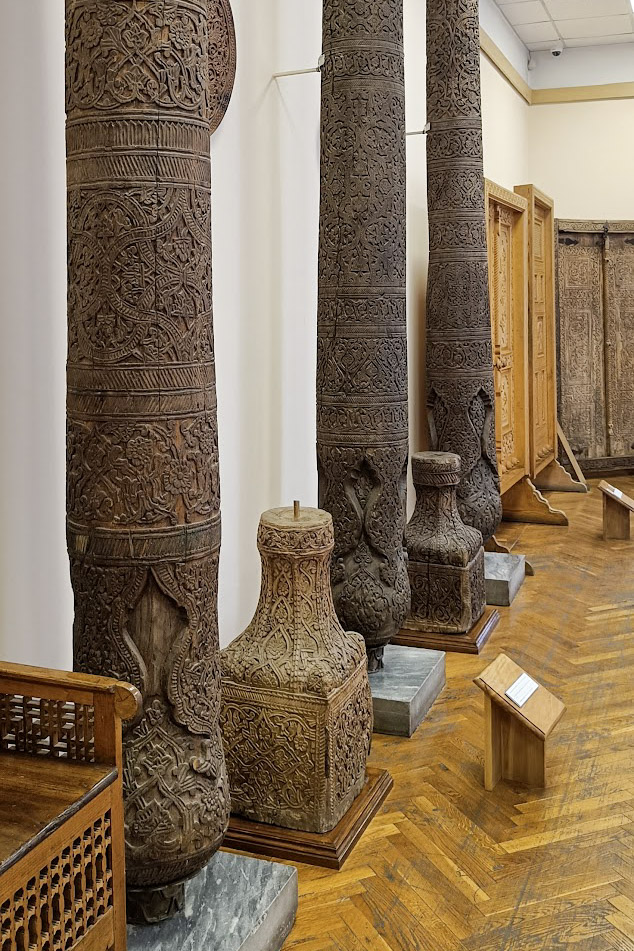
You’ll also find a small gift shop that sells high quality local crafts. Being honest, the prices are higher than you’ll find at a bazaar, but here you can be guaranteed they’re the real deal, while a bazaar can be hit or miss.
Amir Timur Square
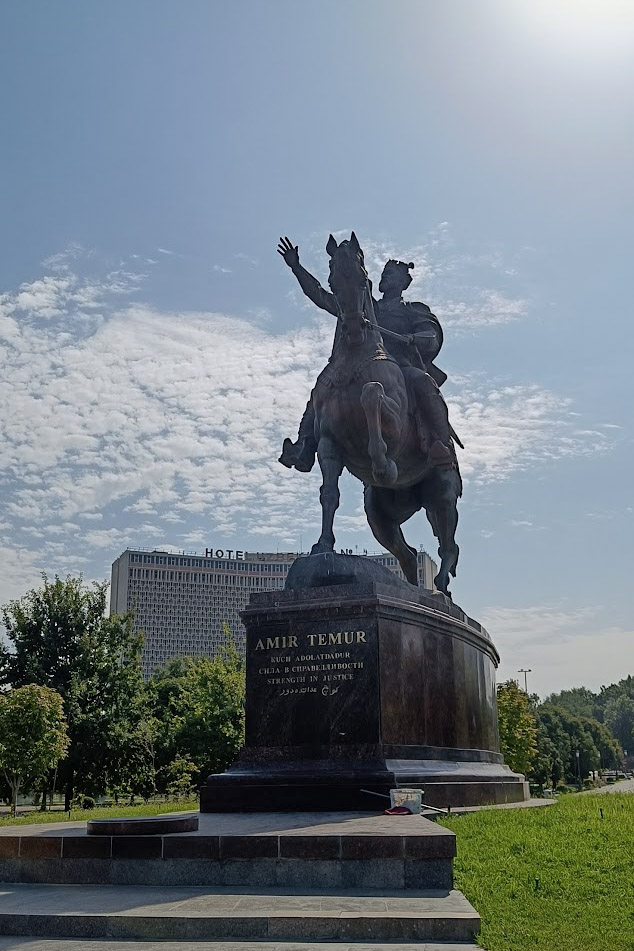
If the heat has eased up, the walk from the Museum of Applied Arts to Amir Timur Square takes about 40 minutes. If that’s not on your bucket list today, then you can either hop back on the metro and head for Amir Temur Xiyoboni, or use a taxi app (YandexGo is the dominant one in Uzbekistan).
If you visit Uzbekistan, there’s absolutely no avoiding the name Amir Timur (or Temur in some transliterations). Also known as Tamerlane, Amir Timur was a conqueror and the founder of the Timurid Empire, which is now modern-day Afghanistan, Iran, and Central Asia. He was born in what is now part of Uzbekistan in the 1320s, and he’s seen as a hero in Uzbek history.
The square named after him, Amir Timur Square, is the main public square in Tashkent. Where the square sits now was originally Constantinov Square, then renamed to Revolution Square, before finally becoming Amir Timur Square in 1994.
During Soviet times, a statue of Stalin stood in the centre of the square. This was removed in 1961, and replaced with a statue of Karl Marx in 1968. After Uzbekistan gained its independence, Karl Marx was evicted, and a statue of Amir Timur on horseback now stands pride of place.
Sunset: The Brutalist Icon
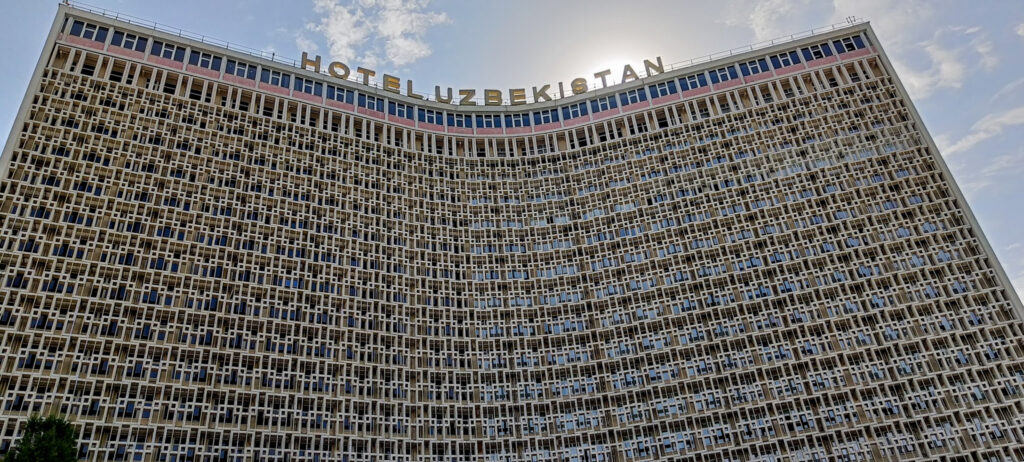
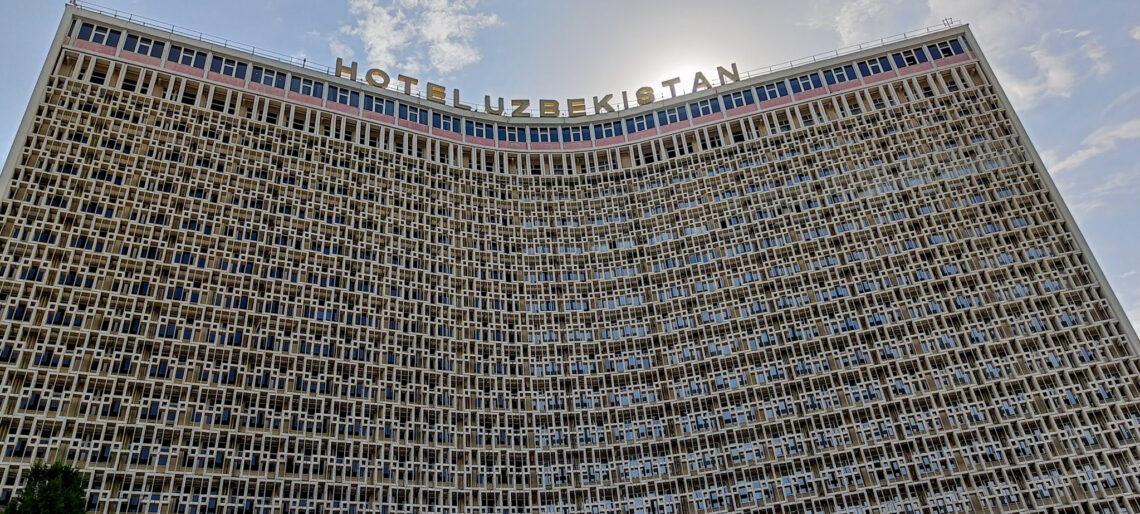
We’re finishing up your list of things to do in Tashkent with the most striking edifice in the city, and one you can’t help but notice from Amir Timur square: the Hotel Uzbekistan. Looming over the square, it’s just steps away to your final stop of the day.
Hotel Uzbekistan
The Hotel Uzbekistan is a little bit like the Barbican in London: A Brutalist masterpiece, but is it beautiful or hideous? That’s up to you.
The first thing you’ll see either way is the concrete lattice making up the front of the building. This was designed to keep the rooms cool before air conditioning was even thought of.
The hotel itself gives off a Blade Runner meets The Grand Budapest Hotel kind of vibe: grand and impressive, but rough and intimidating at the same time. It originally opened in 1974 to cater to Soviet diplomats and visiting dignitaries to the Uzbek capital. Legend has it that during Soviet times, every one of the 200 rooms in the hotel was bugged.
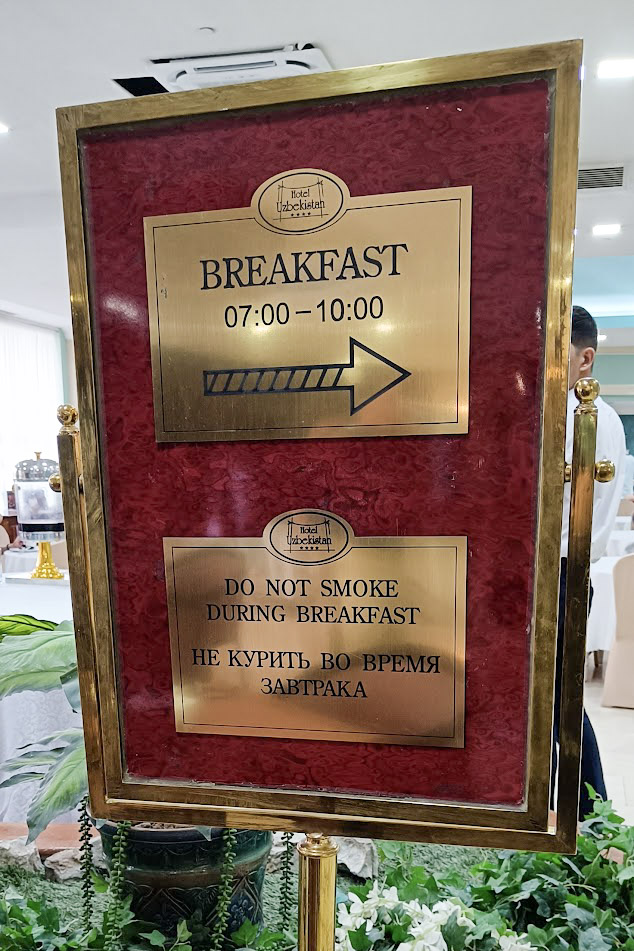
Presumably, today, there’s a touch more privacy, but the shadow of the Cold War era is still very much in force here. The lobby underwent a revamp in late 2024, just after my visit, but the highlight of the hotel still remains its top floor bar.
When you go in, take the elevator up as high as you can go, then take the stairs up one more flight. Here you’ll find the hotel bar. It’s not remotely impressive at first glance. In fact, for my fellow Irish, it distinctly gives off the vibe of “local GAA club bar”. It looks thrown together, far too much empty space, no thought for design, and just a weird ‘you’re not from round these parts’ kind of lull over the place.
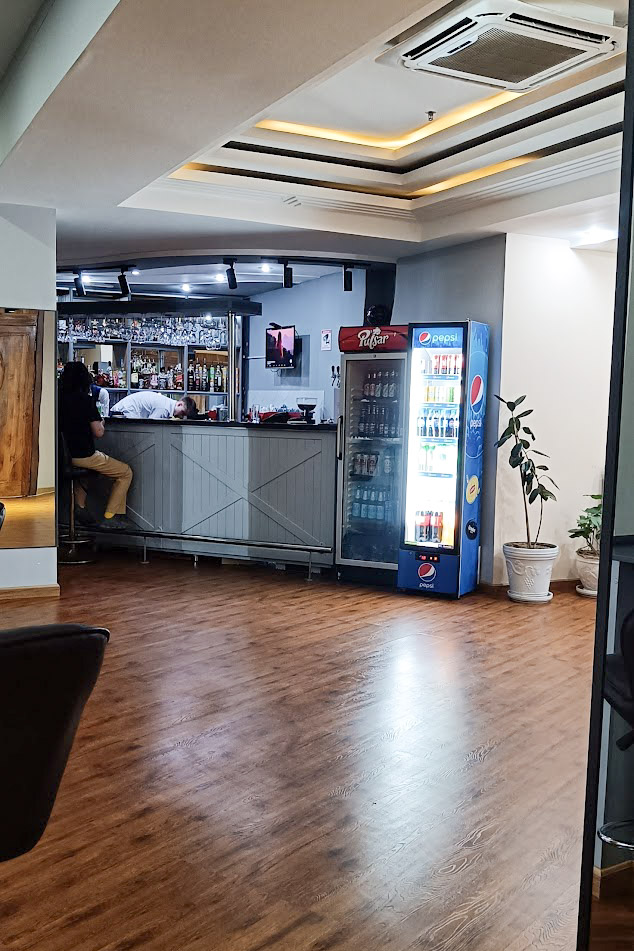
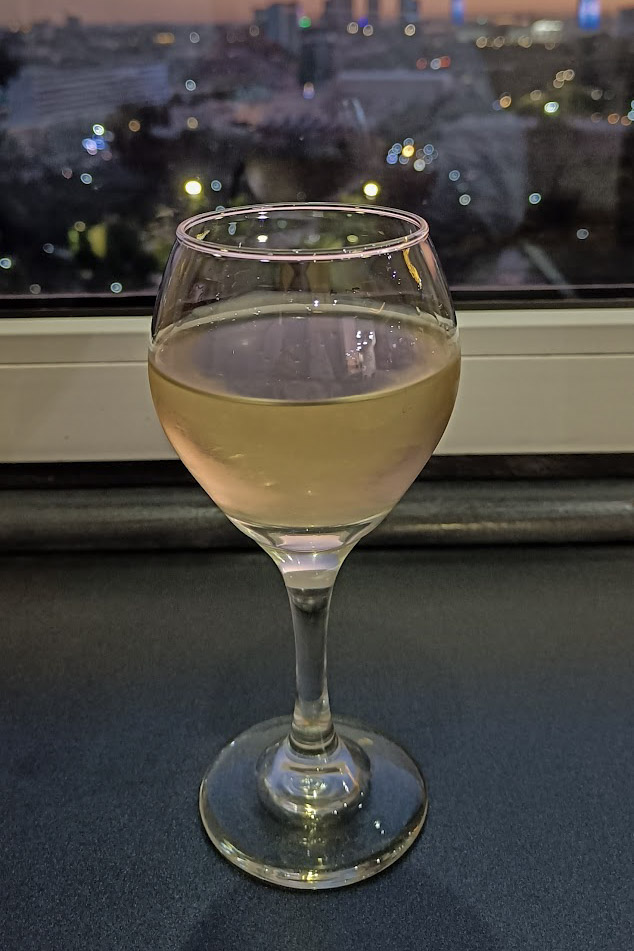
Don’t let that put you off. You’ll still get a great glass of Uzbek wine for next to nothing, and if you get a seat by the window, you’ll see the reason I’ve brought you here in the first place: the view. Because of the height, you’ve now got an incredible vantage point out over the city. I’ve been in the bar in both the early morning and at sunset (only one was with wine, I’ll leave you to guess which), and while the view is impressive during the day, at night is when the skyline really comes alive.
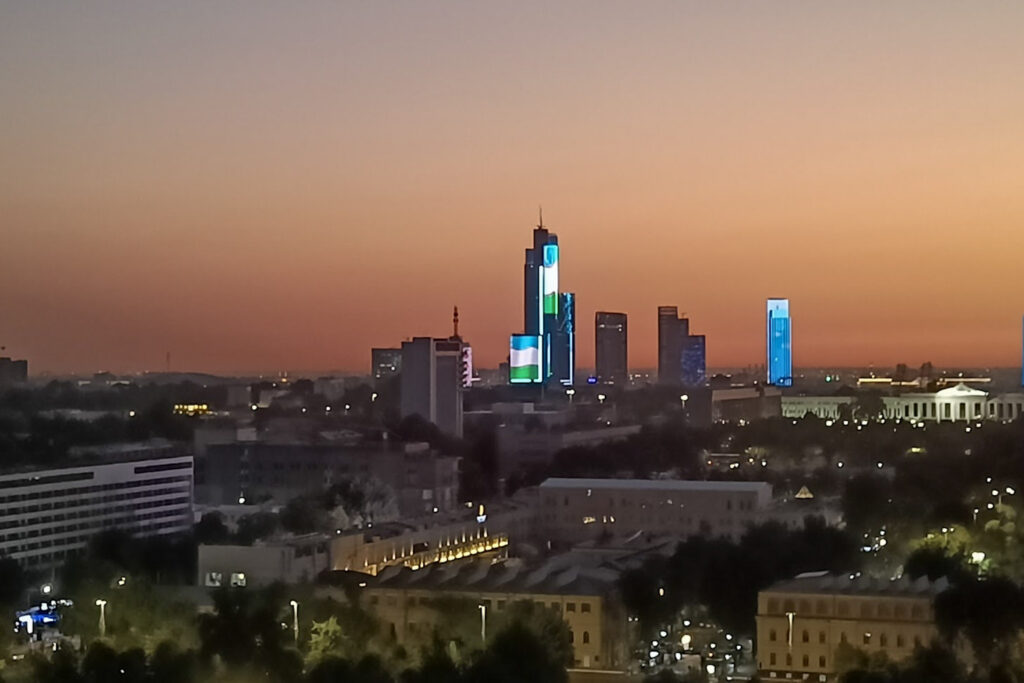
The tall buildings of downtown Tashkent are lit up with a light show at night, projecting the Uzbek flag onto their steep edifices. From here, you can really see the modern city that Tashkent has become, all while sitting in a piece of Soviet history.
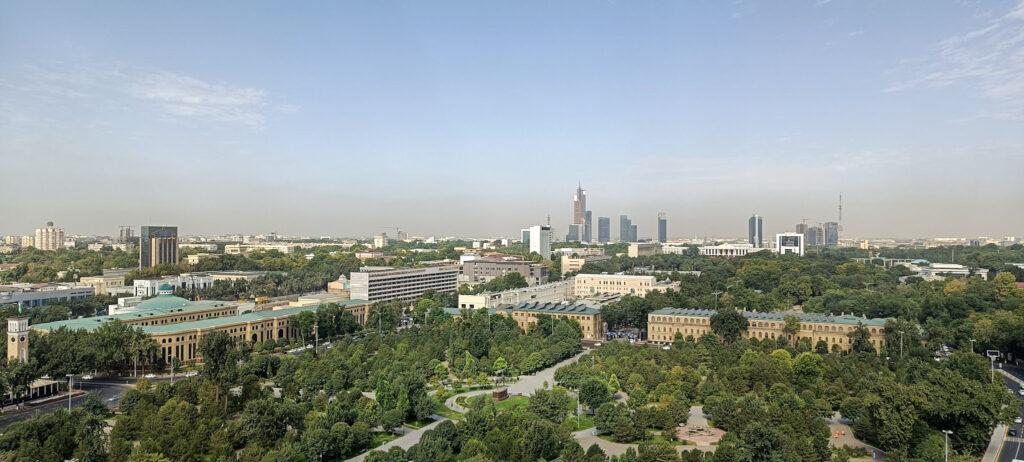
It’s the perfect place to end a day in Tashkent, having wandered through the ancient spiritual past, the recent USSR history, and a view out over the future.
If you’re travelling onward in Uzbekistan, I’ve written a guide to the Uzbek rail system here to help you get on your way.