
10 Incredible Things to do in Samarkand
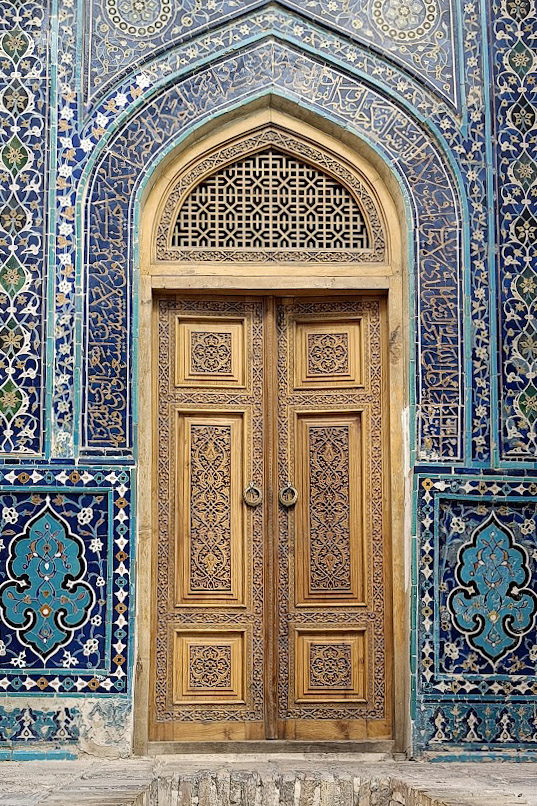
The moment I knew I’d visit Uzbekistan one day was when I first saw a photo of Samarkand. You know the old romance trope of eyes meeting across a crowded room and knowing that person is The One? That was me, except it wasn’t a person, it was shimmering turquoise domes. I immediately went down a rabbit hole, clicking through photo after photo and thinking “how did I not know somewhere that looked like this existed?”
I barged into my husband’s study and announced “I’m going to Uzbekistan”. He barely looked up, well-used to these interruptions. A couple of months later, I’d quit one job, had some off before the next, and a one-way ticket to Uzbekistan in my hand.
In real life, Uzbekistan is more beautiful than any Instagram photo can ever do justice. It’s a place where 2,500 years of history meet the smell of freshly baked non bread and the never ending artistry of the blue mosaic tiles.
When Alexander the Great made his way to Samarkand, he took one look at the place and proclaimed “Everything I have heard about Samarkand is true, except that it is even more beautiful than I had imagined”. Well, Laura the Ordinary agrees with him.
If you’re spending time in this otherworldly place, and you’re looking for the best things to do in Samarkand, read on.
Quick Samarkand Facts
- Why Visit: Unbelievable architecture: ancient mosques and madrasas right next to a living breathing city. It’s affordable, and the Uzbek people are famously warm and welcoming.
- Currency: Uzbek Sum (UZS)
- Best Time to Visit: Spring or Autumn (although I survived August and I’ve got the complexion of uncooked chicken)
- Language: Uzbek, Russian, and Tajik (Samarkand is close to the Tajik border and is a Tajik-speaking enclave)
The Samarkand Highlights: Registan Square
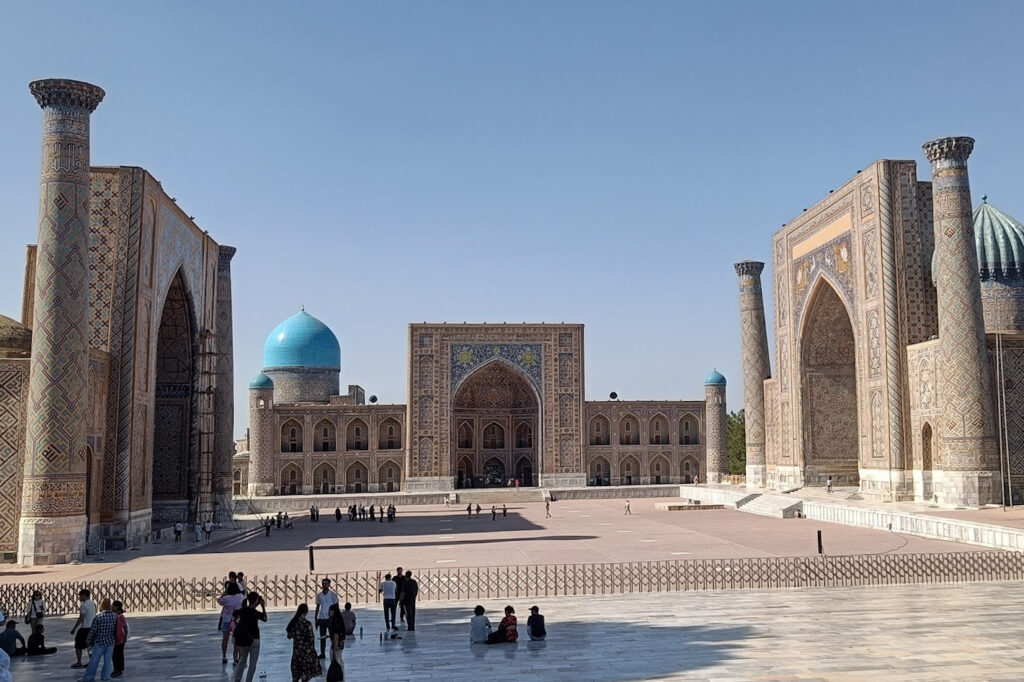
On a list of things to do in Samarkand, Registan is the obvious place to start. It’s the place that drew me to Uzbekistan in the first place, and it’s probably the main reason you’re thinking of visiting.
Historically, Registan was the town square. It was where people gathered to hear proclamations, shop at the bazaar, and even watch public executions. Today, it’s a lot more peaceful, though just as visually dramatic.
It’s framed by three madrasas (Islamic schools): Ulugh Beg Madrasa, Tilya-Kori Madrasa, Sher-Dor Madrasa.
Visiting:
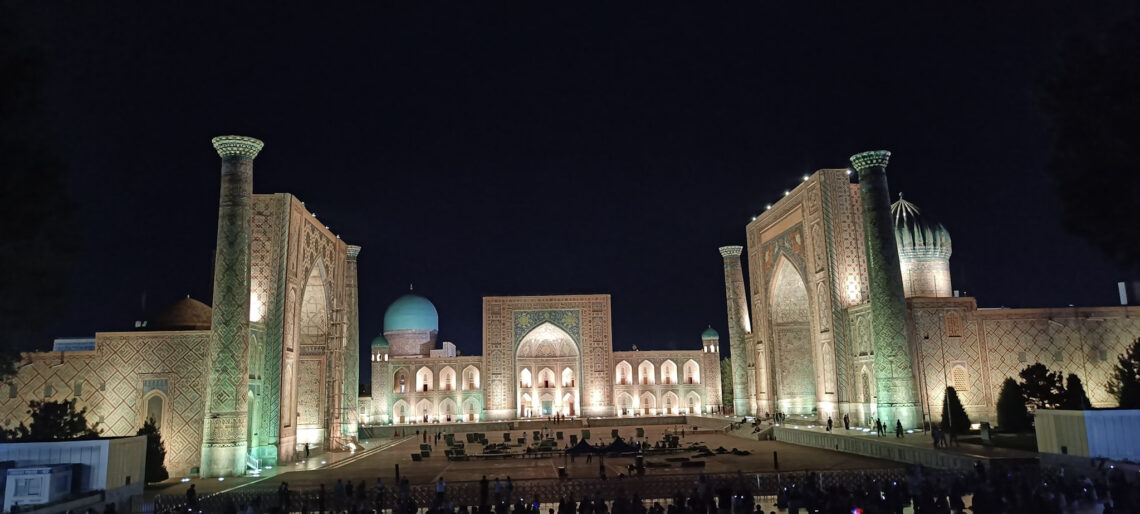
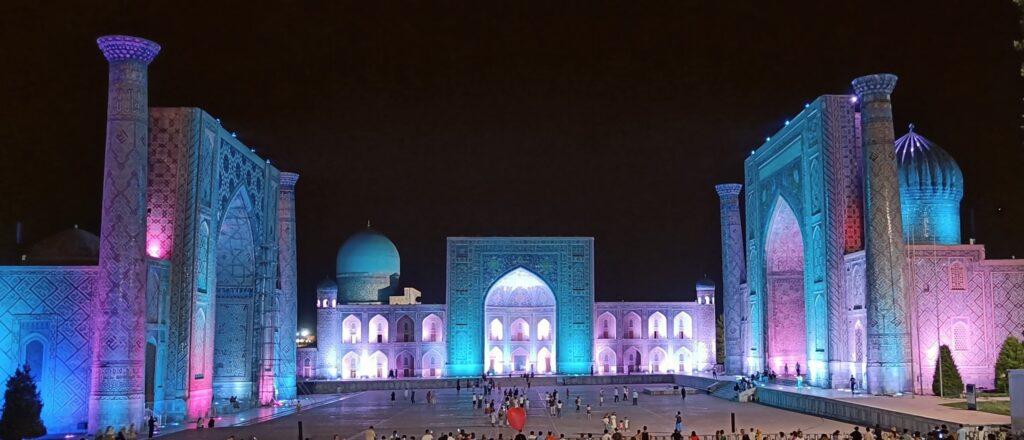
The three madrasas together form a UNESCO World Heritage Site, and they’re open daily from 08:00 – 20:00, for an entry fee of 50,000 UZS (about £3.20 / $4.10 USD). You can buy tickets from the booth on the left side facing the square. At night, the three madrasas are lit up in a colour-changing display, set to music.
If you’re visiting Registan, go twice: Once in the morning to actually visit the madrasas and get that wow moment on the inside, and once in the evening to see this historic square all lit up in her evening wear.
Ulugh Beg Madrasa
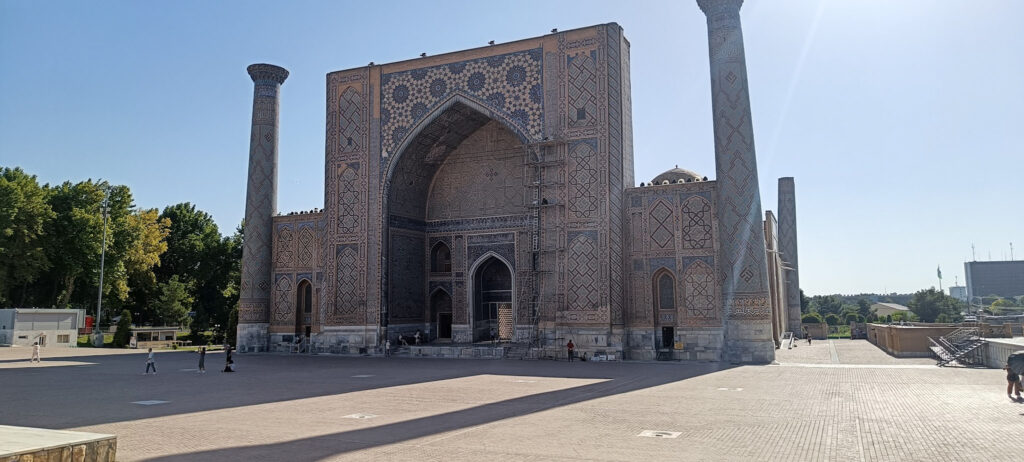
When you’re facing the square, Ulugh Beg is the building on the left. It’s the oldest of the three madrasas, built in the early 15th century. It’s named after, and built by, the astronomer and Sultan Ulugh Beg, who taught mathematics and astronomy here.
The building surrounds an inner courtyard, which you’ll find surrounded by what were once student cells (hurjas). There’s a mosque at the rear of the madrasa
All exterior surfaces are covered in decorative patterns, tiling and mosaics. The main entrance is decorated with blue stars, as a nod to Ulugh Beg’s passion for astronomy.
Sher-Dor Madrasa
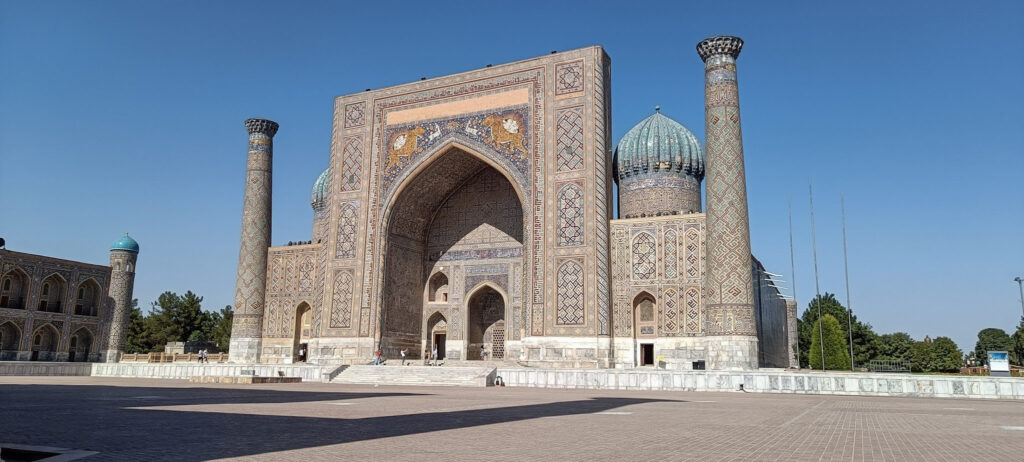
To the right of the square, directly across from Ulugh Beg Madrasa, you’ll see the Sher-Dor Madrasa. This was the second to be built on Registan square, built in the early 17th Century.
The name Sher-Dor means “with lions”, and if you look up at the entrance, you’ll see two big cats chasing deer with human-faced suns on their backs. This is really unusual to see in Islamic architecture: traditionally, it’s a big no-no to depict animals or human figures. It’s a bold bit of artistic rebellion, thought to be a nod to ancient Zoroastrian symbols.
Architecturally, it’s similar to Ulugh Beg Madrasa, with a square layout and an inner courtyard with student cells and classrooms.
Tilya-Kori Madrasa
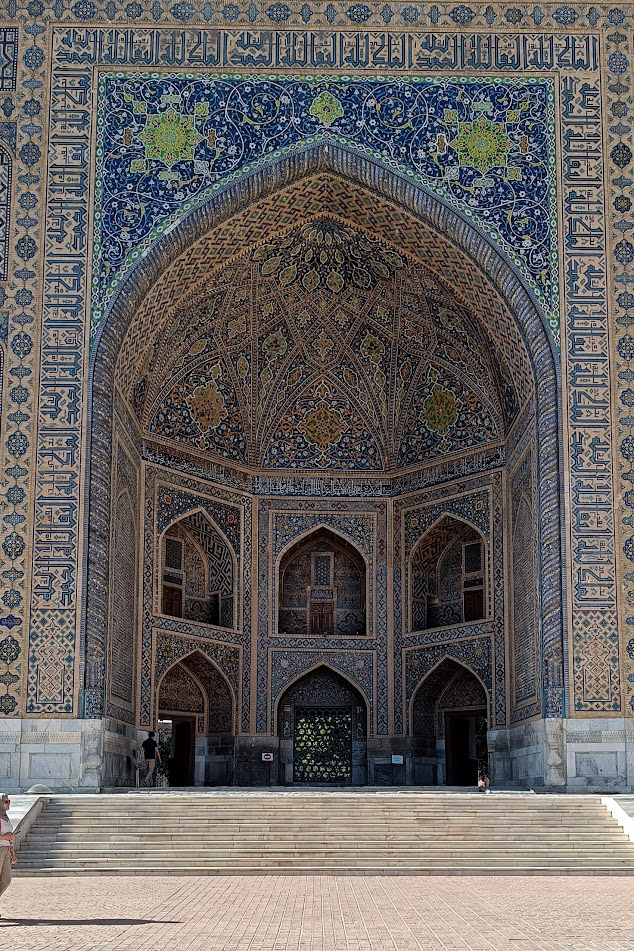
When you’re facing the square dead-on, this is the gorgeous building looking back at you. It’s the newest of the three, built 10 years after Sher-Dor. It was both a residential college for students and a grand mosque.
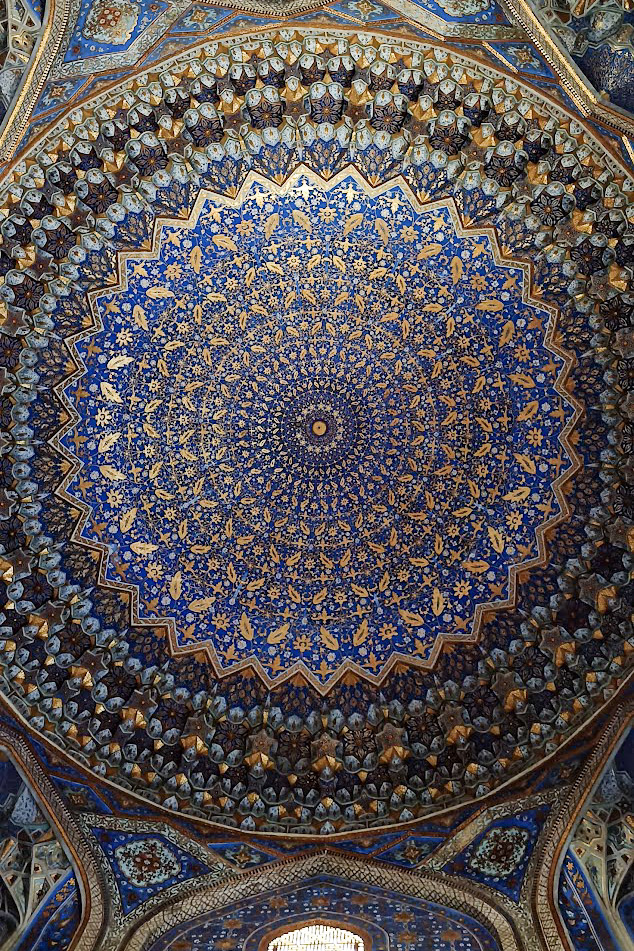
The mosque inside is the showstopper of the Registan complex: It’s completely covered in gold leaf and blue patterns. When you look at the dome inside, it looks rounded and deep, but it’s actually a trompe l’oeil trick: it’s completely flat, but designed to evoke the idea of an infinite heaven.
When to Visit Registan
There’s almost zero shade in the square, so if you burn as quickly as I do, I recommend going in the morning before the sun (and tour buses) are out in full force.
However, I’d also recommend making a return visit in the evening to see the square all lit up at night.
Bibi Khanym Mosque
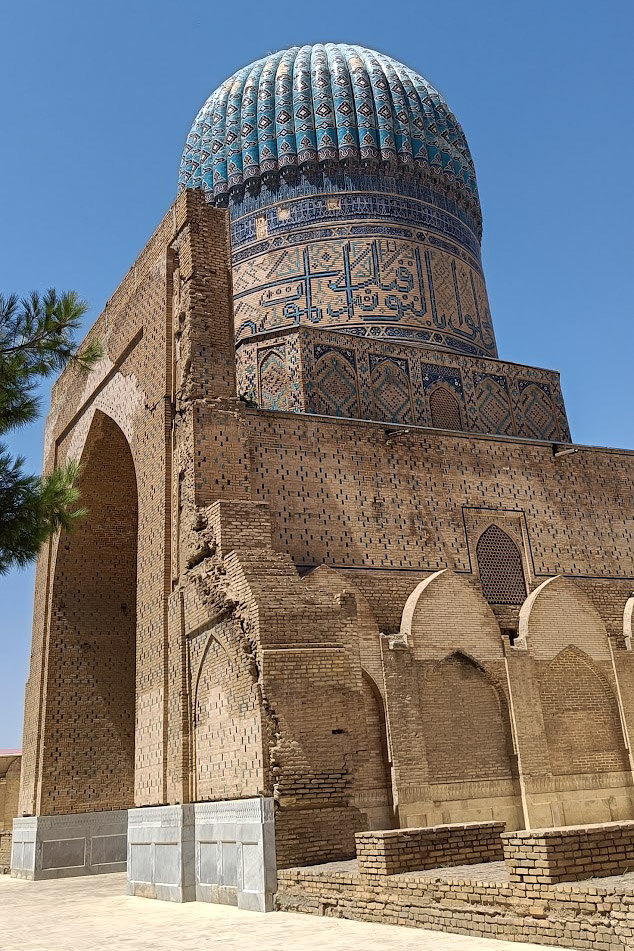
If you’ve spent any time travelling in Uzbekistan, you’ll already have come across Amir Timur or Tamerlane as he’s sometimes known as.
Legend has it that while the fabled conqueror was in India, his favourite wife, Bibi-Khanym had it built as a surprise for him. Plot twist though, the architect fell in love with her (well she was a favourite wife for a reason), and refused to finish the job unless he could kiss her. She agreed, provided it was through a cushion. Despite the barrier, it left a mark on her cheek. When he found out, Amir Timur was so enraged that he had the architect executed.
In reality, Amir Timur built the mosque himself to show off the massive wealth he’d amassed while he was off looting his way around India. He wanted it to be the most magnificent mosque in the world, and pushed the architects to the limits of 14th century engineering.
On the very first day it opened, bricks started falling on the worshippers’ heads. It was crumbling under its own weight before the mortar was even dry.
Today, it’s a lot more stable, and with it just being a short walk from Registan, it’s a great next stop on your Samarkand adventure.
Visiting:
The entry fee here is around 30,000 UZS (around £1.85 GBP / $2.45 USD), and it’s open from about 08:00-22:00.
Siyob Bazaar
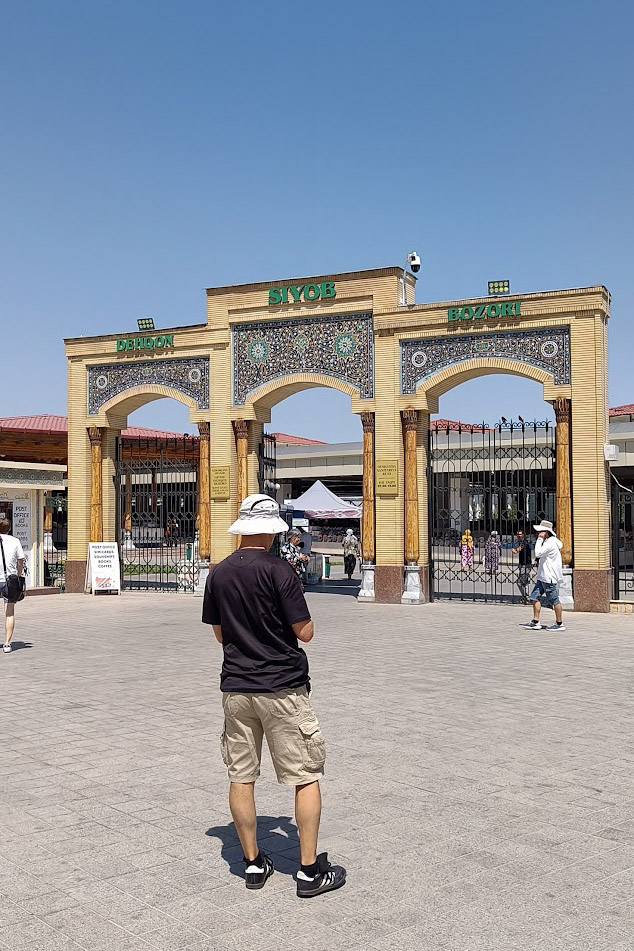
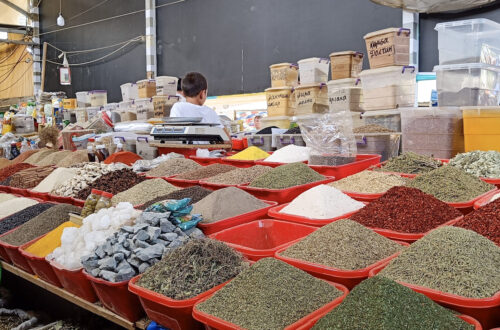
Once you’ve finished exploring the incredible decorative arts of the mosques and madrasas, head over to Siyob Bazaar. It’s right next door to Bibi Khanym mosque, and it’s a great gear shift from a visual feast to a literal one.
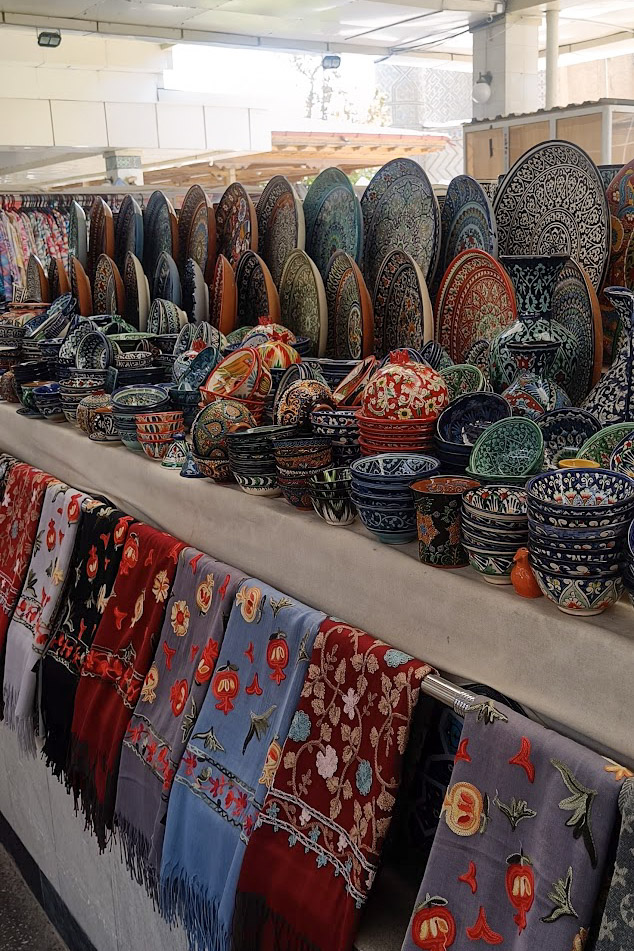
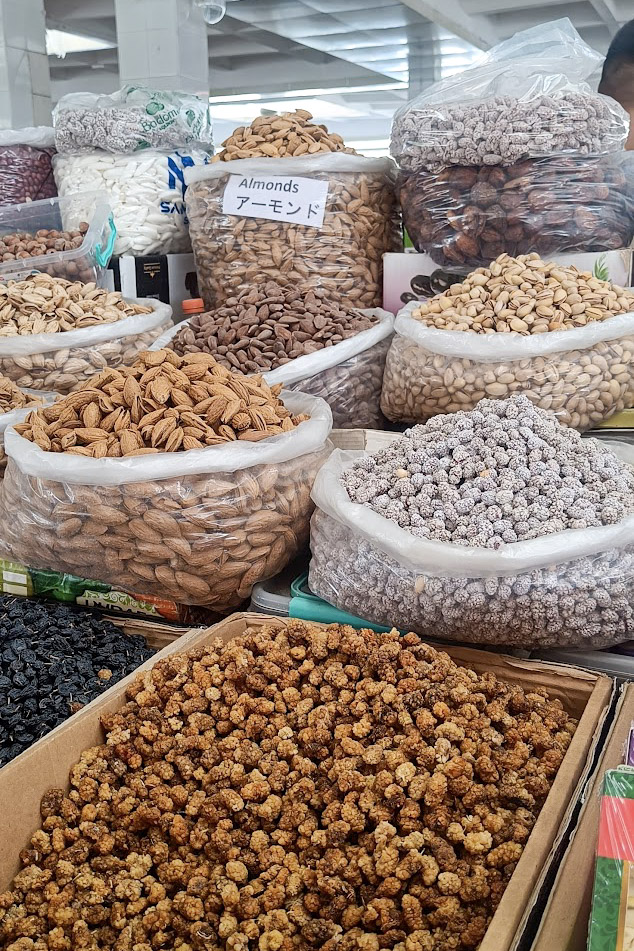
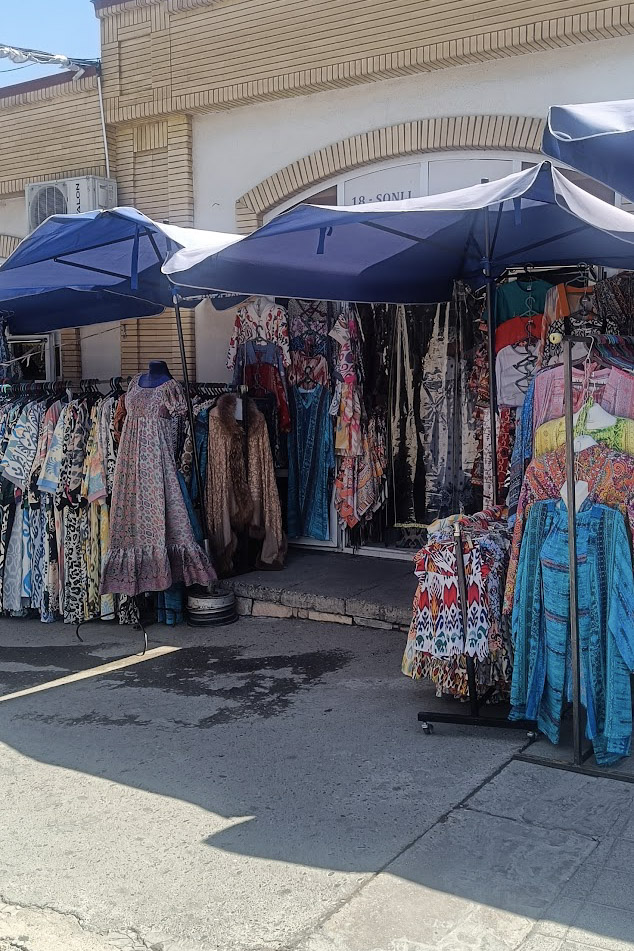
The bazaar itself is a real melting pot of offerings: you’ll find homewares, clothes, and food all in one place. If you’re looking not only for things to do in Samarkand, but things to take home, this is where you’ll find them. Do be warned though: prices are usually not listed, and as a tourist you’re likely to pay a bit more. Likewise, you may find that not everything is as “authentic” as you might be told: I bought a beautiful embroidered scarf that I was told was pure silk – it’s not, it’s pure polyester, but it’s so pretty I don’t care.
The bazaar is also a great place to try the famous Samarkand non bread. It’s baked in the traditional tandir clay ovens, and it’s estimated that about 15,000 Samarkand breads are baked every day in Uzbekistan.
If you’re a fellow vegan, you’re in luck here because Samarkand bread is almost always vegan, usually just made with flour, water, yeast and salt.
The overall vibe of the bazaar is bright, colourful, chaotic, and wonderfully energetic.
Bibikhanum Teahouse
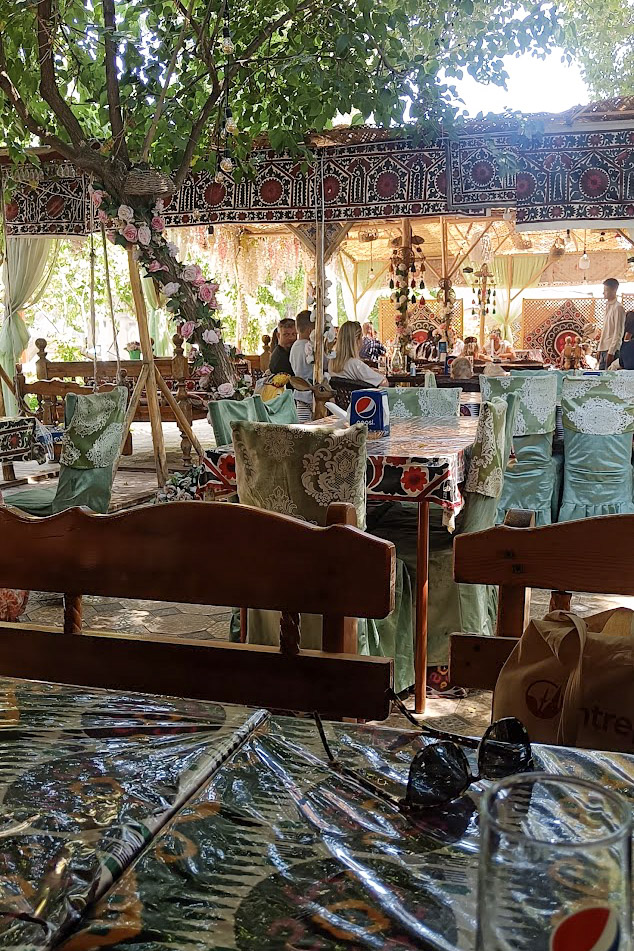
Funnily enough, the Bibikhanum Teahouse is also near the Bibi Khanym Mosque, as well as the bazaar. It’s an ideal place to stop and grab a bite and get out of the sun for a little while.
The teahouse is famous for its leafy courtyard and traditional tapchans (raised wooden platforms covered in carpets, the ones that look a little like beds). It’s a great place to lounge, and you’ll likely find a few local cats wandering around, looking for a spare crumb or a good nap spot.
They’ve got great options for vegans and non vegans alike. If you’re a fellow plant based traveller, I’d highly recommend a pot of green tea and a plate of Achichuk (a simple but incredibly flavourful tomato and onion salad). The tomatoes in Uzbekistan actually taste like sunshine, which is a lot better than the muck I get in Tesco Express.
It was also here that I came across another cultural difference with Uzbekistan and Europe: the toilets. In Europe, if a restaurant has seating for over about 10 people, they have to have a toilet that their customers can use. In Uzbekistan, you’ll find a toilet, but they’re not always owned by the restaurant. In Bibikhanum Teahouse, they’re operated by another business and you have to pay a small fee to enter. Make sure you’ve got some small bills (usually about 2,000-3,000 UZS) to enter.
The Mausoleum of the King: Gur-e Amir
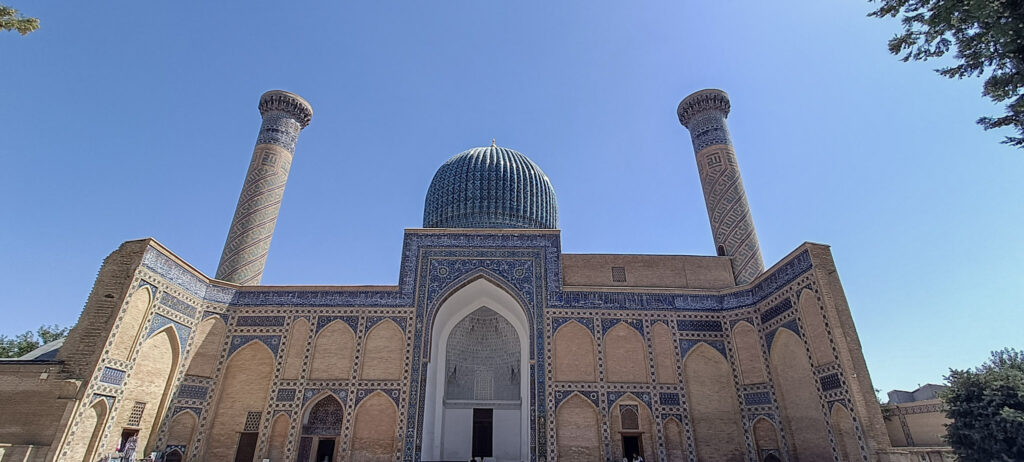
Next on the list of things to do in Samarkand, we’re going back to Amir Timur. Or more specifically, his resting place. This is where you’ll find a distinct ribbed, azure blue dome that looks a bit like a cupcake case made of mosaic.
If Timur wasn’t extra enough building the grand Bibi Khanym mosque, his mausoleum should convince you. Inside, the walls are covered in gold leaf and intricate papier mache relief.
His actual tombstone is the largest piece of nephrite jade in the world, and on it there’s a warning inscribed: “Whomsoever opens my tomb shall unleash an invader more terrible than I.”
In June 1941, Soviet anthropologists decided to ignore the warning and open the tomb. Two days later, Hitler launched Operation Barbarossa and invaded the Soviet Union. Coincidence or curse?
Visiting:
The entrance fee is about 50,000 UZS (about £3.20 / $4.10 USD), and while opening hours can vary, it’s generally open for visitors from 09:00-18:00.
The Necropolis: Shah-i-Zinda
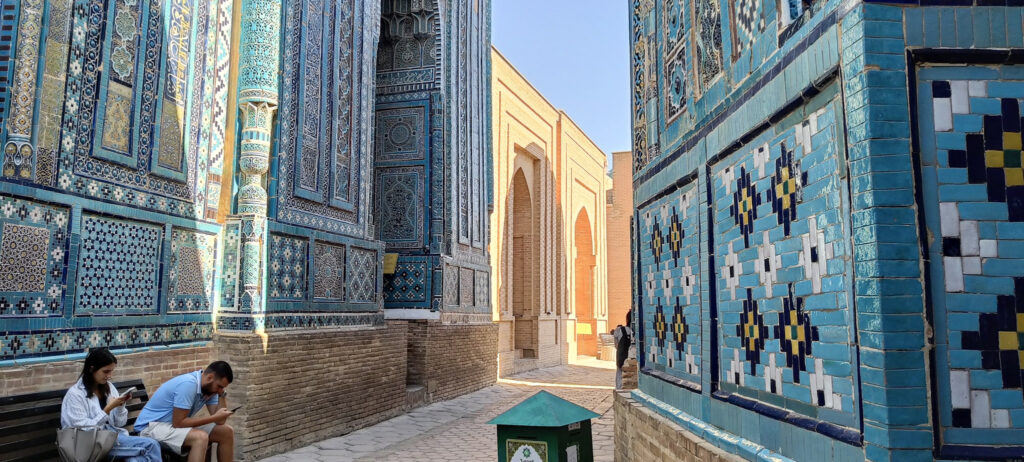
If you thought Registan was impressive, wait until you see Shah-i-Zinda. It’s quite possibly the most beautiful street it in the world, a narrow, winding alley entirely lined with mausoleums covered in every shade of sapphire, lapis lazuli, and turquoise you could imagine.
The name means “Living King”, which refers to the legend of Qutham ibn Abbas (a cousin of the Prophet Muhammad), who is said to be buried here. Legend has it he was beheaded for his faith, then simply picked up his own head and walked into a deep well, where he’s said to live to this day.
The Shah-i-Zinda complex was slowly formed over eight centuries, beginning in the 11th century. Today, it includes more than 20 buildings.
The Staircase of Souls
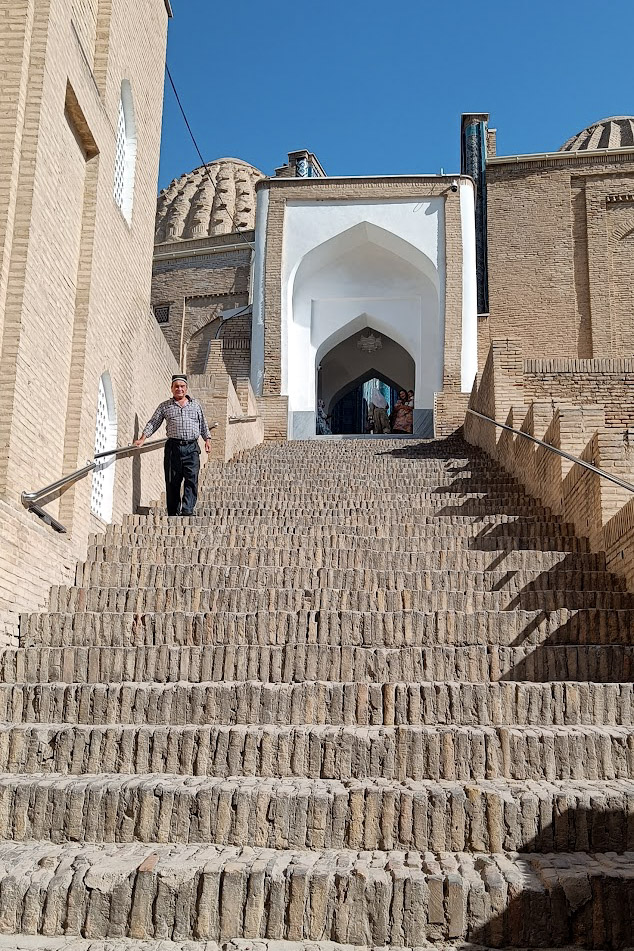
As you arrive at Shah-i-Zinda, you’ll be faced with a steep, ancient brick staircase. There’s a local legend here: As you go up the stairs, you must count each step. When you come back down, you count again. If the number is the same, it means you are a “pure soul”.
You’ll see tourists and locals alike making their way slowly up the steps, muttering their count under their breaths. At the top, you’ll see a pure white archway, and just beyond, your hike up the stairs will be rewarded with the intense blues of the mausoleums.
Visiting:
I’ll be putting together a full, timed Samarkand itinerary in a future post, but what you really need to know is to go early. As in, gates opening early. When I visited, I stayed in the Khan Hotel, which is right across the road, making it easy to go first thing in the morning.
Once you hit about 10am, it gets crowded with tour groups. If you have to pick between Shah-i-Zinda and Registan for your first stop of the day, go for Shah-i-Zinda – it’s so narrow that seeing it at a quieter time really does make all the difference.
The entrance fee is around 40,000 UZS (approx £2.50 GBP / $3.20 USD)
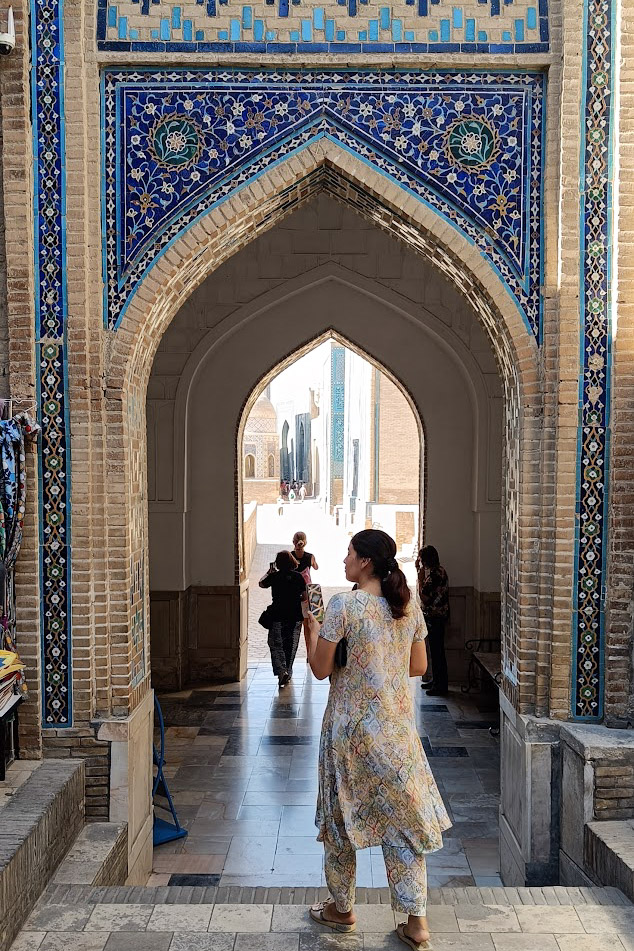
Dress Code:
This is a very holy site. You’ll need to make sure your shoulders and knees are covered, and for women, it’s a good idea to cover your head. If you do visit in inappropriate clothes, you’ll find a rack of scarves/wraps by the entrance that you can borrow while you visit.
The Ulugh Beg Observatory
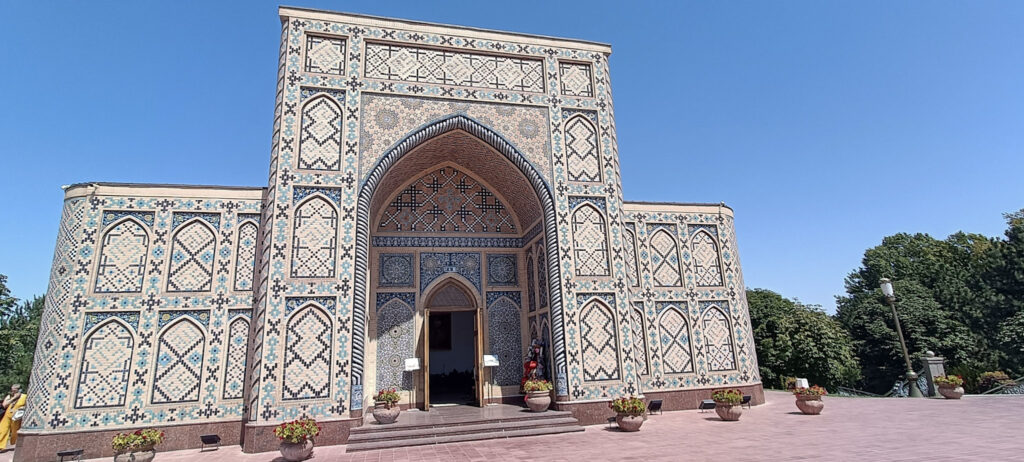
We talked about Ulugh Beg earlier in the section on Registan, the Timurid ruler and astronomer who resided in Samarkand and was responsible for many of the stunning buildings that stand in the city today.
Even though he was a Sultan, Ulugh Beg’s real driving force was his love for astronomy and mathematics. His goal was to turn Samarkand into an intellectual centre of the Timurid Empire, and the Ulugh Beg Observatory is a testament to that.
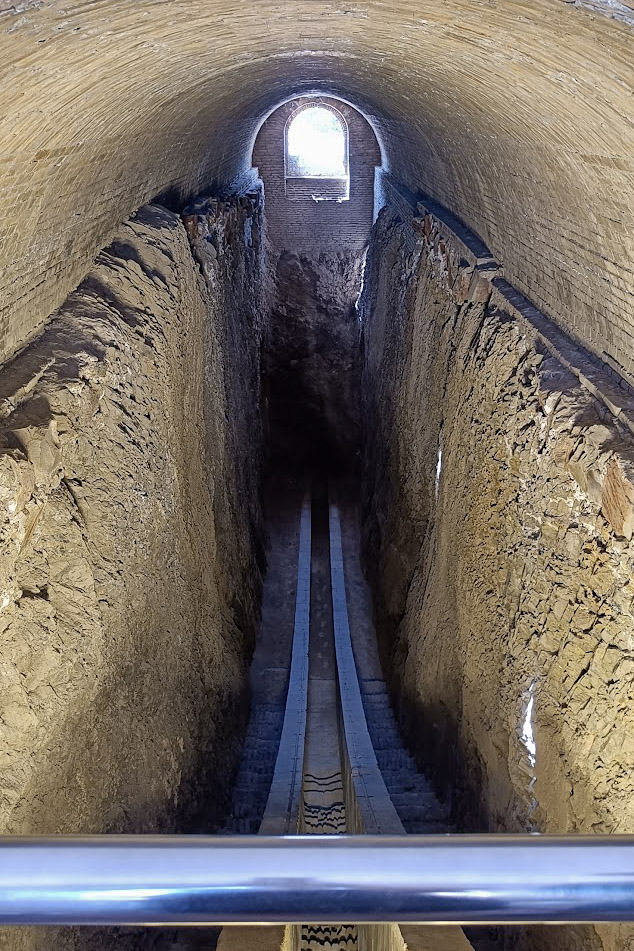
In 1428, Ulugh Beg built a massive observatory to house a giant sextant he used to track the stars with incredible accuracy.
Using his observatory, Ulugh Beg was able to calculate the length of a stellar year to within one minute of what we know it to be today with all our satellites. Seriously impressive when you consider it’d be nearly another 200 years before Galileo would invent the telescope.
Unfortunately, not everyone was a fan of Ulugh Beg’s scientific achievements, and he was assassinated by his own son in 1449. After his death, the observatory was destroyed. It would sit undiscovered until 1908.
Today, there’s a museum that shows you what the observatory looked in its full glory days, and you can still peer into the deep trench that made up Ulugh Beg’s sextant hundreds of years ago.
Visiting
The observatory is a little bit out from the main city, so you’re going to need to get a taxi or a YandexGo to get there. Luckily, it’s right by the Afrasiab Museum, so you can visit two sites at once.
Entrance: 75,000 UZS (approx £4.80 GBP / $6.15 USD)
Afrasiab Museum & Ancient Settlement
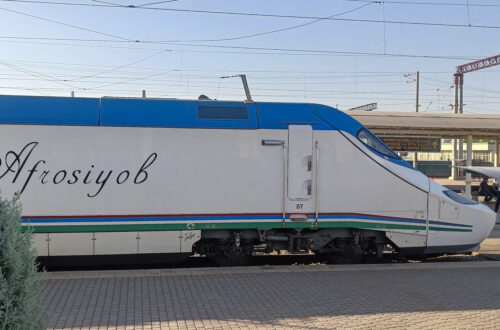
If you’ve taken the Afrosiyob train in Uzbekistan, the name may sound familiar to you. The Afrasiab Museum is built on the ancient site of Afrasiyab, named after the King that also loaned his name to the train. (note: you may see English spellings of words change frequently around Uzbekistan. These aren’t typos, they’re just different transliterations)
The site of Afrasiyab is one of the largest archaeological sites in the world, and is where an ancient city sat until it was destroyed by the Mongols in the early 13th century. In the 1970s, the Soviets opened a museum here in honour of the 2500th anniversary of the founding of Samarkand.
Inside, you’ll find artefacts found during excavations of the site, including ancient swords, ossuaries, coins, ceramics, weaponry, and other objects from every day life.
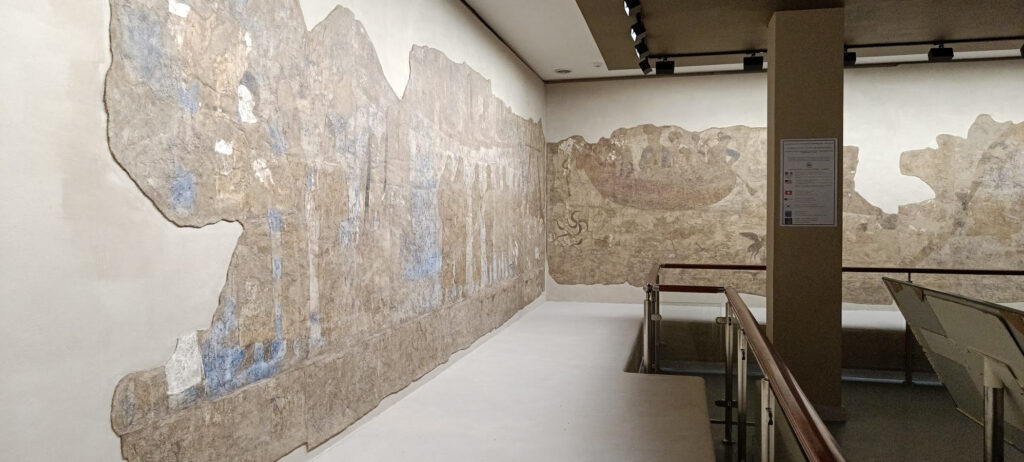
The most famous and impressive of the exhibits is the incredibly well preserved 7th century Afrasiab murals of Samarkand Palace.
Visiting:
Entrance fee: 40,000 UZS (approximately £2.50 GBP / $3.25 USD)
If you want to take photos of the murals, there’s sometimes an additional fee of 20,000 UZS.
The museum is typically closed on Sundays, and on Monday through Saturday is open from 09:00 to 18:00. It’s right next to the Ulugh Beg Observatory, so when you’re planning things to do in Samarkand, you can bundle both together in one Yandex trip.
Konigil Tourist Village & Meros Paper Mill
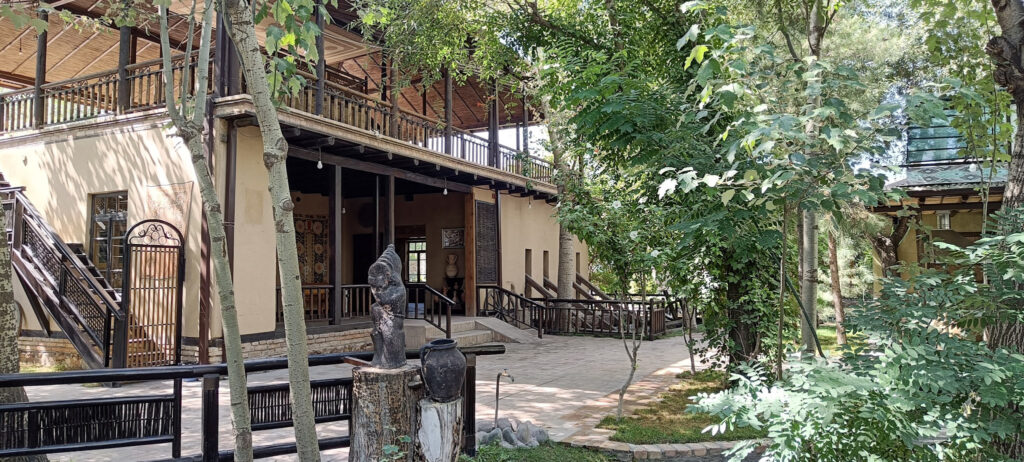
When you search for things to do in Samarkand, usually you’ll get a list of sites around the centre of the city. While these certainly are the highlights, and they’re things you shouldn’t skip, sometimes it’s nice to take a quick escape outside of the city.
One of the places I’d recommend visiting is Kongil Tourist Village. It’s far more authentic than the name suggests. It’s a quiet, green escape along the Siab River, and the main attraction is the Meros Paper Mill.
The mill was founded by a family who spent years researching how to revive Samarkand’s 8th century paper making techniques. This isn’t the A4 stuff that gets jammed in the printer, it’s paper made from mulberry bark, the same trees that feed silkworms.
It’s naturally yellow, incredibly durable, and apparently lasts for 400 years.
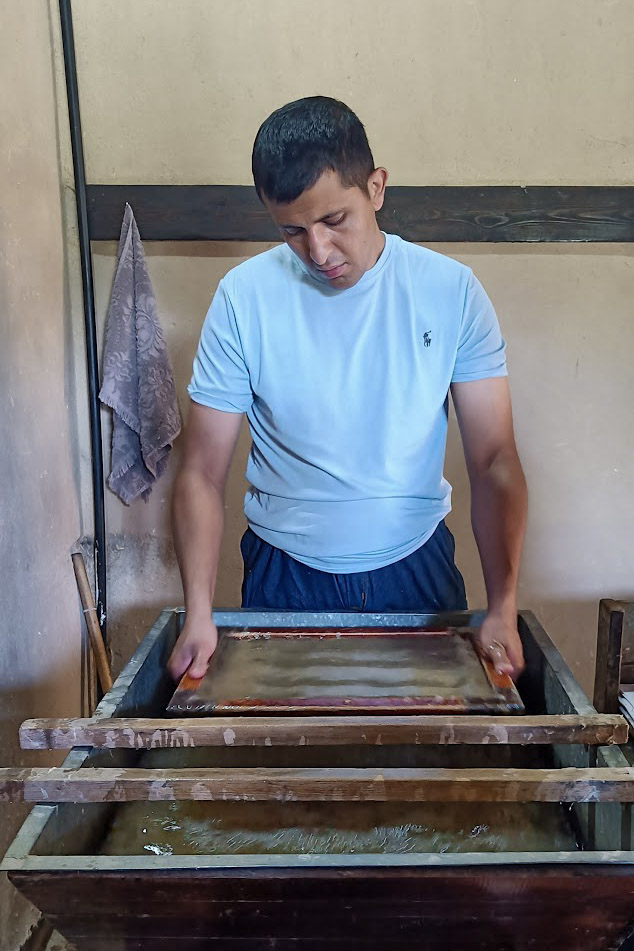
When you visit the mill, you can watch the whole process. From seeing local women carving strips out of mulberry branches by hand, to water powered hammers pounding the bark into a dough, all the way to artisans smoothing each sheet with a piece of polished marble or bone.
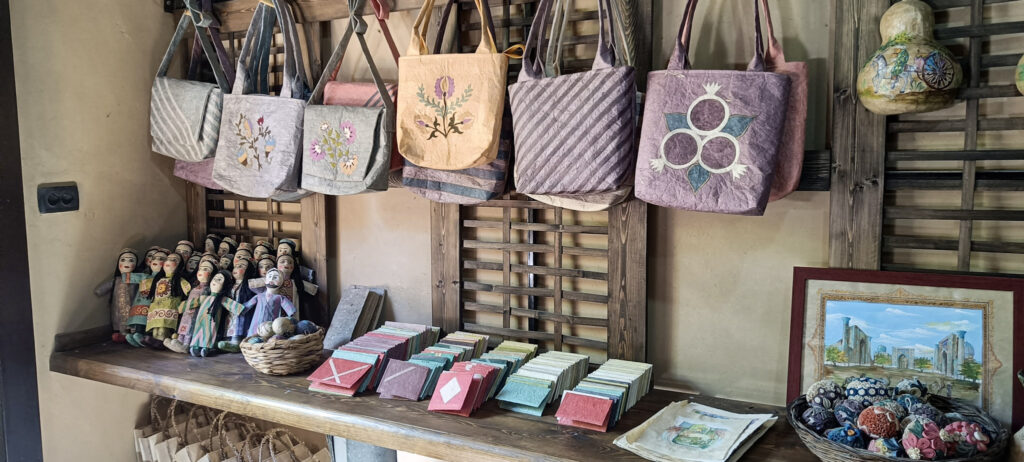
They make everything from paper here. When you wander into the gift shop, you’ll find notebooks and postcards as you’d expect, but also handbags, dresses, and dolls. I like to collect Christmas tree decorations from places I visit, and now, every December, I unwrap a little bauble from the Meros Paper Mill to place out of reach from the cats
Tour Tip: Traditional Crafts in Samarkand
If you’re interested in exploring more traditional crafts while you’re in Samarkand, this tour includes not only the Konigil Tourist village, but will also show you around a ceramic workshop, a silk carpet factory, the Afrasiab museum, and even give you lunch
Visiting:
Entrance Fee: ~10,000 UZS (less than £1 / $1).
Opening Hours: Usually 09:00-18:00 seven days a week
Getting there: It’s about 15-20 minutes from Registan. Grab a YandexGo for about 25,000-40,000 UZS
Bagizagan Winery
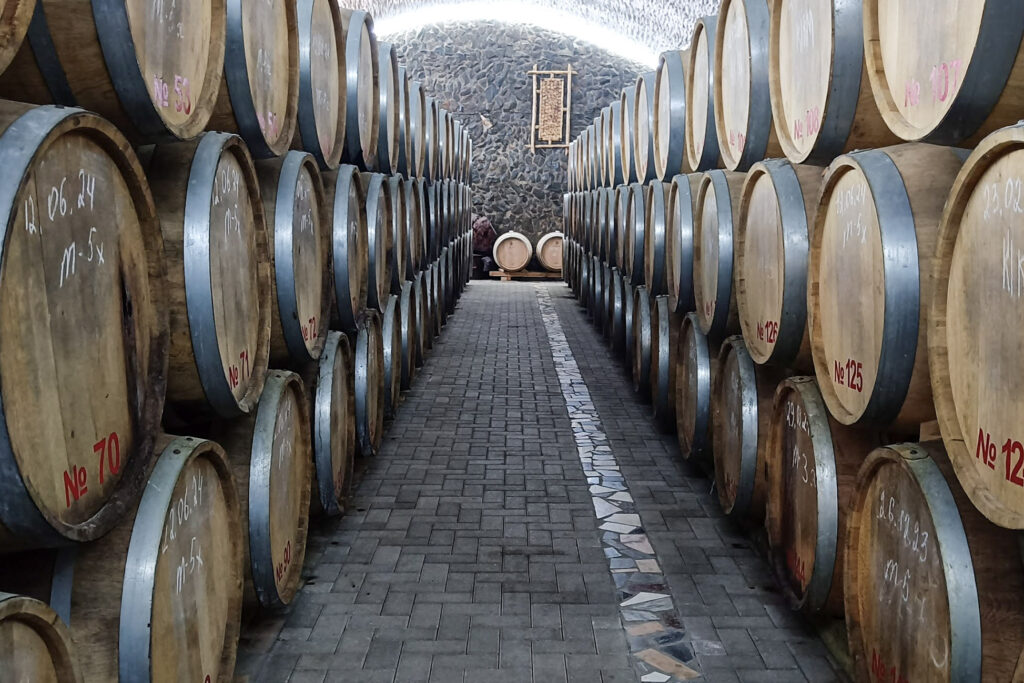
To finish off our “things to do in Samarkand” list, we’re heading about 25km outside the city to the Bagizagan Winery. I know Central Asia isn’t usually the first place that springs to mind when you think about wine, but Uzbekistan’s actually got a long, rich history of viticulture.
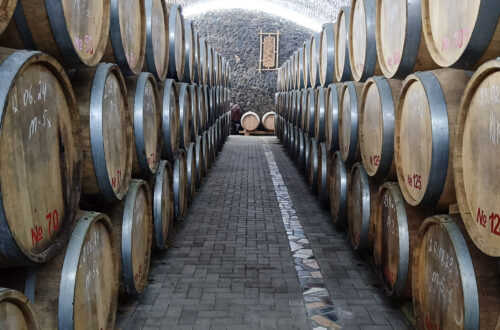
I’ve written more in depth about the Bagizagan Winery in this post, because I find their history fascinating, and while you’re staying in Samarkand, it’s definitely worth a visit. This is a five generation strong family winery that managed to survive the Soviet Union and the dry laws of the 1980s.
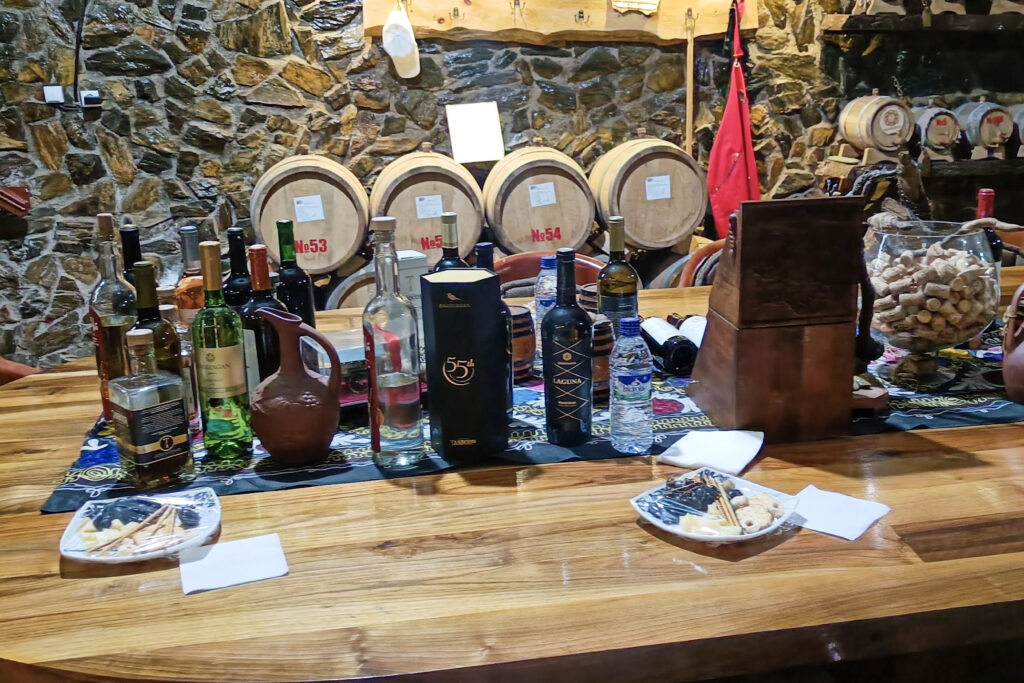
If you visit the actual estate, you’ll get to tour their full winery and cellar, and I’d strongly recommend booking onto a tour to do that as opening hours can vary. However, if you’re short on time, they also have a boutique hotel and tasting room in the centre of Samarkand.
Expect a range of wines from a surprisingly crisp and sweet white wine, to heavy, sugary dessert wines. And, if you’re really feeling brave, you can even try chacha – a grape brandy that’s strong enough to get you through a cold winter.
Staying in Samarkand
As you can see from this list, there’s far more things to do in Samarkand that you could conceivably get around in a day, especially when you consider trips out of the city to the paper mill or the winery. Most tourists who visit the city stay for a couple of days. I’ll be writing a full guide on the different neighbourhoods to stay in soon, but for now, here are a few standouts that cover different styles and budgets:
This is where I stayed during my time in Samarkand, and the location is fantastic. It’s literally right across the street from Shah-i-Zinda, so if that’s on your must see list, you can roll out of bed and up the Staircase of Souls long before the tour buses arrive.
It’s modern, clean and a family run place. There’s a lovely central courtyard to sit out in and the rooms are quiet and comfortable. It’s about a 10-15 minute walk to Registan, so you’re close to everything.
The Treat Yo Self Stays
I say “treat yo self”, but the reality is that even a very high end, 5 star hotel in Samarkand often works out cheaper per night than a Premier Inn in London. If you’re looking for good value luxury, these are some great picks:
This hotel was actually built in 1959 as Samarkand’s first-ever hotel. It’s now a protected heritage site. It was last updated in 2024, so even though the exterior is historic, the rooms are clean and modern. It’s right next to the Central Park of Samarkand, and has a lovely outdoor pool and garden courtyard.
It’s about a 20 minute walk to get to the main sights.
While Zarafshon may be Samarkand’s first hotel, Kosh Havis is one of its newest, only opened in 2023. It’s one of the most photogenic hotels in the city, with a rooftop terrace that has a bar and hot tubs with panoramic views of the Bibi Khanym Mosque and Registan.
The Budget Friendly Options
If you’re travelling on a budget, Uzbekistan is one of the best places to make your money go further. While these hotels are much more basic than others in the city, they’re still clean, well rated stays for a very good price.
If your main priority is being able to roll out of bed and be at Registan five minutes later, then Registan Palace is for you. It’s one of the most well known budget hotels in the city, and has great ratings amongst fellow travellers.
If you want somewhere budget friendly, but quiet, the Shahram Plus is a great option. It’s tucked away on a quiet backstreet, yet only 7 minutes walk away from Registan. It’s a cosy, family run bed and breakfast that’s well known for its hospitality that will make you feel like a guest in an Uzbek home.