
Things to do in Bukhara: A Love Letter to Uzbekistan’s Soul
Most visitors to Uzbekistan come for the impressive scale of Samarkand, or the beautiful old city of Khiva, and I get it. If you’ve read my Samarkand post, you’ll know that it was a photo of Registan that ignited my interest in the country.
When I was actually in Uzbekistan, however, it was Bukhara that surprised me the most and still has a hold on me long after. Wandering the dusty, sun-bleached alleyways, you feel like you’re actually walking through history. This charming city feels like a film set: you’ll walk through the market stalls with carpets and silk embroidery laid out and feel like you’re an extra in Aladdin, while other parts of it give off a rugged, desert outpost vibe that wouldn’t look out of place in Star Wars.
And despite this, it’s not a tourist trap cliche. It’s a real city where real people live, buy their groceries, pray at the mosques, pick up their kids from school, and go about their daily lives as we do in every other part of the world.
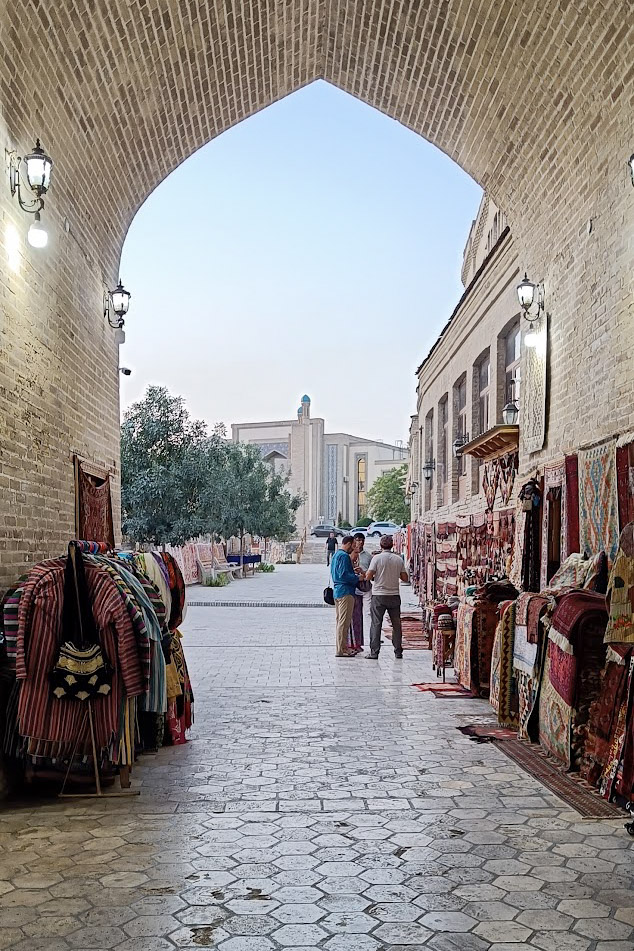
Bukhara is absolutely steeped in history, and you see it everywhere. It’s not somewhere that’s been dolled up for the cameras. At one point, this city had over 350 mosques and 100 madrasas. It was the intellectual heart of the Islamic world for centuries, and it makes sense that you really feel the soul of the country here.
If you’re looking for the best things to do in Bukhara, then you’ve come to the right place. You’ll still see the iconic blue domes, but beyond that there are the hidden bars, the grim history of the “bug pit”, and all the tiny, wonderful details hidden in plain sight.
This isn’t an itinerary post, but a love letter to the city that quietly became my favourite stop in Uzbekistan.
Bukhara at a Glance
- The Vibe: Ancient desert oasis city with millennia of history and tons of soul
- Best Sunset Spot: Shukhov Water Tower or The Terrace Restaurant for a drink with the Kalan Minaret
- Top History Spot: The Ark of Bukhara and the Zindon Prison “Bug Pit”
- Solo traveller tip: Book a tour with a local guide, or head to The Old Barn for a beer and a break from the tourist trail
The Heart of the Old City of Bukhara: Lyabi-Hauz
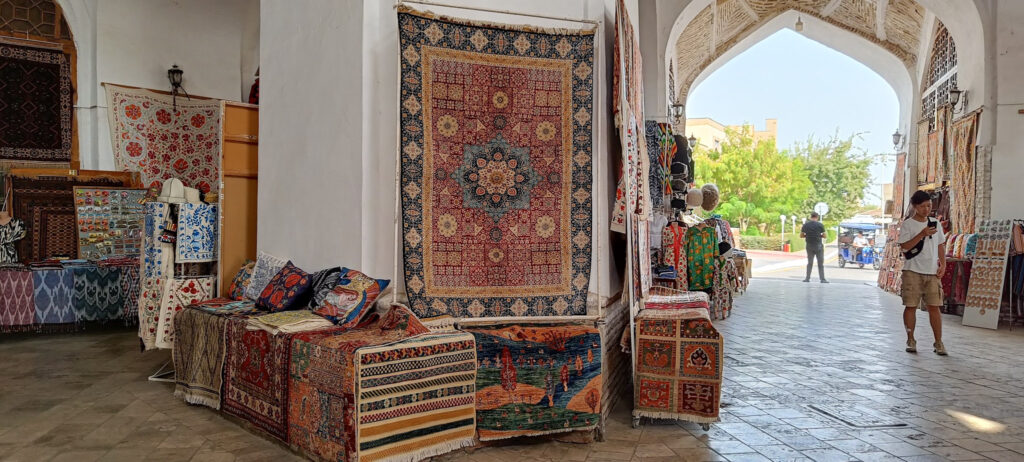
Bukhara is an oasis city, on the southwestern edge of the huge Kyzylkum Desert. Lyabi-Hauz is the centre of the old town, a plaza built around one of the few remaining ancient hauz (ponds) and it’s where you’ll find everyone hanging out. You’ll see young kids kicking a ball around, elderly men perched on the wall chatting to friends, women with bags of shopping at their feet gossiping with a neighbour they’ve just bumped into.
In a city surrounded by desert, the water is sacred, but also has a history of being a bit of a headache for the people who built it.
There’s a local legend that the Vizier, Nodir Devonbegi (aka Nadir Divan-Begi) struggled to build the main plaza because of a Jewish widow who owned a house right by where the pond was supposed to be. She refused to sell, even when he kept upping his offer. Fed up, the Vizier dug a canal that ran right under her home. As the water slowly began to undermine the foundations, she finally agreed to move. But on one condition: the Vizier had to build a synagogue for her community nearby. To this day, some locals still refer to the pond as “House of the Grandmother”.
Khanqah of Nodir Devonbegi: Sufi Lodging
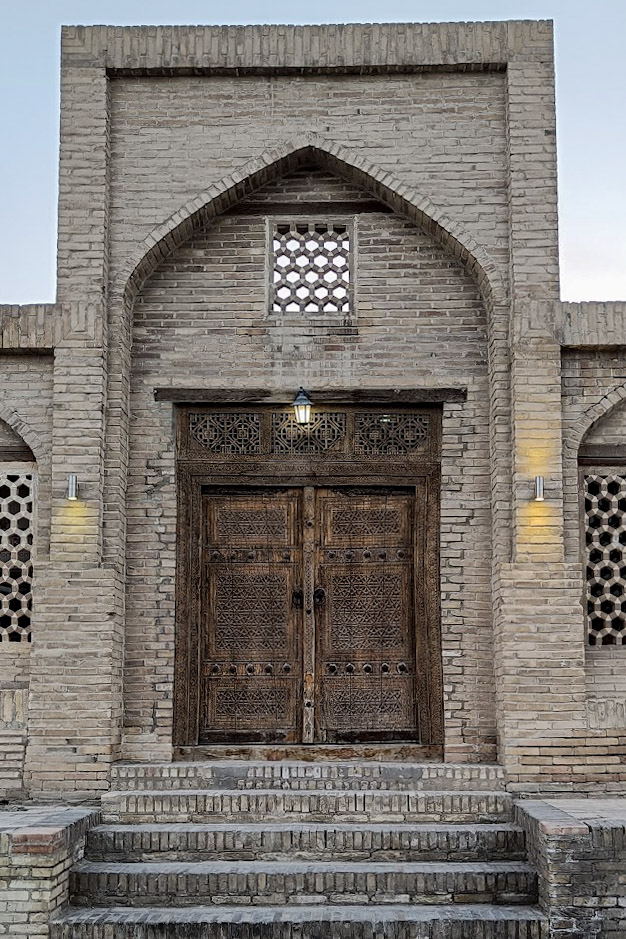
Think of a Khanqah as a Sufi monastery. It was a place for Sufi dervishes (mystics) to stay, study, and perform their religious ceremonies. This particular one, in Bukhara’s old town, was built by the Vizier (yes, he of widow-bothering fame) around 1620, the same time as the rest of the plaza.
Why you should visit:
If you’re already there, but looking for things to do in Bukhara, you’ve probably unknowingly wandered by the Khanqah. The main hall features a massive, high-vaulted dome. It was engineered for Zikr, the Sufi practice of chanting and rhythmic breathing.
Inside, you’ll find a museum displaying handicrafts and applied arts. Entrance is around 20,000 UZS.
Nadir Divan-Begi Madrasah: The Mosaic School
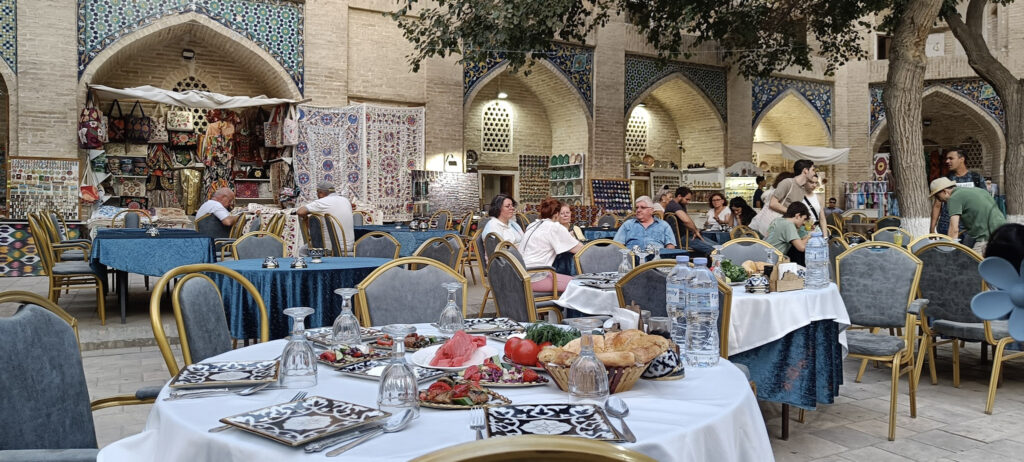
Across the pond from the Khanqah, you’ll find the Nadir Divan-Begi Madrasah. The Vizier originally built this as a caravanserai, basically an ancient motel. It was intended to be a high-end stopover for Silk Road merchants. However, at the grand opening in 1622, the Khan looked at the building and publicly complimented the Vizier on his beautiful new Madrasah (Islamic school).
The Vizier enjoyed having his head connected to his neck, so he just smiled, nodded, and spent the next few months frantically converting the guest rooms into tiny student dorms.
Because the building was originally designed as a hotel, you’ll see pretty rare artwork here. Usually, Islamic art is strictly geometrical or floral, and depicting living creatures is not the done thing. On the portal here, however, you’ll see two massive Simurghs (mythical phoenix like birds) flying towards the sun, carrying lambs in their talons.
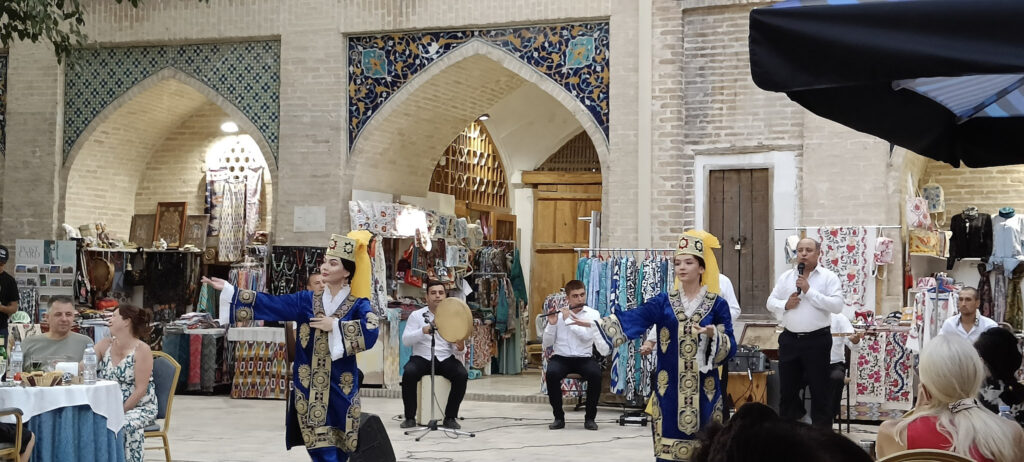
Today, the courtyard is used for a nightly folk dance and fashion show while dinner is served. I’ve done it, and it’s definitely touristy, especially compared to some of the other things to do in Bukhara, but it’s a great way to spend a few hours having dinner under the stars, surrounded by this piece of history. If you want to try it yourself, you can book tickets here.
A note for vegans: A fair warning, when I did this tour, it was booked on my behalf, so I didn’t have a chance to contact the organisers. I was given a small bowl of lentil soup, and ended the night cranky, eating pistachios and drinking warm beer back in my hotel room. It’s actually the experience that inspired my vegan travel hacks post, and taught me a valuable lesson before my trip to Kyrgyzstan. If you’re thinking about doing this, contact them ahead of time to ask about vegan options. I’ve also got a separate post about being vegan in Uzbekistan here.
Toqi Telpak Furshon: The Hat-Seller’s Dome
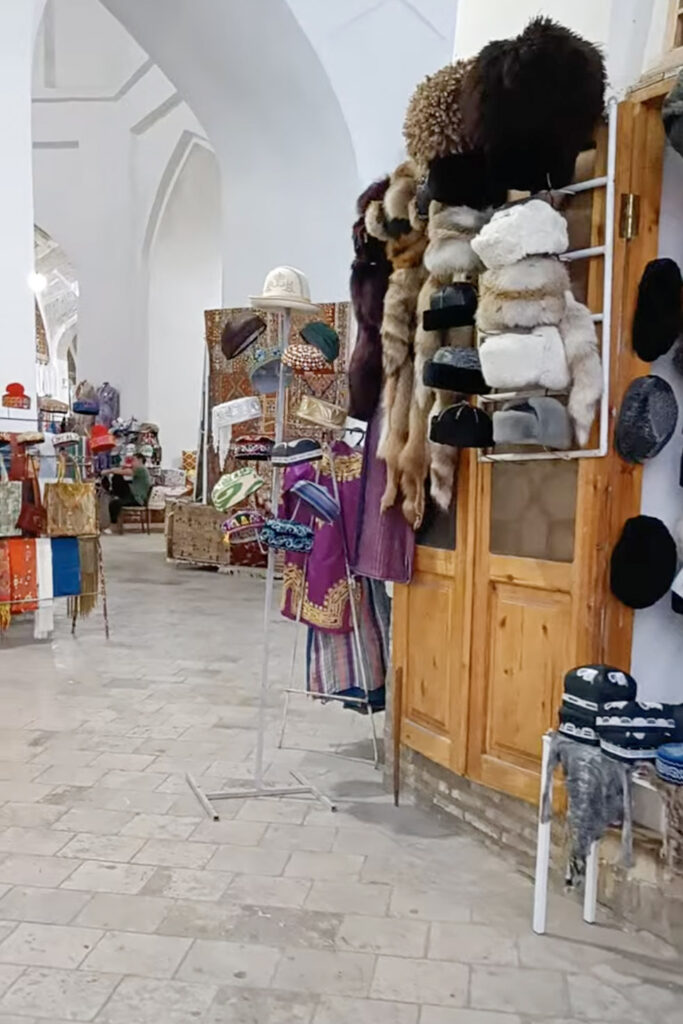
Back in the 16th century, you didn’t just have one big bazaar like you might find in Tashkent these days, you had specialised “trading domes”. These domes were usually located at major intersections to manage the traffic of camels and merchants. This one, Toqi Telpak Furshon, was the go-to spot for headwear. Telpak refers to the iconic, heavy fur hats you’ll still see locals wearing today (which is some serious commitment in a city in the desert).
These massive stone structures were engineered to pull cool air from the ground and circulate it through the high vaulted ceilings. As you wander through the hot streets of Bukhara, stepping into the dome feels like a bit of welcome relief.
In this dome, you’ll find a bunch of stalls selling all kinds of hats. You’ll see the massive, fluffy sheepskin hats, as well as soft felt hats. Alongside these, you’ll also find incredible hand-knotted carpets and the famous Bukhara scissors (shaped like birds) being sold here.
I mentioned Bukhara feeling a bit like a Star Wars set earlier, and Toqi Telpak Furushon could easily double up as a corner of Mos Eisley – minus the cantina fight. The light filters down through small holes in the dome in dusty shafts, lighting up racks of fur hats and silk scarves. It’s a great place to lose yourself away from the heat of the city for a little while.
The Old Barn: A Hidden Soviet Era Bar
One of my favourite memories in Bukhara happened completely by accident. After dinner one night, I found myself in a windowless, stone-walled cellar with a beer in front of me and someone’s child asleep on the booth behind me.
While most of Bukhara looks like a desert fairytale, The Old Barn feels like discovering a local hideout. It’s dark, cool, and filled with mismatched wooden furniture and Soviet-era memorabilia. It advertises itself as a restaurant, but it feels more like a Cold War era bar where some time-hardened men sit nursing a straight vodka.
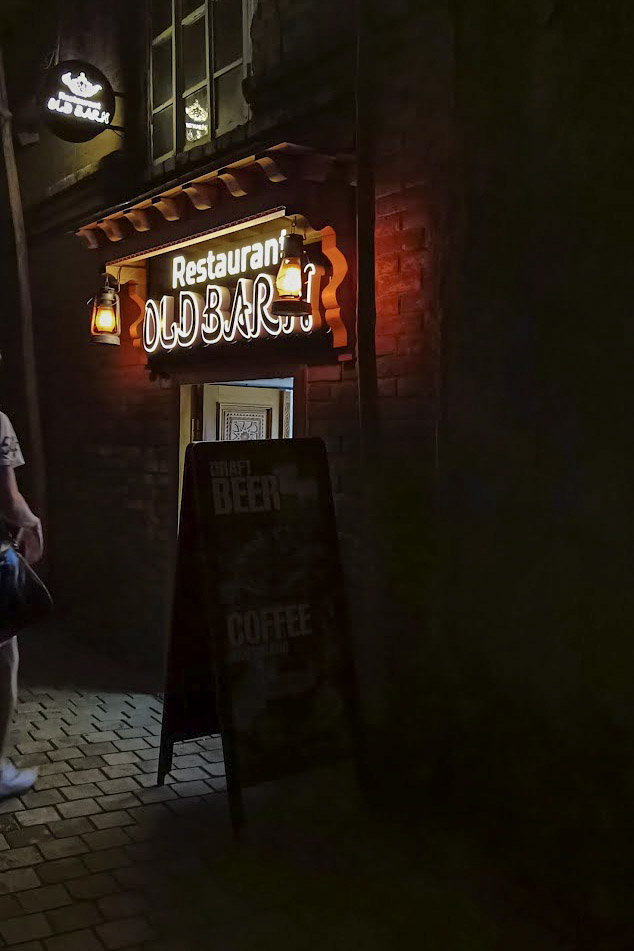
In reality, The Old Barn is part of Uzbekistan’s growing craft beer scene. You can find really good local brews here, including IPAs and dark ales with real character. If you’re looking for a drink after hours, this is where to go. Don’t expect a curated wine list or fancy cocktails – you’re getting pints, spirts, or a snack, and you’ll be happy about it.
After a day spent exploring some of the most meaningful sites around the city, going to The Old Barn kind of felt like skipping school or sneaking out after hours. It’s completely legal of course, but still feels rebellious, and it’s exactly the type of place I love discovering as a solo traveller.
Kukeldash: Dinner Under the Stars
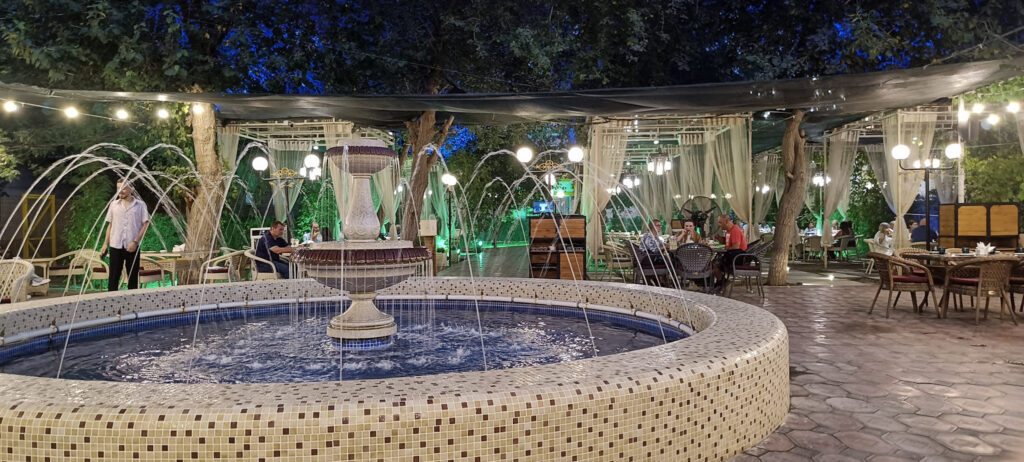
I mentioned the madrasah dinner earlier as an al fresco dining experience, but if you want plov by moonlight without the tourist vibes, Kukeldash is where to go.
Kukeldash is a “Garden Family Restaurant” and almost all of its seating is outside, either behind fluttering white drapes or under pretty pagodas. There’s a fountain in the centre, and it’s just such a lovely atmosphere. It’s right next to the Kukeldash madrasah, the largest in Bukhara.
For vegans and vegetarians, there’s not loads on the menu, but there are a few veggie dishes like vegetarian pasta or vegan vegetable kebabs. For us, this place is definitely more about the vibe than the food, but if you’ve had a good lunch, the atmosphere is worth a just okay dinner.
The Citadel: Royal History & Dark Legends
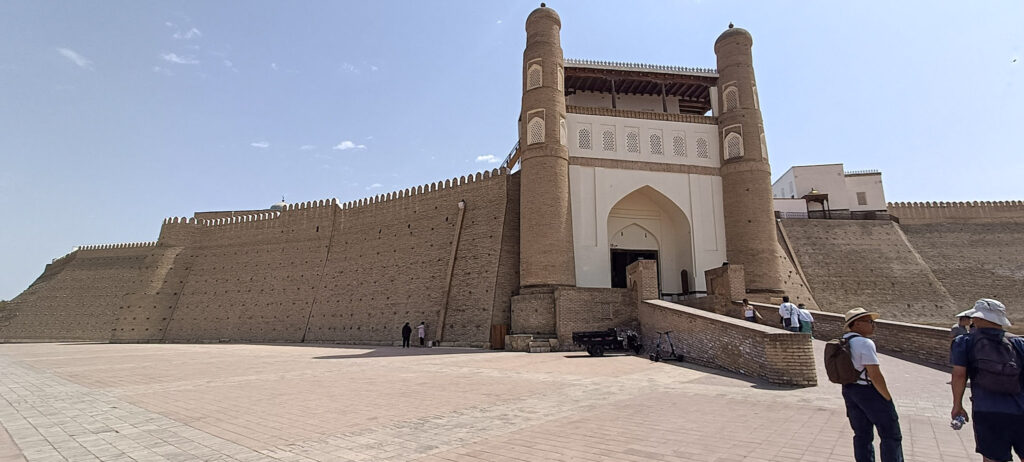
Walking west, away from the trading domes, you’ll suddenly see a massive, menacing, sloping wall of mud and brick that’s clearly been there for centuries. This is the Ark of Bukhara, a place that always ranks high on lists of things to do in Bukhara. For over a millennium, it was the fortified residence of the Emirs of Bukhara.
While the rest of the city is charming and communal, the Citadel is a reminder that being a ruler in this part of the world was often a dangerous business.
The Ark of Bukhara: The Royal Fortress
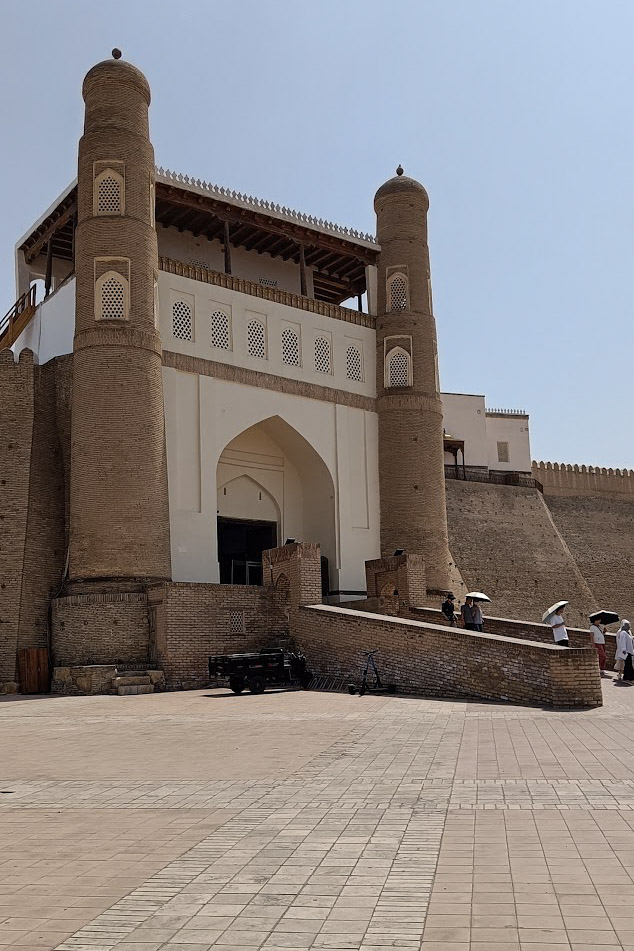
You’ll be unsurprised to know that the fortress’s origin story is a local legend: The hero Siyavush wanted to marry the daughter of the local ruler. Unimpressed, the ruler set him an impossible task: Build a palace on this spot that fits within a single bull’s hide.
Siyavush, undeterred, cut the hide into incredibly thin strips, tied them together to form a long rope, and used it to perimeter the entire hill. The ruler was impressed, and let him build the Ark of Bukhara.
When you arrive at the Ark of Bukhara, you’ll see a ramp up through the massive gateway. Back in its glory days, this wasn’t just a palace. It was a functioning city of about 3,000 people. Inside the walls were:
- The Emir’s private residence
- The treasury and the mint
- Stables, dungeons, arsenals, and workshops
- The Juma Mosque (which we’ll get to further down)
Basically, the citadel was built so that if the wider city of Bukhara fell to an invader, the Emir could lower the big gates at the entrance and continue running the empire from inside the fortress.
The walls outside are huge: About 16 – 20 metres high, and you’ll notice they have a strange, bowed shape. This wasn’t an architectural accident, it was designed to make the walls harder for invaders to scale and more resistant to earthquakes.
However, it’s not completely impervious. In 1920, the Red Army bombed the Ark during the Bolshevik revolution. Much of the interior was destroyed by fire, which is why today, about 80% of the Ark is actually a ruin of empty space behind the restored front sections. It adds a bit of a haunting atmosphere to the place, you’re walking through a restored shell of a long-gone empire. If you’ve ever been to Pompeii in Italy, it’s a similar “preserved but gone” feeling.
Juma Mosque: The Friday Mosque
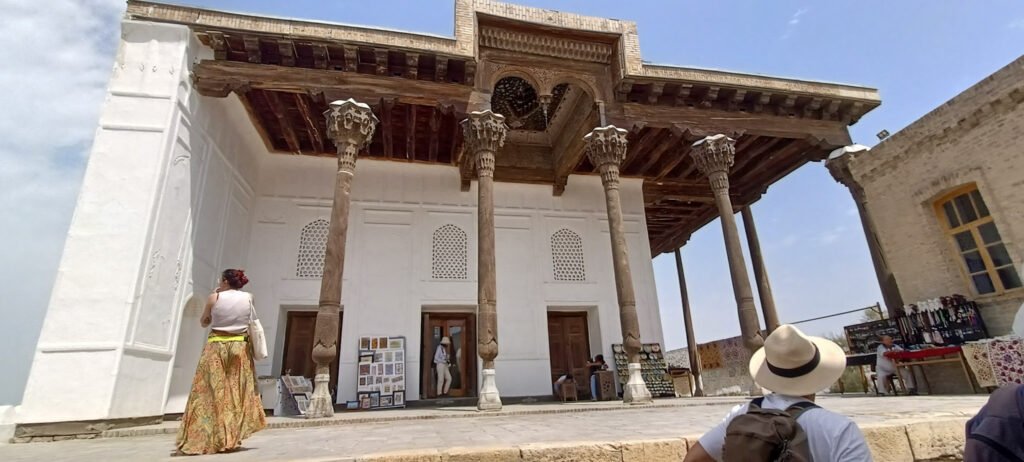
The Juma Mosque is located just inside the massive gates of the Ark. The first thing you’ll notice about it is the iwan (porch), which is supported by a row of slender, intricately carved wooden columns. They’re made from elm and they’re surprisingly tall and slender compared to the chunky, robust mud walls of the fortress outside.
If you look up, the ceiling is a riot of colour, geometric patterns of reds, greens, and blues that have survived remarkably well. It’s also common to see local vendors in this porch area, selling trinkets and handmade souvenirs from Bukhara.
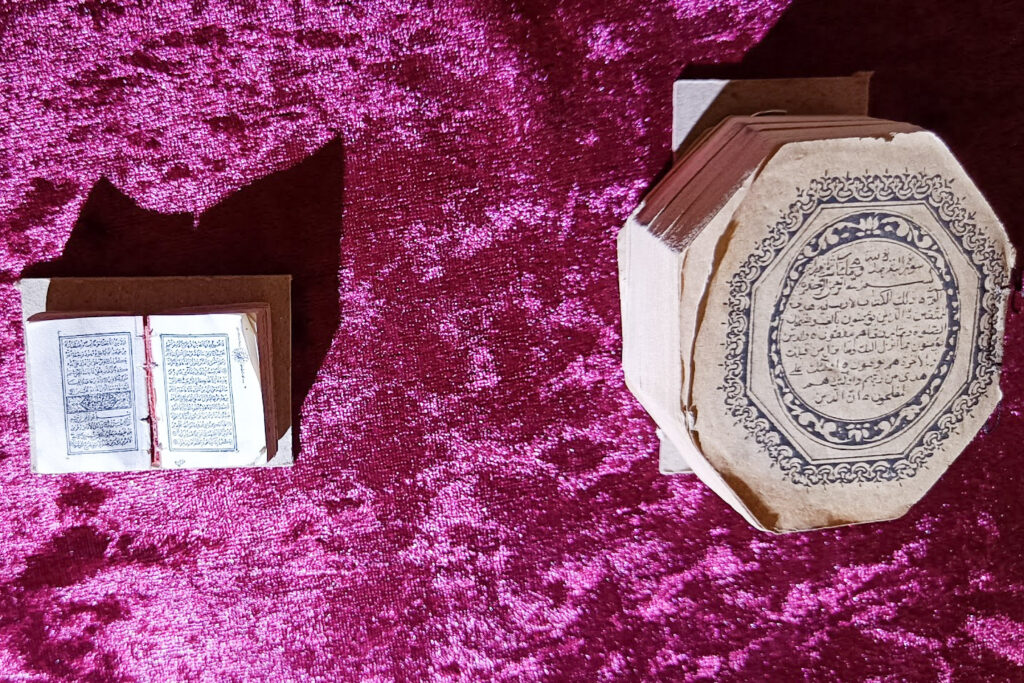
Inside the mosque, you’ll find a small museum display. Tucked away in here is an illuminated miniature octagonal Qur’an manuscript. It’s small enough to be held in the palm of your hand, and yet has incredible detail. It’s a great reminder that the Silk Road wasn’t just about big, spectacular buildings, it was about the dedicated, delicate craft of the people who lived here.
Zindon Prison & The Bug Pit
Note: Skip this part if you’re squeamish.
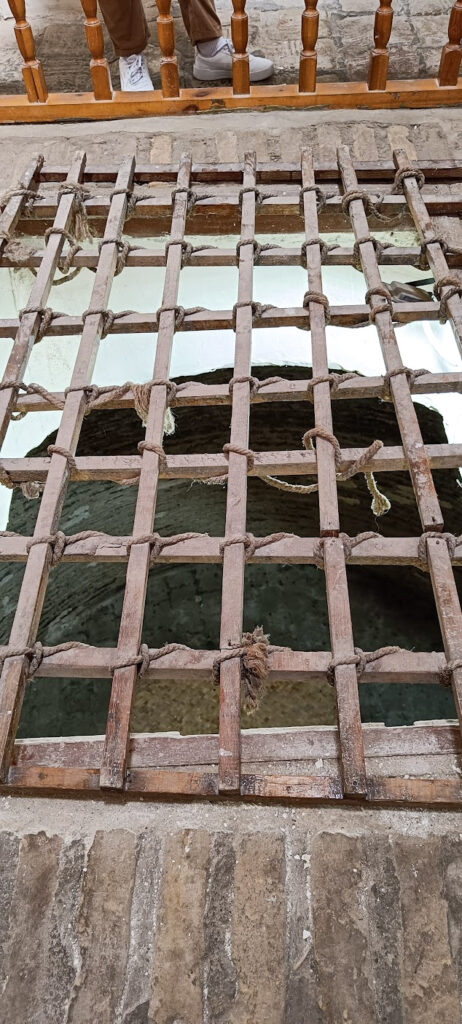
Located just a short walk behind the Ark, the Zindon (which literally means “dungeon”) was the Emir’s high-security prison. And this is where things get dark. From the outside, it’s an unimpressive small brick building. Inside, you’ll find the Siyah Chah (the Black Well), better known by the history books as The Bug Pit.
This is a hole in the ground, about four metres deep, accessible only by a rope. The Emir reportedly filled the pit with scorpions and large, biting insects. It was a slow, horrible kind of torture for the prisoners kept there.
Today, the opening is covered by a grate, but it still brings a shiver thinking about what a truly grotesque, inhumane experience that would have been for the unlucky souls who were lowered into it.
The most well known occupants of the Bug Pit were two British Officers, Charles Stoddart and Arthur Connolly, who were part of the Great Game (the 19th Century cold war between Britain and Russia).
Stoddart arrived in 1838 to negotiate an alliance, but offended the Emir by not dismounting his horse at the palace gates, and for not bringing a letter from the Queen herself. He was thrown into the pit. Connolly arrived a few years later to rescue him, only to be thrown into the pit alongside him. After years living in the filth and bugs of the pit, both were eventually executed in the square outside the Ark.
We all know that history is often gruesome and violent, and the Zindon Prison is a well preserved reminder of that. It’s not for everyone, and it’s a very different pace from the peace of the mosques and beauty of the mosaics in Uzbekistan.
If you want to learn more about The Great Game, Peter Hopkirk’s book is highly regarded.
Po-i-Kalyan: The Iconic Skyline
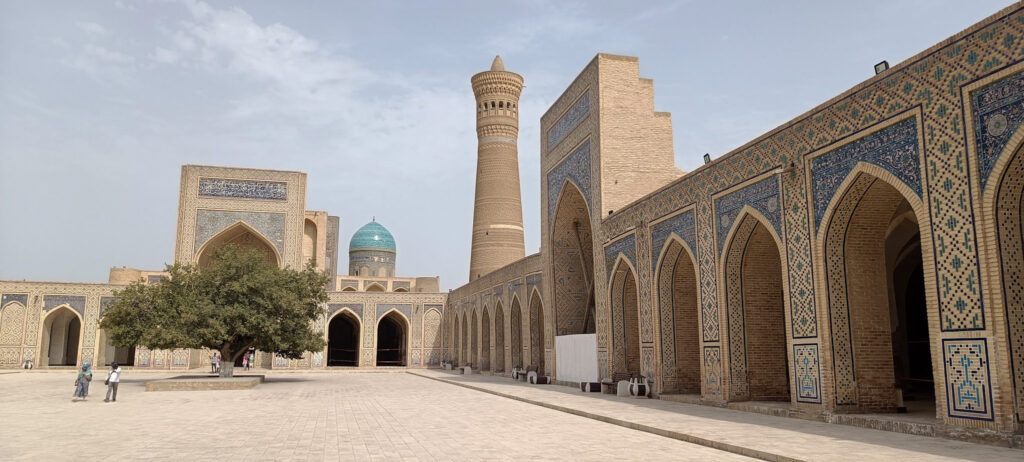
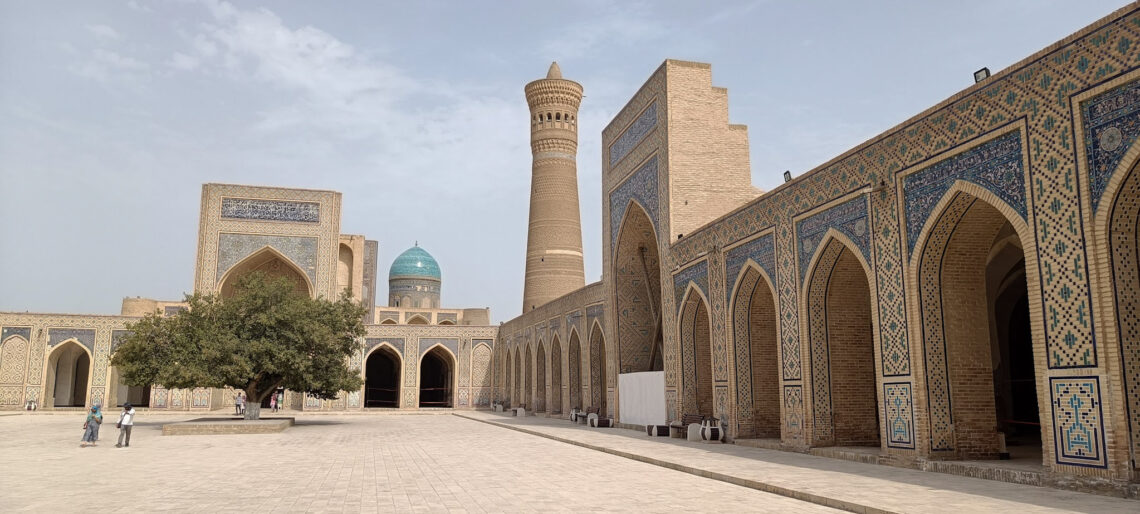
If you’ve seen a postcard of Bukhara, you’ve seen this square. Po-i-Kalyan (sometimes called Poi Kalan) literally means “the foot of the great”. It’s the architectural heart of the city. It’s where you’ll find Kalan mosque, the Mir-i-Arab Madrasah and the Kalan Minaret.
Kalan Mosque & Minaret
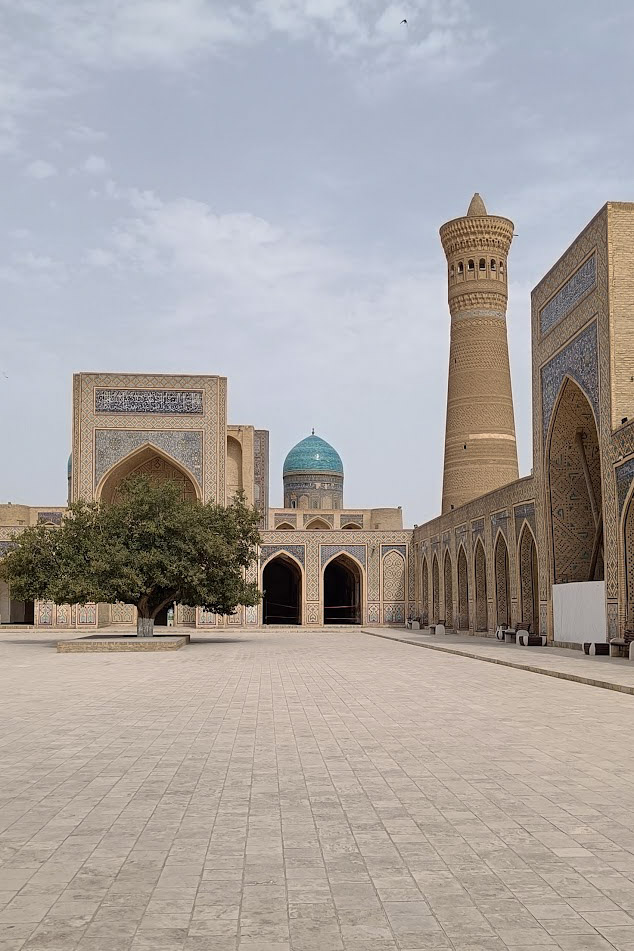
The Minaret is a 47 metre tall brickwork tower, completed in 1127. To give you an idea of how impressive this was: when Genghis Khan and his Mongol army swept through Bukhara in 1220, they levelled almost the entire city.
The legend goes that when Genghis stood at the foot of the tower and looked up, his hat fell off. As he bent down to pick it up, he remarked that anything that could make him bow was worth keeping. He ordered his army to spare the tower, making it one of the few original pre-Mongol structures in Central Asia.
The mosque itself is massive, large enough to hold 12,000 people. The galleries of the mosque are supported by 288 stone columns and covered by 211 small brick domes. Walking through these vaulted galleries is incredibly atmospheric. It’s the perfect place to sit in the shade, listen to the silence, and realise you’re standing in a building that’s seen empires rise and fall for nearly a thousand years.
Mir-i-Arab Madrasah
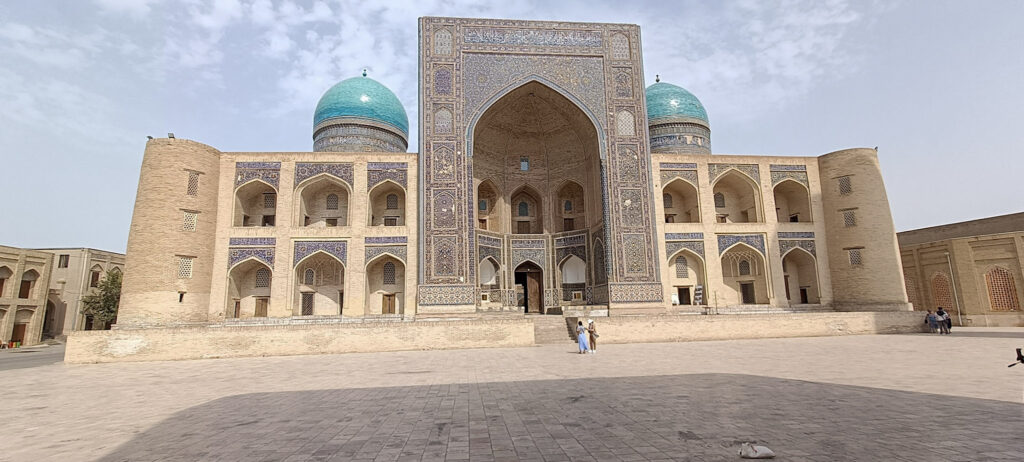
This is one of the most prestigious Islamic schools in the world, and what makes it unique is that it’s remained active for most of its 500 year history. Even during the Soviet era, when almost every other religious building was turned into a museum or a warehouse, Mir-i-Arab was allowed to keep its doors open.
Because it’s a functioning school, you can’t wander into the courtyard or peek into the classrooms, it’s strictly for students. However, you can appreciate the view from the square, and there’s a small bookshop open to the public.
When I was here, one of my tour-mates was a Muslim woman from Jordan who said she’d like to buy a Qur’an here as a special souvenir. We wandered into the bookshop, which turned out to mostly have guidebooks or souvenir books of Bukhara photography. The shop was empty, with no staff around, so she shrugged and said she’d try in Khiva, and went to go get some more photos. I stayed around, wandering, and a staff member came back into the store. I asked him whether there were any Qur’ans for sale. Crestfallen, he apologised and said no, so I thanked him and headed back out.
About five minutes later, just as we were about to leave, I heard someone call out. The man from the shop was running towards us, Qur’an in hand. He’d gone looking through the student supplies to see if there were any spare Qur’ans available. When my travel companion tried to pay him, he pressed it into her hands and insisted it was a gift.
While I’m not religious myself, I can appreciate how much this meant to her. It was a really lovely moment of connection between two souls, and a real testament to the unending hospitality of the Uzbek people.
For solo travellers, the Uzbek people are the best part about Uzbekistan, and it’s the reason you’ll never feel lonely in a place like Bukhara. There are always people there, happy to welcome you.
Bolo Hauz: The Mosque of 40 Columns
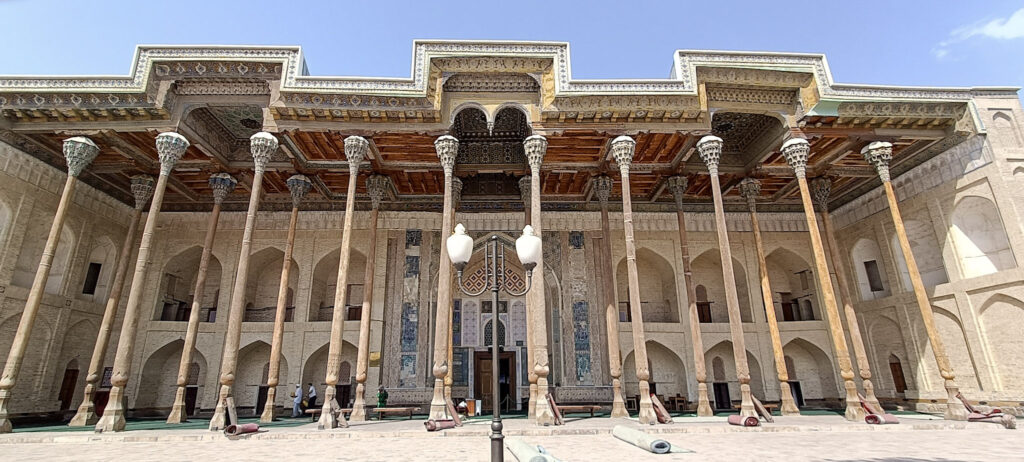
The name Bolo Hauz literally means “above the pond”, referring to the large ritual pool sitting right in front of it. This mosque is famous for it’s iwan (porch), supported by 20 tall, slender wooden columns made of carved elm. If you visited the Juma Mosque inside the Ark, you’ll recognise similarities here.
Despite having 20 columns, it’s known as “the mosque of 40 columns” because of its reflection in the pond in front of it.
Originally, this was the official place of worship for the Emirs of Bukhara, as the Ark is just across the road. At that time, the Emir didn’t want to walk through the dusty streets with the commoners. In Ireland, this is what we’d call “having notions”. To appease said notions, a special red carpet was laid out from the gates of the Ark all the way to the mosque whenever he wanted to pray.
Shukhov Water Tower: Sunset Views
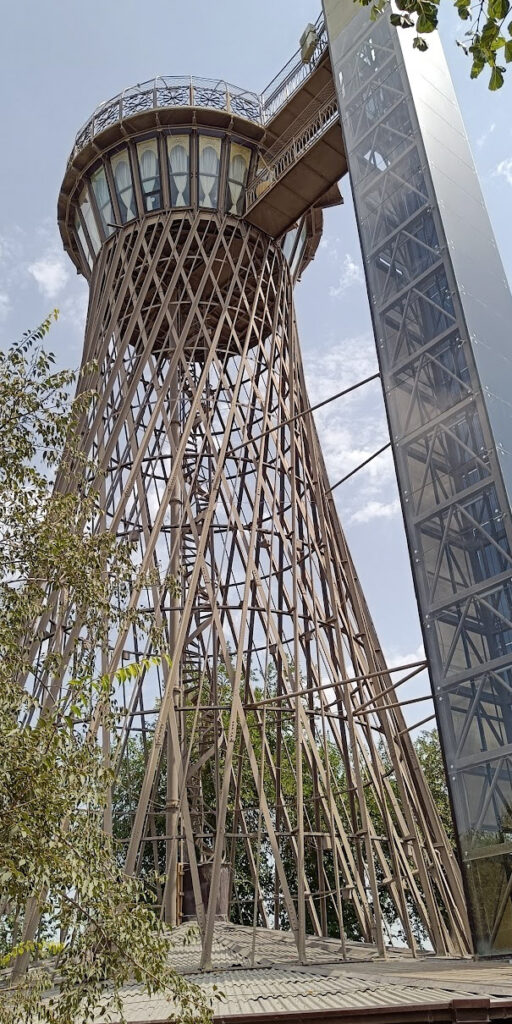
Right next to the ancient mud-brick Ark and intricate carving of the Bolo Hauz, you’ll see a twist of metal with what looks like a spaceship on top. It’s not as modern as it looks, however. Designed by Vladimir Shukhov in the late 1920s, it was originally a water tower.
Today, it’s been repurposed into a sightseeing platform. There’s an elevator that takes you to the top to get a full 360 degree view out over the city.
At sunset, this is the place to be. You can see the turquoise domes of Po-i-Kalyan, the massive walls of the Ark, and the way the desert light turns the whole city burnt orange. It’s one of the best things to do in Bukhara if you want to get a brilliant view of the skyline.
Dinner: The Terrace Restaurant (Vegan Options)
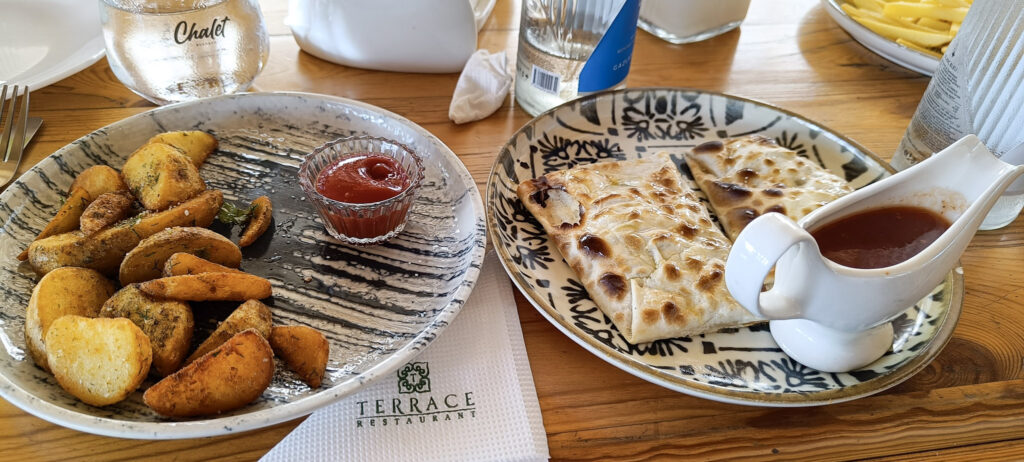
This restaurant is positioned directly across from the Po-i-Kalyan complex. It’s the ideal spot to have dinner with a view, and if you time it right for sunset, you’ll get to see the sun go down over the most iconic landmarks of the city.
It’s also one of the few restaurants around that has a solid vegan section of the menu. As many vegetarian or vegan travellers know, eating in Uzbekistan can start to feel like a lot of tomato-and-cucumber salads. I’ve written more about eating vegan in Uzbekistan here, but trust me on this: they do good food, for vegans and non-vegans alike.
Samonids Park: Sacred Masterpieces
After the intensity of the Ark, and having had your fill of wandering around the old town, the next stop on our list of things to do in Bukhara is Samonids Park. It’s a bit of a walk from the main town, but there are some historical masterpieces here that you can’t skip.
Samanid Mausoleum
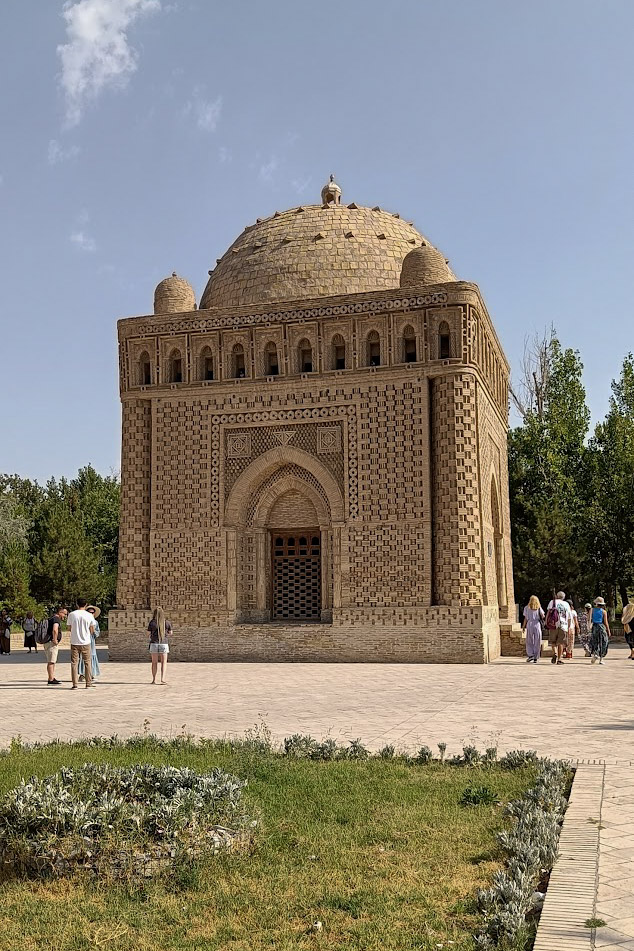
Built in the 10th century, this is the oldest Islamic monument in the city. From the outside, it’s a simple brick cube with a dome, but don’t let that simplicity fool you. It’s built entirely of baked brick, and the way those bricks are laid is some ancient genius.
The bricks are woven together in a way that looks like a wicker basket or embroidery. Because they’re set at different depths and angles, the building looks completely different at different times of day, depending on how the light falls.
Chashma-Ayub: Job’s Well
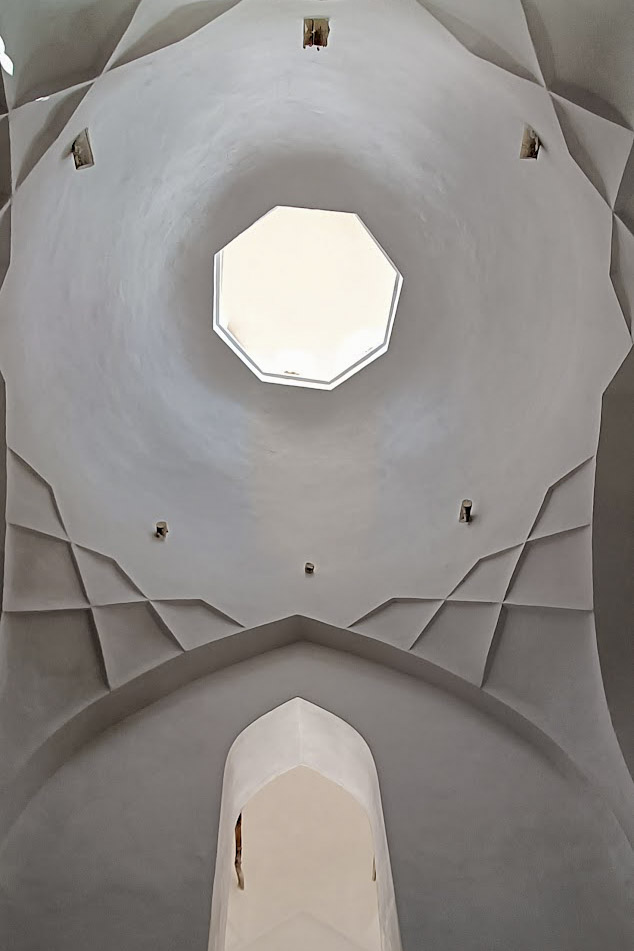
Also in the park is the Chashma-Ayub Mausoleum. Instead of the usual, rounded domes, it has a sharp, conical roof which is unusual for the area. The name means “Job’s Well”.
Legend goes that the biblical prophet Job (Ayub) visited this desert spot and found the people dying of thirst. He struck the ground with his staff and a spring of cool, medicinal water erupted. People still come here today to drink from the well, believing it has healing properties.
The Adventures Beyond
I’ll be writing an itinerary for Bukhara in an upcoming post, but if you find yourself with more time in the area and want to explore beyond the city, this is the best time to learn more about the legendary crafts of the Silk Road.
Gijduvan Ceramics and Meeting The Narzullaev Family
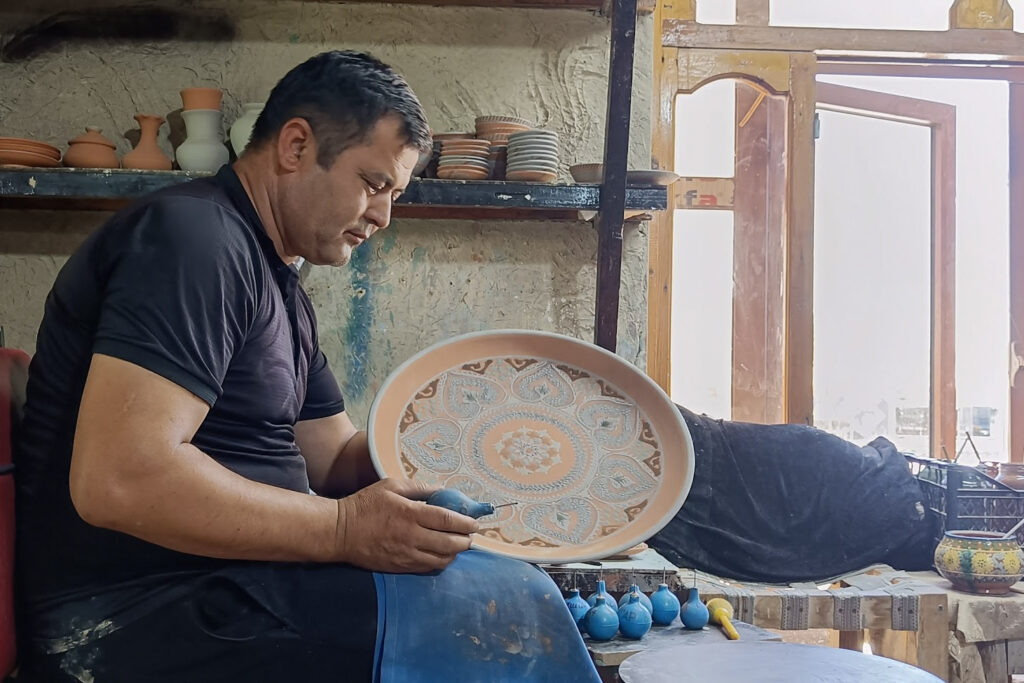
About 45 minutes outside of Bukhara you’ll find Gijduvan. This is a town well renowned for its distinct style of pottery. The most famous family in this craft is the Narzullaev family.
They’re sixth- and sevent-generation master ceramics artists. The Gijduvan style is famous for their warm, earthy tones: deep yellows, rich greens, chocolate browns.
A visit here isn’t just a shopping trip, it’s a chance to see these masters at work. You can walk through the entire process, from spinning the local clay to the natural dyes made from pomegranate skins and walnut shells.
When I was here, I got lost in watching the intricate, detailed precision of one of the artists. I was almost afraid to take a photo of him, for fear of throwing off his work.
Next to the workshop, there is a shop where you can buy pieces to take home, from huge serving platters to small cups and mementoes.
If you’re travelling by car from Samarkand to Bukhara, it’s a common stop along the way. Otherwise, you can book a Yandex taxi to take you out. Or if you’re really feeling adventurous, this tour takes you on an overnight stay in a traditional yurt, and includes a trip to the ceramics workshop.
Suzani Embroidery Workshop
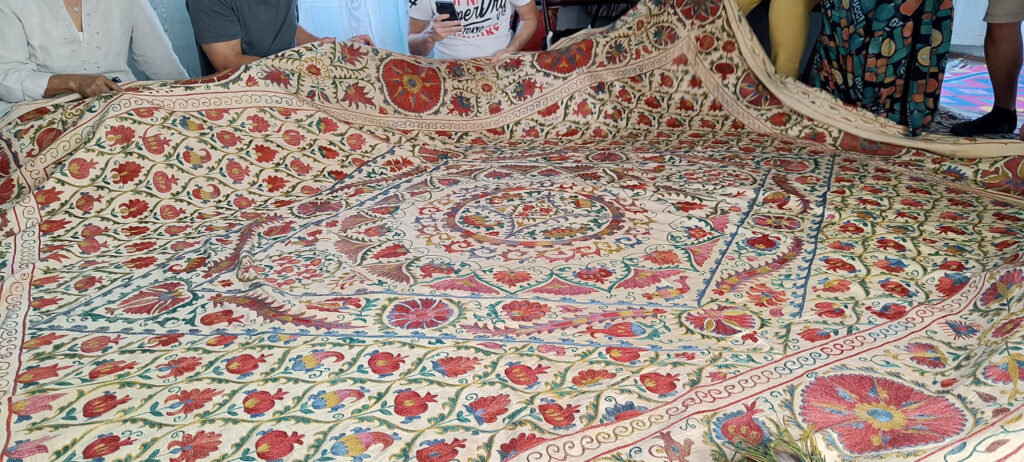
If you spend some time wandering around the market domes and street-side stalls of Bukhara, you’ll have come across Suzani embroidery without even realising it. These textiles are more than just pretty patterns, every piece is hand embroidered with meaningful symbols, such as pomegranates for fertility, or peppers to symbolise protection from the evil eye.
Visiting a suzani workshop around Bukhara is a way to see the skill up close. Suzani is largely performed by women, so you’ll see female-led workshops, with groups of women hunched over large swathes of silk, engrossed in their work. The best workshops still use vegetable dyes (indigo, madder root, onion skins). The colours are softer and more soulful than the neon chemical versions. It’s also common to see a small imperfection in the embroidery – this is deliberate and a reminder that only Allah is perfect.
When I was in Bukhara, I visited a suzani workshop just outside. I had the pleasure of meeting these women, hearing about their lives, and the skill they pass down from grandmother to mother to granddaughter.
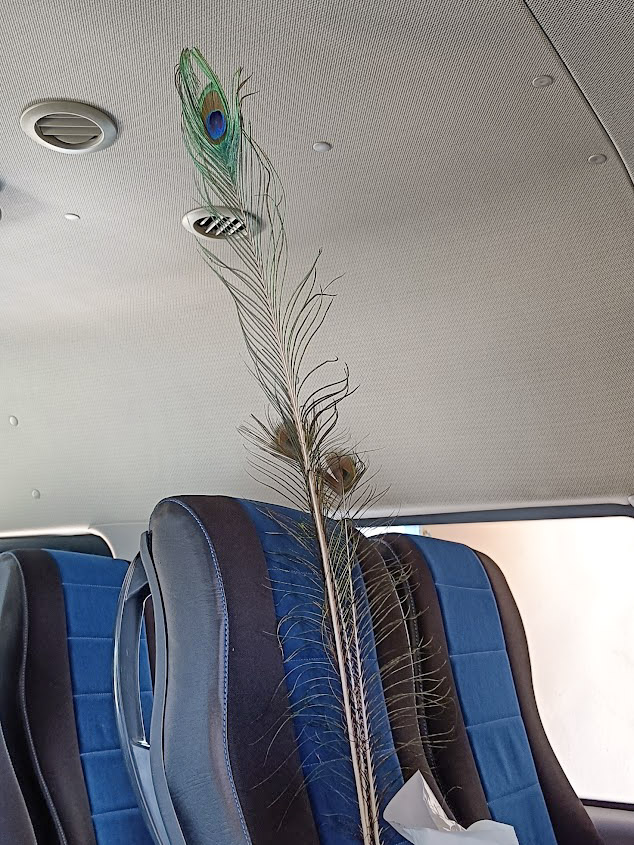
The workshop I visited also had a number of farm animals. I’d heard braying and wandered off to find a very cute donkey. The man of the house came by to find me petting the donkey’s soft snout, and was so delighted that he presented me with six peacock feathers on my way out… which was lovely, until one of my group mates, a pulmonary doctor, remarked that the feathers are a prime breeding ground for avian diseases. I reluctantly left those peacock feathers behind in my Bukhara hotel room, but I was still touched by the gesture all the same.
If you want to meet your own group of impressive Suzani women, and even try the craft for yourself, this tour is the perfect way to do that.
Things to do in Bukhara: Tours and Activities
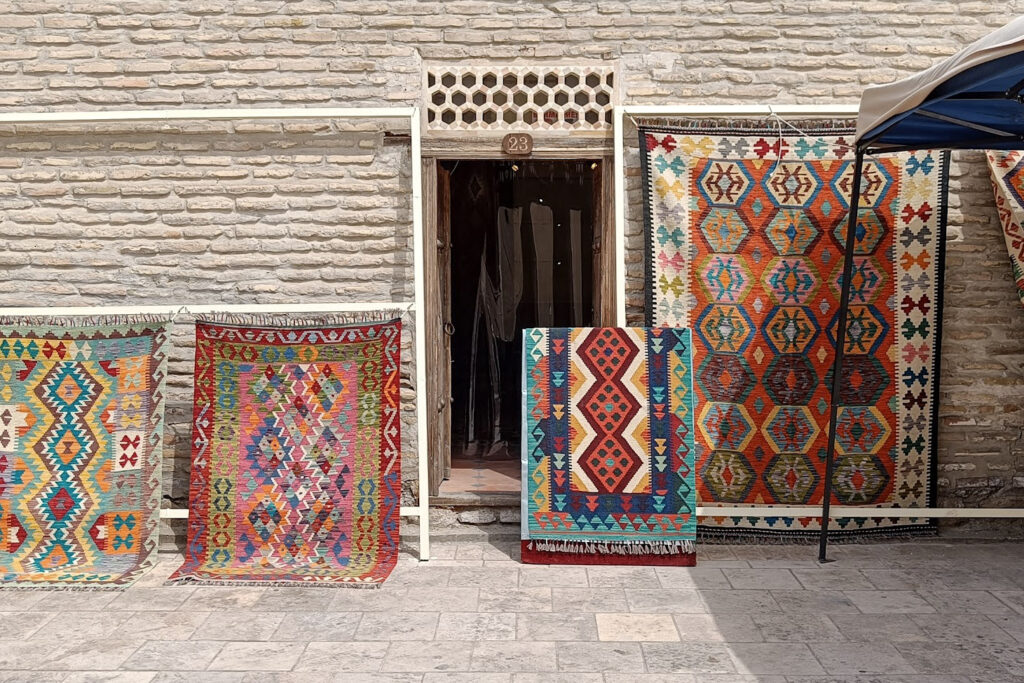
For me, the most special part of Uzbekistan was getting to learn about and appreciate the culture and history of the country. The best way to do this is to actually meet Uzbek people, whether that’s a local tour guide, artisans, servers in restaurants, or anyone else you meet on your travels.
If you’re planning your own trip and are looking for things to do in Bukhara, I’d really recommend booking onto one or two tours or experiences where you’ll get the opportunity to go deeper than a museum display can show you. I’m not talking about those awful bus tours that wheel you around with an unintelligible audio track playing, I’m talking about the experiences where you have an expert on hand to share their beautiful country with you.
Here are some of the best looking tours in Bukhara that’ll give you that depth, and hopefully come to love the city as much as I did:
Walking Tours
- Walking Tour of the City
- I love a walking tour, and this one will take you around to some of the main sights I’ve listed in this post. This is a great Day 1 type activity to help you get the lay of the land.
- Private Walking Tour
- This private tour is very reasonably priced, and the tour will be just for you or whoever you’re travelling with. The beauty of private tours is that you can often customise the itinerary – if you already have somewhere you’re dying to see, or you want to linger a little longer over a beautiful building, they’re usually happy to adapt.
For the Adventurous
If you’re up for getting out of the city and seeing a side of Uzbekistan you won’t get from the Afrosiyob’s stops, these are for you.
- An Overnight Yurt Stay
- This tour takes you out to a yurt camp for the night, with a visit to Aydarkul Lake. It also ties in a visit to the Gijduvan Ceramics Workshop I mentioned earlier.
- Overnight Desert Tour and Yurt Camp
- This tour takes you out to see the famous Kyzlkum desert that surrounds Bukhara and will have you sleeping under the stars in a yurt camp.
- Mountain Village Visit, ending in Samarkand
- If you haven’t been to Samarkand yet, and you want to tie it in with a visit to the Nuratau Mountains, this tour includes a village stay and will drop you off in Samarkand
Local Crafts and Artisan Workshops
- Suzani Workshop
- This experience brings you to a Suzani village, where you’ll meet the women behind the stitches and even try it out for yourself.
- Woodcarving Masterclass
- You know all those intricately carved elm pillars adorning the mosques around Bukhara? This experience will introduce you to a master wood carver, and even includes a tour of the city.