

The Speri Winery: 7 Generations Strong in Valpolicella
It’s a chilly day in March and I’m standing in front of an enormous 150-year-old wine barrel. Around me, newer barrels line the walkways, aging the wine that will end up on dinner tables around the world. In Canada, a wine shop owner will tell their clients about the red fruit flavours and deep savoury finish. In Dublin, someone will pick up a bottle on their way to a friend’s birthday party. And back in London, my husband and I will open a bottle with friends, telling them about the day we bought it.
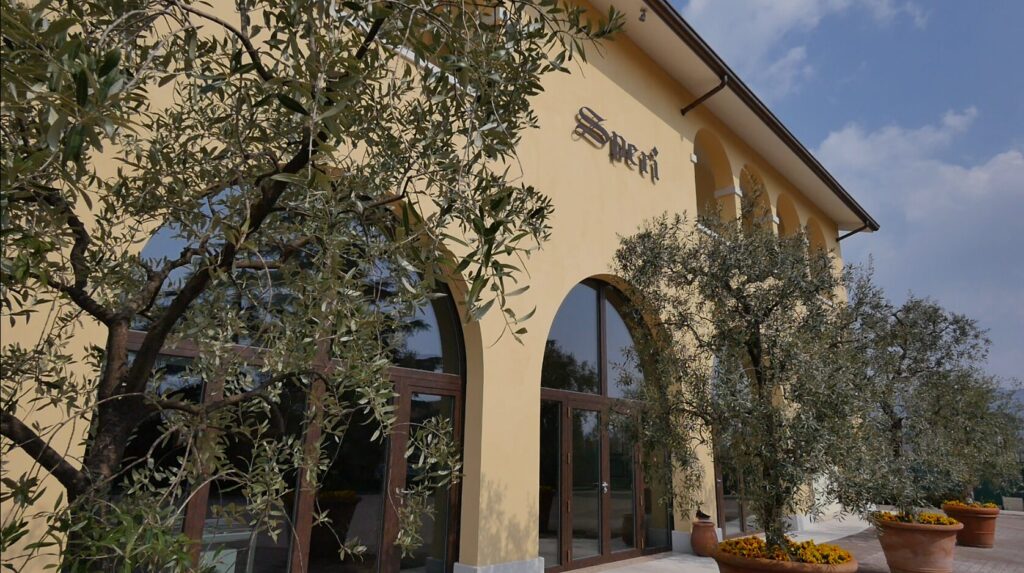
That day is this cold March morning, and we’re in the aging room in the Speri winery, in the heart of Valpolicella. As I marvel at this 150-year-old behemoth, Chiara Speri is telling me about her family’s history. “We keep this barrel to remember our origins” she says. There’s a little wooden plaque on the front of the barrel with the number 1874 engraved on it, but the family’s history goes back even further.
Blending History and Innovation

Now in its seventh generation, Speri’s wine production and history in the region began in the 1800s. Today, it is Chiara and seven of her relatives that are the guardians of the family’s legacy.
In the years after World War 2, Italy moved from a post-war, agrarian society into an industrial powerhouse. During this time, millions of people left the countryside to move to the industrial cities of Milan, Turin, and Genoa. In Valpolicella, many estates were left or sold to large co-operatives that cared more about quantity than quality. At the same time, Speri and the other Historic Families of Valpolicella were deepening their roots and honing their winemaking crafts.
These stubborn, resilient families that held their ground (literally) went on to produce Amarone and put the name ‘Valpolicella’ on every sommelier’s map.
Yet at the same time, the Speri family don’t hold onto traditions simply because “that’s how it’s always been done”. In the 1990s, Speri developed their open pergola vine system (often called the Pergoletta Speri) after years of field testing and observation. They’d noticed that the traditional methods weren’t optimal for light and airflow. At the same time, many producers were replacing pergolas with the French Guyot system. Speri did the opposite, in a move that’s very Speri: They honoured the local tradition, but updated it with their own innovation to fix the flaws.

Speri’s also fully dedicated to organic production, and they officially received their full organic certification in 2015. This wasn’t an overnight change, it was a long period of sustainable farming, moving away from synthetic chemicals. Every bottle of Speri wine you buy around the world is fully organic. This was a risk for a winery of their size (65 hectares), but it’s something they’re rightfully proud of and protective of.
Beyond just avoiding pesticides, they acknowledge the vineyard as a living ecosystem. “We plant herbs and flowers to give nutrients to the soil” Chiara tells me, going on to explain that they also plant grass between rows of vines to keep the soil alive.
I’ve seen this in practice elsewhere in Italy too – on a wander through the vineyards of Chianti, the winemaker pointed out the fava beans growing between the vines. The fava beans provide nitrogen to the soil, the bacteria in the soil take that nitrogen and convert it into a form the vine roots can absorb. Gives a whole new meaning to “fava beans and a nice Chianti”.
Labels and Legacies

As we continue our walk through the Speri winery, Chiara pauses at a rack of vintage wine bottles. As I bend to get a better look at a beautiful label on a wax-topped bottle of Recioto, Chiara says “the first labels were designed by one of our uncles.” He was a chemist by trade, but a talented artist who painted the first illustrations to grace the Speri labels. “He’s like you own personal Da Vinci,” I comment, “skilled at both art and science”. “Not only that, but his sons were called Leonardo and Michelangelo” Chiara laughs.
Today, a wine shop is almost like a gallery in the variety of label designs. And which of us haven’t picked up a bottle because the design on the label caught our eye?

It wasn’t always this way. In the early days of wine producing in Valpolicella, wine wasn’t even bottled. If you wanted some local wine, you’d show up to the winery of your choice with a glass demijohn, called damigiana in Italian, like you see here. (Photo credit: Wikimedia)
After getting it filled up by the winemaker, you’d either use a siphon at home to fill your glass, or transfer it into your own bottles for storage.
The Speri family were ahead of the game at the time they started bottling Amarone in the 50s, under the Sante Speri label. Fast forward to 1974, and they decided to add the actual cru name Sant’Urbano. They were one of the first in the region to highlight a single vineyard like this. Over half a century later and it’s still that very same single vineyard that produces the Amarone on offer today.
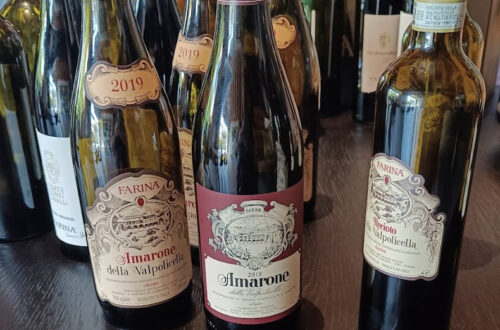
Speri’s label designs have changed over the years, and you’ll see decades of design on display in the winery. If you pick up a bottle of Speri Amarone, however, you’ll still see that original illustration, reworked yet preserved. It’s that “modernity with heritage” theme that I’m coming to realise is the heart of this family.

Living with the Land
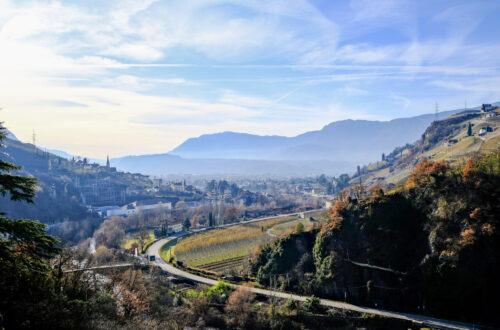
In a region where many producers buy in grapes to keep up with global demand, Speri is a bit of an outlier. They grow 100% of their own fruit, and only grow native varieties of grapes such as Corvina, Corvinone, and Rondinella. This gives them total control of their production, but it also makes them stewards of a very rugged piece of earth.
It also makes even more sense, then, that Speri have developed their own vine training system, the “pergoletta Speri” I mentioned earlier. This system came about after years of testing and experimenting, and the result was a tilted canopy of vines that maximises sunlight while ensuring a constant flow of air around the grapes.
As the family only uses their own, home-grown grapes, ensuring they’ve got the ideal growing conditions means they’re protected against a poor harvest, while still being able to meet their organic commitments.
Speri owns 5 vineyards that stretch across 65 hectares, and Sant’Urbano is the one that produces their Amarone and Valpolicella Superiore.
Sant’Urbano is a high-altitude vineyard characterised by dark, volcanic soil and handmade stone terraces. These terraces are built without a single drop of cement. This is more effort to maintain, but it allows the land to breathe.
Alongside the vines, they grow cherries and olives, while herbs and flowers are planted between the rows of grape vines to enrich the soil. Every inch of their land is carefully considered, with years of research and experimentation going into producing the ideal, organic growing conditions.
As someone who struggles to keep potted basil alive on a windowsill, I can’t help but be deeply impressed as Chiara explains their methods and ingenuity.
The Craft of Winemaking

If you pick up a bottle of Speri Amarone in your local wine shop, then it’s been over six years since someone picked those grapes in the Sant’Urbano vineyard.
After harvest, the grapes go through the traditional drying method called appassimento, before eventually ending up in the Slavonian oak barrels I found myself standing in front of.
In order for an Amarone to earn its name, it legally needs to be aged in wood barrels for two years. To earn the title “riserva”, that wait time goes up to four years.
“We age our Amarone for an extra year” explains Chiara, resting a hand on one of the smaller barrels, “We could call it a riserva, but because we don’t produce any other kind of Amarone, we want to keep it pure”.
As they only produce one single-vineyard Amarone from the Sant’Urbano land, they believe it should always be the best expression possible. The smaller barrels in the aging room are used for their Amarone and Valpolicella Superiore wines, allowing the wine more contact area with the wood during the aging process.
“It’s important to us that this is wine to drink,” Chiara continues, “it’s not just for exclusive use.”
It’s a humility that’s both warm and refreshing. While it would be easy to lean on the prestige of the wine and the family’s history, Speri want you to actually enjoy the (literal) fruits of their labours.
Meeting The Wines

While I’d still be very glad to rock up to the Speri winery with a few empty demijohns, the wines they sell in the winery and around the world thankfully come in the much more portable wine bottles – some still featuring those early illustrations on the label.
As we come to the end of the tour, Chiara leads us to their tasting area where we get to try the wines for ourselves. In front of us are five bottles:
- Valpolicella Classico:
- This is the wine Chiara calls an “every day” bottle. It’s 12% alcohol with a bright, fresh taste. It’s the type of wine you might open on a Tuesday night, pasta bubbling on the stove and music playing in the background.
- Valpolicella Ripasso:
- Ripasso wines are usually my favourite, and Speri’s is a beautiful one. It’s a bridge between the Classico and the Amarone, made by “re-passing” the Classico wine over the sugar-rich skins left behind from the Amarone production. It’s lighter than a true Amarone, but has more of a deep, raisiny fruitiness than the Classico.
- Valpolicella Superiore:
- While Ripasso is usually what ends up in my case, it was the Superiore that came home with me. This wine gets its character from the soil of the Sant’Urbano vineyard and it’s aged in those smaller oak barrels we saw earlier. It’s the type of wine you might bring to a dinner party, but it’s not so heavy that it’ll have you falling asleep by the time dessert comes out.
- Amarone della Valpolicella:
- This is the main event, the one they wait six years for. Because of that volcanic soil and the 100 days of appassimento drying, the wine is incredibly concentrated. It tastes like dark chocolate, dried plums, with a velvety texture. It’s a higher alcohol content, at 15%, but incredibly balanced.
This isn’t the wine to open at the end of the night, it’s the type that you savour over long conversations and a plate of good cheese (vegan in my case).
- This is the main event, the one they wait six years for. Because of that volcanic soil and the 100 days of appassimento drying, the wine is incredibly concentrated. It tastes like dark chocolate, dried plums, with a velvety texture. It’s a higher alcohol content, at 15%, but incredibly balanced.
- Recioto:
- Recioto is the wine that started it all for the region. It’s made in a similar way to Amarone, but fermentation is stopped early to keep the natural sugars high. It’s a sweet wine, often served as a dessert wine and sold in smaller bottles. Think blackberry jam and a hint of dark cocoa.
The Parting Glass

After working our way through Speri’s portfolio of wines, we leave the winery with a bag holding bottles of Superiore, Amarone, and Recioto.
Now back in London, Speri’s wines have joined our collection, but heeding Chiara’s words about “wine to enjoy”, I don’t intend to keep them there for long. While the family history is deep rooted, and their wines are world class, what stuck with me most was the respect for the land and the vines.
I’m notorious for bringing wines home from my travels, and then feeling like I need to wait for the “right” occasion to open them. The complete opposite of what these winemakers truly want for their wines. So, in the spirit of Speri’s philosophy, those bottles won’t just gather dust. They’ll be opened with my homemade ravioli, they’ll leave red rings on my grandmother’s Irish linen table cloth that I’ll worry about later, and they’ll be the background music to conversations that go on into the night while the candles fizzle out.
Visiting The Speri Winery in Valpolicella

If you want to experience the Speri winery firsthand for yourself, and you should, they offer a range of experiences and tastings in their winery in Valpolicella.
It’s very easily accessible from Verona, and I’ve written a separate post on visiting Valpolicella without a car, which you can find here.
I was kindly invited to visit as a guest of Speri; however, all thoughts, opinions, and inevitable wine stains are entirely my own.
Speri winery details:
Website: https://www.speri.com/
Address: Via Fontana 12, 37029, San Pietro in Cariano, VR, Italy
Typical opening hours:
- Monday – Friday: 08:30-12:00 / 14:00 – 18:00
- Saturday: 08:30-17:00