
How to Visit Lake Garda Without a Car: The Best Towns & Easy Routes
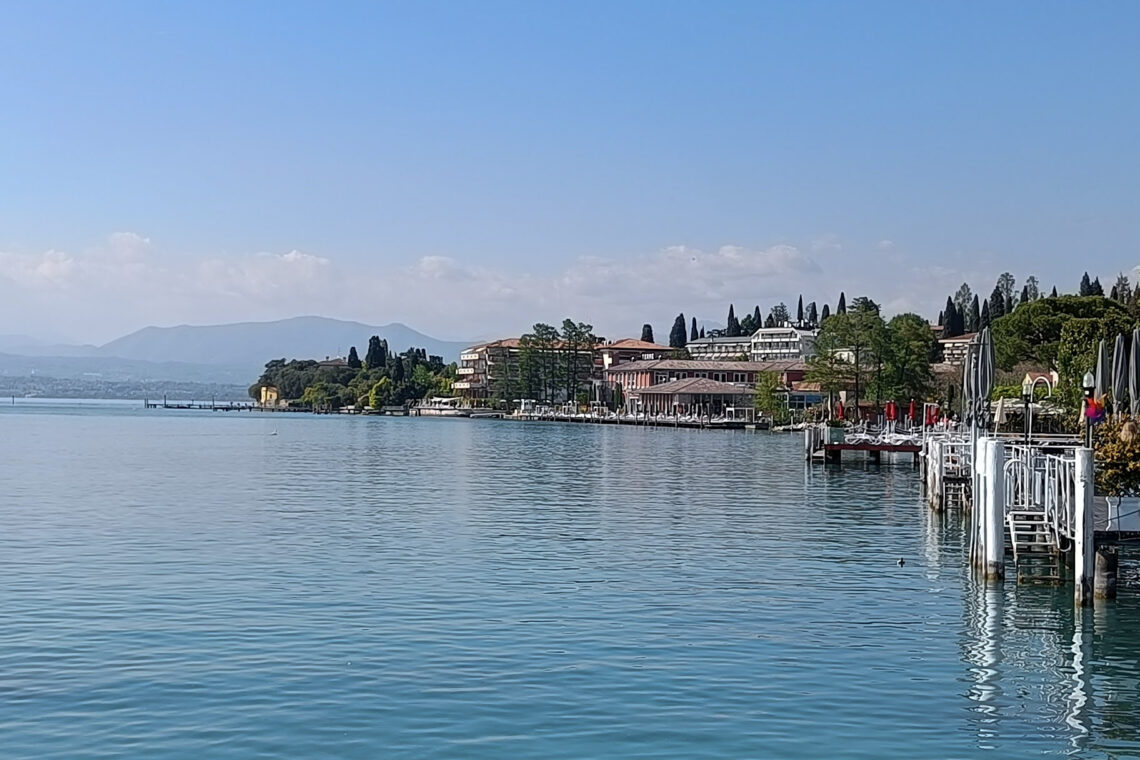
Italy’s largest lake, Lake Garda, is well known for its gorgeous scenery, pretty lakeside towns, and a refreshing, relaxing pace of life. If you’ve visited the lake before, you’ll have seen plenty of tourists from other parts of Italy, Austria or Germany – usually with a car that’s bursting with luggage and sporting equipment. It would be easy, therefore, to assume that visiting the lake requires a set of wheels. You would be wrong. It’s surprisingly easy to visit Lake Garda without a car.
Milan and Verona are the closest major cities to Lake Garda. Both are major transport hubs that are easy to reach from other parts of Italy. In this post, I’ll give you transport options from each city, as well as focusing on a few of the towns around Lake Garda that are most accessible if you’re coming by public transport.
Planning a Visit to Lake Garda Without a Car
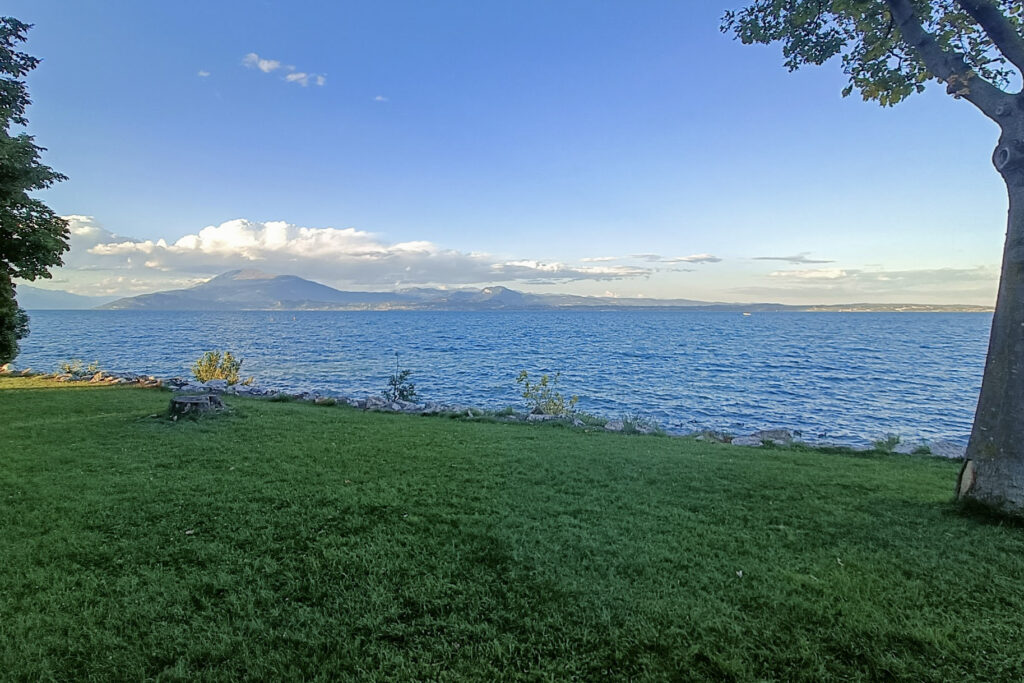
I’ve already mentioned that Lake Garda is Italy’s biggest lake, and it really is huge. It’s 52 km at its longest point, stretching all the way up towards the Dolomites.
For those of you travelling to Lake Garda without a car, especially if you’re coming from Milan or Verona, focusing on the southern end of the lake is your best bet, especially if you’re only on a day trip or a one night stopover.
Plus, for some of the smaller towns, parking, and even driving through, is going to be a nightmare. A couple of years ago, I was in Sirmione at the height of tourist season. Some eejit was trying to drive through the crowd in their car, and I remember thinking “why on earth would you bring that here”.
Getting to Lake Garda from Verona Without a Car
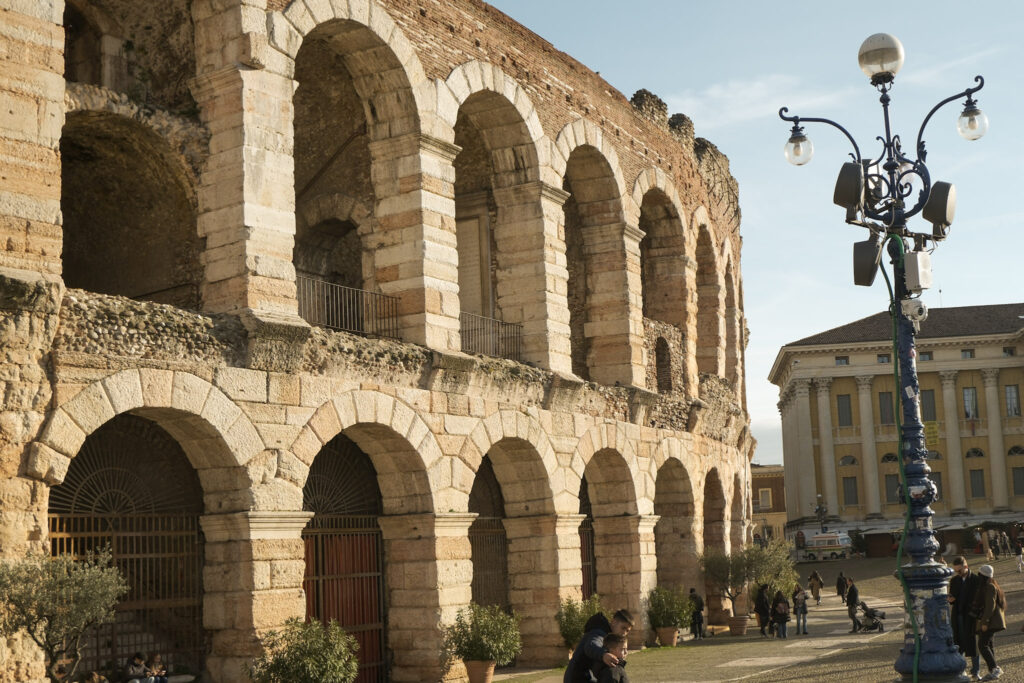
Let’s start with routes from Verona to Lake Garda, as it’s the closest major city to the lake. It’s common for visitors to Verona to do a day trip or a quick overnight to Lake Garda.
Of the three towns I’ll recommend in this post: Peschiera del Garda, Sirmione, and Desenzano del Garda, Peschiera is the closest to Verona, just under 30km away.
The Fast Route: By Train
The train is the fastest route between Verona and the lake. You’ll start from Verona Porta Nuova station, which is a 15-20 min walk from the centre of the city, or a short bus ride from Piazza Bra.
If you’ve read my Bolzano guide, or you’re familiar with Italian rail travel, you’ll know you’ve got a few options.
My Recommendation
Trenord
- This is the thrifty traveller choice. It’s a standard commuter train, and it’s the cheapest option.
- At the time of writing, tickets are cheaper on Rail Europe or the Trenitalia website than Trainline, coming in at about £3.50 for a one way ticket to Peschiera del Garda.
- Trains are about once an hour, and take 13 minutes to get to Peschiera del Garda station.
- To get to Sirmione or Desenzano del Garda, it’s the same train, just a little further, at 23 minutes, and tickets are around £4.50.
- Note: These are the regional trains, so you may see “Regionale” listed on the departures board.
Other Train Options
- Italo
- This is a private rail network, running every 30-40 minutes. Train journey times are about the same length of time as the Trenord trains. At the time of writing, a ticket on Rail Europe is going for £14.50.
- Frecciarossa
- Frecciarossa is Trenitalia’s high speed train service, but you’ll only save about 5 minutes compared with the cheaper Trenord option. These trains run about once an hour. At the time of writing, a ticket on Rail Europe is going for £14.50.
My advice? If you’re going by train, plan ahead and take the Trenord option. It’s about a third of the price, yet the time saving is negligible. They’re only once an hour, so you’ll need to plan your journey there and back ahead of time. It’s also worth noting that train strikes and engineering works do happen in Italy from time to time. Plan ahead, and if your preferred service isn’t running, at least you’ve got backups.
The Scenic Route: By Bus
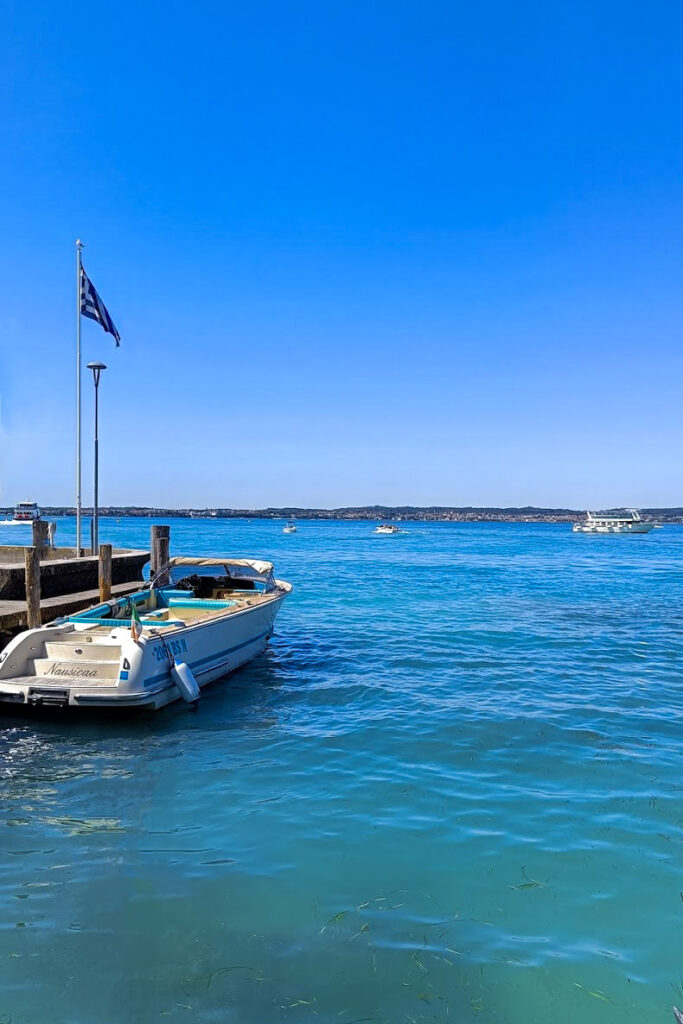
I have a love-hate relationship (mostly hate) with the bus from Verona to Lake Garda. I’ve attempted to take it three times, each time from a stop within the city. The first time, I was waiting at the bus stop for over an hour. The second time, the same thing happened. The third time, the bus didn’t even show up. To this day, I have no idea if the bus just didn’t run or if it arrived super early and I somehow missed it.
It’s a beautiful drive, when it does show up, but it’s been so unreliable for me that I don’t recommend it. If it does decide to show, you’ve got a much broader range of towns to visit than the train route. You can see the full timetable and route map on the ATV website.
The bus takes about an hour, and tickets are around €4. However, it’s worth noting that not all of the stops have correct, clear timetable information on them, and the app doesn’t always show the up to date info.
For your own piece of mind, especially if you’re tight for time on a day trip, I’d strongly recommend taking the train from Porta Nuova station over the bus.
From Verona Airport
During the peak season (April to mid-October), there’s a direct bus, the 482, from Verona Airport direct to Peschiera del Garda. It leaves from directly outside the airport, and you’ll see clear signs for it on the bus stops.
- Cost: About €4-5.
- Journey time to Peschiera del Garda: About 40 minutes.
- How to buy: Downloading the ATV app to your phone and purchase through the app.
- If you don’t have data service abroad, I recommend getting an Airalo e-sim as you’ll need connectivity to activate the ticket.
If you’re travelling outside of peak season, then you’ll need to get the regular airport bus (about €7) to Verona Porta Nuova station and continue your journey on from there.
Note: The buses in Verona are regular regional buses. While some may have luggage areas, it’s not always guaranteed. If you’re travelling with large amounts of luggage during busy times, you may be better off getting a taxi or leaving your luggage in a luggage storage in the train station.
Getting to Lake Garda from Milan Without a Car
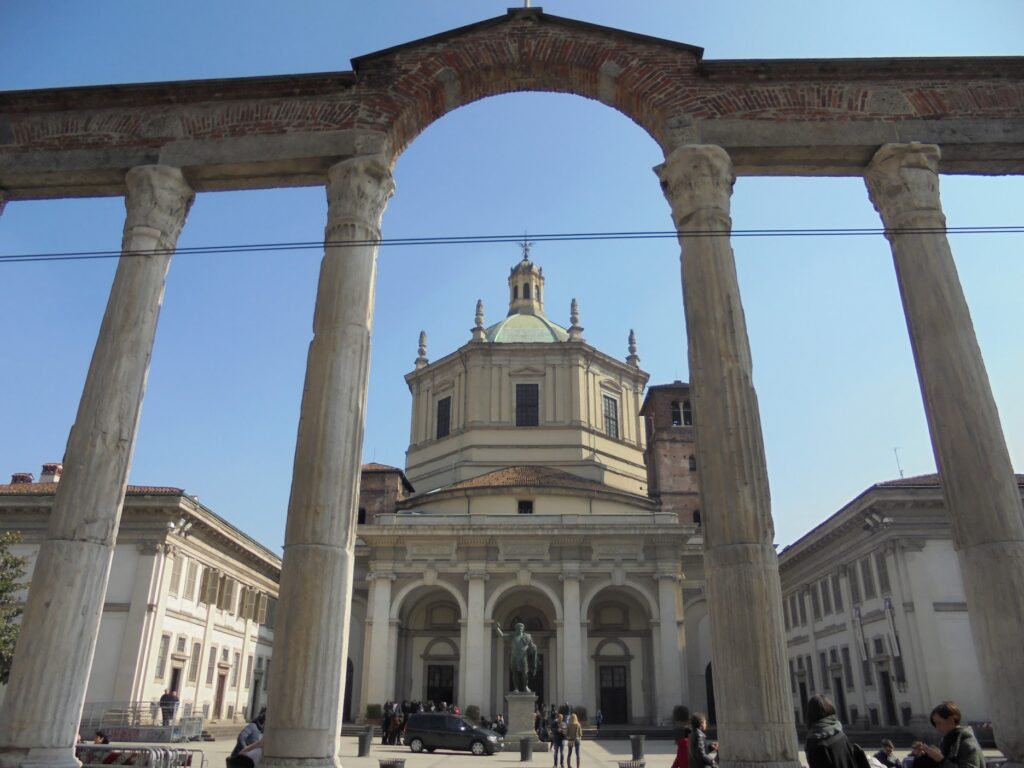
If you’re travelling from Milan, to Lake Garda without a car there are direct trains that will get you there in around an hour. It’s about 130km, so its a further distance than Verona, but it’s still very doable as a day trip.
High-Speed vs. Regional: Which Train?
The quickest option from Milan Centrale is the Frecciarossa high speed trains, while the regional train is slower but about a third of the price. Which one you get depends on what your priorities are. Both can be booked through the Rail Europe site.
High Speed from Milan Centrale:
- Travel time: Around 53 minutes.
- Frequency: Direct trains every hour. If you’re willing to change at Brescia, then you have options every half hour.
- Average cost: Around €35.
Trenord/Regional Train from Milan Centrale:
- Travel time: Around 1 hour 25 minutes.
- Frequency: Every hour.
- Average cost: €11
Recommendation:
If you take the high speed train, you’re saving about half an hour, but you’re paying triple the price. When both the high speed and regional direct trains are once an hour, you’re better off planning ahead and going for the cheaper option.
It’s also worth noting that trains can run late. Get the direct option if you can, rather than the one that changes in Brescia. You don’t want to be making a mad dash across platforms with all your luggage!
Which Milan Train Station?
Milan Centrale is Milan’s main train station and where you’ll have the most options. It’s a huge station, and these trains can sometimes leave from the “far” platforms (1-3, or 20+). Make sure you arrive with enough time to spare, allow an extra 15 minutes to find your platform just in case.
Your other option is Milan Porta Garibaldi. There’s a metro that connects it to Milan Centrale. There are direct trains from here, although they leave at irregular times – double check when you’re booking that you’re picking the right train station!
Note: It’s worth checking the station name on your ticket. Some booking platforms default to whichever station is cheapest, or include all local stations in the search.
From Milan Airport to Lake Garda
If you’re flying into one of Milan’s airports, the best way to get to Lake Garda without a car varies.
From Milan Malpensa (MXP), Your best bet is to take the Malpensa Express train (about 50 minutes, €13) to Milano Centrale. From there, you can hop on the direct train to Peschiera or Desenzano as described above.
However, if you’re flying into Milan Bergamo (BGY), where a lot of budget airlines fly to, there is a direct bus with FlixBus to Peschiera del Garda. These buses are irregular, with only about 4 per day, so check the timetable ahead of your flight and see if one lines up with your arrival time.
The journey from Bergamo airport to Peschiera del Garda takes about an hour and costs about €13 when booked online.
Three Best Towns to Visit
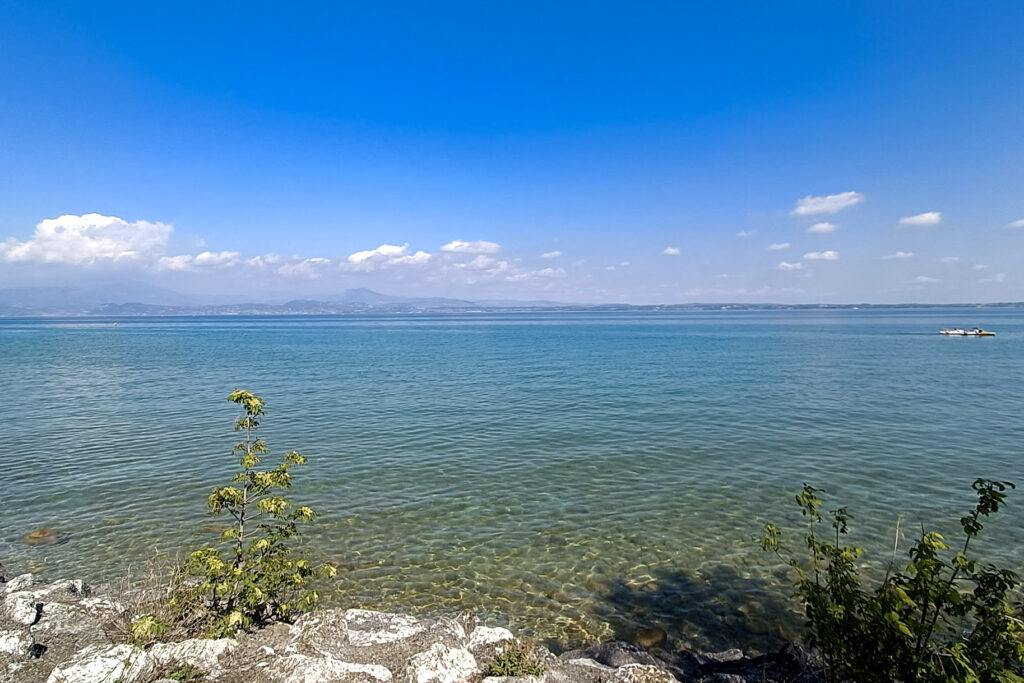
For a trip to Lake Garda from either Milan or Verona, I’d recommend focusing on the towns at the southern end of the lake. If you have more time, by all means explore this beautiful region, but for those tight on time, these three are the most accessible.
Most trains from Milan or Verona will stop at Peschiera del Garda or Desenzano del Garda. Once you’re in either, it’s very easy to travel between them. There are regional buses that will take you between towns, and up to Sirmione (more on that below!).
Peschiera del Garda
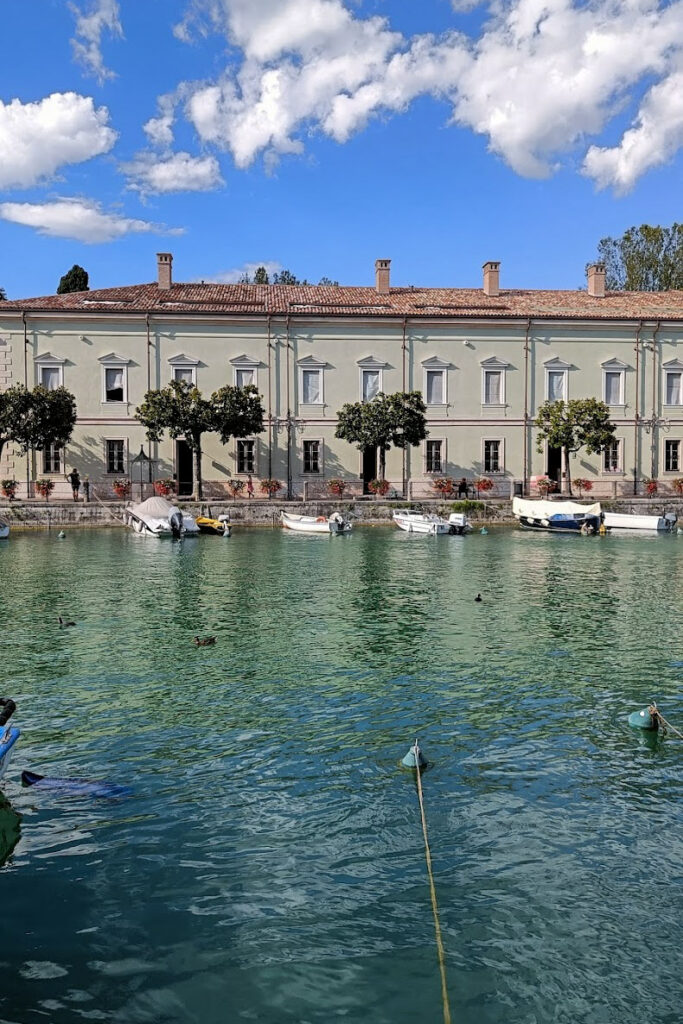
Peschiera del Garda is a bit of a transport hub, so it’s where you’ll find a lot of trains and buses to other parts of the region.
Going into the town, you cross a bridge into a Venetian fortress. When the Austrian Empire had control over what is now Northern Italy, Peschiera del Garda was one of its four key fortresses (known as the Quadrilatero) in the region.
Today, that fortress is a UNESCO world heritage site, and the town is a colourful, pretty place to visit along Lake Garda.
To get into town from the train station, it’s about a 10-12 minute walk to the Porta Verona entrance to the town. It’s a straightforward walk, but it’s a bit uphill on the way back to the station – something to bear in mind if you’ve been hitting the Aperol.
For people staying longer in the Lake Garda area, Peschiera is a good hub as it’s got great transport and easy access to towns around the lake, as well as the neighbouring Gardaland amusement park.
What to do in Peschiera:
Most of the inner walls of the town are pedestrianised, which makes it a lovely town to spend an afternoon wandering around. Because of the moat system of the fortress, Peschiera has a lot of canals. It’s an ideal spot to grab a spritz overlooking the water, or renting a small motorboat to sail around the outside of the fortress walls.
- The Walls: Walk the ramparts for a view over the lake.
- On the Water: Rent a small motorboat (no license needed) to cruise around the outside of the fortress walls.
- The Beach: If you want to actually get to the water’s edge, there’s a pebble beach called Spiaggia dei Cappuccini. It’s a 10-15 minute walk from the town centre.
- Moving On: The ferry terminal is right in the heart of town, making it a great spot to get to Sirmione
Desenzano del Garda
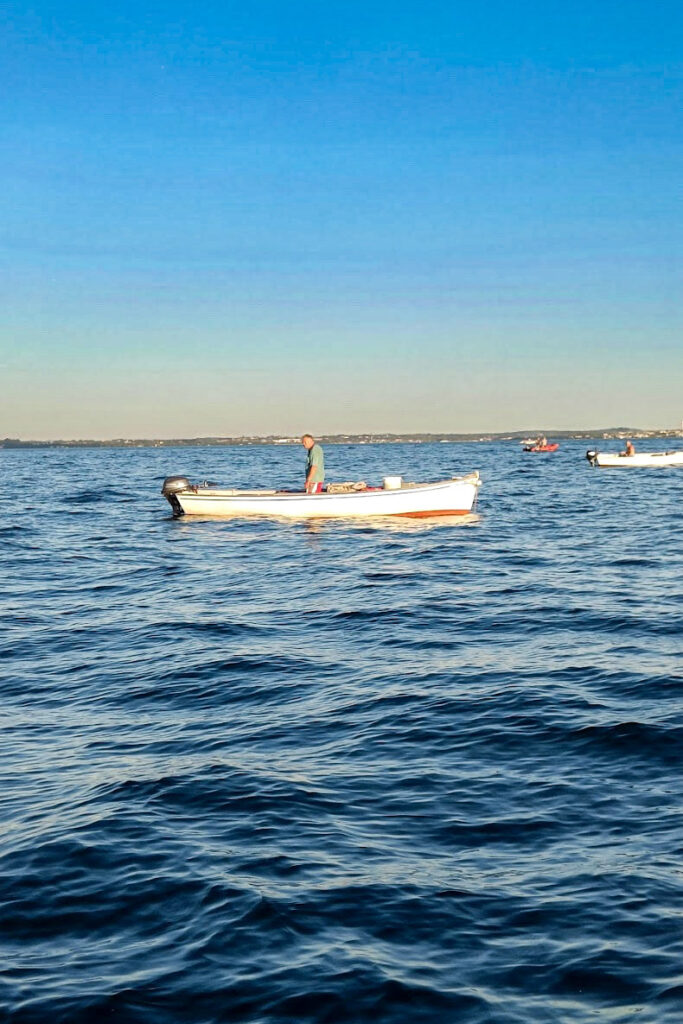
Desenzano del Garda is the other main town that most people arrive into if they’re coming to the southern end of Lake Garda without a car. It’s often called the “Capital of the Lake”, and it’s got a totally different energy to Peschiera. While Peschiera is a historic fortress, Desenzano is its chic and lively neighbour with a bustling harbour where you can take a ferry or a sunset cruise.
Just like Peschiera, the station is a bit of a walk from the lake – about 15 minutes. The walk is entirely downhill on the way to the water, but be warned: on the way back, it’s a bit of a steep climb. The LN026 bus stops right at the station and drops you closer to the harbour if you want to spare your legs.
What to do in Desenzano:
- Visit the Roman Villa: One of the most important Roman villas in Northern Italy, Villa Romana di Desenzano was built around 2,000 years ago. Here, you can visit the museum and see mosaic floors that are incredibly well preserved.
- The Old Port: This is the most photographed spot in town, with a beautiful Venetian style bridge separating the old harbour from the new.
- Castello di Desenzano: Sitting on the hill overlooking the town, the castle was originally built to protect locals against raids. You can walk along the walls, with an amazing panoramic view over the lake.
- Tuesday Market: If you visit on a Tuesday, swing by one of the largest and oldest lakeside markets in Italy, dating back to the 15th Century.
- Sunset Cruise: Take a sunset cruise from Desenzano, seeing the lake from the water as the sun slowly sets.
From the Desenzano harbour, you are also perfectly positioned to catch the ferry across to Sirmione: our final, and perhaps most famous, car-free destination
Sirmione
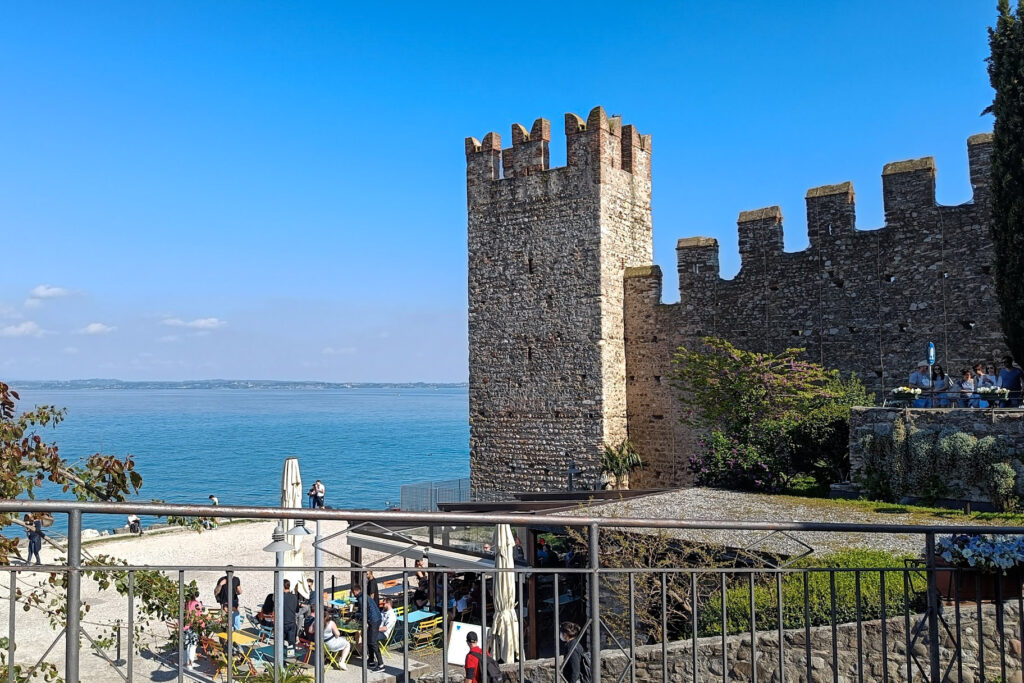
Sirmione is the stuff postcard dreams were made of. My first time visiting Verona was back in 2022. A friend of mine had spent years living in Milan and recommended I visit Sirmione if I was around the Lake Garda area. I’m so glad I listened to him, because it’s absolutely stunning (thank you Paddy!).
If you’re planning on spending a day in Sirmione, I’ve got a post on that here.
Getting to Sirmione Without a Car
The town sits on a peninsula that juts into the southern end of Lake Garda. There’s no train station here, so your options are bus or ferry.
You’ll need to arrive via Peschiera or Desenzano first. That unreliable bus from Verona can also go to Sirmione, but as I mentioned before, you’re better off making your way to one of the other lakeside town first and then transferring to Sirmione.
- The Ferry: This is easily the most fun way to get there, and it leaves you right at the harbour next to the castle. There are ferries from both Peschiera and Desenzano into Sirmione, costing between €3-5 for a one way ticket.
- The ferry is more regular from Desenzano, but it still only runs about 10 times a day (varies with season), with last ferries around 5pm. If you want to use the ferry, make it an early day.
- The LN026 Bus: There is a regular bus route to Sirmione, but be warned: the bus normally stops at the bottom of the peninsula in an area also called Sirmione on maps, but you may see it as Colombare on the bus stop. From here, it’s about a 25-30 minute walk to the actual historic centre.
- Some buses do go up to the top of the peninsula, including the navetta shuttle bus, but they are less regular.
A Word of Advice
Travel around this area can be unpredictable, and it does tend to finish early in the day. If you’re heading back to Verona or Milan from the top of the peninsula, map out your return journey even before you set off for the day.
I’ve spent time standing at the bus stop next to Sirmione’s Scaliger Castle at the top of the peninsula, only to realise the bus I was waiting for was leaving from Colombare, and I’d long since missed it.
These days, I would advise anyone going there to check what time your last bus/ferry is, and aim for the one before that. That way, even if you miss the earlier one, you’ve got a backup plan.
What to do in Sirmione
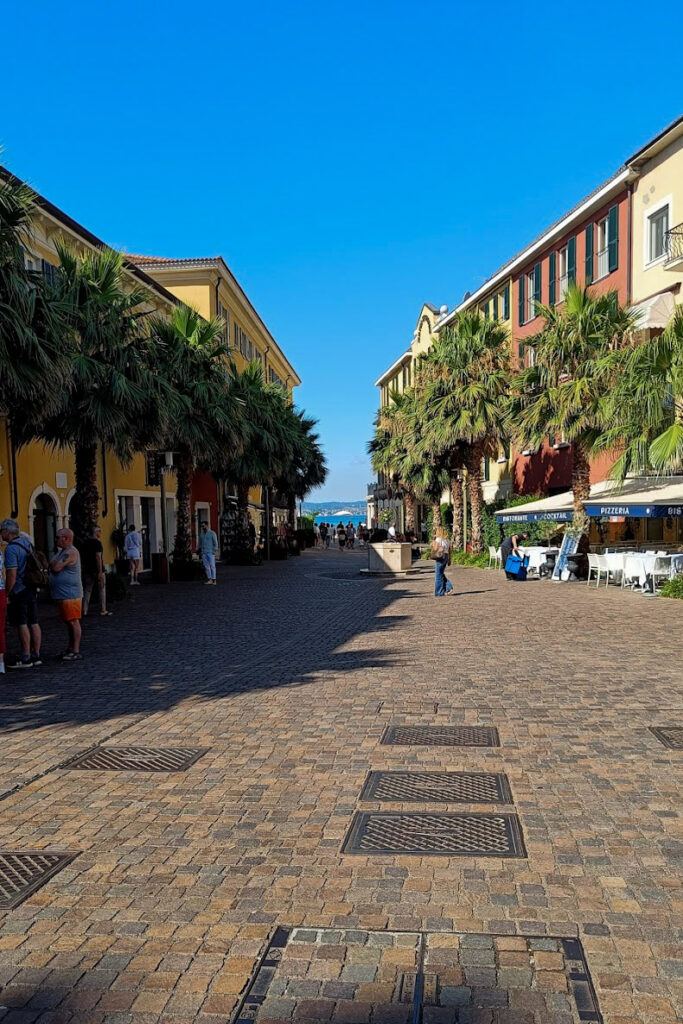
After all my words of warning about the unreliable buses and long walks, you may be wondering whether you should even bother with Sirmione. I get it, but you’d be a fool not to. It’s one of the most beautiful places I’ve been, and once you walk over the moat and through the castle gate for yourself, you’ll know exactly what I mean.
The town itself is inside Scaliger Castle. This is one of the best-preserved lakeside castles in Italy. You actually have to cross over a drawbridge to enter the town. It was built in the 14th Century by the Scaliger family of Verona (who you might be familiar with if you’ve read my day in Verona post). The family built the castle to protect their fleet of ships. These days, you can climb the tower for a view over the narrow streets below.
I love Sirmione so much that I’ve written a separate post how to spend a day here, but for now, the highlights:
- Grotte di Catullo: At the very tip of the peninsula is the ruins of a Roman villa. It was originally a home for an aristocratic family, and it’s about 15 minutes walk from the castle.
- Jamaica Beach: Below the Roman ruins there’s a beach that features flat stone slabs rather than sand. In the summer months, you may find a small bar along the beach, and the water is that perfect shade of turquoise that would almost have you believe you’re in the Caribbean.
- Shopping: The town is small, but packed full of tiny shops, selling everything from tourist souvenirs to handmade soaps, local olive oils and clothes.
Essential Tips for Lake Garda Public Transport
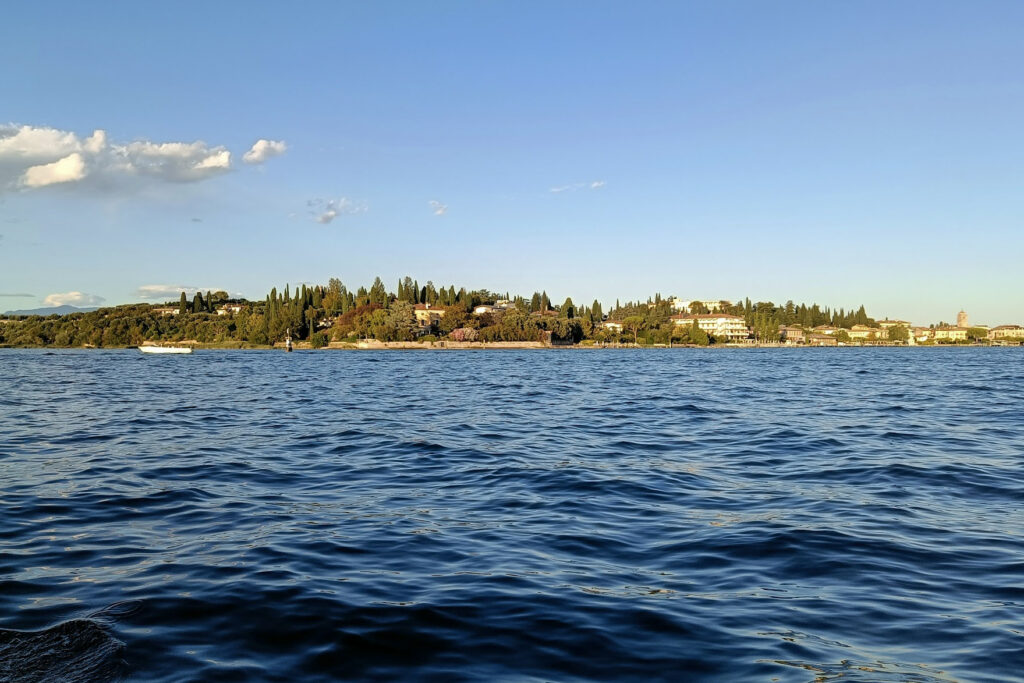
Hopefully by now, you can see that it’s easier than you think to get to Lake Garda without a car. If you’re not familiar with Italian transport, here are a couple of tips I’ve learned over the years that could help on your own journey:
- Validate train tickets:
- If you’ve bought your ticket online, you must “check in” on the app before the train’s scheduled departure time to validate your ticket.
- If you’ve got a paper ticket from a machine at the station, you must find the small green or yellow machines on the platform and stamp it. If a conductor catches you without a validated ticket, you will be fined, and they really do check.
- Keep your ID on you:
- Occasionally, conductors may walk through train carriages and ask everyone for their ID. They’re looking for some kind of photo ID, so things like a passport, drivers licence, national ID card or passport card all work here.
- Stay connected:
- Make sure you have data roaming on your phone. If not, get an e-sim. If you buy bus or train tickets online, you’ll need the internet to validate them. And in an area where transport can be unpredictable, you’ll thank yourself for being able to check timetables.
- Apps:
- For ferry tickets and timetables, download the Dreamlake app.
- For bus tickets in and around Verona, including to the lake, you want the ATV app.
- For bus tickets on the west side of the lake, including Sirmione, it’s Arriva MyPay
- Queues:
- The ferry ticket office queues at any of the lakeside towns can be massive in the summer. Buy your ticket online or arrive at the dock at least 20 minutes early.
- Don’t Rely on the “Last” Option:
- As I mentioned in the Sirmione section, transport around the lake tends to wind down early, often around 5/6pm (sometimes later in summer months). Always check in advance and aim for the second-last service. If that one is cancelled or full (and it does happen), you still have a final shot at getting home.
- Avoid Large Luggage on Public Transport:
- Many of the buses around and to the Lake are regular commuter buses. You’ll be getting it alongside people out doing their grocery shopping, going to work, picking their kids up from school – basically, locals living their lives. If your luggage is so big that it’ll block aisles or take up multiple seats, avoid travelling at busy periods or consider a taxi instead. Better yet, ditch the luggage in a locker or at your hotel if you can.
Visiting Lake Garda without a car isn’t just an eco-friendly move, it’s a much more relaxed way to see the south of the lake without the headache of traffic jams. Whether you’re going to Peschiera for the history or heading to Sirmione for the views, the trains and ferries have you covered.
If you’re planning to spend more time in Northern Italy, check out my guide to Verona in a day or my tips for visiting Bolzano further north. Happy travels!