
Sake 101: Everything You Need to Know about Japanese Sake
For a long time, my knowledge of Japanese sake was limited to that thing my husband ordered in Wagamama from time to time. “It’s actually pretty light!” he told me, sipping the hot sake. My husband is a Slavic man, so I was deeply mistrustful of his definition of ‘light’. I’ve met Bulgarian rakia and we are not friends.
Turns out, I was wrong. Instead of being something I could use to remove my nail polish, sake is less like a shot of spirits and more like craft beer’s sophisticated, centuries-old cousin. It can be light and floral, or rich and complex, and all the varieties in between. It has its own rules, its own terminology, and its own traditions.
I already love visiting vineyards around Europe and other parts of the world, so when I made it to Kyoto, I wanted to get a deeper understanding of everything that goes into a glass of sake.
(Incidentally, I ended up in Kyoto on St. Patrick’s day. I feel like there’s a joke in there somewhere about rice paddies, Paddy’s day, and me being from Ireland.)
What is Sake?

Despite often being called “rice wine”, sake is actually brewed, making it much closer to beer in its production. While wine is the result of fermenting the sugar already present in fruit, sake’s alcohol content comes from the rice grain converting into sugar first.
In Japan, the word “sake” actually just means alcohol in general. If you go into a bar and say “one sake please”, they’ll know what you mean, but you’re basically just saying “one booze please”. If you want to use the correct term, it’s Nihonshu (literally “Japanese liquor”)
To describe sake to someone who’s never had it, think of it as a middle ground between a crisp white wine and a very clean, smooth craft beer. It doesn’t have the burn that comes with spirits, and it doesn’t have the high acidity you find in many wines.
Some types have umami – that savoury quality you get from miso paste. Others can be fruity (melon and pear flavours are common), floral, or even earthy and nutty.
Sake: The Basics
- Alcohol content: Usually around 15-16%. A bit stronger than your average Pinot Grigio, but not quite Glenn’s Vodka either.
- Ingredients: Just four things: water, rice, yeast, and a very special mould called koji-kin. Some variants of sake will have extra alcohol, but we’ll get to that.
- How to pronounce it: In English, it’s pronounced as either “sah-kay” or “sak-ee”. Never just sake, as in “for goodness sake”
Where Does Sake Come From?
Japanese sake is a little bit like French wine in that there are different regions around the country known for their production. It usually comes down to two things: the quality of the water and the temperature of the region.
The Big Players:
- Hyogo (Nada): This is the biggest sake producing region in Japan. The water here is hard (full of minerals), which makes for a stronger, robust sake known as “the sake of Nada”.
- Kyoto (Fushimi): This is where I was truly introduced to sake. The water in Fushimi is much softer, which results in a smoother, more elegant sake.
- Niigata: If you like your drinks crisp, clean and dry as a bone, look for bottles from Niigata. They have high snowfall, which means the water is incredibly pure and the fermentation happens at a slow, cool pace.
In the wine world, you’ll hear talk about terroir, or the idea that the soil and climate give the wine its soul. For Japanese sake, it’s a bit different. Because breweries can forward their favourite rice from the other side of the country, the location is more about the local water source and the traditional style of the head brewer (known as the Toji).
As a Dubliner, it’s probably a bit like Guinness. You can make it elsewhere (shoutout to our friends in Nigeria), but there’s a reason that people swear the “homegrown” version just tastes different. Although, let’s be real – if it’s down to the local water, the River Liffey might put you off. Thankfully, Japanese sake breweries are pretty obsessed with their mountain-spring purity.
How is Japanese Sake Made?

Because rice doesn’t have any natural sugar, the brewers have to do a bit of alchemy. They need to turn the starch into sugar (thanks to that koji-kin mould) at the same time the yeast is turning that sugar into alcohol.
This two jobs at once process is why sake can reach a higher alcohol content than wine without needing to be distilled.
Before the brewing even starts, the rice is polished to remove the outer layers of protein and fats. If you leave those on, the sake tastes rough or heavy. Generally speaking, the more polished the grains of rice are, the cleaner and more floral the sake becomes. This is why you’ll see percentages on the bottle – it’s telling you how much of the grain is left. If you see something like 50%, it means they’ve polished away half the rice just to get to the good stuff.

While we were in Kyoto, we were able to see grains of rice at differing stages of polishing, and you really can tell even just visually the difference it makes to the grain. Generally, the more “polished” a sake is, the more high end it is. You’ll often see very expensive bottles at 70% or higher, meaning there’s only about 30% or less left of the grain.
What are the Different Types of Japanese Sake?

Just like wine, there are different varieties of Japanese sake. Most of it falls into a few main categories based on how much the rice was polished and whether any extra alcohol was added.
Junmai: The “pure rice” group
In Japanese, junmai, means “pure rice”. This is sake in its most traditional form, made using only water, rice, yeast, and koji-kin.
It’s usually a bit richer, fuller bodied and has a higher acidity. It tastes like rice, but in the best possible way. This kind of sake is best with heavier savoury dishes, like a hearty ramen dish.
Honjozo: The “crisp” group
This is very similar to junmai, but with a tiny amount of distilled brewer’s alcohol added at the end. Adding a splash of alcohol actually lightens the flavour and makes it more fragrant and clean on the finish.
This is usually the easiest sake to drink, and more budget friendly than other types.
The Premium Levels: Ginjo and Daiginjo
This is where things get more high end. If you see the words ginjo or daiginjo, the rice has been polished down significantly, at least 40-50% gone.
Ginjo is at least 40% of the rice gone and it’s fruity, floral and delicate. Daiginjo is the final boss level, with at least 50% of the rice gone, often much more. This is the top shelf, treat yourself kind of Japanese sake. It’s very refined and almost always served chilled to preserve the delicate aromas.
Namazake: The wild stuff
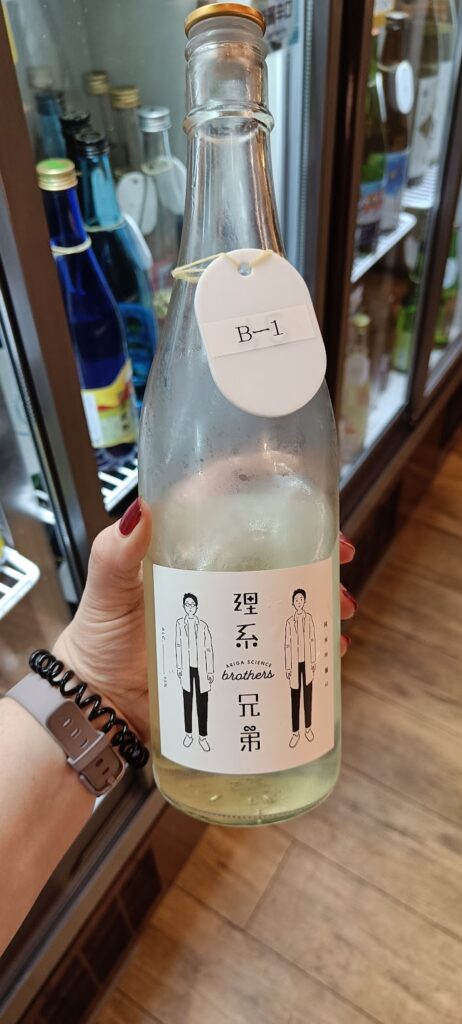
Namazake is to Japanese sake what natural wine is to…well, wine. Most sake is pasteurised twice (once after brewing and once after bottling) to kill off bacteria and stabilise the flavour. Namazake is unpastureised, it’s “live” sake. It’s incredibly hard to find namazake outside of Japan, due to import laws and the lack of pasteurisation process, so if you want to try it, you’re going to have to go to the source.
Because it hasn’t been heat treated, it tastes incredibly bright, zingy, and sometimes has a bit of natural fizz. Some types will have a stronger umami flavour. I tried some in Kyoto that tasted a bit like blue cheese to me (in a good way!).
Try it with some avocado and teriyaki sauce and thank me later.
You have to keep this stuff chilled. If it sits on a warm shelf, the active yeast and enzymes go rogue and the flavour will change for the worst. You’ll see a lot more of this in the spring (right after the winter brewing season). Look for the character 生 (Nama) on the label.
Sake Traditions in Japan
It wouldn’t be Japan without rituals and tradition, and sake comes with plenty – and they’re delightful. These rules aren’t about being stuffy or rigid, but more about showing hospitality, generosity, and respect for the sake.
The Overflowing Glass

If you order sake in an izakaya or other bar, the server might place the small sake glass inside a wooden box called a masu. They’ll pour the liquid until it overflows from the glass and fills the box. This isn’t an accident. It’s a sign of the host’s generosity. It’s their way of saying they’re so glad you’re here, they’re giving you extra.
I had sake served to me like this in the bar of The Knot Hotel in Shinjuku, and asked the bartender why. He wasn’t sure how to explain it to me, but came back to me a little bit later with a translated paragraph about the masu tradition. It was completely charming, and such a nice way to end my day.
If you experience similar, don’t panic. The “correct” way to handle it is to lean down and take a sip from the glass while it’s still on the table to avoid spilling. Once there’s room, you can pick up the glass. When the glass is empty, you pour the overflow from the wooden box into the glass and finish it off. It’s kind of like the chocolate at the end of a Cornetto, but in Japanese sake form.
The Big Rule: Never Pour Your Own
In Japanese sake traditions, you should never fill your own cup. Instead, keep an eye on your companions’ glasses. When it gets low, offer to pour for them. Using both hands on the bottle is a nice touch of respect. They will reciprocate and pour yours. Unless you’re out with one of my brothers, in which case, you’re on your own kid.
If you’ve had enough and don’t want a refill, leave your glass full. If it’s empty, someone will try to refill it.
How to “Cheers”
When you clink glasses with someone, try to ensure the rim of your glass is slightly lower than the rim of your companion’s glass, especially if they’re older than you or someone in a more “superior” position (like your boss or a host). In Japanese culture, it’s a subtle show of humility.
Saying “kanpai!” is the Japanese version of the English “cheers” or the Irish sláinte, and literally translates to “dry the cup”. Which, again, you only want to do if you want someone to refill it!
The Sake Connoisseur Basics
The Cheat Sheet

You can download the image above to keep on hand when you’re actually in a sake bar in Japan!
And for our friends using screen readers or want some text they can copy-paste:
| Added Alcohol Sake Types | Pure Rice Sake Types | Rice Polishing |
| Daiginjo | Junmai Daiginjo | 50% or less (at least 50% of the rice is polished away) |
| Ginjo | Junmai Ginjo | 60% or less (at least 40% of the rice is polished away) |
| Honjozo | Junmai | 70% or less (at least 30% of rice is polished away) |
If you’ve gotten your hands on Daiginjo or Ginjo, these are best served chilled, as it helps bring out the gentle, floral flavours more. For more robust sake like Junmai, this can be warm or cold. If it’s served warm, it’ll come in a ceramic jug called a tokkuri.
If I’m having warm sake at home, I do a bain-marie method: Place the sake-filled tokkuri into a small saucepan of boiling water. The water level should reach about two thirds of the way up the tokkuri. Let it sit for about 4-5 minutes, and you’re good to go.
Be sure to use a heat-safe container for your sake. If you don’t have a tokkuri, a good, sturdy mug may do the job – just avoid glass.
How to Read a Japanese Sake Label

The front of a Japanese sake bottle will usually have decorative calligraphy that can be hard to read. The information about the sake is usually on the back or at the side.
Google Lens is going to be your best friend to actually translate the labels, but if you only learn three Japanese characters, make it these:
生 (Kanji for “Raw/Live”) — Nama. If you see this symbol, check the bottle is cold and keep it that way. This is the sign for the unpasteurised namazake.
辛 (Kanji for “Spicy/Dry”) — Karakuchi. If you see this, the sake will be crisp and fresh tasting.
甘 (Kanji for “Sweet”) — Amakuchi. If you see this, the sake will be softer, fruitier, and more like a dessert wine.
Other things to look out for:
The Sake Meter Value – you’ll see a small box on the back label that says 日本酒度 (Nihonshudo). It will have a number with a plus or minus sign. If its a positive number, it’s a dry sake (the higher the number, the drier). A negative number tells you that its a sweet sake, and the lower the number, the sweeter it is. A zero is perfectly balanced in the middle.
The Polishing Number. Look for a percentage followed by 精米歩合 (Seimaibuai). This tells you how much of the rice is left. If you see 50% or lower, you’re holding a premium Daiginjo. If the number is 70%, it’s a more robust, ‘ricey’ Junmai.
Where Can I Taste Sake in Japan?

As you might expect, you can find Japanese sake everywhere in its homeland. You’ll get basic sake in convenience stores like 7-Eleven or Family Mart (One Cup Sake is a popular brand), and you’ll find premium selections in dedicated sake bars.
In Kyoto, the Fushimi District is a must visit. You can explore some of the centuries old breweries around the area (and I’ve got a post on this coming soon), and I’d really recommend booking a GetYourGuide experience to really get a deep dive. That’s what we did, and having an expert on hand gave me so much more knowledge and appreciation than I would have gotten just reading a drinks menu.
For those in Tokyo, if you’re feeling adventurous, there’s a wonderful all you can drink sake bar in Shinjuku. Here, you pay for the time you stay, and help yourself to an endless variety of sake from their fridges. It’s a great chance to try out different flavour profiles, styles of sake, and learn which you like best.
If you’re planning on bringing Japanese sake home as a gift for someone or even as a souvenir for yourself, it’ll always be cheaper at the source – you can get some amazing sake for very reasonable prices in the breweries. If you don’t make it to a brewery, look up the closest big liquor stores close to where you’re staying.
You can also naturally buy Japanese sake at the airport on your way home. It’s more expensive than in the cities, but still much cheaper than what you’d pay back home. I got an amazing high end daiginjo for about £30, while the same brand goes for about £100 here in London.
Don’t Make My Mistake
If you are buying Japanese sake to take home, just do me one favour: Don’t save it for too long. While most sake types are safe to drink after awhile in the cupboard, their flavours dim over time. It’s not a wine that gets better with age. If you’re buying super premium sake in Japan, you’re doing yourself a disservice by letting it go past its best.
I am terrible for buying nice things abroad and then convincing myself I need to save them for a special occasion… and then suddenly it’ll be a year down the line and that special occasion never arrived. I’ve got a gorgeous bottle of Dassai 23 in my wine cupboard as I write this, and it’s coming up on its second birthday. I told myself I’d save it for a special dinner, invite friends over, make a Japanese meal and serve the sake… and then never got around to it. It’ll still be safe to drink, but it won’t be nearly as good as it was when I bought it.
I’ve learned my lesson with some matcha I bought in Uji. Even though it feels too special to use for a drink to have during a work meeting, I’m making myself use it and enjoy it while it’s still good. Sometimes those “special moments” in life are actually just the regular moments that need a bit more sparkle.