
One Day in Verona: More Than Just a Balcony
Verona is easily one of my favourite cities in Italy. It’s sometimes overlooked by its more famous neighbour of Venice, but it still pulls in about 3 million visitors every year. If you only have one day in Verona, the goal is to navigate the crowds, skip the tourist traps, and actually see the city without feeling like you’re leaving too much behind.
Whether you’ve got limited free time around a business trip, stopping over on the train, or you’ve got other plans for the rest of your time in Italy, I’ll help you get the most out of your day in Verona.
Tours around Verona
While the rest of this post is focused on how to DIY your day in Verona, sometimes you just want someone else to do the planning for you. If that’s more your vibe, these tours will cover the main highlights of the city:
Getting into Town
Regardless of whether you’re coming to Verona by plane or by train, Verona Porta Nuova Station is probably going to be your first port of call.
Most travel guides will tell you that the walk from Porta Nuova station to historic centre is a pleasant 20-minute stroll. They’re not wrong on the time, but it’s a drab trek into town. The route takes you alongside busy roads, and it feels like longer than it is before you get to the pretty parts of the city.
If you’ve only got one day in Verona, I’d skip the walk and take the bus. The bus system in Verona is frequent, fast and cheap. Lines 11, 12, and 13 (among others) leave from stands outside the station and will drop you at Piazza Bra, right in front of the Arena, in about five minutes.
There are self-serve ticket machines by the bus stops, but if you’re planning on visiting some of the main sights (which I’m about to recommend), buy the Verona Card instead. The card includes your bus fare into the city, as well as entrance to the Arena, Juliet’s House, Castelvecchio, and the Museo Archeologico. A 24 hour ticket costs €27, and is activated from the first use. If you want access to the audio app too, this option is just €3 more.
Verona is an incredibly walkable city, so everything I’m going to talk you through can be done on foot or with public transport. If you have travelled to Verona with a car, I don’t recommend you use it around the city – the streets are old, small, narrow streets and it’s going to take you longer than it would on foot. If you’re able to walk around, you’re going to enjoy the city a whole lot more that way.
The Itinerary
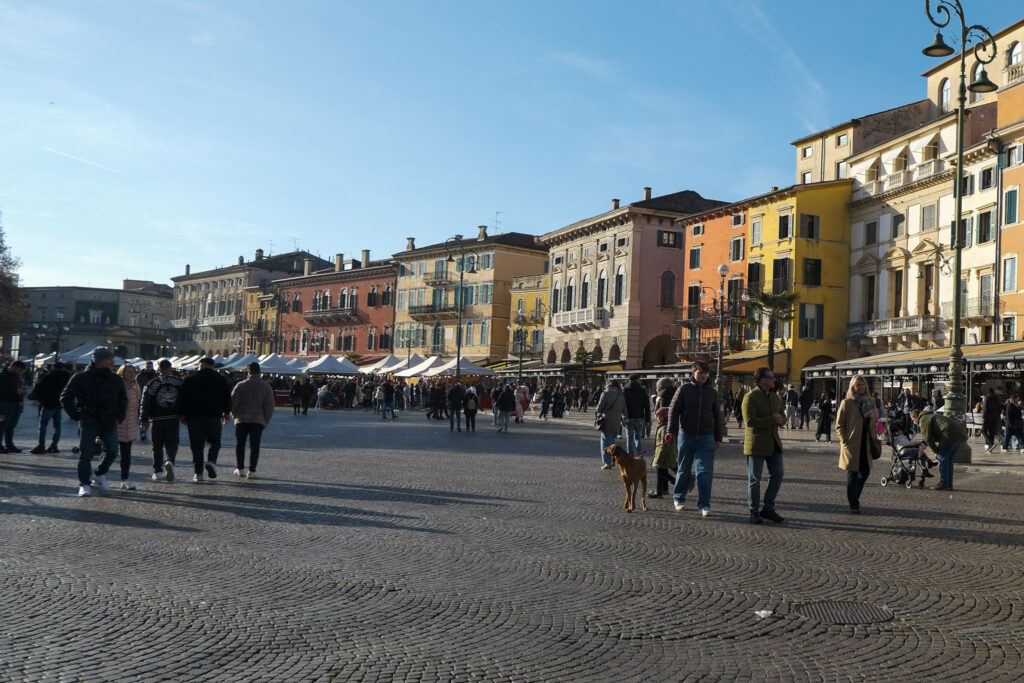
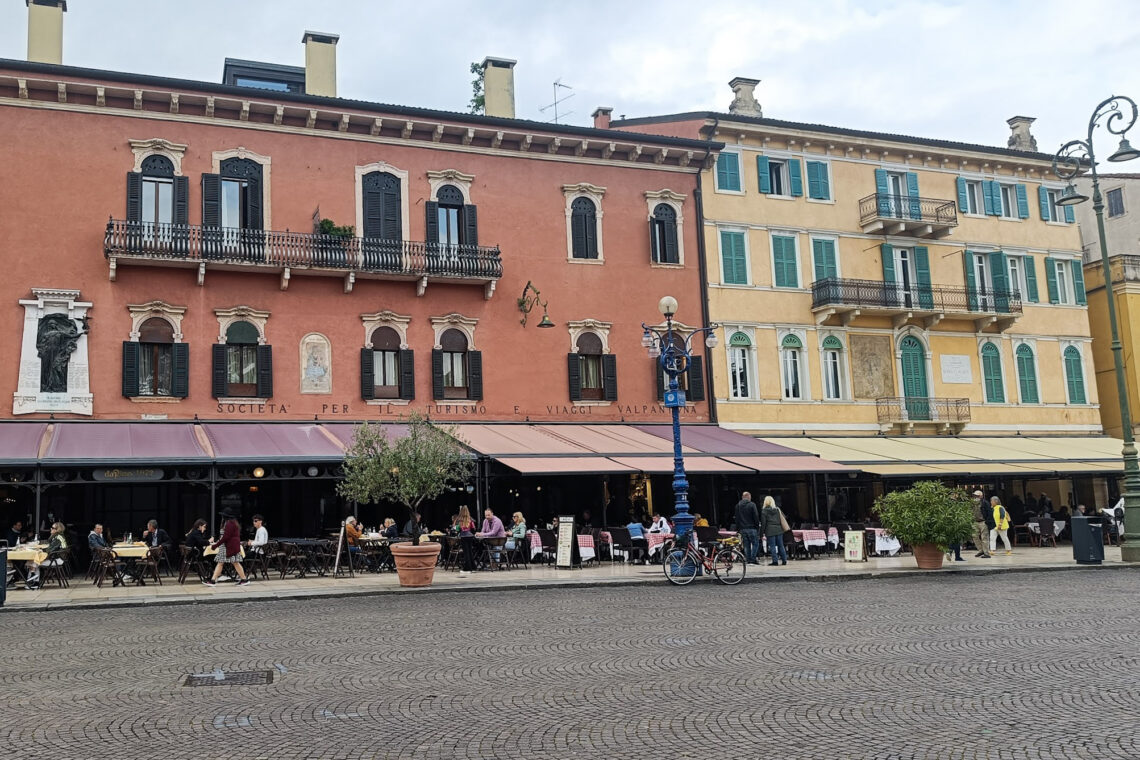
Once you’ve gotten into the city, you’re going to start at Piazza Bra. This is Verona’s biggest public square. Here, you’ll find a bunch of cafes and restaurants, with seating right out on the square, regardless of the weather. This is the best starting point for one day in Verona, and I’m going to take you through the morning, afternoon, and evening.
The Morning
Caffeine Boost
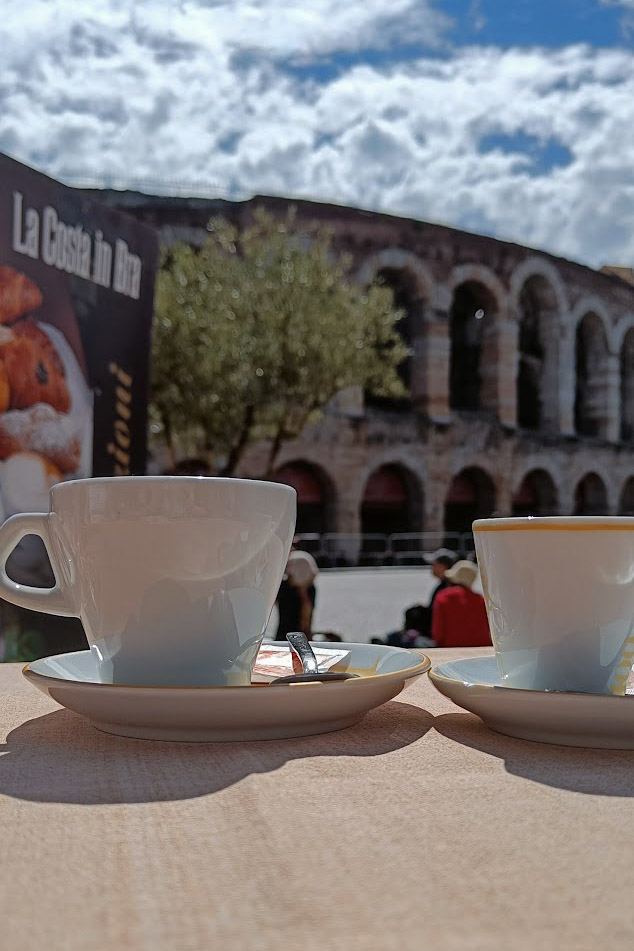
Once the bus drops you at Piazza Bra, you’ll immediately be faced with the Verona Arena.
If you’re feeling bleary eyed from your travels, you’ve got two choices.
You can lean into the tourist experience and sit at one of the cafes lining the square. Yes, it’s far more expensive than a standing espresso on a side street, and you are paying a “view tax” to sit in the shadow of the Arena. However, sitting on the marble paved sidewalk while looking up at a 1st century Roman amphitheatre is one of the few times I can say the tourist tax feels worth it. I can justify the price hike for a coffee, but I’d draw the line there. Skip the food, as you’ll find much higher quality for half the price just a few streets away.
Alternatively, if you want to skip the high prices of the Piazza Bra cafe, there’s a small coffee shop called Caffetteria Bar Cinque Stelle on a street parallel to the piazza.
Or there’s my favourite option, hitting up a supermarket. There’s a Pam grocery store a 4 minute walk from Piazza Bra, on Via dei Mutilati. Grab a drink, a snack, and head back to sit for a moment in the gardens on Piazza Bra. You’ll still get a view of the Arena, but for a much lower price tag.
The Arena
Note: If you do not have the Verona Card, you will almost certainly need to book this experience in advance.
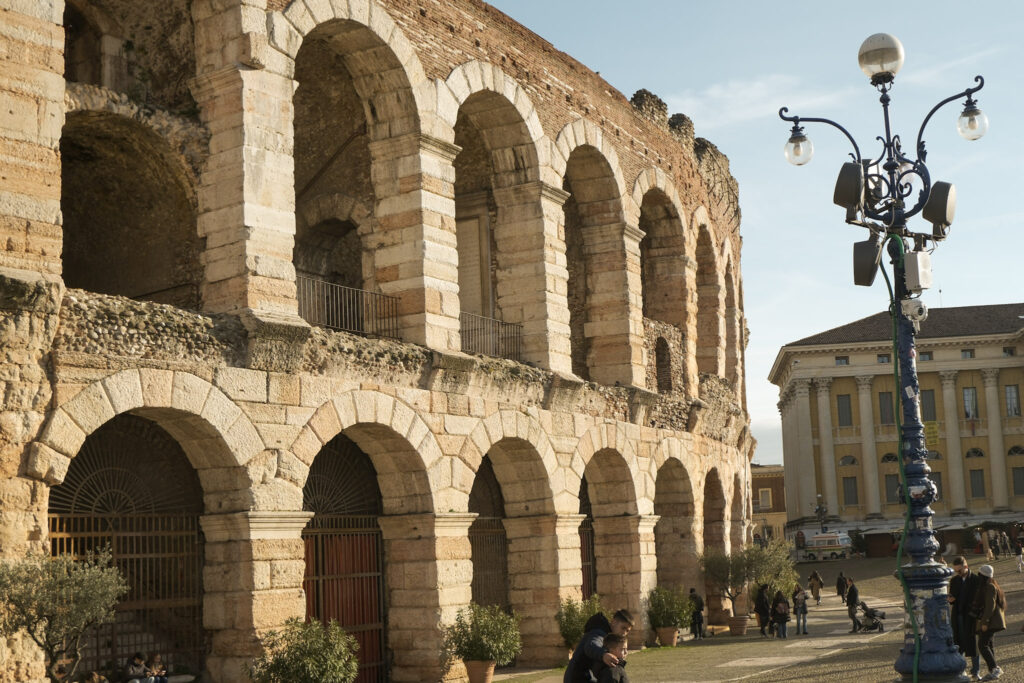
Once you’re suitably perked up and ready to take on the day, your first port of call is going to be the Verona Arena. If you’ve bought the Verona Card, you’ll get priority entry at gate 5, allowing you to skip the line. If you did not buy the card, then you’ll need to buy a ticket. These can book out, so it’s advisable to book it in advance.
However, a word of warning: Booking online incurs a €6 service charge per booking. An adult ticket is €12, so once you add in the service charge, you’re looking at €18 if you’re travelling solo. Given that the Verona card is only another €9 for the day, if you’re planning on visiting even one other attraction (such as Juliet’s balcony or Castelvecchio), it will be cheaper for you to get the Verona Card.
Inside the Arena
Once you’ve got the maths and the ticket prices out of the way, you can get on with actually visiting the Arena. The Arena of Verona is one of the most impressive pieces of Roman engineering left in Italy.
Built in the 1st Century, it’s actually older than the Colosseum in Rome. It was designed to hold 30,000 spectators, and like its Roman cousin, it’s got a violent history of gladiators, animals, and bloodshed.
In the upper tiers of the Arena, the stone is a distinct white and pink marble. This is Veronese marble, quarried in the local Valpolicella hills. Much of the outer wing of the area was destroyed by an earthquake in 1117, leaving only a small section of the original external wall.
The Romans were famous for mastering acoustics. Today, the Arena is host to an annual opera festival every summer. Because of the design of the arena, you can hear a singer on stage from the highest tier without any extra amplification. If you’re a music fan visiting during the summer, why not see if you can grab tickets to an opera?
Castelvecchio
Once you’ve finished taking in all the history of the Arena, it’s time to move from the Roman era to the medieval. Coming out of the Arena, it’s a ten minute walk along via Roma. It’s a straightforward walk, leading you straight to the imposing red brick walls of Castelvecchio.
Back in the middle ages, Verona was ruled over by the Scaligeri family and you’ll see their stamps on history all over the city. Their most important construction was Castelvecchio, which was built between 1345 and 1376. The castle’s bridge across the Adige River was built to allow the family to escape north to Tyrol in the event of an attack or rebellion.
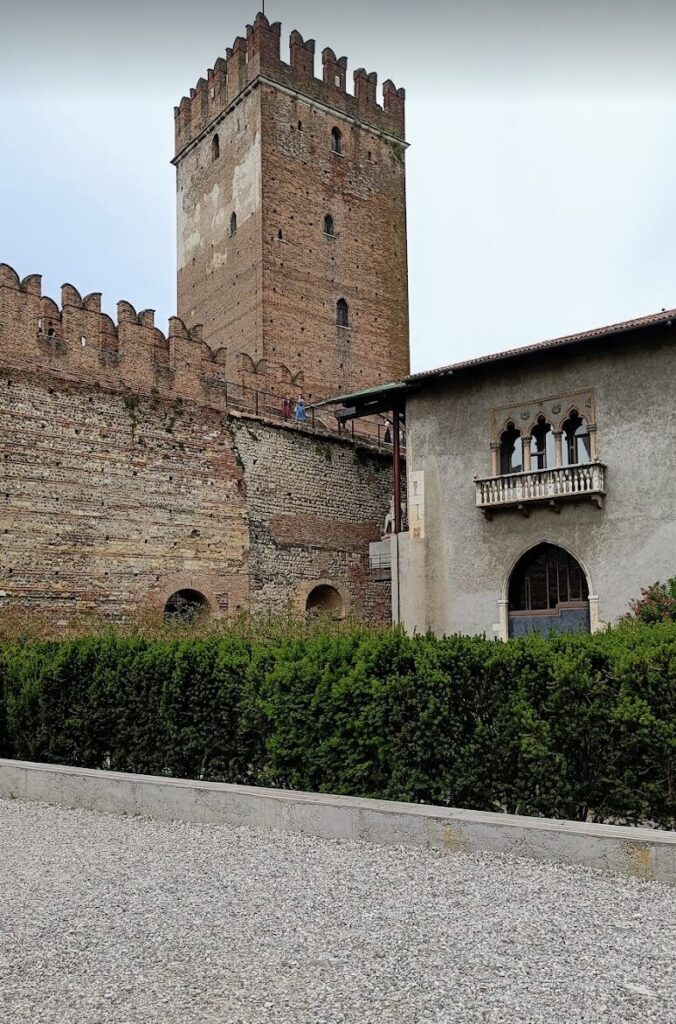
Today, Castelvecchio houses the Castelvecchio Museum, which is the next stop for your One day in Verona Itinerary. The museum entry is included with your Verona Card, or €9 for an adult ticket without it.
Inside the museum, you’ll find a collection of sculpture, paintings, weapons, ceramics and other artworks and treasures. Back in 2015, seventeen Old Master paintings from the museum’s collection were stolen in an armed robbery. They were recovered about 6 months later by Ukrainian border guards near Odessa, and returned to the museum in Verona. Today, you can see those paintings hanging in the Castelvecchio.
If you’re not into art, the castle’s garden is beautiful to walk around. And, if you want a different view, you can walk up to the ramparts of the castle. Walking along the fortified walls, you’ll get a great view out over the Adige river and the Castelvecchio Bridge.
All of these outdoor spaces are free and open to the public, it’s only the museum that you’ll need a ticket for.
Lunch
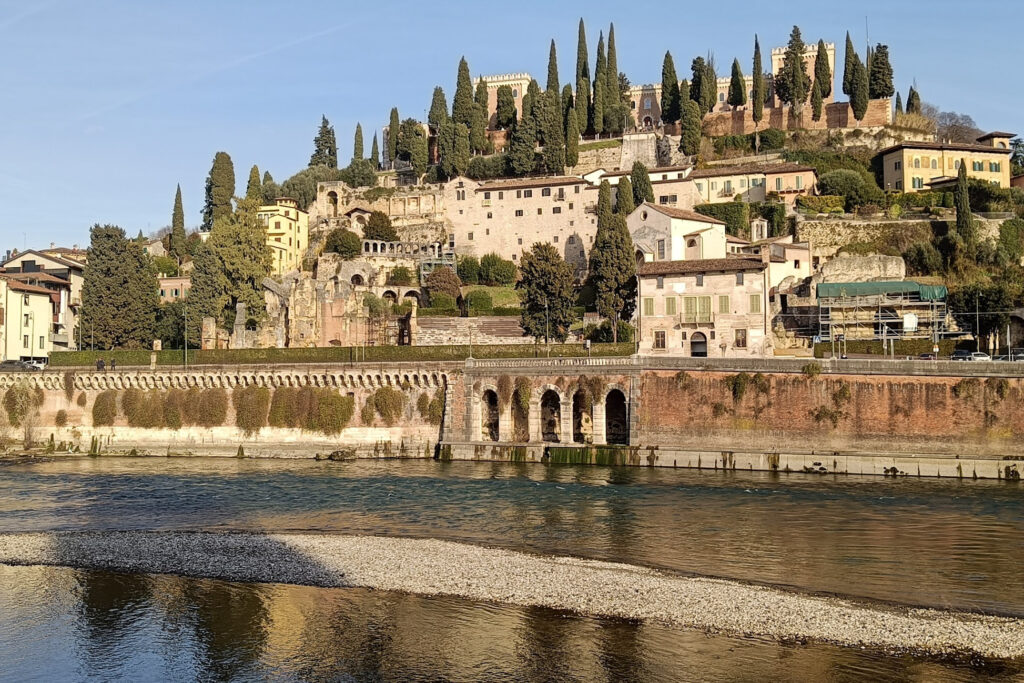
After a morning of gladiatorial arenas and medieval castles, you’ve earned a break. The city is full of great restaurants, but if it’s a clear day, my advice is to skip the table service and head to the river for a picnic.
To get to the best lunch spots, you need to head toward the Ponte Pietra area, where the Adige river loops around the historic centre of the city.
To get there, you’ve got a couple of options:
- The Bus
- There is a bus, the 91, which will take you between both points in 14 minutes. However, the route the bus takes is a big old loop outside of the city. It’s quicker than walking, but it doesn’t feel like the best use of time.
- The Walk (recommended)
- The walk from Castelvecchio to where I want to take you next is about 20 minutes, but it’s worth it. If you’re not too hungry yet, you can follow the roads on the river-side of the city, with a view most of the way round. Otherwise, the most direct route will take you down the main shopping street of Corso Cavour, and through Piazza Erbe.
My advice? Don’t take too long to get sucked into the shops or the market stalls yet – we’ll be back here later when the crowds thin out and the light turns golden.
- The walk from Castelvecchio to where I want to take you next is about 20 minutes, but it’s worth it. If you’re not too hungry yet, you can follow the roads on the river-side of the city, with a view most of the way round. Otherwise, the most direct route will take you down the main shopping street of Corso Cavour, and through Piazza Erbe.
The Focaccia Feast
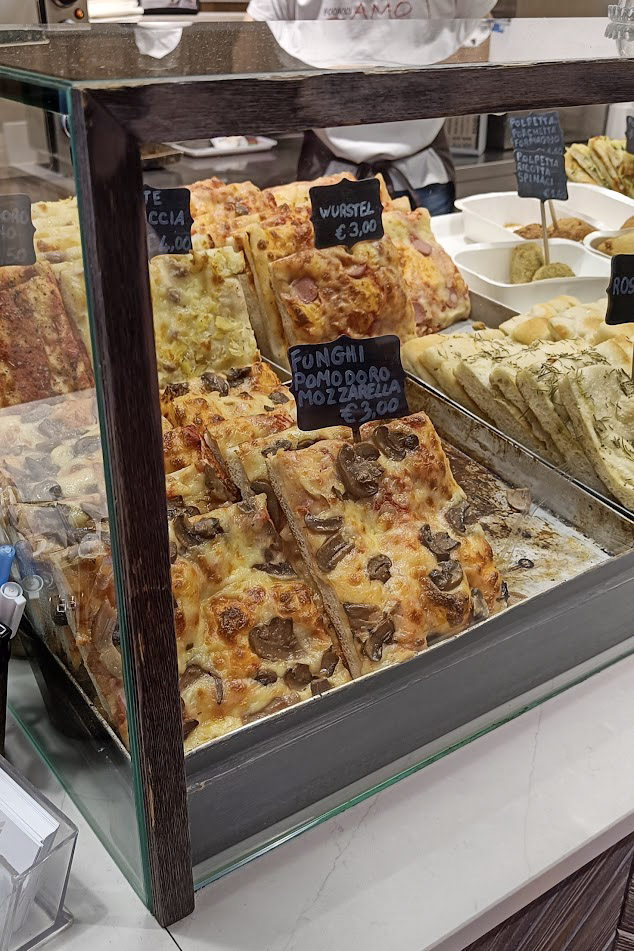
Once you’ve reached Ponte Pietra, you’re steps away from the whole reason I suggested this area in the first place: the focaccia.
Along via Ponte Pietra, you’ll find the small, unassuming shop of Focacceria Genovese. Sure, we’re in Verona, not Genoa, but the focaccia is freshly baked and comes with more toppings and varieties than you can imagine.
Inside the shop, you’ll see a counter stacked with trays of focaccia. Get in the queue, and be ready to order by the time you get to the top – it moves fast.
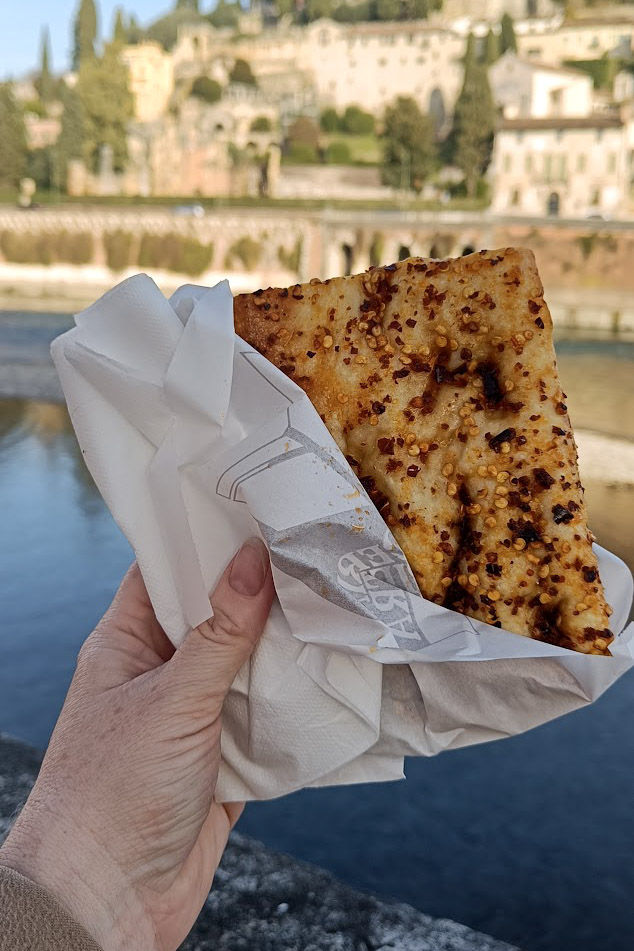
My recommendation: I recommend at least one piece per person. My personal favourite is the onion-topped focaccia. If they ask if you want it heated, always say yes.
A personal tradition: The last time I was in Verona was in December of 2025. My brother and I were stopping over from Bolzano with a few hours to kill before our flight from Verona airport. He’d never seen Verona before, and the very first place I took him was this focaccia shop.
It was a cold, crisp day, and we sat on a bench overlooking the Castel San Pietro across the river, warm focaccia in our hands. My husband, who was back in London, had requested I bring a slice of the onion focaccia home that evening. We’d been to the shop together on a previous trip, and he loved it just as much as I did. I managed to grab the very last piece in the shop.
Building the Perfect Picnic
If you want to turn your focaccia snack into a full on feast, don’t tuck in just yet. Further up via Ponte Pietra, you’ll find Salumeria Gironda. This is a deli selling things like meats, cheeses, olives, spreads and mini bottles of wine. They’ve got a terrace out the back overlooking the river, where you can stand around high tables to eat the snacks you picked up. You’ll need to ask them if they’ll allow you to eat the focaccia alongside the goods you’ve purchased in-store, or just take the whole lot to go.
Still on the same street is Grif Forneria, a small bakery with a takeaway counter. They sell slices of pizza, but if you’ve already got focaccia, then the real stars are going to be arancini or panzerotti (basically a small, deep fried calzone).
Once you’ve loaded up your bag with everything your heart desires, you’ll need to find a spot for your picnic. Walking back down Via Ponte Pietra, past the focaccia shop, there’s a line of benches facing the river.
Or, you could cross the river over the Ponte Pietra itself and head up to Castel San Pietro. It’s a bit of an uphill walk, but you’ll get great views out over the old town of Verona. There aren’t as many benches here, but towards the top there’s a wide wall you’ll see plenty of people perching on.
If you want to skip the picnic
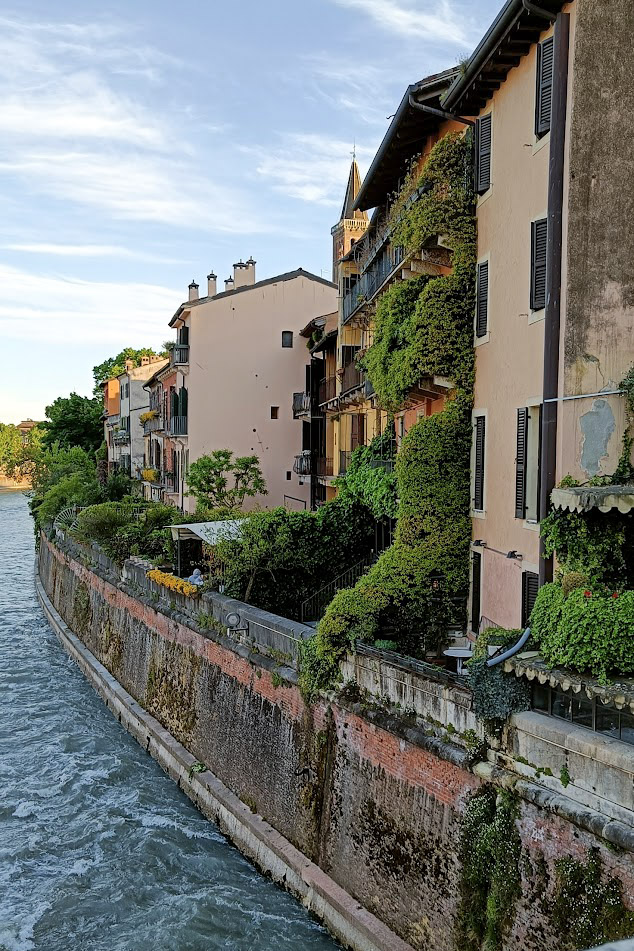
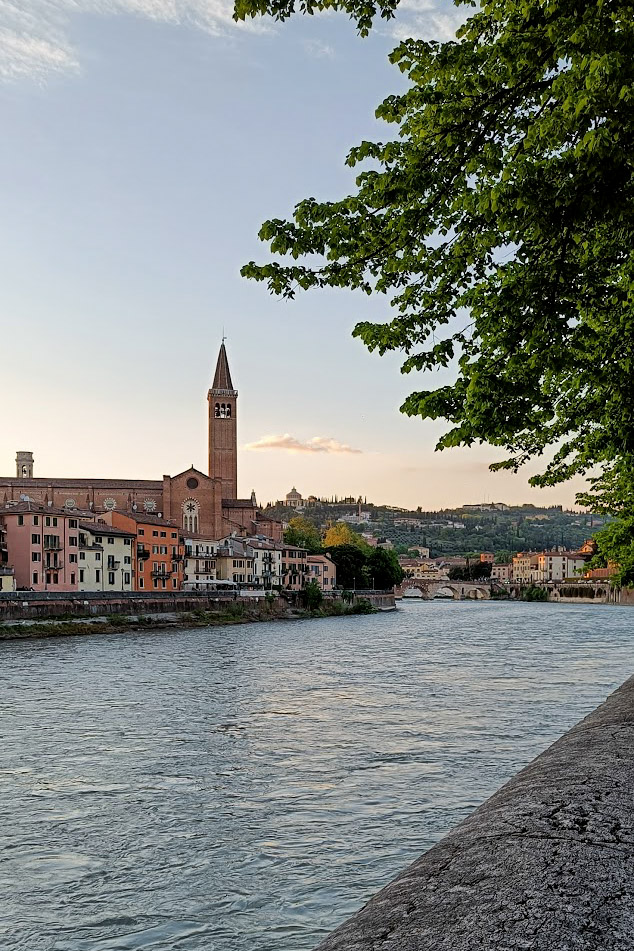
If the weather is lousy, or you’d rather a restaurant for lunch, there are plenty of restaurants and cafes around the Ponte Pietra area. You’ll pass a bunch of them even just going to the places I’ve already recommended. Terrazza Bar al Ponte has a lovely terrace out on the river, which is covered by umbrellas if it’s too hot. Alternatively, Osteria Ponte Pietra Ristorante is a grand looking, traditional restaurant that has both on-river terrace seating and indoor seating.
While I’m still a massive advocate for the picnic lunch, any of the options that give you lunch with a view of river is going to be a winner.
Afternoon
Once you’ve had a good, long lunch (maybe even with a wee Aperol spritz because you deserve it), it’s time to get back out to make the most of your one day in Verona. Regardless of whether you had lunch in a cafe along Via Ponte Pietra, or took your haul up to the Castel San Pietro, you’ll be right by the Roman Theatre.
The Roman Theatre
If you’re a bit history-weary after the morning, I totally get it, but if you’ve got the energy and time, this will be the last ancient site you’ll visit today. The Roman Theatre was built before the Verona Arena, around 1st Century BCE. Over time, houses and churches were built over its remains, and the theatre lay forgotten until it was rediscovered and excavated in 1851.
In the summer, the theatre hosts the Veronese Theatre Festival. Year round, it’s got the Archaeological Museum where you can see objects donated to the museum and artefacts found at the site during the excavation.
As with most other historical sites in Verona, entrance is included with the Verona Card. Without it, tickets are €9 per adult.
Juliet’s Balcony
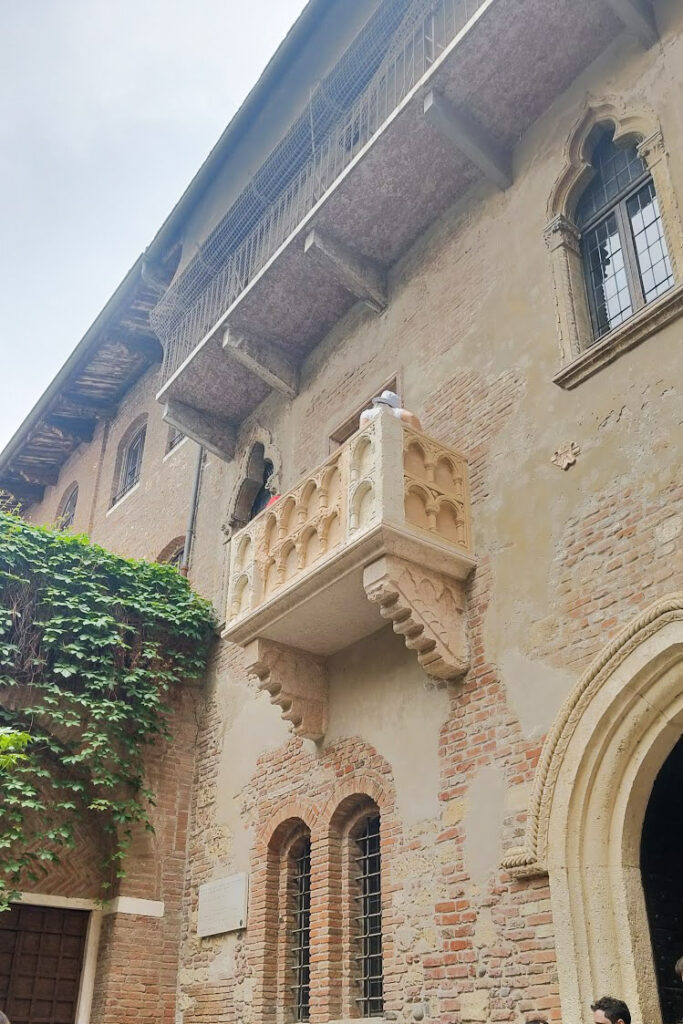
Once you’ve had your fill of the Romans, it’s time to return to fair Verona, where we lay our scene.
Even if you only have one day in Verona, you can’t visit the city and not even get a peek at Juliet’s balcony.
Normally, visitors can wander into the courtyard without tickets. There, you can see the balcony, and the Juliet statue (which creepily, has a very shiny breast from years of people rubbing it. She was 14, dirtbirds).
When I stopped by in December, they’d stopped letting people enter the courtyard without a ticket. This is something the city does on occasion during holiday periods for crowd control, so if you’re visiting during peak season, it’s worth checking in advance.
But guess what I’m going to say next? Yep, it’s included in the Verona Card. Honestly, at this point, the card is just short of having a Veronese family adopt you.
With the card, or a €12 ticket, you’ll still need to book an entry time if you’re planning on visiting the museum. It’s the most popular tourist spot in Verona, so the slots go quickly, and its important to show up on time for yours.
The museum is in a building that was once the home of the Cappello family (where our pal Shakespeare got the name “Capulet”). Inside the museum, you’ll find artworks, props from films, as well as being able to step out onto the famous balcony. The balcony itself might have only been added around 1940, but it was made using marble remains from the 14th century!
Evening
Piazza delle Erbe
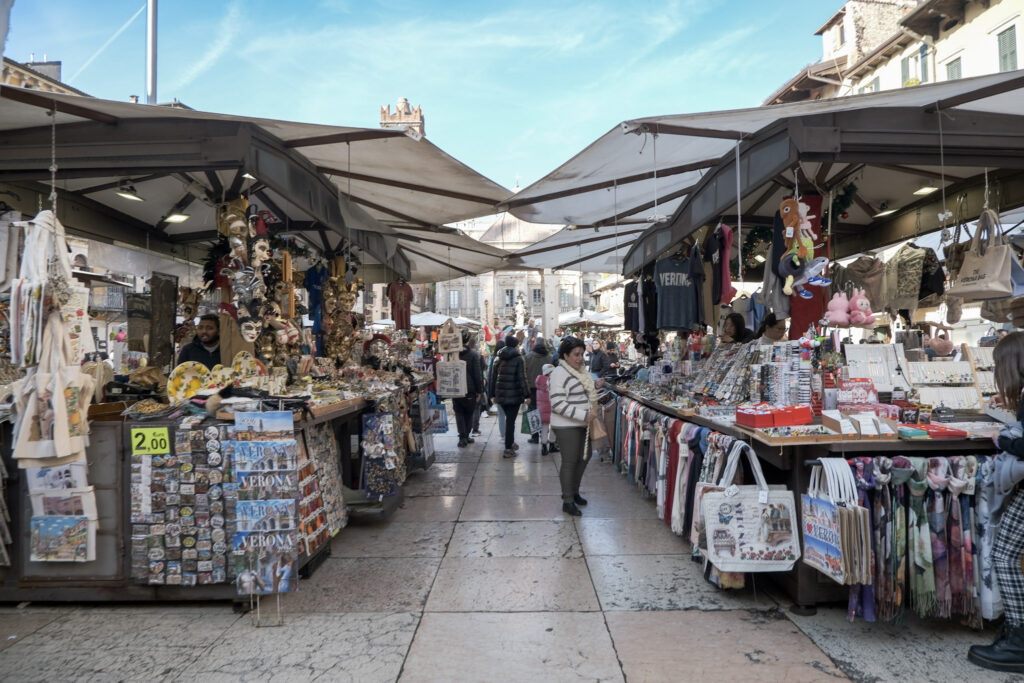
I promised you earlier that you’d get a chance to return to Piazza delle Erbe, and now’s the time for it. Once you’ve finished up in Juliet’s house, you’re steps away from Verona’s oldest piazza. Piazza delle Erbe (or sometimes simplified to Piazza Erbe) was once the Roman Forum of Verona, and it’s still very much the heart of the city.
In the piazza, you’ll find a daily market selling souvenirs, food, clothes, flowers, and other local products. In the centre of the piazza is a fountain with a statue of the Madonna Verona. The statue was commissioned by one of the Scaglieri family (told you those guys were influential), and it’s supposed to signify the beauty and pride of Verona.
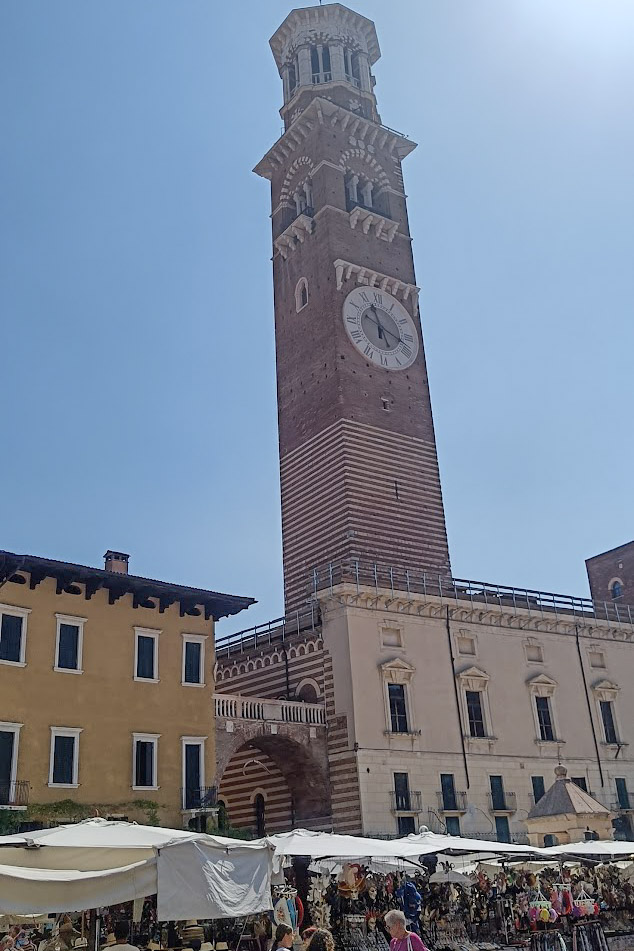
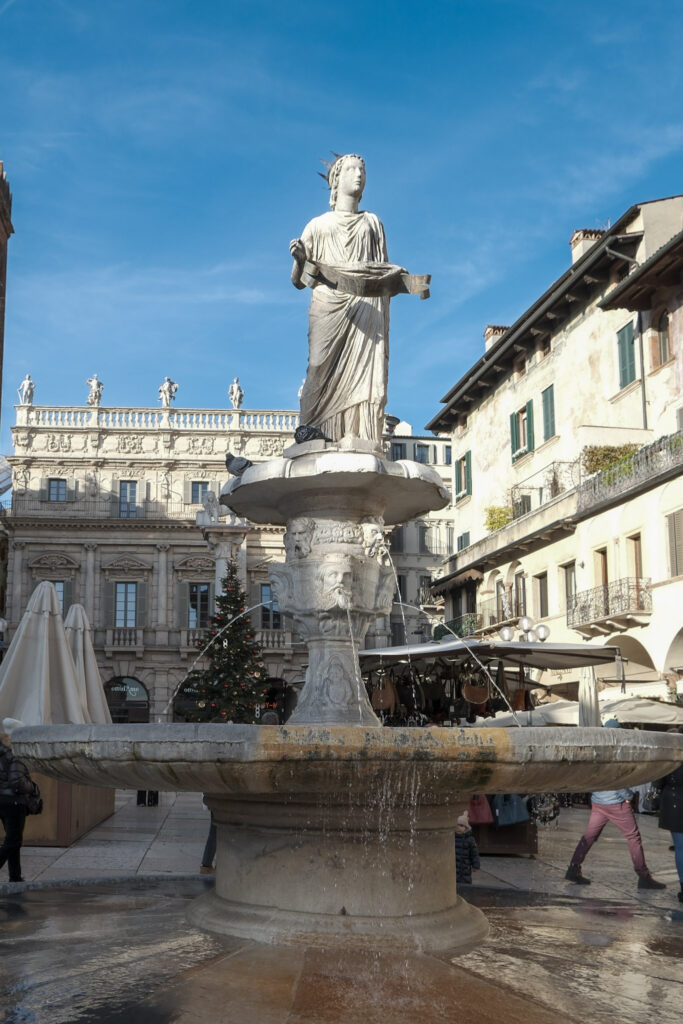
Usually, the market runs until 6pm. Some stalls, like those selling fresh produce, may finish up earlier. However, if you just want to browse the souvenirs and gifts, you should still have plenty of time at this point in the day. And, being brutally honest, a lot of what you’ll see on the stalls is going to be the usual tourist tat you can find anywhere.
While you’re wandering around the square, keep an eye out for the whale bone. Going from Piazza delle Erbe to the adjacent Piazza dei Signori, you’ll pass under Arco della Costa. Hanging from the arch is a big, curved bone that’s been there since at least the 1700. Local legend says that the whale bone will fall on the first person to walk under it who has never told a lie.
Around the square are plenty of bars and restaurants. If you’ve got the time, you can stop here for an aperitivo, although like with the coffee earlier at Piazza Bra, you’re going to pay a “tourist tax” because of the location.
The Marble Promenade: Via Giuseppe Mazzini
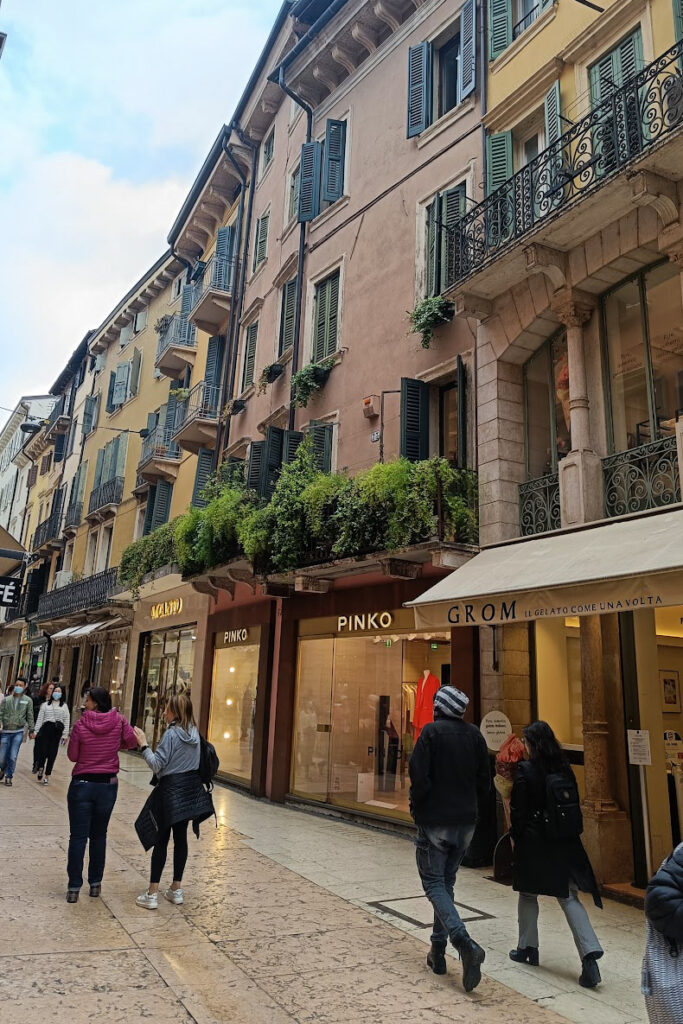
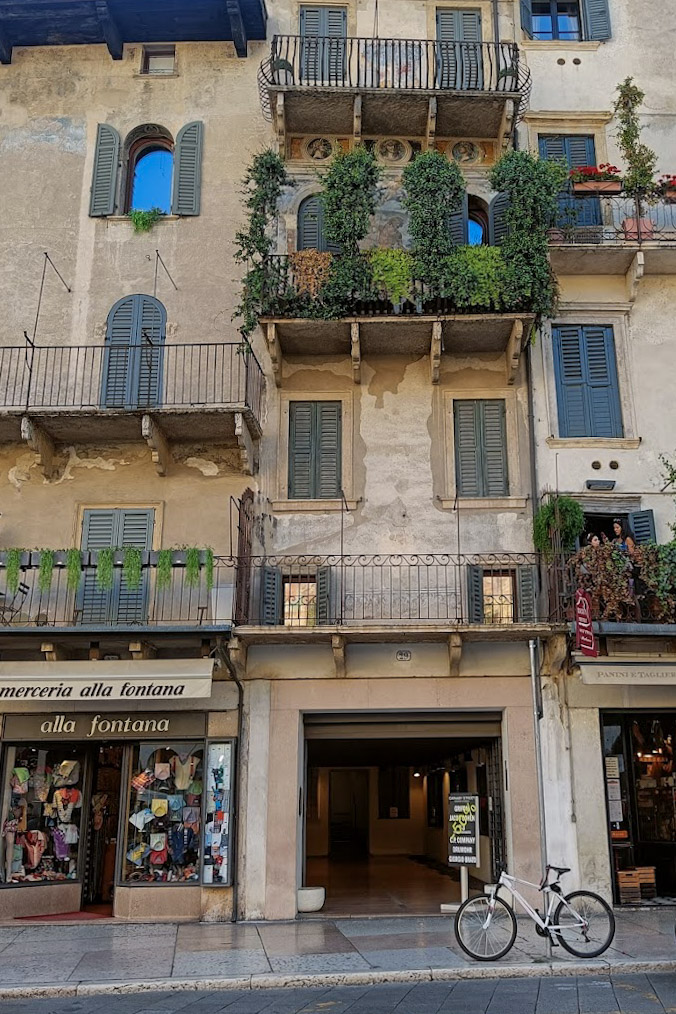
Instead of stopping in Piazza delle Erbe, my vote is to take a wander down Via Giuseppe Mazzini. You may have already come down this street on your way to the focacceria earlier on. It’s one of Verona’s most elegant streets, lined with high end boutiques.
It’s fully pedestrianised, and paved with the same pink and white Veronese marble you’ll have seen at the Arena and Juliet’s balcony.
This street is Verona’s premier shopping street, and it connects Piazza delle Erbe back to Piazza Bra, where you started your day. As you’re here in the evening, you’ll get to witness the Italian passeggiata in action – the traditional evening stroll.
Take your time wandering down this street, nobody else is in a rush either. This is your last stroll through the streets of Verona before the sun starts to set and I bring you to our last stop.
Tip: While the marble street is beautiful, it gets slippery in the rain. There are grates, and it’s designed to drain the water, but if it’s a wet day, skip the high heels.
The Grand Finale
You’ve checked out the Roman ruins, conquered the castle, seen Juliet’s balcony (and hopefully didn’t grope her in the process), as well as having some of the best focaccia in the city. Now it’s time for your reward, and I’m leaving you at one of my favourite places in Verona.
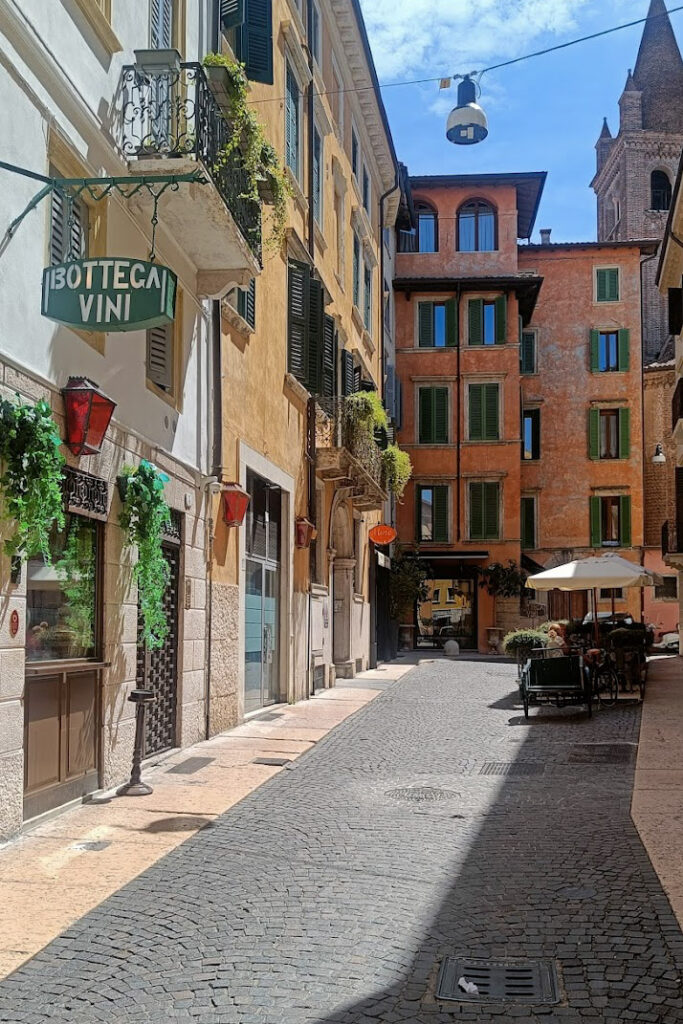
Tucked away off Via Giuseppe Mazzini, you’ll find Antica Bottega del Vino. This wine bar and restaurant is a Verona institution, and has history that goes back to the 16th Century (almost as old as Castelvecchio!).
Inside, it’s still got the look of a tavern from the 1800s, and it’s cosy, charming and an absolutely perfect way to end your day. Sitting inside gives you all the old world charm, with wood fixtures, and a dark, cosy atmosphere. Sitting outside gives you plenty of people watching opportunities. Both options are the right choice.
If you’ve got longer than a day in Verona, I’d highly recommend taking a half-day trip out to Valpolicella and seeing where the wine is actually made.
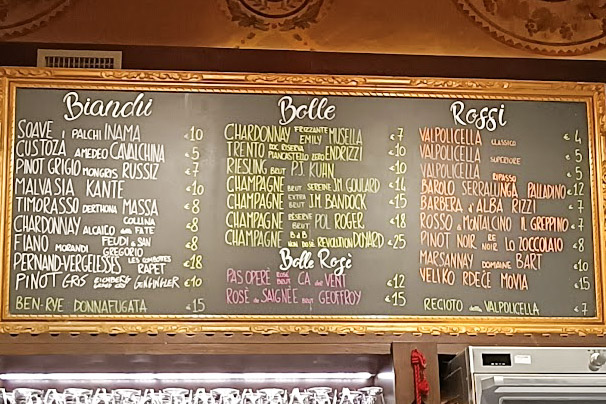
On the menu is a truly impressive wine list, but if you want something local, my recommendations are:
- Amarone
- The local heavyweight. It’s rich, intense, and it makes me endlessly sad that it’s not sold at Italy prices in London.
- Valpolicella Ripasso
- A red wine that’s like the little sister to Amarone. It’s more budget-friendly than the big hitter of Amarone, but more special than Valpolicella Classico.
- Soave
- If you’re a white wine person, go for Soave. You’re just kilometres away from the Soave region, and the wine is local, fresh and very affordable.
Dinner Plans
If you’ve got time to stay in Verona for dinner, Antica Bottega del Vino also serves food, or you may have seen somewhere on your travels today.
This is always the point on itineraries where I’ll leave you, for two reasons: One, I’m vegan. Any recommendations I have for dinner (La Lanterna in Verona) are going to be quite specific to a smaller number of people, and I’ve written a separate vegan in Verona post here.
And two, I think picking a dinner place is part of the adventure of the day. As you’ve spent the day on foot getting to know the city, it’s almost impossible that you didn’t walk by somewhere and think “ooh that looks good for later”. The best meals I’ve ever had have been in places I didn’t plan in advance, so I want to leave this open to you.
If you’re looking for local specialities though, Amarone Risotto is a Veronese dish, and you’ll find it in many restaurants.
Tips for Visiting Verona
Where to Stay in Verona
I’ve written a separate post about the neighbourhoods around the city, and my top picks for each place. If you’re thinking of a longer trip, or you’re visiting Verona for the second time, then I’d give it a read through to get some ideas of places you may not have thought of.
However, if you only have one day in Verona, my best advice is to stay in the Centro Storico, the heart of the city. These are my top 3 picks:
- The Boutique Hotel: Hotel Gabbia D’Oro
- The Mid-Range Central Spot: Hotel Aurora
- The Historical Luxe Option: Hotel Due Torri
The Verona Card: Is it actually worth it?
If you follow this itinerary, absolutely yes. Even if you’ve only got one day in Verona, having the 24 hour card works out far cheaper than paying entry to each of the places I’ve listed. Between the Arena, Castelvecchio and the Roman Theatre, you’ve already hit €36 in value for a €27 card, and that’s before we even factor in the cost of visiting Juliet’s House.
Plus, it also covers your bus fare from Porta Nuova station.
If you want to buy the card, find the tabacchi in the train station as soon as you arrive, and buy it there. You’ll be able to spot it by the sign marked with a T outside it.
If you’re planning on using this guide for inspiration, but you only want to visit one main tourist site during your day in Verona, then the card probably isn’t worth it.
Best Time to Visit Verona
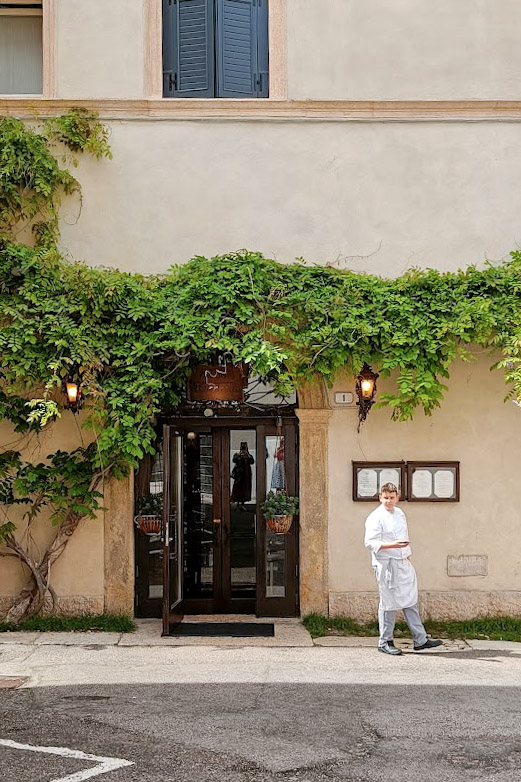
Verona is a city that’s wonderful year round. In the late spring and summer, the weather is sunny and warm – perfect for picnics and wandering the streets of the old city.
However, in winter, even though the weather drops, it’s still typically clear and dry. You’ll need a coat, and you may want to break up your day with museum visits where you can spend time indoors. During December, there’s a Christmas market in Piazza dei Signori, as well as market stalls in Piazza Bra.
Staying Hydrated
You don’t need to keep buying plastic bottles of water. Verona has a bunch of fontanelle (small drinking fountains) with fresh, cold, drinkable water. The water is safe to drink, free and colder than anything you’ll buy in the shop.
Bring a reusable water bottle with you. I swear by my Chilly’s one and recommend it if you don’t already own an insulated water bottle, otherwise just use whatever you’ve got at home!
Staying Connected
Connectivity in Verona is generally pretty good, and many places you visit will have guest wifi. However, the winding streets of the old town can mess with your GPS. Download the Verona area on Google Maps before you leave the house/hotel. It’ll save your battery and make it easier for you to get around.
If your mobile phone carrier does data roaming, it may be just as easy and cheap for you to use that abroad, depending on how long you’re abroad. For example, my phone network charges me £2 per day to use my data abroad. If I’m away for longer than two days, it works out cheaper for me to buy an Airalo e-sim.
Language and Currency
Most people you’ll meet in Verona’s service industry speak excellent English, but a “buongiorno” and a “grazie” goes a long way.
If someone speaks to you in Italian, don’t be that tourist that launches into rapid-fire English. It’s polite to first ask them if they speak the language: “Scusi, parla inglese?”.
The currency in Verona, like all of Italy, is the Euro. Tipping is not expected or mandatory, but if you’ve had good service, you can round your bill up (eg. €32 rounded up to €35), and if you’re paying in cash, always tip in the local currency.
Cards are accepted in many places, but it’s always wise to have a little cash for market stalls or an espresso shot here and there.
Final Thoughts & What Else to See
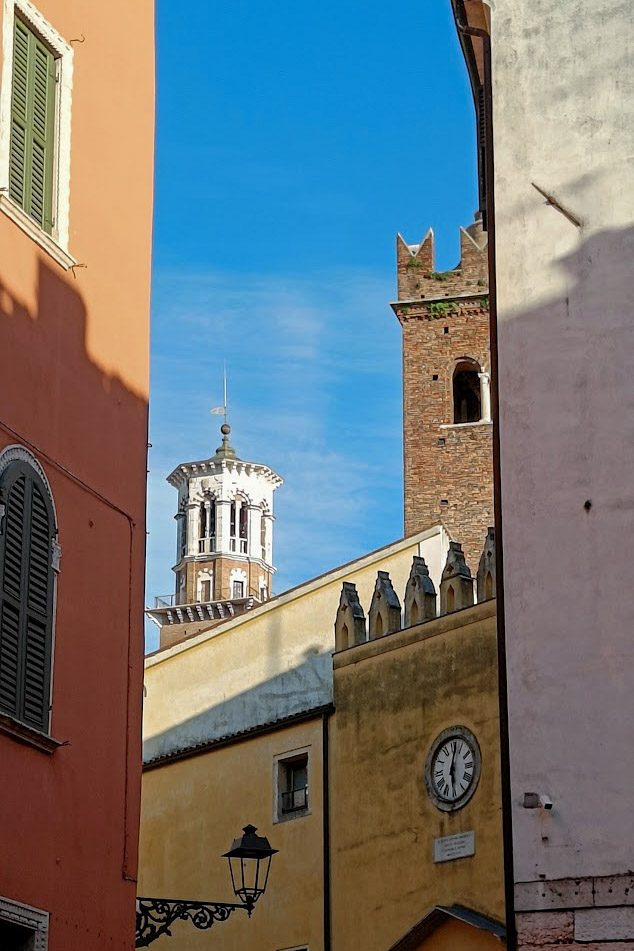
While one day in Verona might not feel like a lot of time, it’s enough to get a feel for the flavour and history of the city. Sure, you’re going to feel rushed trying to get around everything. I’ve laid out the main highlights in this post to give you ideas, but in reality, if you try and do every single one, you’re going to be pretty wiped by the end of the day.
Give yourself some grace if you can’t get around everything. The best parts of any trip are the things you didn’t plan for. Maybe you find yourself completely engrossed in Castelvecchio’s museum and you need to skip Juliet’s House. Or, you spend too long chatting over focaccia and need to skip the Roman Theatre.
My husband once told me that he much prefers to leave a place wishing he’d had more time there than feeling like he got through everything too quick. It’s a stance I take with me into all my trips now. Figure out what are your absolute must-sees, and if you can’t get to everything, well you’ll just have to book another trip.
Looking for more to do on your Verona trip?
If you’re staying in Verona for longer than a day, then you’re in the perfect position to explore more of the Veneto region: