
Bolzano Travel Guide: Italy’s Gorgeous Alpine City
When most people plan a trip to Italy, usually the big name cities make it onto the itinerary: Rome, Venice, Milan, Florence. And for good reason, each one is beautiful, with its own character, history and culture that makes it special. But let me introduce you to another option: Bolzano, or Bozen if you’re speaking German.
Often referred to as the gateway to the Dolomites, Bolzano sits close to the Italian border with Austria, in the north of Italy. In this post, I’ll give you a comprehensive Bolzano travel guide, helping you plan your own trip to this beautiful part of the world.
Bolzano: The City of two Cultures
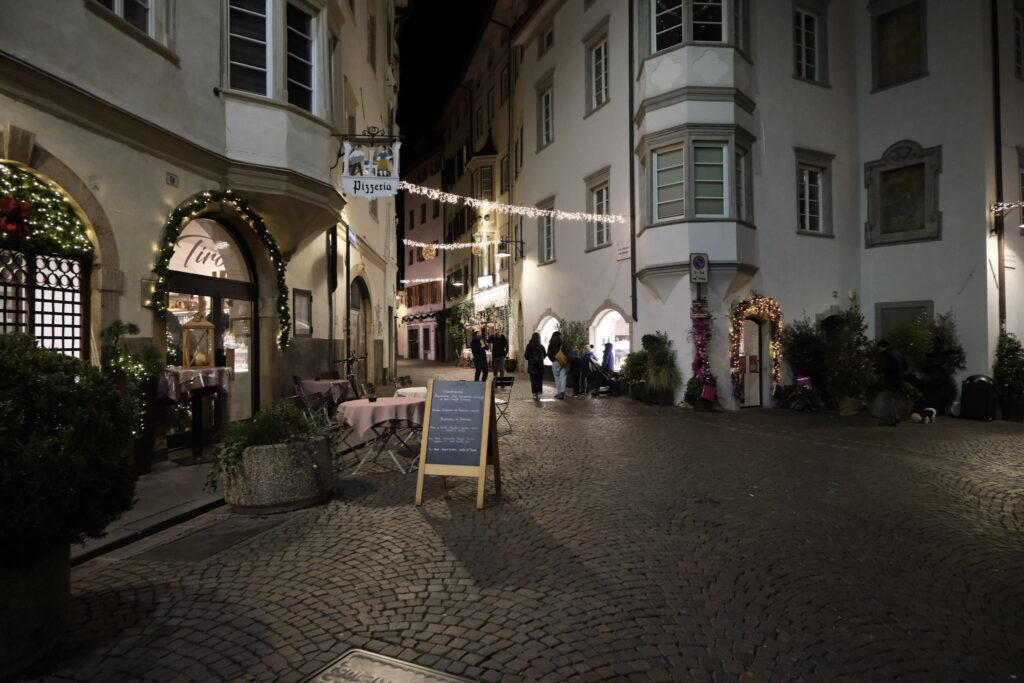
Bolzano, also known as Bozen to German speakers, is the capital city of South Tyrol, a province of Northern Italy. Both the city and province are officially bilingual, with Italian and German appearing together on street signs, train station signage, menus and many other places.
But What is Tyrol?
“Tyrol” is a word you’ll see a lot around these parts, and the easiest way to explain it is to think of it as a large, historic alpine region that’s existed long before present day or recent history land borders were drawn. For centuries, Tyrol was the heart of the Alps, with its own distinct culture: lederhosen, felt hats with a feather, mountain folk music and hearty, warming cusine.
At one point, it was part of the Austro-Hungarian Empire, but after World War I, the empire collapsed and the map was redrawn. The northern part (North Tyrol) stayed with Austria, but the southern part (South Tyrol, where Bolzano is) became part of Italy, following Italy’s annexation of the region.
Why is it Bilingual?
The transition of South Tyrol to become part of Italy wasn’t smooth sailing. From the 1920s, Mussolini enforced an intense “Italianisation” programme.
As part of this programme, the German language was banned from schools and newspapers, Italians from the south were moved north in an attempt to outnumber the German speaking population, and surnames were forcibly translated from German to Italian. For example, names like Weiss became Bianchi, Gruber became Della Fossa, or Brunner to Fontanella.
However, this Italianisation didn’t work. Locals set up illegal catacomb schools to teach children the German language and keep their local culture alive.
Eventually, after decades of tension, Italy granted the region “Autonomous” status. Today, the province keeps almost all of its own tax money, and both German and Italian are recognised as official languages.
Growing up in Ireland, I can fully appreciate the cultural implications around a loss of language and identity (there’s a reason I’m writing this post to you in English), so it’s beautiful to see both languages and cultures coexisting and being celebrated in Bolzano today.
How to Save Money: The Bolzano Card
Here’s a tip for you that I wish I’d taken advantage of: The Bolzano Card.
If you take one thing away from the Bolzano travel guide, it’s getting your hands on that card.
This is a card that’s given to guests at participating establishments in the city and the surrounding area. You can’t buy the Bolzano Card yourself, but it is included in the room price if you’re staying in an eligible accommodation.
With the card, you get all of this for free:
- Public transport in the city
- Regional and regional express trains within South Tyrol and down to Trento
- Cable car access
- Renon/Ritten light railway and funicular access
- Admission to over 90 museums and collections in South Tyrol, including the South Tyrol Museum of Archaeology, Museion, and Runkelstein Castle.
How to Get the Card
The card is given to you at check in if you’re staying in a participating guesthouse, hotel, inn or campsite. Some Airbnbs may offer it if they’re registered as a guesthouse, and you’ll see it mentioned on their listing if this is the case. If you know you’re going to make use of the card, I’d recommend prioritising accommodation that includes it. Some options are:
- Goldstern Townhouse
- Stadt Hotel Citta – right in the heart of the city
- Castel Hortenberg – a stunning looking 5 star hotel, if you’re feeling fancy
- Villa Anita – A pretty, budget-friendly guesthouse near the old town
Why the Card Makes a Difference
When I booked my own Bolzano stay, I booked an Airbnb as I needed kitchen access (veganism and Tyrolean food are not always the best of friends), and sadly it didn’t include the Bolzano card. This meant that I paid about €25-30 for the cable car, the castle and public transport over the course of a weekend. Having the card means you can save that for a good dinner instead!
What to Do in Bolzano
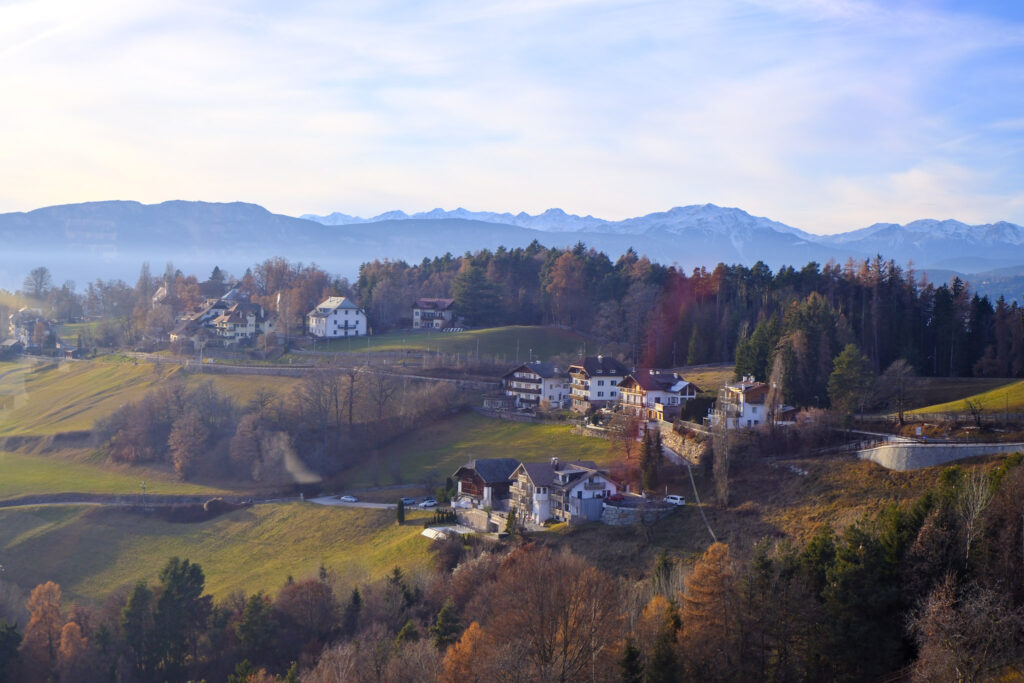
While Bolzano is small enough to explore on foot, and with the public transport available, it’s packed with enough history and culture to fill your trip. A Bolzano travel guide wouldn’t be complete without mentioning some of the highlights:
Ötzi the Iceman
A resident of the South Tyrol Museum of Archaeology, Ötzi is a 5,300 year old mummy found in a glacier in South Tyrol. Discovered by hikers in the Alps in 1991, his body and gear were incredibly well preserved in the ice, showing an insight into Copper Age European life.
At the time of his discovery, he was transported to Innsbruck in Austria for examination, but there was a dispute as to whether he belonged to Austria or Italy. Land surveys took place, with surveyors literally measuring the distance from the border. Turns out Ötzi was just 92.56m inside Italian territory, and today he’s on display in Bolzano’s Archaeology Museum.
The View from the Top: Renon Cable Car
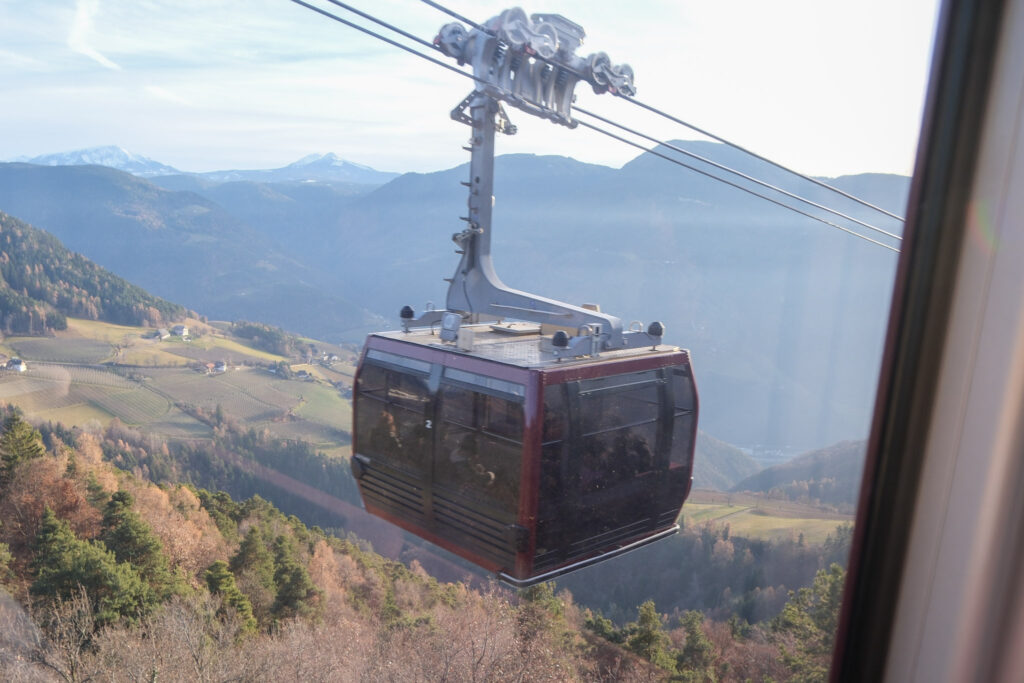
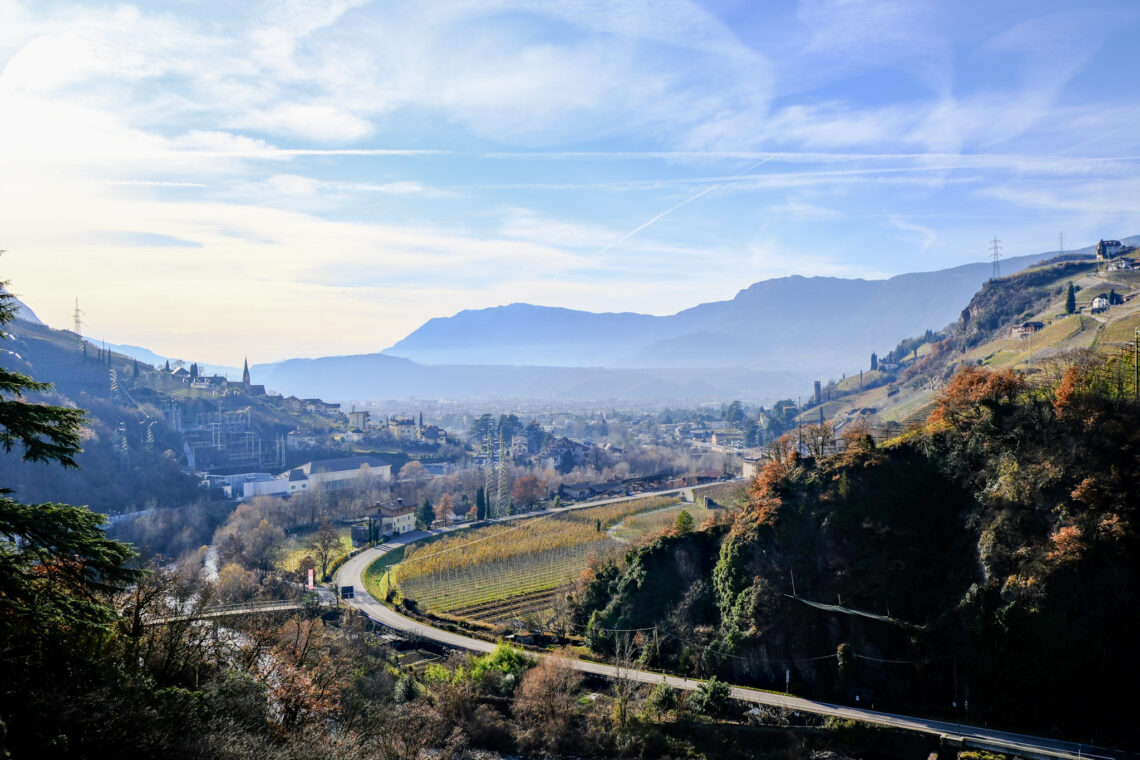
Bolzano is surrounded by the Dolomites. Every direction you look, you’ll see mountains, and it’s part of what makes the city so beautiful. However, if you’re spending time in the area, you can’t miss getting a closer look at the jagged peaks.
The Renon cable car takes 12 minutes and draws you from the city centre up to 1,200 metres. The view out over the massif and the city below is truly breathtaking. The cable car moves quickly, and you’ll have a panoramic view out over the incredible nature while the city disappears below you.
At the top, you’ll find Suprabolzano/Oberbozen, a village on the Renon plateau. From here, there’s a light railway that will take you along to other villages on the mountain top, or you can take advantage of one of the hiking routes.
Castel Roncolo: A Medieval Dream
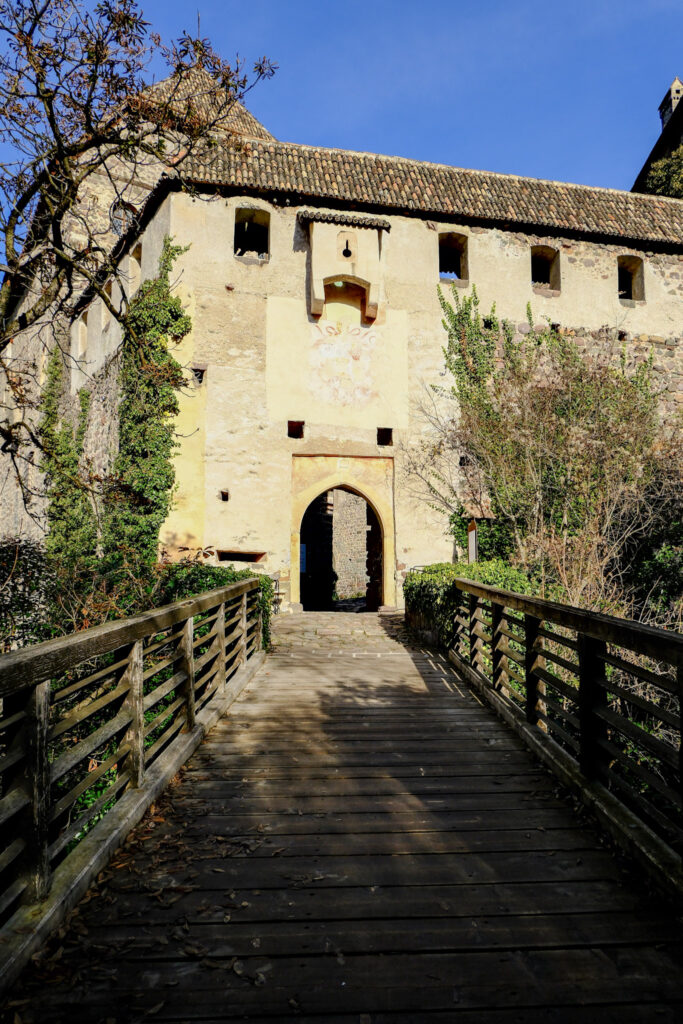
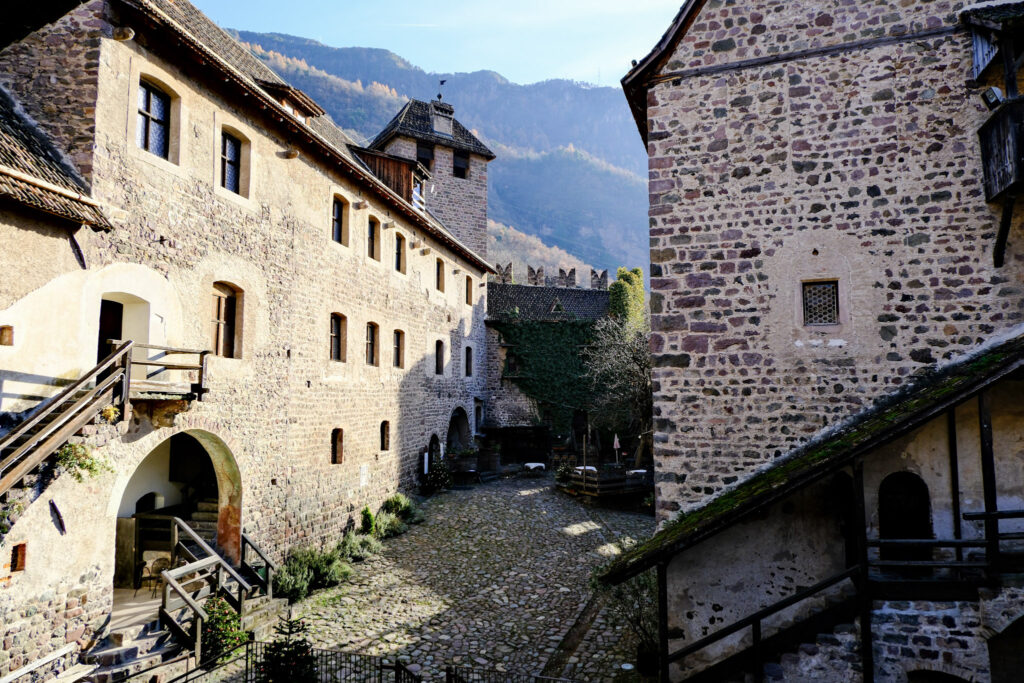
Taking a walk along the Talvera River, or a bus from the city centre will bring you out to Castel Roncolo. Even though it’s just a short distance outside of the city, it feels like being out in the countryside. The Castle is built up on a hill, looking out on the valley of the city below.
The castle is covered in secular frescoes, which is quite rare for the 14th Century, where most frescoes were in churches or picturing religious scenes. Instead, Castel Roncolo’s frescoes depict knights, hunting, and courtly romance, as well as fashion of the time. It’s incredibly well preserved, and essentially a window into medieval social life.
Plan the Perfect Day
While you’re in Bolzano, I’d recommend downloading the city map and Google translate (Italian and German) for offline use. I’d also recommend getting an e-sim (I use Airalo) if you don’t have data roaming. Even though it’s a small city, it’s easy to get lost in the winding, cobbled streets and it’s always handy being able to check when the next bus is or where to get a snack nearby!
I’ve also written a guide for 24 hours in Bolzano, which you can read here. It covers everything you need to know about the main sights of the city, and how to spend the perfect day here.
Where to Stay
The next stop on our Bolzano travel guide is thinking about where you’re going to rest your head for the night. This city isn’t huge like Rome or Milan, so you have a lot of options all within a fairly compact space. Where you stay will depend on what your priorities are, so let’s look at your options.
The Culture Afficionado: The Old Town
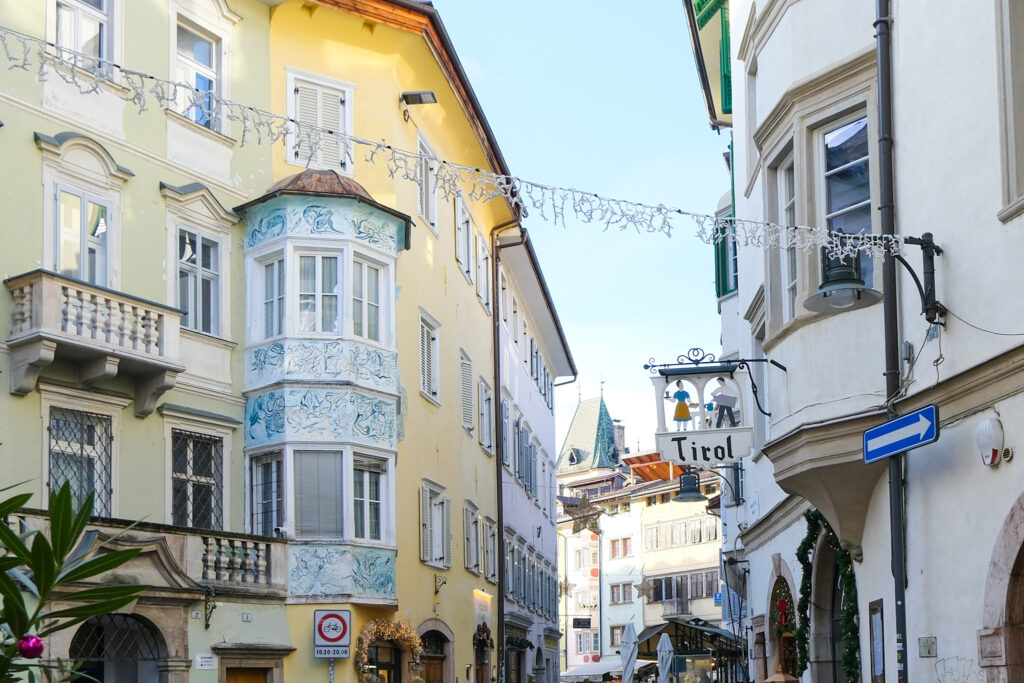
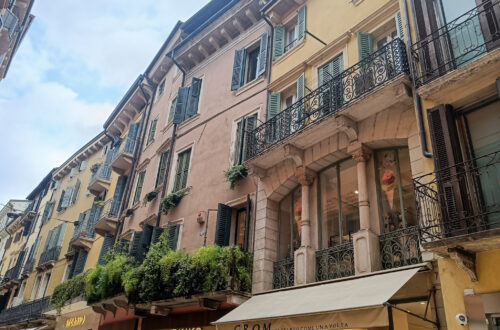
The old town of Bolzano is where you’re going to get the looks-like-a-Christmas-card, old world charm. The streets are narrow and winding, the buildings looming over the cobbles below, bay windows peering out. It’s also where you’re going to find the highest density of bars and restaurants in the town, as well as keeping you close to museums and the main town squares.
If your goal is to wake up feeling like you’re in a Disney movie, you want to be able to nip back to your hotel in the middle of the day, or you’ve got mobility considerations that may make staying elsewhere difficult, then the old town is for you.
Some hotel options to consider:
- Stadt Hotel Citta – right in the heart of the city by Walther Platz and the cathedral
- Apartment Rental – very close to Walther Platz, reasonably priced
- Villa Anita – A pretty, budget-friendly guesthouse near the old town
Travellers on the Move: The Station District
If you’re planning to use Bolzano as a base, but explore the wider South Tyrol area, you may want to consider staying close to the train station – there’s nothing worse than getting back late, and still needing to trek back to your hotel.
Normally, I wouldn’t recommend staying near a train station in most European cities, as the area by the station can often feel quite seedy. This isn’t the case in Bolzano. Because it’s such a small city, once you step out of the train station, you’re only a few minutes walk away from the old town. The station faces plenty of bus stops, and a large shopping mall, so there’s plenty of foot traffic and I personally felt perfectly safe arriving here at night.
Some accommodation options to consider:
- A Studio Apartment steps away from the station – it may be small, but if its a place to rest your head for the night, it’s got all you need.
- Hotel Regina – facing the train station, so you’re just a stumble from the platform to your bed. They offer multi-person rooms, handy if you’re travelling with a group.
- Parkhotel Laurin – Between the station and Waltherplatz, putting you in the perfect spot. The hotel looks like it could be the backdrop for a film, and they even have a pool!
The Budget Conscious: The Gries District
Gries was originally a separate village before it became incorporated into Bolzano as the city grew. Today, it’s a quieter, greener part of the city, and it’s the most densely populated – it’s where most locals live and it’s a great option if you want to be close to the city, but you’re conscious of budget. You’re also more likely to find affordable apartment rentals in this area, so if having a home away from home and cooking facilities is important to you, Gries is a great choice.
When I travelled to Bolzano, this was the area I stayed in. I was travelling with one of my brothers and wanted to find somewhere that had a kitchen, was affordable, but allowed each of us our own room to sleep in. Even though it feels much quieter and residential than the old town, it took us about 23 minutes to walk to the train station, and there are regular buses that get you into the old town in minutes.
Some accommodation options:
- Victory House – a straightforward, affordable apartment rental with cooking facilities.
- Holiday Apartment Ullin – a little bit more expensive than the option above, and slightly further out, but offering two beds in separate sleeping areas in a gorgeous, traditional building. Ideal for friends travelling together who want their own space.
The Alpine Escapist: Soprabolzano/Ritten
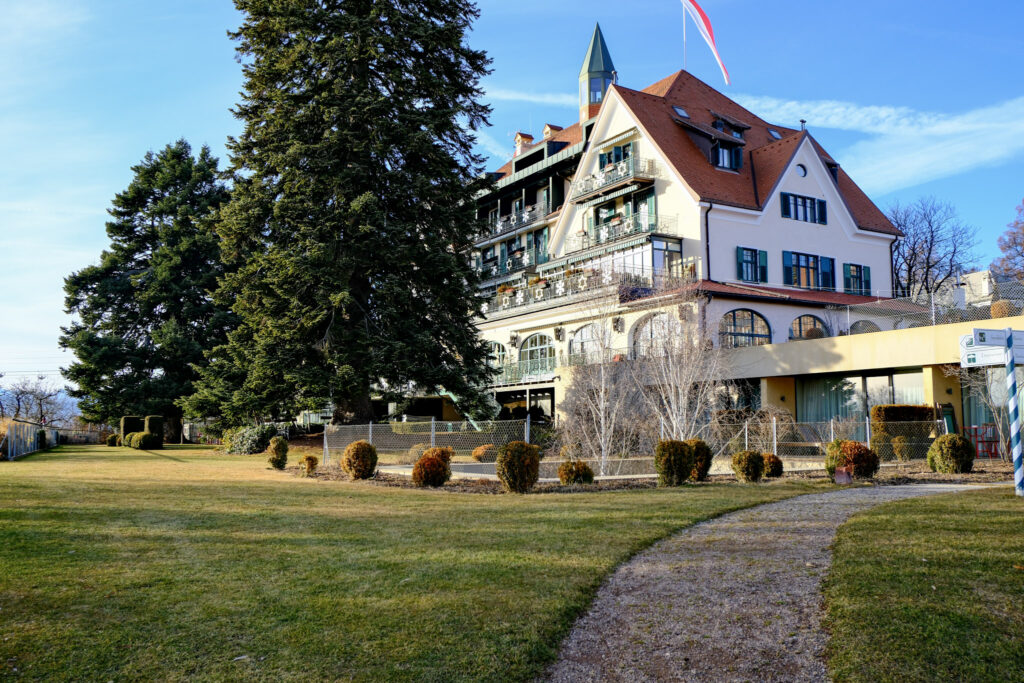
If you take the cable car from Bolzano, you’ll end up in Soprabolzano, a small village up in the mountain plateau. For travellers who want to spend their days hiking and breathing in the clean air, staying up here will keep you very close to Bolzano city, but will feel like you’re out in the wilds.
You’ll also be close to the hiking trails, as well as being able to explore the other alpine villages around the area.
Coming back down in the cable car on my visit, my brother remarked “I’d love to come back here and stay up there, it’s so peaceful”.
If you’re coming without a car, the best way to get to this area is to get to the train station in Bolzano, then take the cable car up the mountain to Soprabolzano. From there, there’s a light rail that takes you through the mountaintop villages.
Some accommodation options:
- Parkhotel Holzner – coming off the cable car, the first thing you’ll see is the enormous Parkhotel. It’s a grand, impressive hotel with incredible views out over the valley below.
- Gasthaus Babsi – also in Soprabolzano, a short walk from the cable car station. It’s a more affordable option than Parkhotel Holzner, but still a charming traditionally Tyrolean style building.
What to Eat and Drink
Food
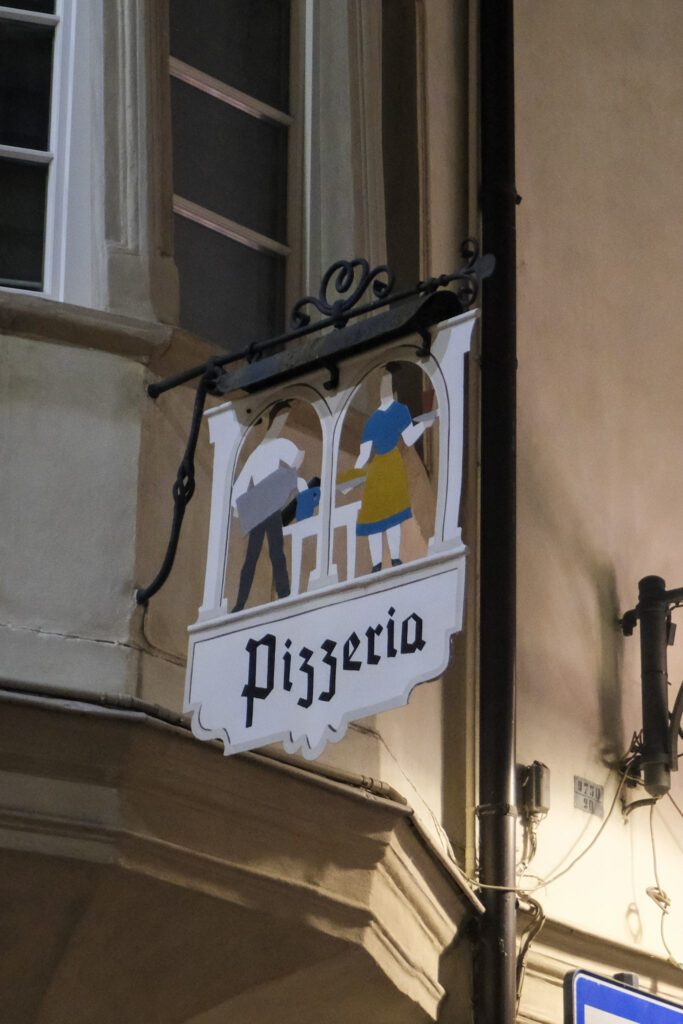
If you’ve spent time in Italy, you’ll be well acquainted with the unparalleled pleasures of pizza, pasta and gelato. Bolzano, however, plays by different rules. Like everything else around the city, the cuisine is a blend of Austrian and Italian. The food is heavy and hearty, as befits a culture that’s lived in the mountains for centuries.
You’ll see a lot of:
- Canederli (Knödel): dense bread and potato dumplings usually served in broth or with butter
- Schlutzkrapfen or Mezzelune: semi circular pasta that’s like a cross between ravioli and pierogi. Fillings vary from things like spinach and ricotta to sauerkraut.
- Speck: Local dry-cured ham that appears on pretty much any menu around the city
For Vegan Travellers:
As a vegan, I’m not going to be the best person to tell you where to get the best speck, or what restaurant does the best traditional Tyrolean food. Traditional Tyrolean cuisine is heavily reliant on meat, cream and cheese. It’s pretty standard for hearty, historic food in mountainous or colder parts of Europe, but it can be disappointing for my fellow plant based travellers.
There are so many beautiful, traditional inns all over the city, but being completely real with you: You’re going to find it hard to find a vegan main course that isn’t just potatoes and a side salad. Even the traditional Tyrolean barley soup usually comes with cubes of speck in it.
There are vegan, or vegan friendly, restaurants around the city, but from my experience, I found most opened for lunch but didn’t serve dinner.
This isn’t to discourage you from visiting Bolzano, because believe me, the nature, scenery and architecture is reason enough to go, but to keep your expectations realistic. When I visited, I chose an Airbnb for this reason, and I’d encourage you to do the same if possible.
I’ve got another post on how I get by as a vegan traveller, which you can read here – it’s full of tips that apply regardless of what country you’re visiting, and hopefully save you from a sad meal of bread and chips.
However, one thing we vegans can enjoy is the local wine, so read on for the next part of this Bolzano travel guide!
Wine Culture in South Tyrol
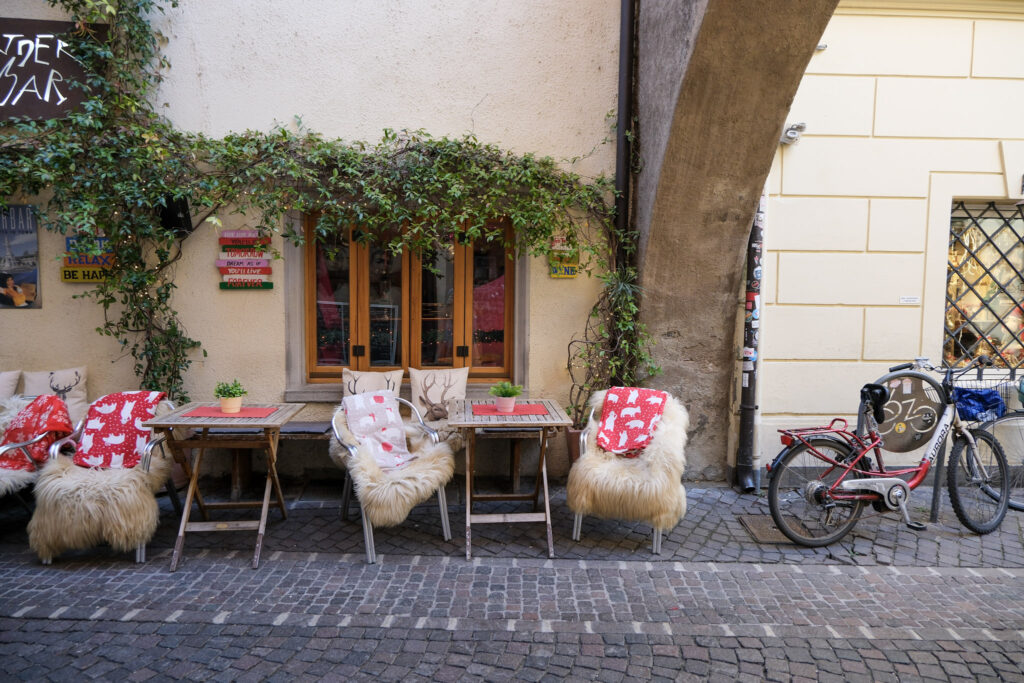
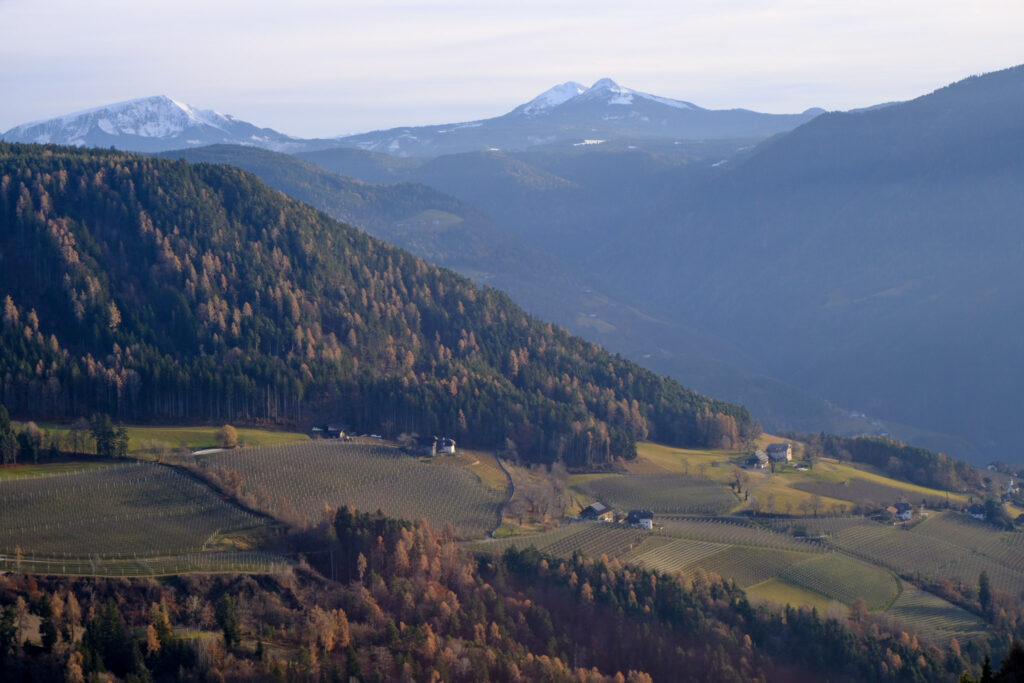
Even if you’re not a big drinker, you’ll still be aware of the wine culture in Bolzano if you visit. Here, the vineyards don’t sit out in the countryside, but come all the way into the city centre. As you walk out to the cable car or to Castel Roncolo, you’ll notice the hillsides are covered in neat vines. South Tyrol is one of Italy’s most significant wine growing areas, and the “wine road” starts here. re. South Tyrol is one of Italy’s smallest wine growing regions, but also one of its most significant. About 98% of the wine produced here is DOC (Denominazione di Origine Controllata), the highest percentage in all of Italy.
In Bolzano, the vines are grown in the “pergola” style, where the vines are trained over wooden frames to create a “roof” of leaves over the grapes. Because the sun can get very intense on the mountains, this helps protect the grapes from sunburn.
Local Wines from Bolzano Vineyards
If you do want to sample the local viticulture in Bolzano, there are two main types of wine you need to know:
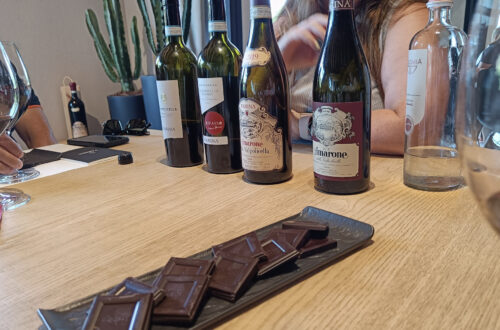
- Lagrein: A deep, velvety red that’s native to the Bolzano valley. It’s been grown here since at least the 1300s, and its flavour is very berry – think dark cherries, blackberries and plums.
- Gewürztraminer: The aromatic local white wine, known for a light floral and fruity taste. You’ll also find this wine around the Alsace region of France, as it thrives in cooler, mountainous regions. It actually gets its name from the village of Termeno (Tramin in German), just down the road from Bolzano.
If you’re in Bolzano and keen to try one of the local wines, you can’t go wrong with one of these two!
When to Visit
There’s no real “right” time to visit Bolzano. Because of it’s location, it has shifts in vibe and personality throughout the year, and every season has something new to offer.
Spring:
The Dolomites will still be covered in snow, but the valley floor is coming back to life with greenery. The mornings tend to be crisp, while the afternoons can get up to around 16ºC. The lower hiking trails are ideal at this time of year, before the humidity of the summer hits the valley.
Summer:
Bolzano can get very hot in the summer, with the heat getting trapped in the valley. It’s not uncommon to see 30ºC days. If you’re visiting in summer, make sure your accommodation has air conditioning (not always a given in Europe), or consider staying higher up on the mountain to get the cooler mountain air.
Autumn:
This is the best time for food and wine lovers. The air is crisp and clear, perfect for hiking, and the vineyards are in their harvest season. Autumn is also when you’ll experience Törggelen, an autumn tradition that celebrates newly harvested chestnuts and wine. You’ll find festivals and special meals on offer around the South Tyrol region and get to take part in a centuries old tradition.
Winter:
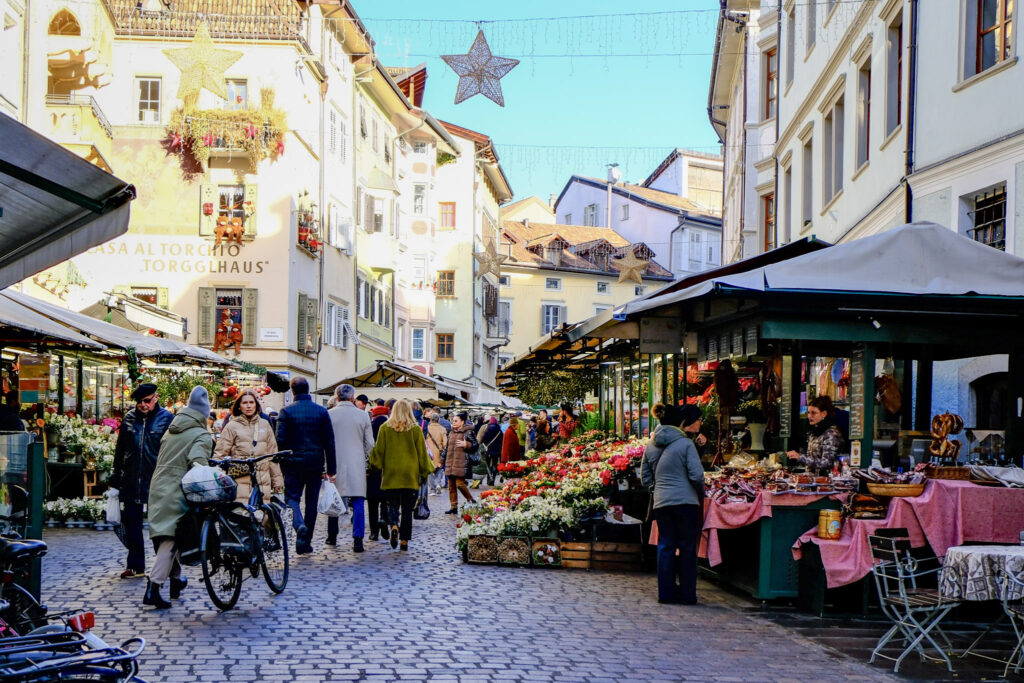
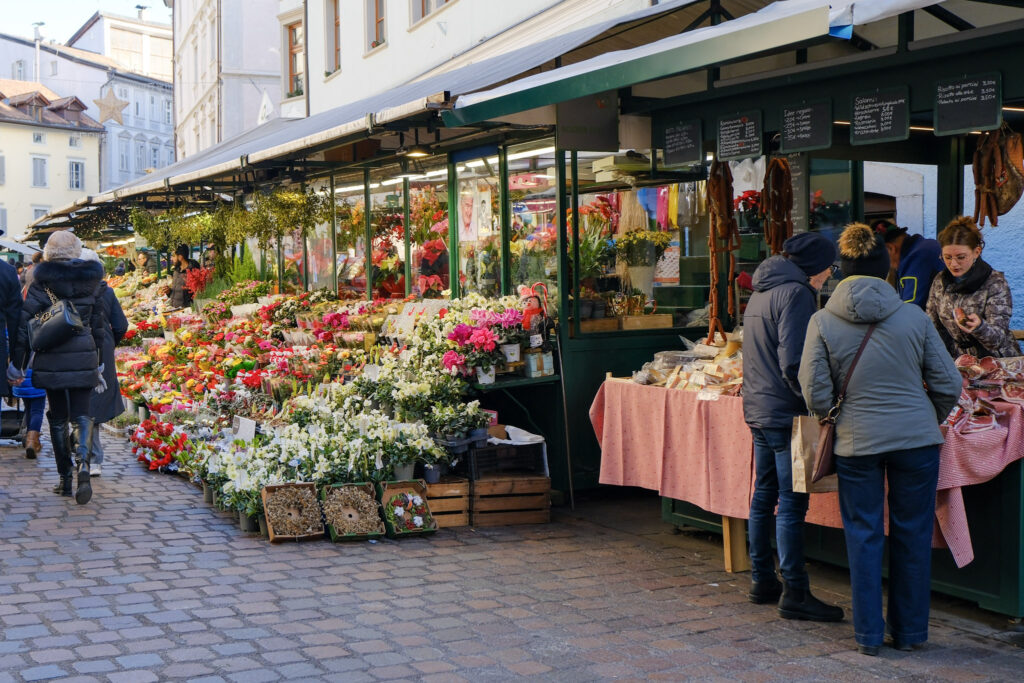
If you want the full chocolate box, snow globe experience, winter is it. This is when Bolzano is at its most popular due to the Christmas markets and the overall cosy alpine vibe, so be prepared for some crowds. I visited in December for this very reason. The Christmas market in Bolzano is one of the biggest in Italy, and usually opens from the very end of November to the start of January. You can check up to date times and dates here.
Weather wise, it gets cold, especially at night, but it’s a dry, crisp cold that’s manageable with a good coat and winter woollens. Personally, I found it on par with London in the winter, but less windy.
Getting to Bolzano
Bolzano actually has its own airport (BZO), but it’s very small and mostly serviced by a small airline called SkyAlps. SkyAlps connects to London Gatwick a few times a week, as well as also serving some airports in Denmark, Belgium and Germany.
If you’re a fellow Londoner, you can check out my London to Bolzano guide here.
Often, it’s cheaper and more convenient to fly into another airport and continue on to Bolzano by rail. If you take this option, there are three main airports to consider:
Verona to Bolzano
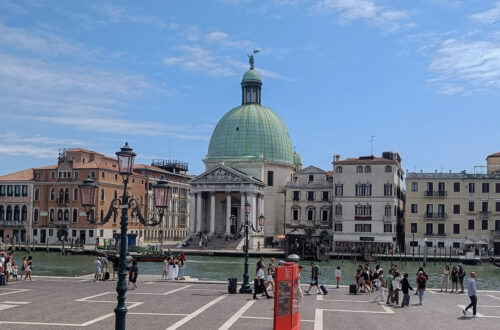
This is the standard choice for visiting South Tyrol, especially from the UK. Low cost airlines like Ryanair and Easyjet regularly fly into Verona.
- The Journey: Take the shuttle bus (€7) from Verona Villafranca airport (VRN) to Verona Porta Nuova Station (about 15 minutes), then take a direct train to Bolzano. Trains to Bolzano leave about once an hour or more, and there are options between fast trains and slower ones.
- Travel time: The train takes about 1 hour and 30 minutes and will cost about €20 one way.
Innsbruck to Bolzano
Another option is to fly into the Austrian airport of Innsbruck (INN). The flight path over the Alps is one of the most beautiful in Europe, and you’ll get to see it all if you’re flying during the day.
- The Journey: A short bus (about €3.50, takes ~20 minutes) or taxi to Innsbruck Hauptbanhof, then a direct EuroCity train over the Brenner Pass into Bolzano.
- Travel time: Roughly 1 hour 30 minutes on the train (about €28).
Munich to Bolzano
If you’re coming from outside of Europe, flying into Munich (MUC), Germany, is probably your best option. It’s further out than the Verona or Innsbruck options, but it’s a massive transport hub, and it’s a beautiful city in its own right – well worth tacking on a few extra days to explore Bavaria too!
- The Journey: You can take a direct EuroCity train from Munich East (Ostbanhof) or the main train station. Alternatively, there is a Flixbus route that goes direct from Munich to Bolzano.
- Travel time: About 3 hours and 50 minutes by train, about 4 hours by bus.
Choosing Your Journey – A Word of Advice
Before you book your flights and hotel, plot out your whole journey. While Verona, Innsbruck and Munich all have direct links to Bolzano, consider the cost of the onward trains and check for any planned engineering works or any other issues that could hinder your travel. The Trenitalia (for the Italy side), OBB (Austria) and Deutsche Bahn (Germany) websites are your friends.
This is especially important if it’s around national holidays or on Sundays where schedules can be irregular. If you’re travelling home on the same day and time is of the essence, a 20/30 minute delay can feel like a lifetime.
Last year, I spent a week in Verona and had planned on doing an overnight stay in Bolzano. At the time, the direct train wasn’t running because of engineering works on the line, so what would normally be about an hour and a half on the train was suddenly four hours. I’m glad I spotted this before I booked a hotel or bought train tickets.
Likewise, if you’re travelling from outside of Europe, allow yourself some buffer room to get back to your departure airport in case anything goes wrong. When I visited Bolzano, my return flight was from Verona. If anything had happened, worst case, I could have taken the train to Innsbruck and gotten a flight back to London from there. However, if you’re flying back to the US or Asia, you’re unlikely to have the same flexibility, so I’d recommend giving yourself an extra day just to be safe.
Know Before You Go
- What’s the currency in Bolzano?
- Like the rest of Italy, the currency is the Euro. Card payments are widely accepted, but it’s worth having some cash on you if you’re ducking into small, family run bakeries or find yourself in small mountain inns.
- Is Bolzano expensive?
- This depends on where you’re coming from! For me, compared to London, Bolzano feels much more affordable. Two glasses of wine in a wine bar cost me €11 for example, and a supermarket dash to get some snacks, drinks, breakfast and lunch for two people came to about €30. However, generally speaking, the North of Italy tends to be more expensive than the South.
- What’s the tipping culture?
- Tipping in Italy is pretty relaxed, it’s not the same as the US tipping culture, nor is it like the UK’s standard inclusion of 12.5% service charge. What you are more likely to see is a “coperto” on your bill. This is a standard cover charge of a euro or two per person, covering bread and table service. If you really appreciated the service, you can round up your bill (eg. €32 becomes €35), but it’s not expected.
- What plug sockets do they use?
- Italy uses Type F (the standard European two-pin) and Type L (three-pin in a row). Most buildings will have universal sockets that take both. Get a universal travel adapter (I have one like this).
- Do I need to speak German or Italian?
- In Bolzano, you’ll hear both. Many locals are trilingual with German, Italian and English (and I’m forever envious of people who grew up with multiple native languages). You’ll get by fine with English or Google Translate, but it’s polite to start conversations with “Buongiorno” or “Guten Tag”. Always ask someone if they speak English before launching into it.
- Will my phone work?
- I don’t know what kind of phone you have, but yes probably. There’s free wifi in almost all hotels and accommodations, and the city has free wifi also. If you’re concerned about being connected abroad, consider an e-sim. I always use Airalo when I go abroad and have had a good experience so far.
- How do I get the Bolzano card?
- You can’t buy the card. It’s provided free of charge by participating hotels, inns, B&Bs and hostels. When you check in your host will give you either a physical card or a QR code. If they don’t mention it, ask. If it’s important to you, contact the accommodation before booking to ask. I’ve also listed some participating hotels above.
- How long do I need in Bolzano?
- If you are just visiting the city, a weekend or 48 hours is perfect. However, if you want to use it as a base for the Dolomites and exploring South Tyrol, you could easily spend 5 days without getting bored.
- How do I get to Bolzano?
- The most common way is flying into Verona, Innsbruck or Munich and taking the train.
Final Thoughts
I’ve spent a lot of time in Italy over the years. I once spent a summer living and working in Tuscany, it’s the first country I ever solo-travelled to, and I only semi-jokingly think that Italy should be prescribed for burnout. However, in the 25+ year love affair that I’ve had with this country, I can honestly say that Bolzano is like nowhere else I’ve been.
It’s Italian, yes, but it’s also got the blend of Austrian charm and their shared history that makes it such a beautiful, interesting and culturally rich place. I went for the Christmas markets, and while I expected the city to look like a beautiful storybook, the impressive Dolomites surrounding the winding streets and cosy taverns made the whole experience feel like being somewhere otherworldy.
Add to that how easy it is to get into the mountains, soaring over the city in a cable car, before settling down for the evening with a gorgeous glass of Lagrein, and you’ve got somewhere really special.
While Italy’s big-name cities are famous for good reason, if you’re someone looking for somewhere a little different, and you’re open to experiencing a totally different side of Italy, then Bolzano might be for you. If you’ve only got a short amount of time to explore the city, then check out my 24 Hours in Bolzano Guide for all the highlights.
I hope you’ve found this Bolzano travel guide helpful, and if you make it to South Tyrol, I hope you have as wonderful a time as I did. I’ll be writing more about Italy and other parts of the world in this blog, so sign up for the mailing list to keep in the loop!
Happy travels.