
Fragile Venice: How Overtourism is Literally Eating the City
Venice is indisputably one of the most beautiful and unique places on Earth. It’s a city built and living entirely on water. It’s got a rich history, once home to one of the most powerful naval and commercial republics in Europe, before being conquered by Napoleon.
And it’s been perennially popular as a tourist destination: From the real life Colin Bridgertons on their 18th-century Grand Tours of Europe, to the megaphone-led tour groups of today, everyone wants a piece of the lagoon.
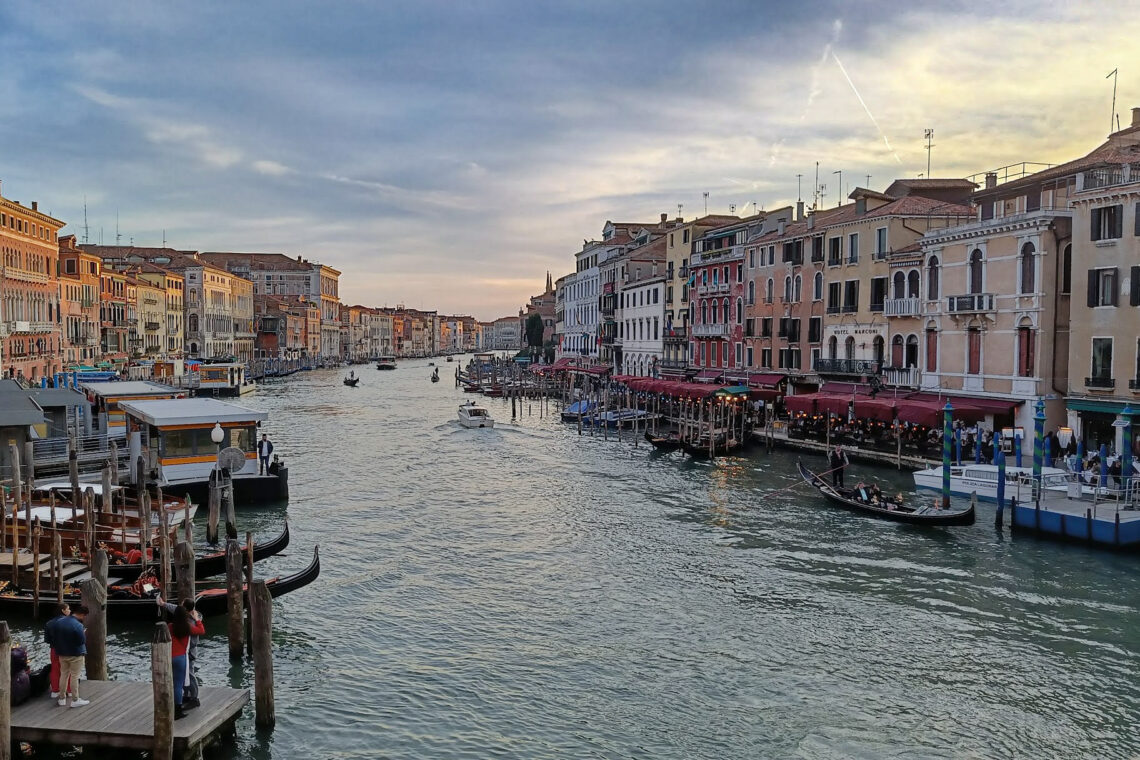
But all that popularity comes at a price. You’ll sometimes hear it referred to as Fragile Venice, with references to the tourist tax or the overtourism problem in the city. It’s a city that has only 48,000 residents in the historical centre, yet plays host to over 20 million tourists every year. It just doesn’t add up.
The Upside-Down Forest: How Venice was Built
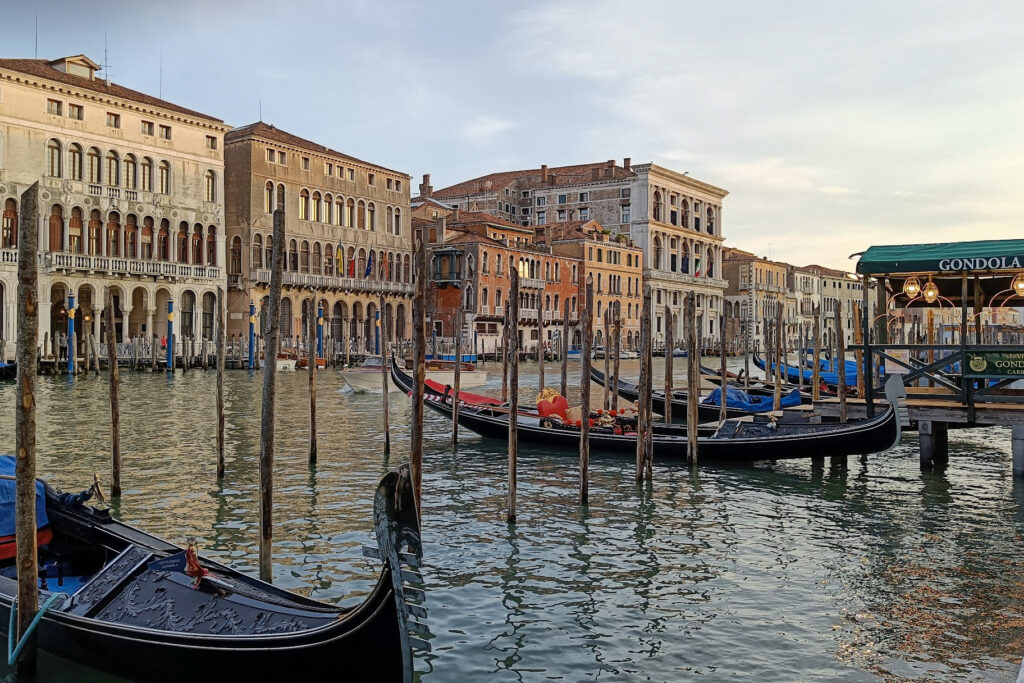
Venice is a complex city of about 118 islands connected by over 400 bridges. Walking around it is so seamless that you almost don’t notice that you’re island hopping.
What you don’t easily see, however, is just what an impressive feat of engineering Venice actually is. Often called “the upside down forest”, Venice is built on a foundation of millions of wooden piles.
These piles (long, structural wood trunks) were made from water-resistant wood like oak, larch, elm or elder. They were sharpened at the end and driven down into the muddy, marshy water below until they reached a hard layer of compressed clay called caranto.
This wasn’t just a few sticks in the ground, it was an enormous effort of the battipali (literally “pile hitters”) thumping millions of trees into the lagoon floor.
Normally, wood will rot when wet due to a build up of fungus and bacteria, but they both need oxygen to survive. Because the piles are driven down into the oxygen-free mud, instead of rotting, the wood underwent a process of mineralisation. Over centuries, the flow of mineral-rich seawater through the food fibres gradually replaced the organic matter with minerals.
Essentially, the wood turns into stone. When St. Mark’s Campanile (the bell tower) collapsed in 1902, engineers checked the 1,000 year old piles and found them in perfect condition, and in fact, harder than they would have been when originally driven in.
Once the “upside down forest” was in place, the tops of the piles were cut to a level height, and two layers of thick larch planks were laid over them like a floor. On top of this wooden floor, blocks of Istrian stone from Croatia was places on top. This Istrian stone is pretty waterproof – it acts as a barrier, stopping the salt water of the lagoon from coming up into the porous bricks of the building, which would otherwise crumble from crystallisation.
To put all of this labour into perspective: The famous Rialto Bridge sits on 12,000 wooden piles. I get annoyed having to assemble Ikea furniture, imagine having to hammer in thousands of tree trunks just to have a front door?
Fragile Venice: Exploding Bricks and the Science of Salt
So that Istrian stone I mentioned in the last section? For centuries, it worked perfectly. It stayed at the waterline and did an amazing job as acting as a buffer to the salt water below. The salt water hits the stone, it stays there, the building is protected – sweet.
But in today’s world, there’s a problem. Venice is sinking, the sea is rising, and the Istrian barrier isn’t enough to protect the city anymore, which brings us to the “Fragile Venice” we’re talking about.
Why is Venice Sinking?
As I mentioned earlier, the city sits on millions of wooden piles. Over the centuries, the weight of all the stone and brick has compressed the layers of silt and clay below. Think about how your sofa cushions get worn out over time – constant weight and pressure in the same place causes the foam in the cushion to compress.
Then we’ve got human error: In the 1950s and 60s, hundreds of deep industrial wells were bored into the ground to help power steel works and chemical plants. They pumped out so much water that the underground pressure holding up the layers of clay and sand dwindled. Think about a balloon filled with water: when you empty it, the balloon loses its shape and collapses.
In just 20 years, this industrial work caused Venice to sink by 12cm, more than it had naturally sunk in over 200 years. While the pumping was stopped in the 1970s, the ground didn’t recover, that compaction was permanent.
And then we’ve got good old global warming. When water gets warmer, it expands. The Mediterranean is already a fairly closed sea, so it’s heating up faster than the average of global oceans. As that water warms and expands, the levels start rising.
All of this is to say that Venice is sinking downwards, the water levels are rising up, and where they’re meeting is at the ground floor of the homes and buildings around the city.
The Exploding Bricks
As I mentioned, the Istrian stone did its job for centuries, acting as a shield around the city and keeping the salt water away from the bricks of the buildings.
Now, because of the relative sea level rise (a combo of the sinking and actual water levels rising), the water is regularly splashing up above that stone shield.
Many Venetian bricks are made of local clay and they’re super porous. They act like a sponge, sucking in the saltwater through capillary action. When the tide goes out or the sun is shining, the water in the bricks evaporate but the salt stays.
The salt then forms crystals that grow in the tiny pores of the brick. When this happens, they expand, exerting an outward pressure – sometimes as high as several hundred kilograms per square centimetre. This pressure, when it gets stronger than the brick itself, causes the brick to literally explode from the inside out: they shatter into a fine powder or flake off in chunks.
In 2026, some experts estimate that some walls in Venice contain up to 70-80kg of salt per cubic metre. It’s a buildup that’s eating the architectural heritage from the inside, adding to the risk of “fragile Venice”.
From the Grand Tour to the Tour Bus
In the 17th to 19th century, Venice was a stop on the traditional Grand Tour. If you haven’t heard of it, The Grand Tour was a trip taken by young European (mostly British) aristocratic men. Think of it like a Bridgerton-era gap year.
These men, after finishing their formal education, would take a tour, usually accompanied by a tutor, around Europe to get first hand experience and education of classical literature, art, music, and history – and let’s be real, they probably acted just as badly as gap year students on Khao San Road.
Venice was a key stop on the Grand Tour, seen as a hub for arts and culture. Canaletto’s famous landscape paintings were popular purchases with British lords who wanted to show off their intellectual gravitas by having visited Venice.

Image: Portrait of Francis Basset by Pompeo Batoni
The Industrial Shift to Modern Tourism
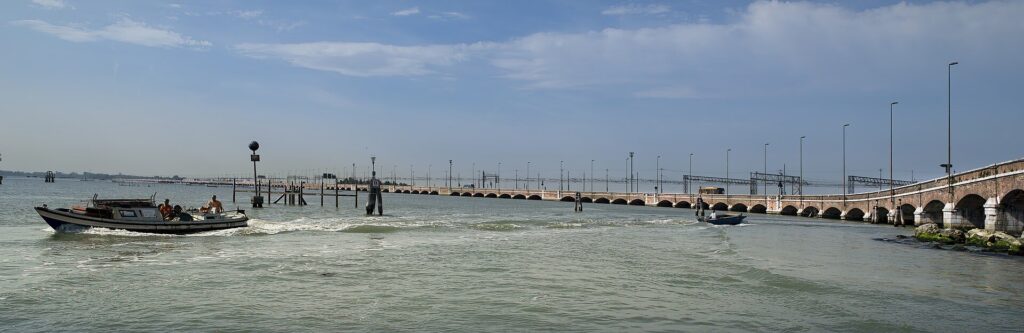
In 1846, the railway bridge to the mainland of Italy was built, making the island city of Venice far more accessible than it ever had been before. While Venice had previously been an exotic location, only accessible by the privileged and wealthy on their lengthy Grand Tours, it was now open for business to the world at large.
Today, Venice is one of the most visited cities in the world, with over 20 million visitors every year – imagine if everyone in Ireland went to Venice four times a year and you’d get an idea of the scale.
How Overtourism Affects “Fragile Venice”
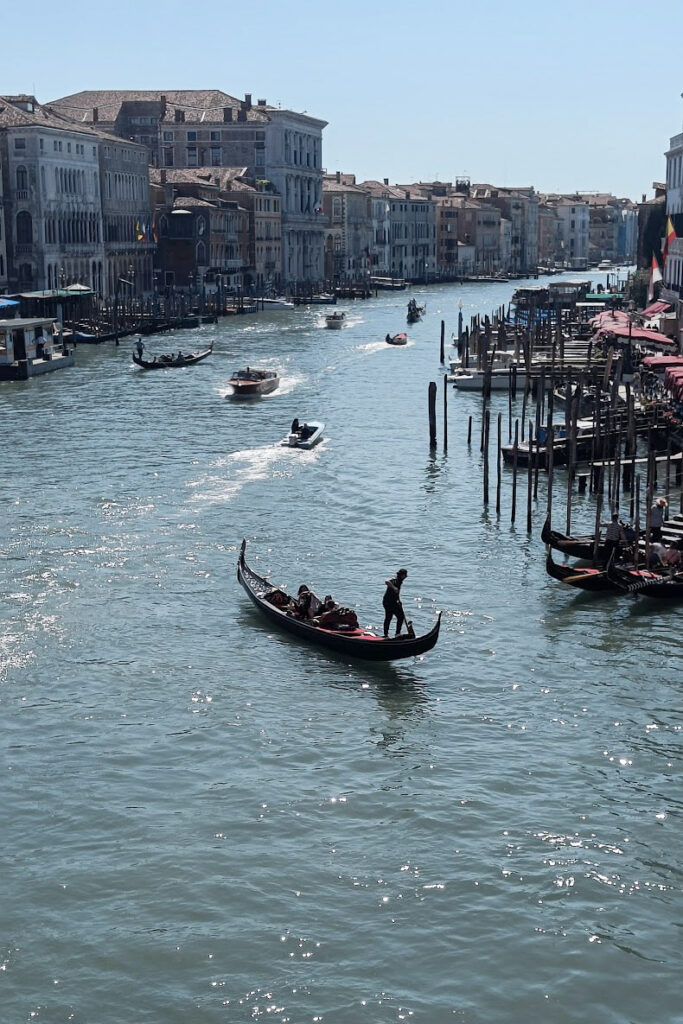
With all those tourists pouring into the city, the infrastructure is under strain. A city that houses under 50,000 residents needs an outsize number of water taxis and vaporetto “water buses” to get all those visitors around.
Those of us who live in densely populated cities are all too aware of the risks posed to infrastructure by increased traffic. Venice has a similar problem, but on water. All of that extra lagoon traffic creates constant, aggressive waves – called moto ondoso (wave motion) in Venice. The wakes from the boats push saltwater higher up the walls than natural tides do, reaching the porous bricks above the Istrian stone and accelerating that “explosion” process we talked about.
Basically, more tourists = more boats = faster crumbling.
On top of the physical effects, there’s economic to consider too. When Venice became so accessible by rail, it brought with it the increase in day trippers. These visitors often put the most strain on the city as they use the boats and infrastructure, but contribute the least to the economy because they don’t usually stay for dinner or stay overnight.
The Venexodus
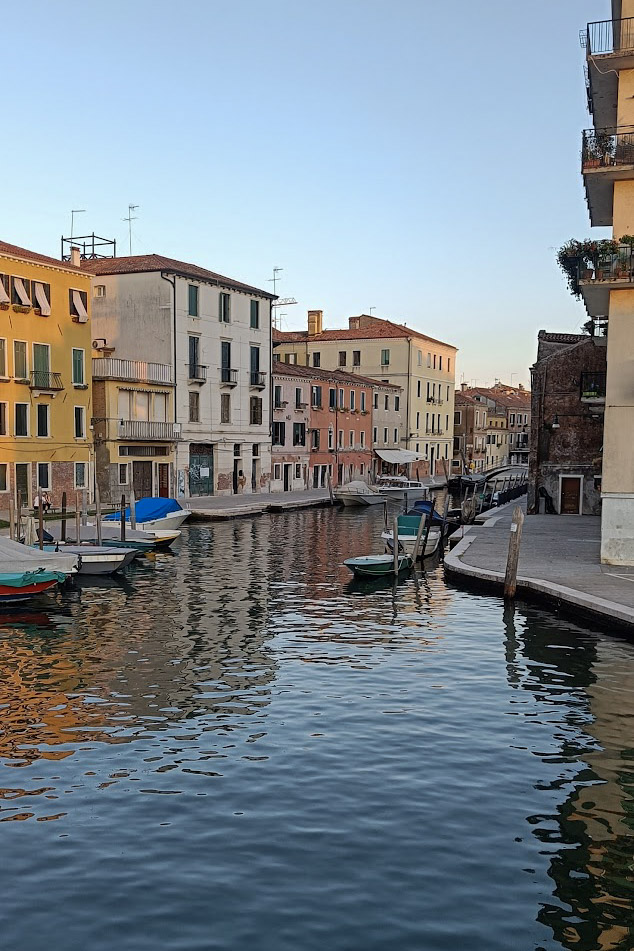
If you walk through the residential areas of Venice like Cannaregio or Castello after dark, you’ll notice the quiet. It’s a total change of pace from the bustle of the crowds through the city earlier in the day. There aren’t just fewer tourists, there’s a quiet emptiness.
Since the 1950s, the population of Venice’s historic centre has drastically changed. In 1951, the city was a vibrant, lived-in community of 175,000 people. By 2022, that number was down to below 50,000.
As of early 2026, the number continues to trend downward, losing roughly 1,000 residents every year.
Venice has officially reached a point where there are more tourist beds in the city than there are residents. When a city loses its people, it loses its soul.
In a response to increased tourism, where you used to see local bakeries, hardware stores, and family run groceries, you’ll now see shops selling cheap, mass-produced “Venetian” masks, magnets, selfie sticks and other souvenirs.
Then there’s housing to think of. Venice has become prey to the Airbnb effect, like many other cities. Landlords can make more renting a flat to tourists for three days than they can renting to a family for a month. This has sent rents skyrocketing, pricing out the people who work in the city’s museums, attractions and shops.
The very people that keep Venice running, be they waitstaff, cleaners, museum guards, often have to commute in from Mestre or Marghera every morning. It’s become a city where people work but cannot afford to live.
For those who do still live and work in Venice, most jobs are related to tourism in some way. If you’re a young graduate who wants to work in law, tech, banking, or anything else, jobs in those industries are thin on the ground – you’ve got to move to the mainland to start your career.
Finally, with the locals being priced out or moved out for their careers, there are fewer children in Venice. When this happens, schools close. When schools close, the remaining families are forced to move so their kids can continue their education.
in 2009, local activists were so concerned by the decline in population that they held a mock funeral for Venice when the population declined to 60,000. They rowed a pink coffin down the Grand Canal to symbolise the death of the city as a living, thriving community. Today, they’d need a larger fleet.
When we talk about a fragile Venice, it’s not just the crumbling buildings, its the fragility of the community and culture that was the heart of the city for centuries. Venice has been museum-ified. It’s a city that looks extraordinarily beautiful on the outside, but it’s been hollowed out.
There’s a quote from Patricia Highsmith’s Talented Mr. Ripley that describes Venice beautifully: “He liked the fact that Venice had no cars. It made the city human. The streets were like veins, he thought, and the people were the blood, circulating everywhere.”
Without the very people that make up the city, that “blood” is being drained, leaving Venice at risk of becoming a lifeless body.
As a visitor, it’s a weird feeling. You’re there to admire the beauty, history and soul of the city, while inadvertently contributing to the very thing that’s destroying it.
The UNESCO Deadline and the Endangered City
UNESCO has a list of “World Heritage in Danger”. It’s exactly what it sounds like. The sites that make it onto the list are usually places that have been threatened by war, unrest, or natural disasters. In Venice’s case, it’s down to uncontrolled development and climate change.
After years of warnings, UNESCO gave Italy a hard deadline of February 2026 to show significant progress in protecting the lagoon. The main things they’re watching are mass tourism, the sinking foundations, and the strategic long term vision for the city.
Italy has responded to UNESCO in the past. In 2021, they banned cruise ships from entering the lagoon, in 2024 they launched the “access fee”. These steps have worked so far to keep Venice off the endangered list, but it’s not enough to move away from being at risk.
The MOSE: Venice’s Shield
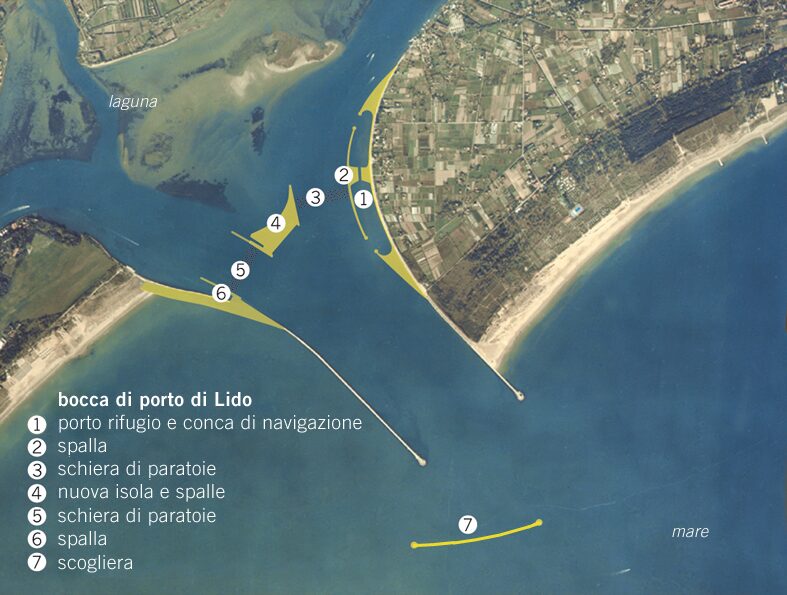
The MOSE (Modulo Sperimentale Elettromeccanico, or Experimental Electromechanical Module) is the main reason why Venice hasn’t officially been put on the list yet.
It’s a system of 78 floodgates that are designed to seal the Venetian lagoon off from the Adriatic Sea during high tides.
These floodgates aren’t visible when they’re not in use, sitting flat on the seabed so ships and boats can pass over them. When high tides are predicted, engineers pump compressed air into the gates, causing them to rise. Once they’ve done their job, they’re refilled with water and sink back to their position on the floor.
So far, they’ve done their job. During their first successful test in 2020, St. Mark’s Square stayed dry during a massive surge. However, there’s a catch. The lagoon is an ecosystem that needs the tide to draw out waste and bring in oxygen. If the sea levels continue to rise, the MOSE will have to be raised more and more often. If the lagoon is closed off for too many days a year, it stops being a tidal wetland and is at risk of becoming a stagnant, polluted pond.
What UNESCO Wants from Italy
When UNESCO has given Italy deadlines to make improvements to protect Venice, the MOSE only goes some of the way to solve the problem. They’re also looking for social and system changes that prove Venice is still a living city and not just a sinking museum.
The entrance fee, which I’ll talk more about in the next section, is one of these initiatives that UNESCO is keeping an eye on. In 2026, UNESCO is watching to see if the fee actually reduces the number of visitors, or if people are just treating it as a ticket price for a theme park.
Venice also has a Smart Control Room that tracks every mobile/cell phone signal in the city to see where the crowds are forming. UNESCO wants to see this data used to actively reroute people away from congested areas like the Rialto Bridge in real time.
Then there’s the “Venexodus” problem. UNESCO is asking for a housing policy from Venice that prioritises residents over tourists. They want to see a cap on the number of short term rentals like Airbnbs, and incentives for families to move back into the historic centre.
Their mandate isn’t just about protecting the stones and the buildings of the city, it’s about protecting the culture and the soul of it: the traditional boat building, glass blowing, lace making, and the local dialect. If the people go, the heritage goes with them, even if the buildings are still standing.
While massive cruise ships were banned from the Giudecca Canal in 2021, they haven’t fully left the lagoon. Many are still docking at the industrial port of Marghera. UNESCO wants a permanent solution that moves the cruise terminal outside of the lagoon entirely. Their reasoning is that cruise ships are essentially floating skyscrapers that can disrupt the delicate mudbanks, putting the city’s foundations at risk.
Italy has to submit a report on the state of conservation every year. If Venice loses its UNESCO status, it’s a big blow to the pride of the city, and the country as a whole. It’s an outright admission that the world’s most unique, beautiful city is failing.
The Entry Fee: Sustainable Tourism or Capitalism at Its Best?
The entry fee is one of the most controversial steps that Venice has taken to preserve itself. In 2024, Venice started a pilot program to charge day trippers. Today, that pilot is over and the Contributo di Accesso is a permanent reality.
- The Cost: Ranges from €5 to €10, depending on how far in advance you book.
- The Valid Days: It’s not applicable every day. It’s targeted at the roughly 60-70 high traffic days: weekends, public holidays, and the height of the Carnival – basically the times when they city is going to be the most congested.
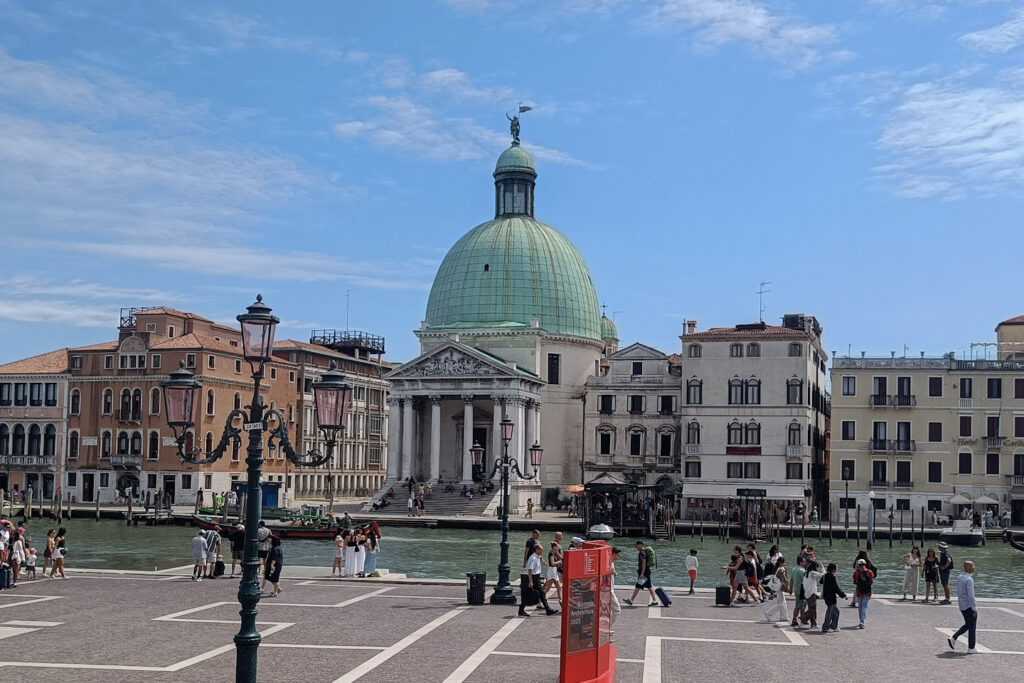
- How it works: You don’t buy a physical ticket. You register on a portal, get a QR code on your phone and show it to stewards stationed at the main entry points like the train station and Piazzale Roma.
The Argument for the Fee
The city makes the case that day trippers create the most waste, but contribute zero in local hotel taxes. They also are less likely to stay in the city for dinner, contributing less to the economy than overnight guests or residents. The fee is considered a contribution to the huge costs of cleaning the canals and maintaining the crumbling bridges.
The goal isn’t to make Venice an exclusive club, but to make people think twice. If you have to go through the friction of registering and paying, but your dates are flexible, you might choose a Tuesday instead of a Saturday, spreading the load out. Likewise, that last minute day trip suddenly coming with a €10 last minute entry fee? Might be better to do something else.
It may sound unnatural, a living city with an entry fee, but it’s actually not that unique. In London, we have the congestion charge for vehicles that enter Central London during peak hours. The fee means people think twice about whether they have to drive into the city at those times, or if they can take public transport instead. The money raised from the fee gets pumped back into investment in Transport for London’s (TfL) public transport network. And it works – in the 15 years I’ve lived here, I’ve never bothered getting a license because bikes and public transport have me so well covered.
Think of Venice’s entry fee a little bit like a human congestion charge. It forces people to be more mindful of when they travel, and the money raised from those who do enter at peak periods gets reinvested in the infrastructure and preservation of the city.
The Skeptical View
The entry fee is not without its critics. By charging an entry fee, Venice essentially becomes a museum or theme park.
When you shift something from a social or civic space to a transactional space, you’re changing the contract between the visitor and the location. Critics are worried that bringing in the fee can bring with it the psychological “I’ve paid for this” mindset. As a customer, there’s a sense of psychological entitlement – you pay for a service or a product, you expect a certain standard from it, right? If you’ve paid €10 to enter the city, you may feel like the city now needs to provide a certain level of service.
Critics are worried that by visitors paying to enter Venice, they expect the “attraction” to be perfect. When the reality of a living, gritty, fragile Venice is in front of them, the “customer” dissatisfaction can turn into a lack of respect for the place. While it’s rare to see truly disrespectful tourists, we’ve all seen those stories of people shoving coins in between the stones at the Giant’s Causeway, taking smiling selfies at Auschwitz, or carving their initials into the Roman Colosseum.
There’s a psychological term called Moral Licensing. By doing “good” (paying the fee), we subconsciously give ourselves a pass to be more selfish elsewhere, like being less careful with litter or noise, because we feel we’ve already contributed.
Likewise, by putting a price on spaces that are meant to be common and shared, is it stripping those places of their dignity? Does it become a product to be consumed rather than a heritage to be protected?
There’s also the surveillance aspect. To enforce the fee and gather data on crowds, the city uses over 500 CCTV cameras and cell phone tracking to monitor crowd density. Of course, we could argue that any modern city is covered in cameras and surveillance, but it adds a high tech layer of scrutiny to your visit that some may find unsettling.
So Who is Right?
The reality of the Venice entry fee in 2026 is that both sides are right. It’s referred to as “Fragile Venice” for a reason, the city is a crumbling masterpiece that needs an enormous budget to keep those exploding bricks from falling into the water, and to protect the culture and heritage that makes it what it is.
Yet, the more it leans into the human congestion charge and the high tech surveillance, the more it risks losing the soul that makes Venice what it is.
Essentially, the entry fee is a symptom of a city on life support. Whether you see it as a modern solution to a pretty modern problem, or the museumification of a city, the reality is that it’s here to stay.
How to Visit Venice Without Being Part of the Problem
I’m well aware that this post has been a lot more doom and gloom than my usual posts. I’ve been working on a new Veneto series of posts, and while I was writing about a day trip I had taken from Verona to Venice, I found myself thinking “actually, is this the right thing to write about?”.
It’s hypocritical, I know: I’ve done the day trip myself, and there are countless resources out there to tell you how to do the same thing. But the more I started looking into the UNESCO demands and the engineering of the MOSE, the more I wanted to dive into this topic. Not only to share it with you, but to learn more myself.
The main thing I’ve taken away from this, and want you to too, is that Venice doesn’t need us to stay away, it just needs us to show up differently. There are ways we can continue to visit and appreciate this wonderful city without adding to the problem.
Stay Overnight
It’s pretty clear that Venice benefits more from those of us who stay overnight in the city. By booking a hotel or a licensed guesthouse in the historic centre, you don’t pay the entry fee, and you contribute more to the local economy. Plus, you get the benefit of seeing the city in the early morning and late at night, in a way that day trippers can’t.
Sustainable Venice Travel
In Japan, they have very clear “Manner Mode” rules for their train system. In Venice, there’s something similar for life.
- Keep to the right – the streets are narrow and people are trying to get to work. Don’t be the person who stops dead in the middle of the bridge to take a photo or check a map. If you need to get out your phone, step to the side, letting crowds pass.
- Then there’s the picnic rule. I’m a massive fan of a supermarket picnic, especially as a vegan traveller, but in Venice it’s actually illegal to eat your lunch on the steps of bridges or monuments. Find a square (campo) with a bench, or even better, support a local cafe.
- Avoid places with pictures of food in the windows or tourist menus. Visit bacari (wine bars) for cicchetti (Venetian tapas). It’s cheap and tasty, and supports small businesses.
- Be mindful when you’re buying souvenirs. If a glass ornament costs €5, it wasn’t made in Murano. Look for the “Vetro Artistico Murano” trademark and buy local.
- Consider your mode of transport. While the water taxis look gorgeous, they’re incredibly expensive, and the Vaporetto water bus creates far less moto ondoso (wave motion). If you do take a private boat, ask them to keep the speed down – it helps reduce the splashes against the walls.
- Explore other parts of Venice. The main human congestion happens in the parts of the city between the train station and St. Mark’s Square. While I’m not going to tell you to totally skip the main attractions you’re there to see, Venice has a lot to offer in the quieter areas of Dorsoduro or out on the islands like Sant’Erasmo or Isola di San Michele.
I’m from Ireland, so I’m from a country with a long history of emigration. I left Dublin in 2010, around the height of the economic crash. Each time I’d go home for a weekend, I’d peer out at the city from the Airport bus windows and feel a sadness at how quiet it seemed and how empty the pubs looked. Dublin’s come a long way since then, in thanks to the people who stayed and the new arrivals, but that feeling of a hollowed out city came back to me when writing this post.
Seeing the Venexodus today feels similar, even though it’s not my home. I know what it looks like when a city starts to dwindle, and I know that its the people that make a place – both literally in its construction, and figuratively in the living, breathing culture.
As visitors in 2026, we have a choice. We can be the customers who continue to consume Venice, or we can be guests that help keep its heart beating. By staying overnight, swapping plastic magnets for local artisan crafts, and remembering that this city is still a home for its people, we can go and not only see Venice, but appreciate it.