
Visiting Venice from Verona: Why the Train is the Only Stress Free Option
Venice is one of the world’s most famous and most visited cities, and while it is beautiful, it can be overwhelming with crowds and tour groups. A train to Venice from Verona is a little over an hour, so if you’re staying in the calmer Verona, you can still get your canal fix very easily!
I make no secret about the fact that I love Verona. I’ve lost count of how many times I’ve visited Italy over the years, and Verona is the place I want to return to again and again. Even as I’m writing this, I got distracted by wandering over to idealista.it to see what flats are for sale in Verona.
Having Verona as a base means you’re in a great position to explore other parts of Veneto, so in this post, I’ll talk you through how to get to Venice from Verona and really make the most of your trip. And, if you’re looking for the best places to stay in Verona, I’ve got you covered in a separate post.
The Train Options: Regionale vs. Frecce
Italy’s Trenitalia has a few different train types. The two most common going to Venice from Verona are the Regionale and the Frecce (you’ll see it listed as Frecciarossa). The Frecce trains are the high speed trains with fewer stops along the way, the Regionale have more stops and the journeys are longer.
For the trains from Verona to Venice, the difference in speed between the two can be negligible, but the price isn’t.
Looking at Rail Europe’s website, a Regionale train to Venice from Verona Porta Nuova Station is about 1 hour 30 minutes, costing €10.55 for a one way ticket.
The high speed alternative, the Frecciarossa, is 1 hour and 12 minutes, with a one way ticket costing €29.
That’s nearly 3 times more expensive to save only 20% of your travel time.
Which one to choose?
I’d almost always advocate for the cheaper regionale train if the time difference is so small. Unless you’re on a very tight schedule and those 18 minutes will make all the difference, or you want to experience the (ever so slightly) nicer Frecciarossa trains, the Regionale is your best bet.
A Note on Regionale Trains
If you go to Rail Europe, Trenitalia’s website or any other rail booker, you’ll see a range of options for trains and their times. The more expensive ones are almost always the Frecciarossa trains.
Once you select a journey, it should indicate which train it is. If you see the Trenitalia logo, it’s a Regionale. Frecciarossa has its own logo, both of which you can see below.


Pay attention to the travel times on the Regionale trains. While most trains to Venice from Verona on the Regionale routes are around 1 hour 30 minutes, occasionally you’ll see one that’s 2 hours and 15 minutes. These have more stops, and even though they may leave earlier than the next, faster train, often their arrival time is the same or even after. You’re better off spending the waiting time getting a coffee or spending more time in Verona than sitting on a train!
Which to Choose: Santa Lucia or Mestre?
It’s very common for people to see “Venice” on the train screen or station signs and hop off at Venice Mestre. Likewise, it’s an easy mistake to make when booking tickets to buy one that goes to Mestre.
I’ll tell you now: Venice Mestre is not Venice as you’re imagining. It’s an industrial suburb on the mainland and it’s not where you’re going to find the gondoliers and the Rialto Bridge.
When booking your train tickets, make sure you’re selecting Venice Santa Lucia. You’ll often see this on booking sites and on station signage as Venezia S. Lucia.
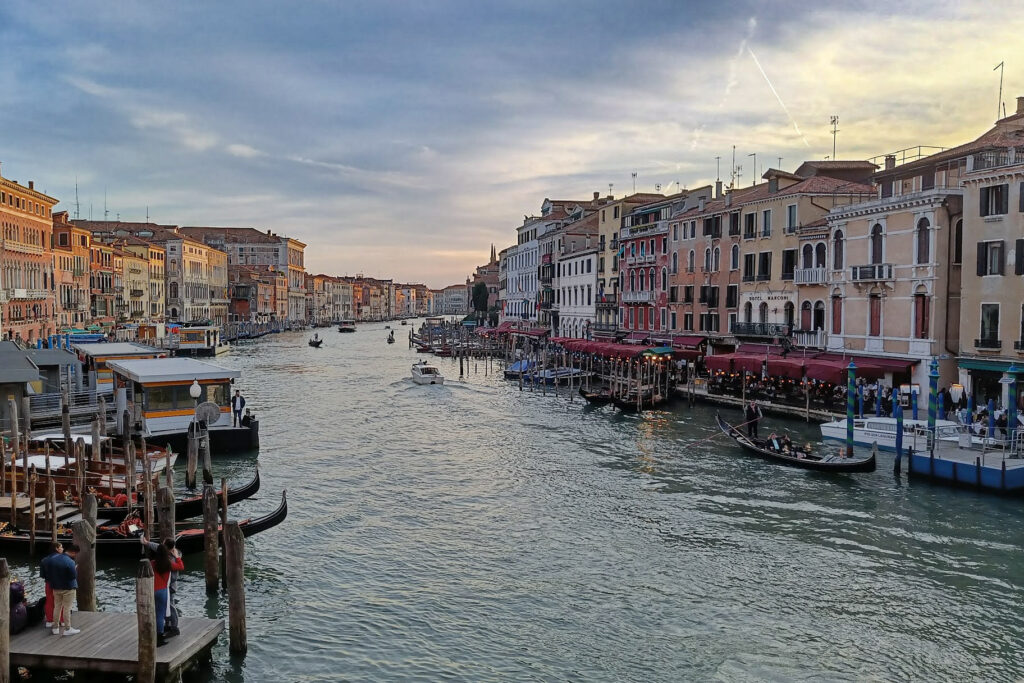
The train crosses a long bridge over the lagoon, making its way to the final stop of Venezia Santa Lucia. As soon as you walk out of the doors of the station, the Grand Canal is right in front of you. It’s one of the most impressive “arrival” feelings in the world.
The 2026 Venice Entry Fee
What This Means For You
Before setting off on your day trip to Venice from Verona, you’ll need to head to https://cda.ve.it/en/ and see if your dates fall on their “peak” days.
When this applies: In 2026, it’s mostly weekends and holiday days between April and July, if you arrive between 8:30am and 4:00pm.
How much is it? This year, it’s €5 if you book at least 4 days in advance. If you wait til the last minute, it jumps to €10.
How to pay it: You pay on the https://cda.ve.it/en/ website, get a QR code, and keep it on your phone (an e-sim is handy here if you don’t have international data).
What if I’m staying overnight? If you’re staying overnight, you’re exempt because you’ll be paying a city tax as part of your hotel stay. Nonetheless, you still have to go to the website to get an exemption QR code.
Do I really have to do this? Yes, it’s a requirement for all visitors to Venice during peak periods. They do check at arrivals in Santa Lucia station, so there’s no real way around it, unless you want a fine.
What is it and Why?
The Venice entry fee, or Contributo di Accesso, is a relatively new introduction (since 2024). It’s been lambasted as an “anti-tourist” tax, but it’s really a response to overtourism.
The historical centre of Venice has about 50,000 residents, yet sees about 20 million visitors every year. The city found that day trippers often put the most strain on the city’s infrastructure, like bins, street cleaning, public transport, but contribute the least to the economy since they don’t pay hotel taxes.
UNESCO had also been considering putting Venice on its “Endangered” list. This fee is a way for the council to prove they’re taking active measures to protect the city’s fragility. And in fact, the history and fragility of Venice is fascinating – and maybe something I’ll need to write another post about, so watch this space!
The council claims the revenue goes towards infrastructure maintenance, waste management and reducing local taxes.
Is it an anti-tourist tax? You could argue that it hasn’t actually thinned out the crowds and makes Venice into more of a commercial attraction than a living city. On the other hand, it’s a data tool that gives the city solid insights into how many people are actually in the city at a given time, it means everyone contributes to the city’s upkeep, and it gives us a nudge to respect this historic and fascinating city.
What side of the argument is right, I’ll leave up to you, but one thing that’s non-negotiable: you’ll need to pay it if you’re doing a day trip to Venice from Verona. If you’re interested in learning more about why Venice is endangered and the impact we’re seeing today, I’ve written more about it here.
Why Not Drive?
Why not drive to Venice from Verona? Well, in my case, it’s because I’ve never bothered getting a drivers license (hello, London living). If you’re more organised than me and can actually legally drive a car, then you might consider driving for your day trip.
Don’t do it.
In Italy, there are ZTL areas (Zona Traffico Limitato). These are camera enforced zones where traffic is restricted. If you accidentally enter one, you can get fined about €100. On top of that, most car hire companies will charge you an admin fee per fine, making that wrong turn get very expensive very fast.
Then there’s the small snag that Venice is a city of water. Piazzale Roma is the only place that you can actually drive into Venice. You’re looking at about €45 for 24 hours parking.
If you park further out, you’ll have to pay for a train to get you into the city. And then there’s highway tolls on top of that.
It’s not a scenic drive to Venice from Verona, the roads in between the two cities are largely highways filled with lorries and traffic, and on a good day, you’re still looking at about 1 hour 30 minutes drive time.
For the same amount of time or less, you could have hopped on a train, avoided all the tolls and fine fears and gotten into Venice stress free.
Logistics for a Day Trip to Venice from Verona
Timing Your Travel
The big tour groups tend to get into Venice around 11:00-midday. Aiming for an earlier arrival means you’ll get to experience the city before the crowds start pouring in, and already have made your way around some of the sights.
Check the return times for the last Regionale trains. The last ones back can sometimes be as early as 9pm. As tempting as it may be to stay for a last spritz in Venice, you don’t want to get stranded with no easy way back!
Venice is also a city that’s very easy to get lost in with all the winding alleys. Give yourself more than enough time to get back to Santa Lucia station. Personally, I always opt for the second to last train if I’m returning late, just so there’s a backup plan!
Before Leaving Verona
Verona is a much cheaper city than Venice. If you’re someone who likes a morning coffee and a pastry, grab these in Verona, because you’ll be hit with “Venice prices” as soon as you’re standing next to that canal.
If you got a paper ticket from a machine or the desk, you must validate it in the green or grey machines on the platform. If you used an app or bought a digital ticket, you’re all good – they validate automatically at departure.
And, if you’re staying in Verona for a longer period of time, you might want to check out my guide on getting to Lake Garda from Verona!
Arriving at Santa Lucia
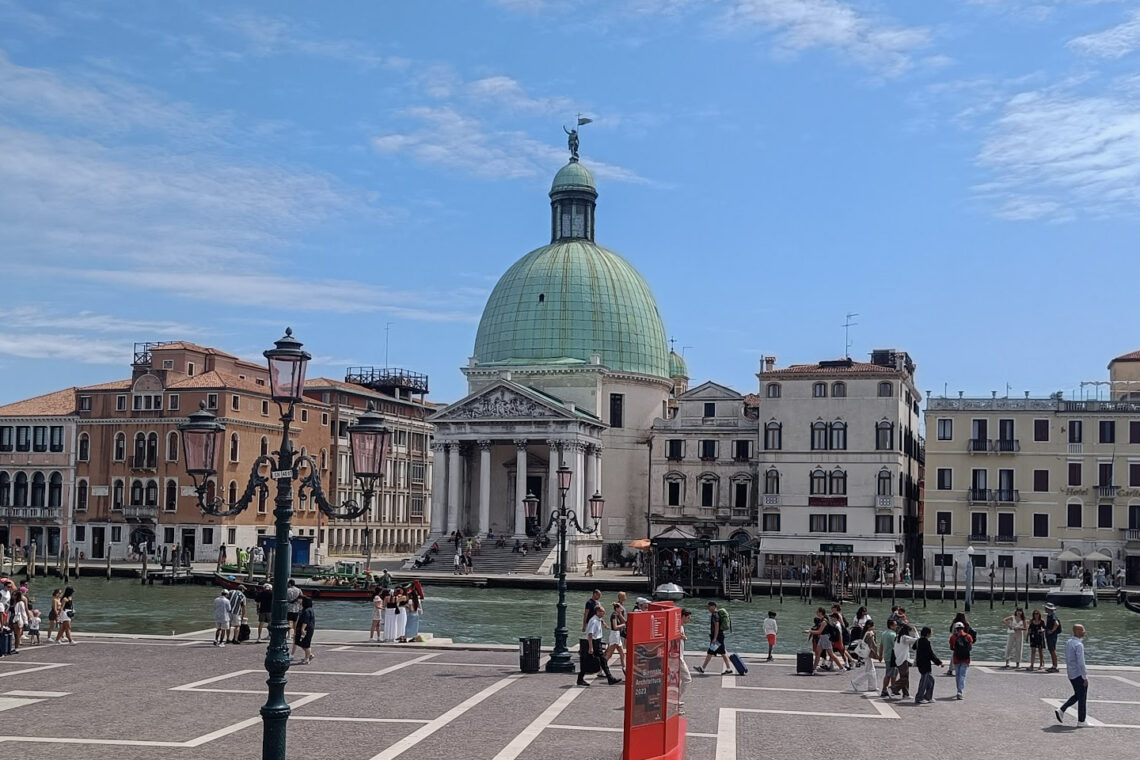
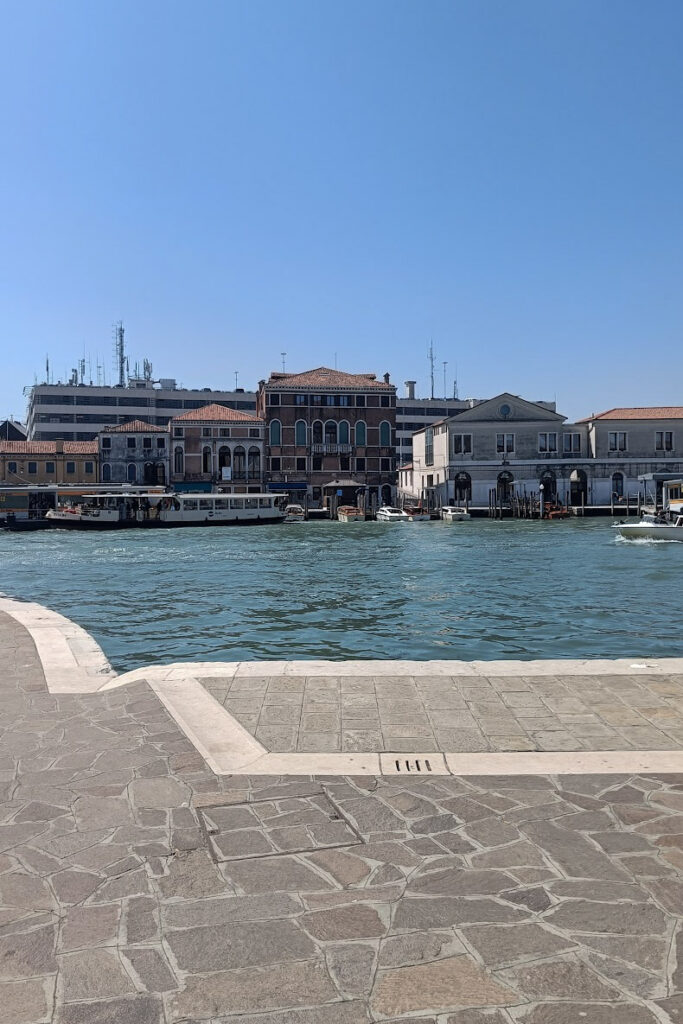
When you step out at Santa Lucia, pause for a moment and take in the view. It’s an iconic Grand Canal moment, with the boats in front of you and Chiesa di San Simeon Piccolo visible across the water.
The water bus (Vaporetto) stops are right outside the station. If you’re only in Venice for a day, don’t bother with the 24 hour pass unless you’re planning on making more than 3 journeys or you’re going to visit Murano or Burano. A single fare is about €9.50 and is valid for 75 minutes(versus €25 for the day pass), and sometimes that’s enough to get your fix of the boat bus!
What to Bring
If you’re only heading to Venice from Verona for the day, pack light! Leave your big bags back at your accommodation and bring a small daypack with the essentials.
Venice is a city full of bridges with stairs, dragging a suitcase with you is not a good time (ask me how I know).
Things I usually keep in my daypack:
- Water bottle: I use this one from Chilly’s because it keeps things cold for hours. Venice has tons of free public water fountains and the water is completely safe to drink.
- Snacks: Venice has more restaurants than I can count, but I like having some nuts or a protein bar in my bag, just in case.
- Cash: Most places will take card, but it’s always handy to have a little cash on you just in case. You don’t need to bring a fortune, I usually keep about €20 on me.
- Smartphone: I know, I know, it’s a given. But keep yours fully charged and on you.
- Battery bank: Trust me, the last thing you want is to get stranded without any phone battery when you’re trying to get back to your hotel. I use this one, it’s basic but cheap. Although if my husband was writing this, he’d tell you to buy something like this one instead.
- Camera: This city is extraordinarily beautiful. If you use a camera, make sure it’s fully charged and your memory card has enough space – you’re going to want it!
Public Bathrooms
Public toilets in Venice cost about €1.50 to use, and they usually take contactless. On the train, there are toilets and they’re free – keep that in mind if you need to use it before you get off!
A lot of restaurants and bars are small. While in London, it can be totally fine to duck into a pub and ask to use the loo, it’s less fine in Venice. Use bathrooms where you can.