
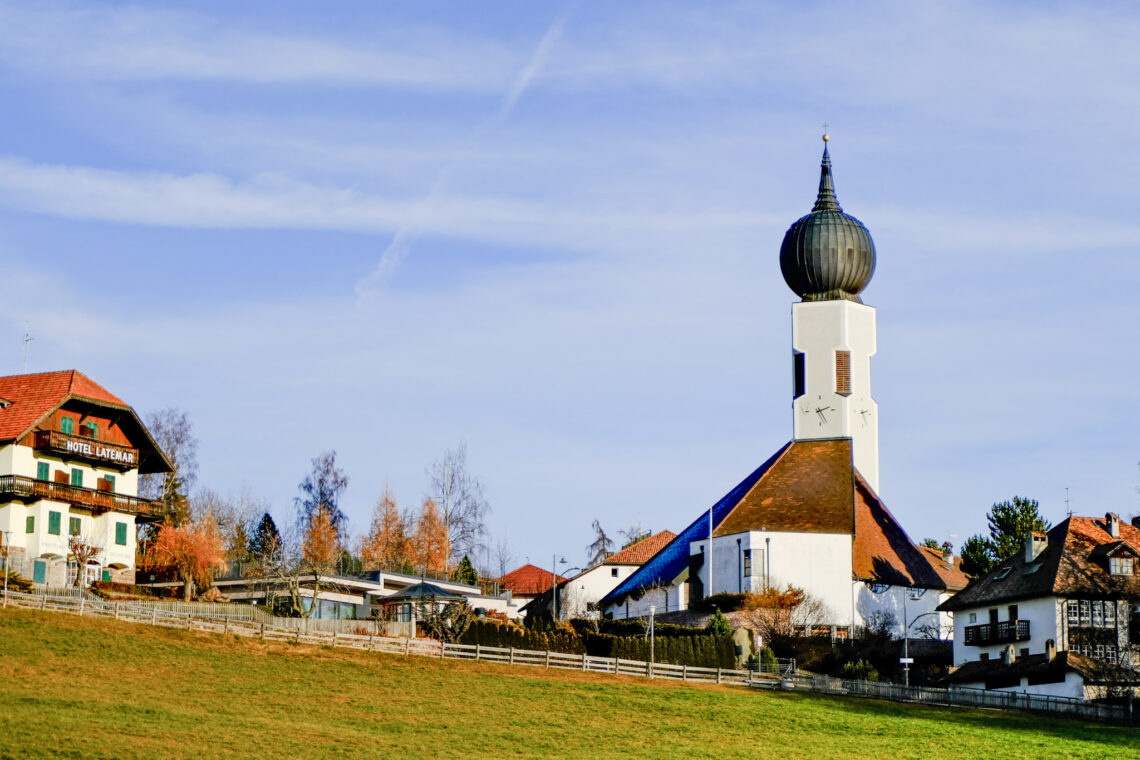
24 Hours in Bolzano: How to Spend a Wonderful Day in Bozen
I recently spent a weekend in Bolzano, and left feeling like I’d barely scratched the surface of this unique Italian city. It’s a city of crisp mountain air with winding, cobbled streets straight out of a storybook, and views of the Dolomites everywhere you turn.
The city has a rich history of Italian and Austrian influence and culture, and you’ll see signs in both German and Italian everywhere, as well as locals fluidly moving between the two languages. It’s a place where you could order a coffee in Italian, and be thanked in German, and that’s just business as usual in Bolzano.
While I honestly think you could go for a week without being bored, it’s also a small enough city that it works perfectly for a day trip or a quick weekend jaunt. If you’ve only got 24 hours in Bolzano, you’ll be able to get around the major attractions, without feeling rushed, and this guide is exactly how I’d spend the day.
First Things First
Many of the attractions and experiences I’ve mentioned below are covered with the Bolzano Card. This isn’t a card that you can buy, but one you receive for free from participating hotels, inns and other accommodations. The card not only covers entry, but public transport around the city too, making it an incredible way to save money. I’ve covered the Bolzano card further in my full Bolzano guide, as well as some suggestions of hotels that include the card.
Morning: Curiosity and Cobblestones
Start your morning early to make the most of your 24 hours in Bolzano. Take a walk in the clean Alpine air and grab a coffee, feeling the city coming alive alongside you. You’re going to start your morning in the old town centre, getting a feel for life in the city.
Piazza delle Erbe: The Heart of the City
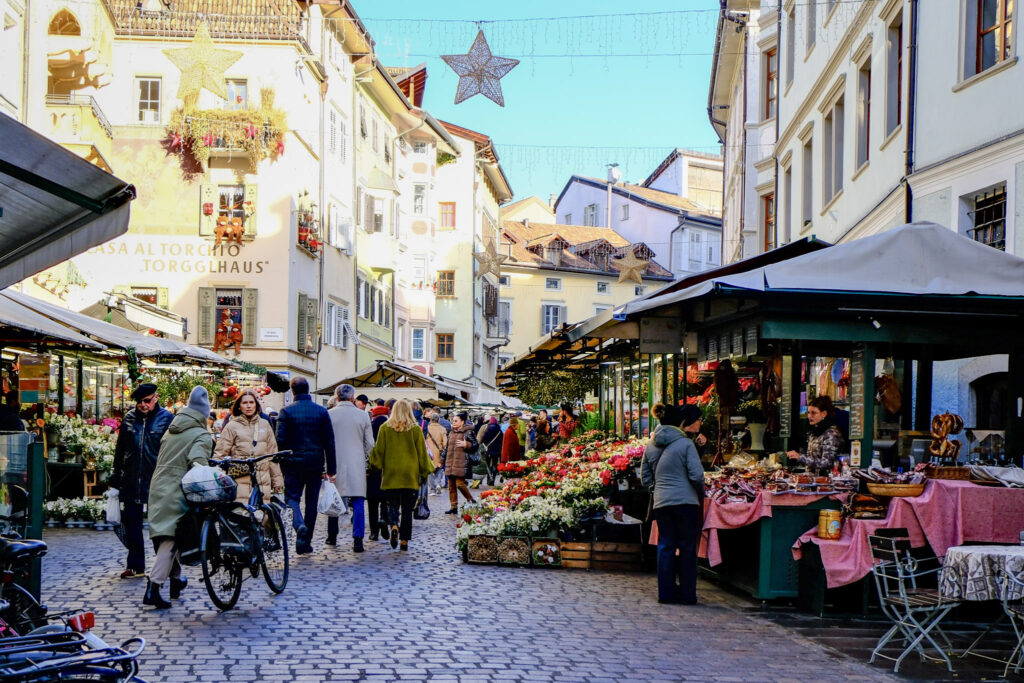
Feeling caffeinated and ready, your first stop is Piazza delle Erbe, also called Obstmarkt. This square dates back to the late 1200s, and for the last 500 years it’s played host to a market Monday through Saturday.
You’ll see fresh produce piled high, their colours bright and inviting. Bottles of high quality olive oil jostle for space alongside balsamic vinegar and herb infusions, while the scent of freshly made bread wafts along gently.
Here, you can try local delicacies such as strudel and speck, and in autumn, you’ll find roasted chestnuts, a South Tyrolean speciality, on offer. I’d also recommend using this time to grab some bread and other food for a mountain top picnic lunch later on.
In the square, you’ll also see the Neptune Fountain, often called “the Host with the Fork” by locals. It’s a great spot for a photo while you’re here.
The market has stalls open throughout the day, but the fruit and produce market tends to only be open in the morning hours, making Piazza delle Erbe the ideal first stop for your day.
Via dei Portici
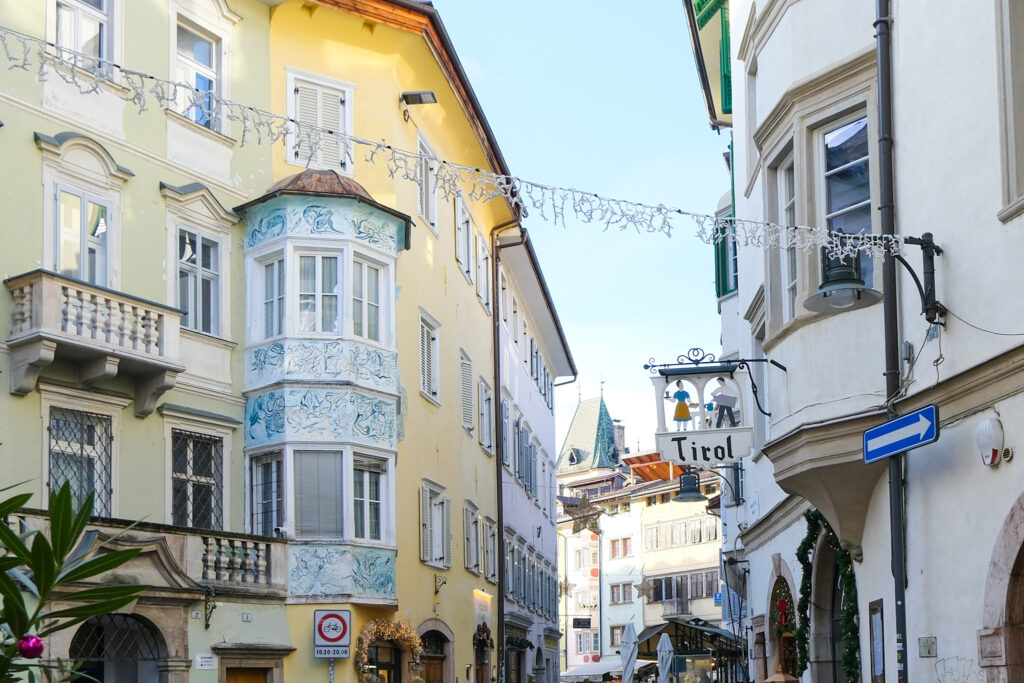
A short walk along the same street from Piazza delle Erbe, you’ll come to Via dei Portici (or Laubengasse in German), a vibrant street lined with shops and restaurants. The street features covered arcade walkways on either side, a feature that dates back to the middle ages. The covered walkways were built to protect pedestrians from the elements, and allow merchants to continue to trade, even in cold weather – essential for a mountain city!
The shops, cafes and restaurants along the street are a total eclectic mix of cuisines, styles and things for sale. You’re not going to see any Pret or KFC shops here, there’s a lot of small, independent businesses selling high quality goods. If you’re looking for souvenirs to take home, like some Tyrolean wool, this is the spot to find it.
Take your time to wander down the covered walkways, passing through the arches and peering into the shop windows. Back in the centre of the street, look up! The pastel facades of the building and the bay windows are some of the prettiest parts of the city, and some of the most photographed.
Ötzi the Iceman
Once you’ve finished shopping, it’s time to meet Bolzano’s most famous, and oldest, resident. A few streets over from Via dei Portici is the South Tyrol Museum of Archaeology, which is home to Ötzi the Iceman.
Ötzi was found by a couple of hikers in 1991, perfectly preserved in a glacier. Because the ice mummified him so well, scientists were able to determine a lot about his life, including what he ate for his last meal, and diseases or ailments he was suffering from. Even his tattoos are still visible. He’s got about 50 of them, mostly on his joints, suggesting they may have been a form of acupuncture, especially as he’s believed to have had arthritis.
He’s Europe’s oldest natural mummy, and gives us incredible insight into what life in the region during the Copper Age was like.
The museum doesn’t just show you Ötzi the man, it also displays his tools, axe and his clothing. Rather than just being a “thing” in a museum, they show him as a real person with a real story that was frozen in time for 5,000 years.
This is the most popular attraction in the city, so if it’s on your can’t miss list, then book your tickets online in advance. If you have the Bolzano card, your entry is included, but you still need to secure a time slot to get in.
Afternoon: Mountain Air and Medieval Frescoes
After a morning wandering the cobbled streets of the city and stopping into the museum, it’s time to get out into nature. By midday, many of the city centre shops shut their doors for a few hours and it’s the perfect time to head for the hills.
This is a great time to refuel. You might choose to stop at a cafe that caught your eye earlier, but I’d personally recommend putting together a supermarket picnic to enjoy at a higher altitude. There’s something so satisfying about a fresh local roll and produce when you have a full view of the Dolomites as your backdrop.
The Cable Car: The View from the Top
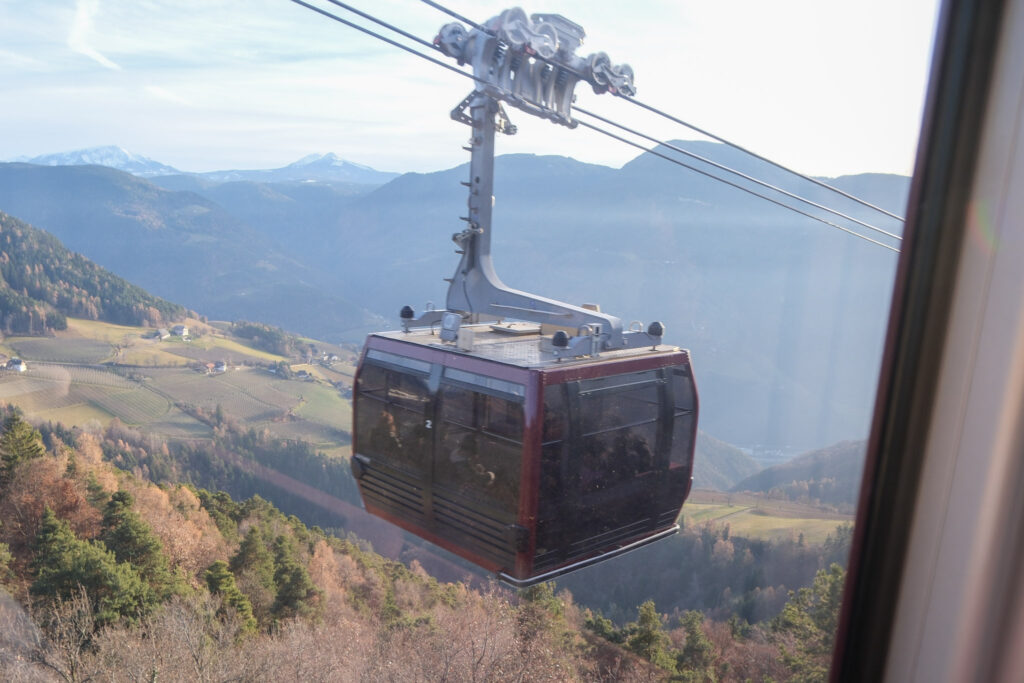
A ten minute walk from Bolzano train station, the Renon Cable Car is one of the best experiences in Bolzano. It’s free with the Bolzano Card, or €13 for a return journey, €20 if you want to use the railway up top too.
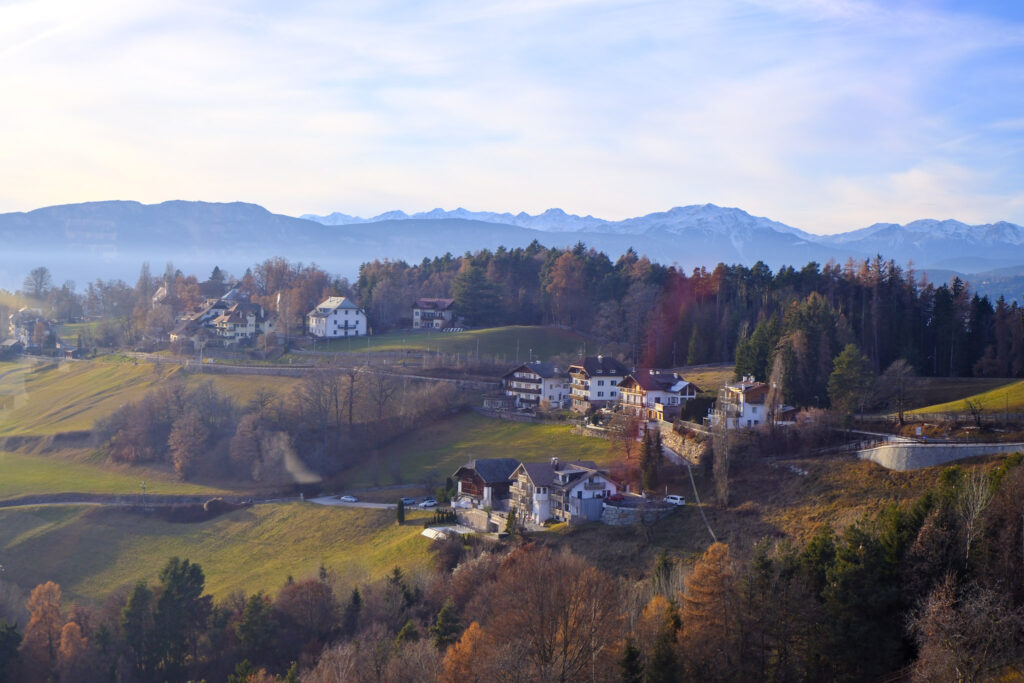
The cable car gondolas leave every few minutes, so if yours looks busy, it’s worth hanging back so you can get a seat with a view. Believe me, the views are worth it: The cable car brings you 1,200m above Bolzano, up into the Dolomites to the mountain plateau village of Soprabolzano.
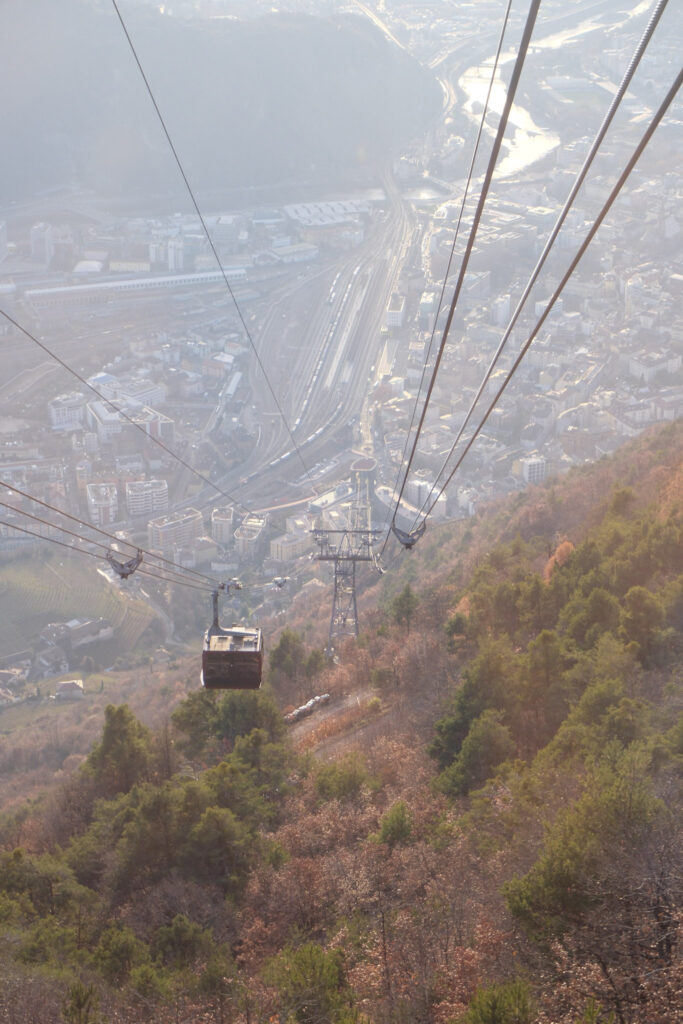
As you rise in the cable car, the city shrinks below, eventually disappearing from view as you soar over a mountain peak. Once you get off the cable car, you’re in the centre of Soprabolzano village. If you stocked up at the market in Piazza delle Erbe or a supermarket earlier, take a short walk from the station and find one of the benches nearby with a view out over the mountain. It’s the perfect place to have a peaceful lunch, with some truly incredible views.
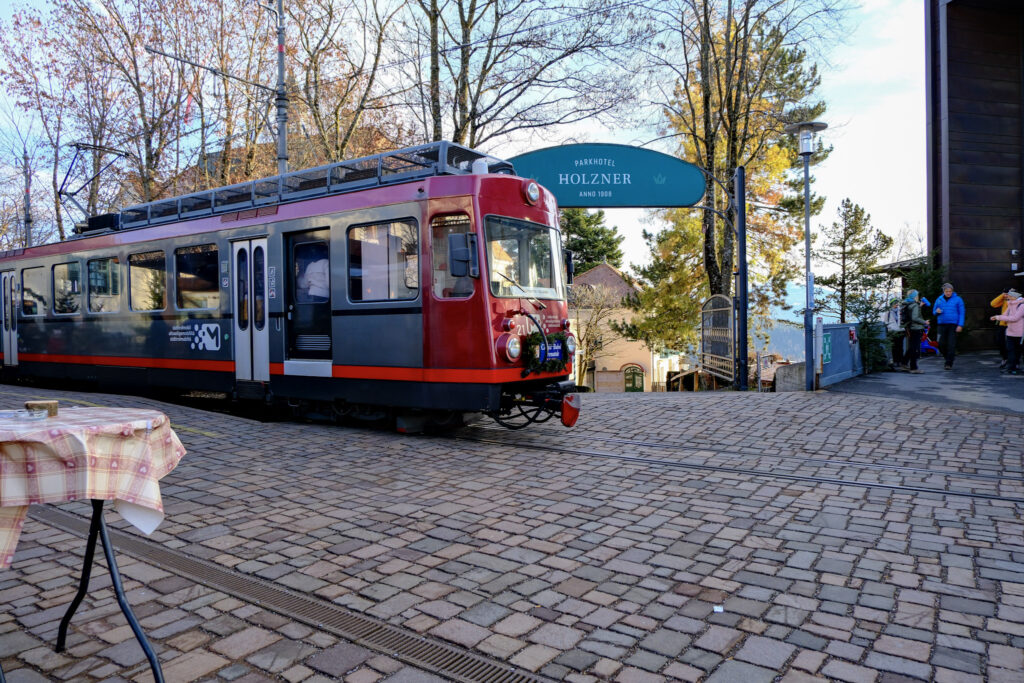
The village is small, and shops are limited up here. There are a couple of restaurants, but opening hours can vary so check ahead of time if you’ve got your heart set on eating in one. If you’re staying longer, Soprabolzano offers some wonderful hiking trails, but for your 24 hours in Bolzano, you’ll need to make do with a walk around the village or hopping on the small train to visit some of the other villages along the mountaintop. If you do stick to Soprabolzano and skip the train, you won’t need more than an hour up here.
Castel Roncolo: A 14th Century Dream
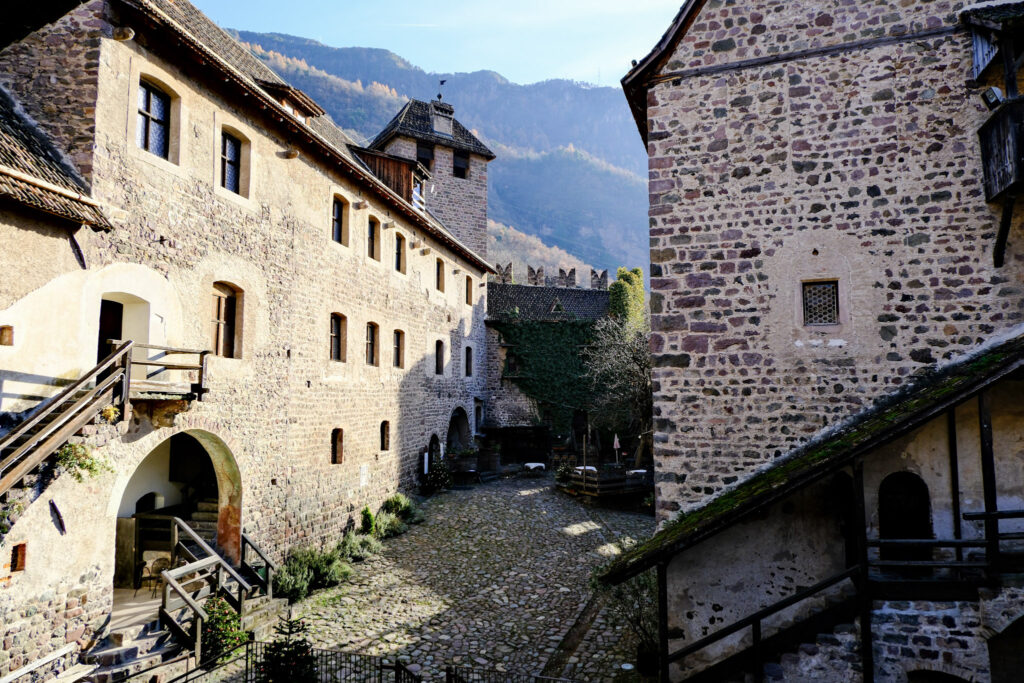
Once you’ve come back into the city via cable car, take a walk or the local bus along the Talvera river towards Castel Roncolo (Schloss Runkelstein). The castle was built in 1237 on a rocky cliff in the Sarentino Valley.
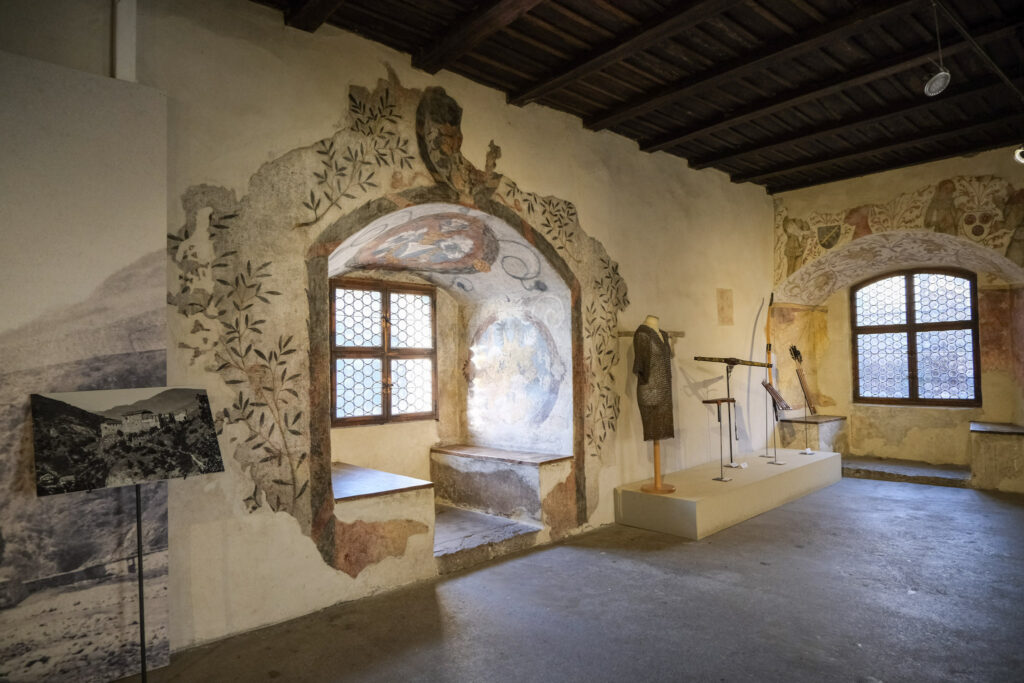
One of the reasons Castel Roncolo is so well known is its art. It’s got the largest collection of secular medieval frescoes in the world. At the time, most frescoes would have been religious, often seen in churches, while Castel Roncolo’s features fashion of the time, courtly rituals and romance scenes (totally PG though!). You’ll see 14th century depictions of knights, animals, and literary figures like Tristan and Isolde. The frescoes are in remarkable condition, despite being so old, and curiously, not covered in glass or perspex like you’ll see in many museums.
The path along the river to get there is flat and green, and feels immediately like being in the countryside, even though you’re not far from the city. It’s about a 30 minute walk. Likewise, the bus is a short ride on the number 12 bus (weekdays) or 14 (weekends). If you’re feeling tired from your travels, you could always walk there and take the bus back.
Accessibility:
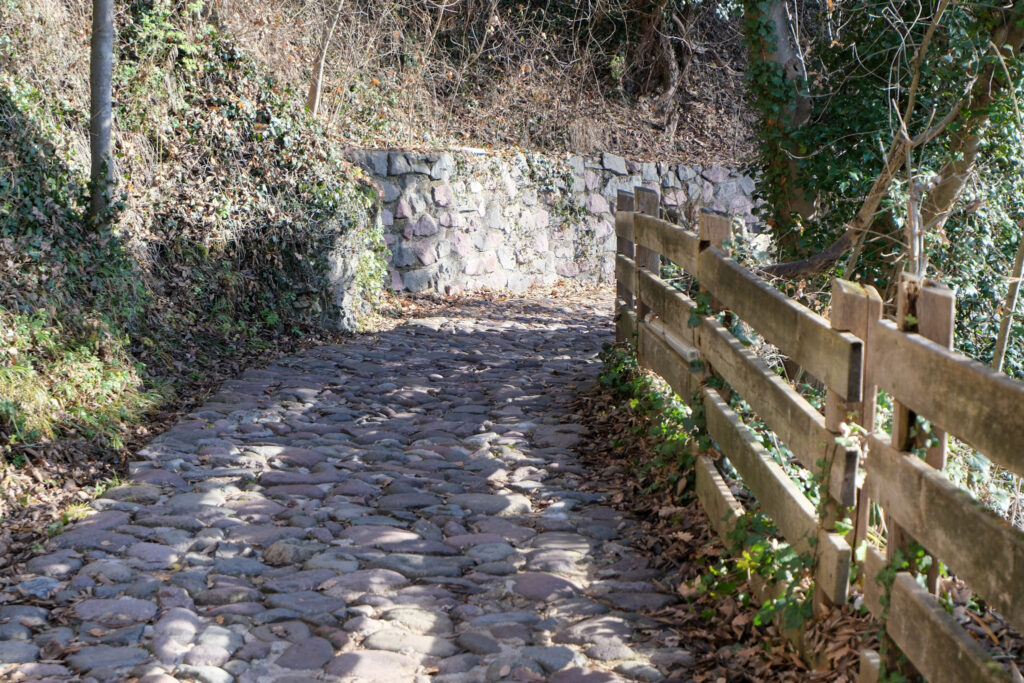
A word of warning for those with pushchairs or mobility considerations: Even though the walk out the castle is very flat, there is a reasonably steep, roughly cobbled walkway from the ground up to the castle. In my opinion, it’s definitely not suitable for wheelchair users, and if you’re by yourself with a pushchair, it’s going to be very tough. I pulled a muscle in my thigh being overambitious in the gym, and let me tell you, I struggled up that hill, hobbling the whole way.
Evening: Aperitivo and Atmosphere
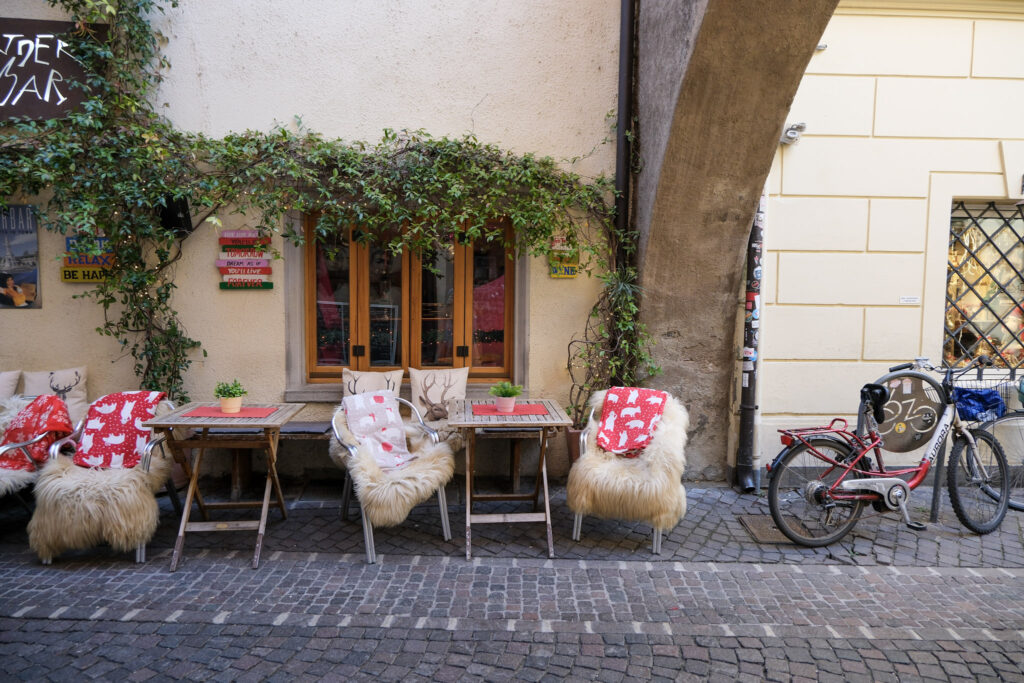
For the evening, keep it simple. You’ve already had a big day: market shopping, meeting Ötzi, a mountain trip and a visit to the castle. Now you need to wind down for the evening, and experience Bolzano at night.
Piazza Walther
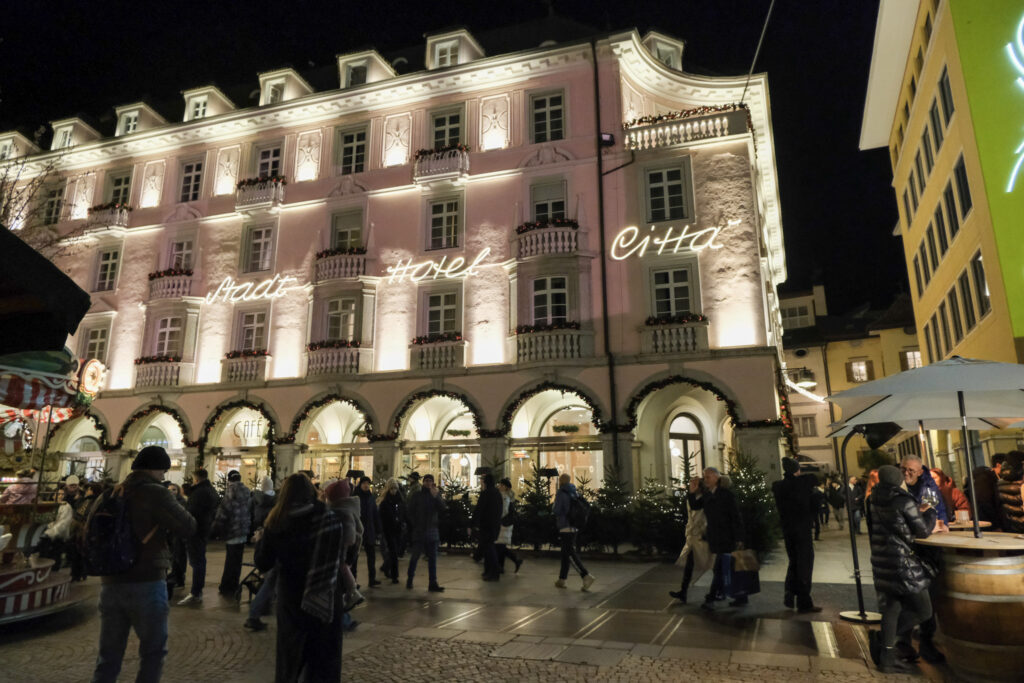
To start off your evening, head to Piazza Walther. You’ve likely already wandered through this morning, it’s the main square of the city, with the cathedral right at the corner. All around the edge of the piazza are bars and restaurants, and around Christmastime, it’s home to the Christmas Market.
Pick a bar that looks inviting to you, get a table outside, and settle in for some people watching before dinner. There are few pleasures in life quite like sitting in an Italian square, your drink of choice in your hand, with nowhere in particular to be anytime soon. It’s a calming, indulgent way to wrap up your day and start winding down as the sun sets.
In summer, try a Hugo spritz – it actually originated in this region as a sweeter alternative to the more popular Aperol Spritz. If you’ve never had one, it’s made with elderflower liqueur or syrup, Prosecco and soda water, usually garnished with mint leaves. It’s light and refreshing, just like Bolzano itself.
If you’re skipping alcohol, try a mountain apple juice. South Tyrol is one of the biggest apple producing regions in Europe and the juice here is crisp, cloudy and way better than anything you’d get from concentrate.
Local Wine
I also can’t talk about Bolzano without mentioning the local viticulture. South Tyrol is one of Italy’s smallest wine growing regions, but also one of its most significant. About 98% of the wine produced here is DOC (Denominazione di Origine Controllata), the highest percentage in all of Italy.
If you do want to sample the local wines in Bolzano, there are two main types of wine you need to know:
- Lagrein: A deep, velvety red that’s native to the Bolzano valley. It’s been grown here since at least the 1300s, and its flavour is very berry – think dark cherries, blackberries and plums.
- Gewürztraminer: The aromatic local white wine, known for a light floral and fruity taste. You’ll also find this wine around the Alsace region of France, as it thrives in cooler, mountainous regions. It actually gets its name from the village of Termeno (Tramin in German), just down the road from Bolzano.
Wrapping Up Your Evening
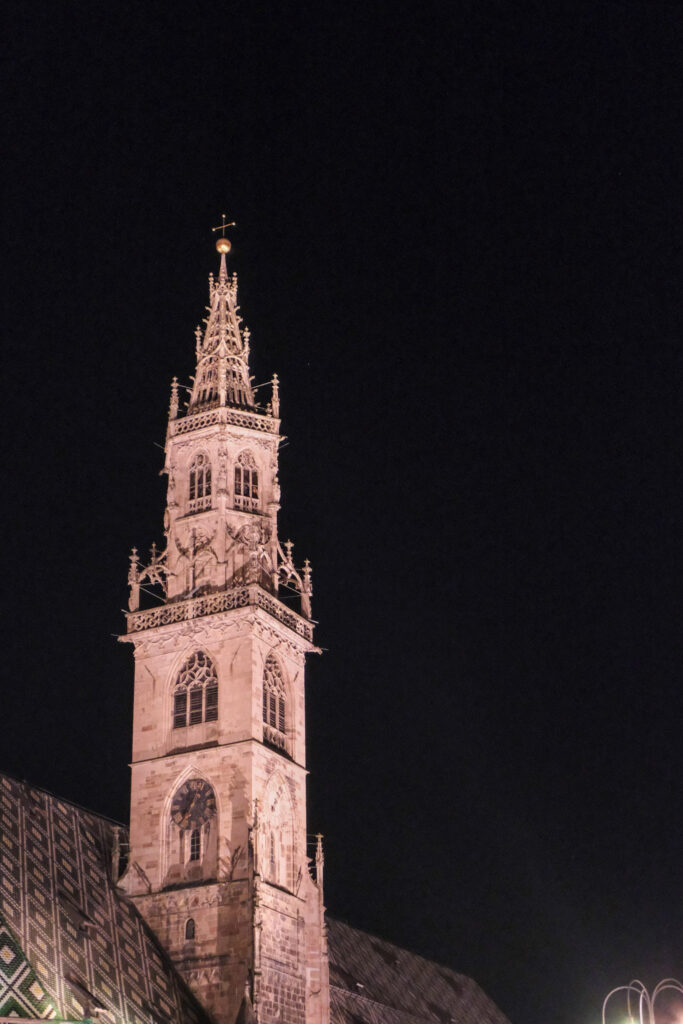
And this is where I’ll leave you to see out the end of your 24 hours in Bolzano. After a day of sightseeing, and an aperitivo in the square, you’ll likely be ready for dinner. There are so many traditional restaurants and taverns around the winding streets near Piazza Walther that you’ll be spoilt for choice. Pick somewhere with a menu you’re dying to try, or with an atmosphere you just have to be part of.
A note for vegan travellers:
As wonderful as Bolzano is, it’s not the most vegan-friendly city that I’ve visited. Vegan and vegetarian restaurants do exist in Bolzano, but many that I saw are only open for lunch service, and close at dinner. There are so many beautiful, traditional inns all over the city, but being completely real with you: You’re going to find it hard to find a vegan main course that isn’t just potatoes and a side salad. Even the traditional Tyrolean barley soup usually comes with cubes of speck in it.
This isn’t to discourage you from visiting Bolzano, because believe me, the nature, scenery and architecture is reason enough to go, but to keep your expectations realistic. When I visited, I chose an Airbnb for this reason, and I’d encourage you to do the same if possible.
If you are travelling with a mixed group who want to visit one of the traditional restaurants, then get your google translate out (an e-sim is handy for this) or try find somewhere where the staff speak good English (assuming you don’t already speak Italian or German of course!), as you’ll want to double check ingredients. Unless something is clearly marked as vegan, don’t assume it is.
I’ll also be writing a post in the future about travel hacks and workarounds I’ve found in situations like this, so sign up to the mailing list to be the first to hear about it.
Tours
One of my favourite things to do in a new city is a walking tour. You know the “free” ones that every city seems to have, where you tip your guide at the end? I’ve had some wonderful experiences on those tours, and really gotten to see the city through a local’s eyes. When I was researching my trip to Bolzano, however, there didn’t seem to be any on offer. Maybe it was the time of year, it was December after all, but I’ve pulled together these links in case you have better luck than me!
- Tours offered by the Tourist Board
- Private Tour with GetYourGuide, it’s pricey, but if you have a big enough group, the price can work out very reasonable per person. It’s also a great way to get a tailored history of the city for you and your party!
- A mix of guided tours and wine tours on the South Tyrol website
Final Thoughts
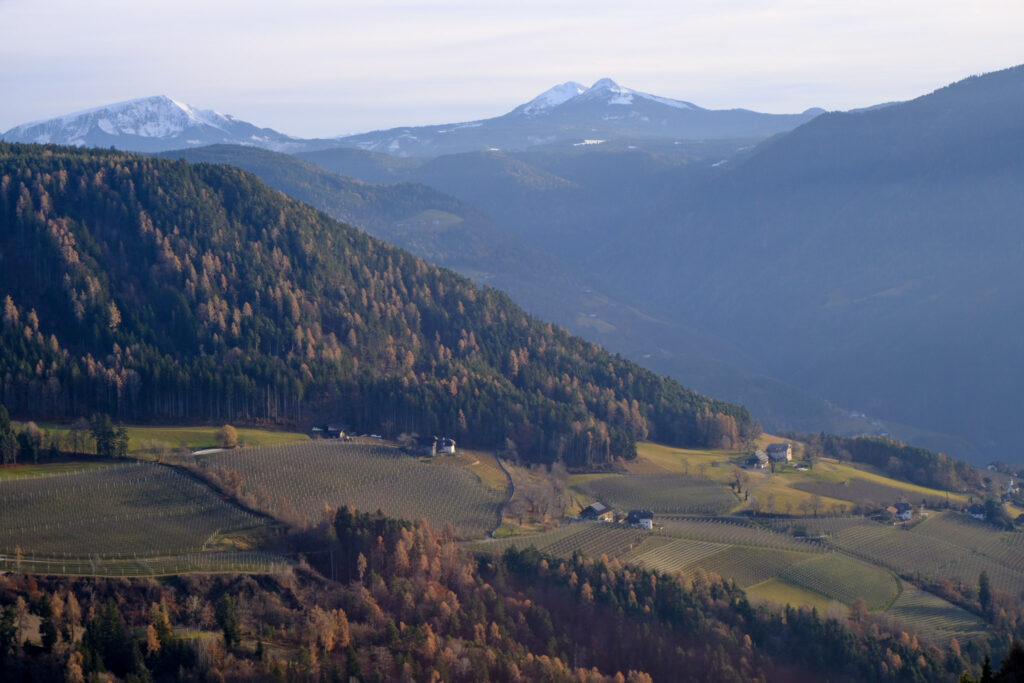
Bolzano is special in that it’s a bit of an anomaly. It’s an Italian city that has a distinctly Austrian edge and efficiency to it, where the “dolce vita” meets Alpine endurance. While 24 hours in Bolzano might just be a whistle stop tour, it’s enough to dig into the heart of the city and understand why it’s so special.
Bolzano is, in my opinion, a wonderful destination for seasoned Italy travellers. If you’ve already done Rome, Florence, Venice, then branching out and experiencing this northern region of Italy will give you a new layer of appreciation for an already complex and richly cultured country.
And, if you’re like me, your 24 hours in Bolzano will be just enough to convince you that you need to come back and explore the region for longer next time. I’ve written a full guide to Bolzano here, if you need more tips for your trip, such as areas to stay in, how to get the Bolzano card, and a little bit about the history of the city and region.