
Luggage Forwarding in Japan: A Beginner’s Guide
Travelling through Japan is pretty easy with the extensive train network and great metro links in the major cities, and it’s a country known for its efficiency and service. Luggage forwarding, or takuhabin, is one of the country’s most innovative ways to make travel easier, and frankly I wish we had something like it in Europe. If you’re planning to travel around the country a lot, and you don’t want to drag a massive bag with all your Donki purchases, this guide is for you.
What is Luggage Forwarding?
Luggage forwarding, or takuhaibin, is a service that allows you to send your luggage on ahead for a reasonable fee, usually with next day or 2 day delivery. This means you can, say, drop your luggage off in Tokyo and have it meet you in Kyoto a day or two later.
While the shinkansen allows luggage onboard, if it’s over a certain size, you’ll be asked to book a special ticket for that, and there are a limited number available on each carriage. Additionally, some local services like buses or regional trains can get very crowded, and travelling lighter is easier for you and more considerate to the people around you (and honestly, I wish I’d done this on a trip to Hakone).
It’s affordable, reliable and safe – and a lot easier to use than you may think.
How Does it Work?
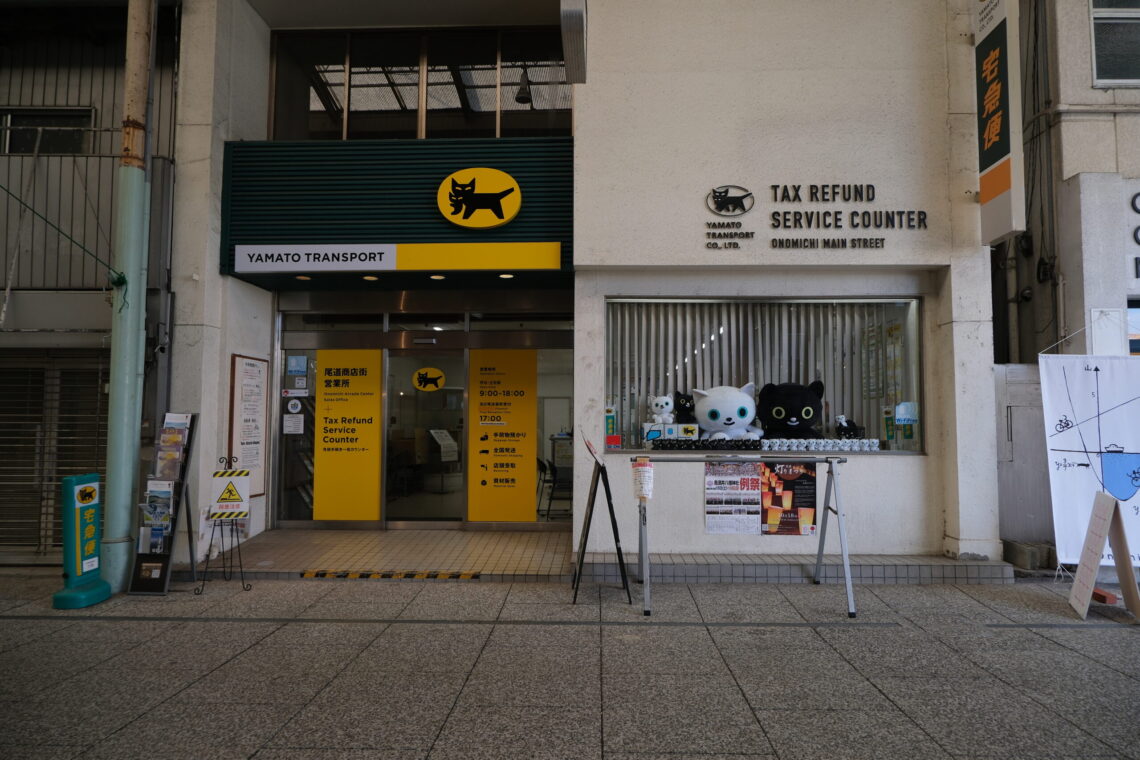
There are several companies in Japan that offer this service, the most well-known being Yamato or Sagawa.
You can either drop your bags off at a service centre in the town/city you’re in, in certain convenience stores, or some hotels will be able to arrange this from the front desk by requesting a pickup. Then, you’ll fill out a mailing slip with your details, contact info, and information about your destination where you’ll retrieve your bags.
How it Worked For Me
On my most recent trip to Japan, my husband and I were planning to cycle the Shimanami Kaido cycle route.
We obviously couldn’t do this dragging our bags behind us, so we decided to use Yamato to forward our luggage to our final stop in Imabari.
We found a service centre in Kyoto, near the train station and headed there as soon as we checked out of our Airbnb that morning. We didn’t need to pre-book, we just queued outside the small office.
Once inside, a member of staff measured our luggage and helped us fill in the form. We used Google translate together to confirm the timeframe, and the correct hotel.
As Imabari is a fair distance from Kyoto, next day delivery was not guaranteed, and we were told that it was likely due to arrive in two days’ time. This worked for us, as we were due to arrive in Imabari on the same day.
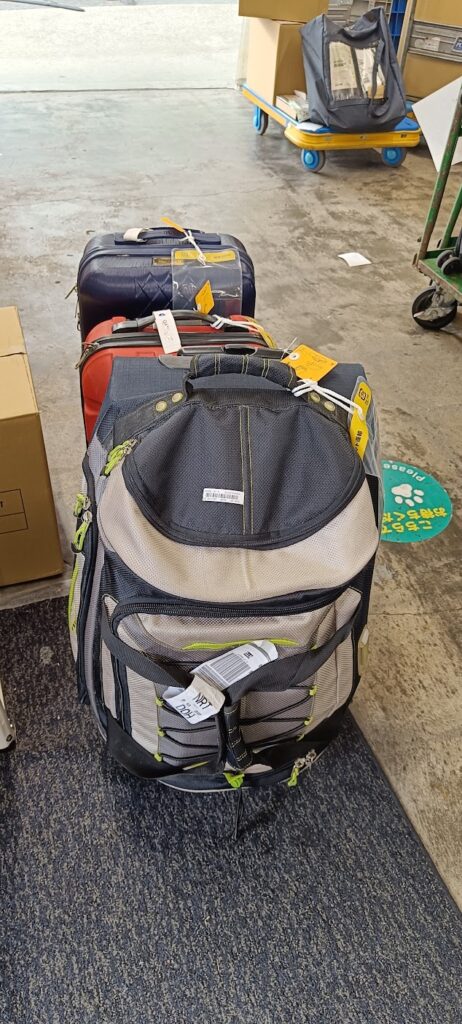
To send three cases (two check-in sized, one carry on wheely case), it cost us about 6,240 JPY (£30). We left Kyoto on a Wednesday, and when we arrived in Imabari on the Friday, our luggage was already waiting for us at the hotel when we checked in.
We’d emailed the hotel ahead to confirm they could store the luggage if it arrived the day before, and they had said they’d be pleased to do so.
Airport Luggage Forwarding
You can forward your luggage immediately upon your arrival in Japan if you don’t want the hassle of dragging your bags to your hotel. All of the major airports in Japan will have a luggage forwarding counter for the big companies like Yamato or Sagawa.
- Find the counter
After getting through customs and collecting your bag, look for the luggage delivery counters in the arrivals hall - Bring your luggage to the counter
Staff here are very experienced with tourists, so they’ll be able to help you out with the forms. You’ll need your passport here, as well as details about where you’re going - Fill out the waybill
As with any other luggage forwarding process, you’ll need fill out the same form with your destination’s name, full address (in Japanese if possible), phone number and your checkin date. - Choose delivery time
The staff will be able to confirm the earliest possible delivery date. For same-city-same-day deliveries, there’s usually a cut off time (eg. drop off before 11:00 for delivery by 18:00), and this comes with a higher cost. Otherwise, it’s usually the next day. - Pay the fee
Your bags will be measured and you’ll pay the fee. Cash is widely accepted, but many counters will also take card payments. - Keep the receipt and go
Take your tracking slip (and take a photo of the tracking number), and go enjoy your time in Japan!
Shipping TO the Airport
It’s possible to send your luggage to the airport ahead of your departure, but the timing is even more critical here. You must send your luggage at least 2 days ahead of your departure date. For example, if your flight is on a Friday, you need to have sent your bag before the end of Wednesday.
This is essential to keep your trip stress free, and make sure it’s there in time for you to get through customs and security.
When filling out the waybill, be sure to also include the Airport Counter name (some of the larger airports have more than one counter), your departure date, and your airline name and flight number.
Tips for Using Luggage Forwarding
What you cannot send
The banned items will vary from carrier to carrier, but generally you will not be able to use luggage forwarding if you’ve packed the following items:
- Personal documents like passports or ID cards
- Valuable items such as jewellery, large sums of cash or expensive electronics
- Items that cannot be easily replaced like original documents, artwork or similar
- Essential medication
- Dangerous items like chemicals, weapons, flammable substances (eg. gas, kerosene, fireworks) or batteries
- Live animals
- Human remains
- Anything leaking/strong smelling from your bag that could cause damage to other customers’ luggage
Also check the weight restrictions. Typically, 30kg is the heaviest bag you can send. For most foreign visitors, this is higher most airline’s luggage restrictions so you should be fine.
Packing Strategically for Luggage Forwarding
There’s a chance you may arrive at your destination, so to make sure you have the essentials, I recommend packing a small backpack or day bag to keep with you. In this, I’d recommend keeping:
- Your passport or other important documents
- Valuable items such as jewellery, electronics or other sentimental items
- A small bag of toiletries (basic makeup, toothbrush, any medication)
- One change of clothes
While the takuhaibin services are incredibly efficient and reliable, things can go wrong and you don’t want to end up in a situation where your bag has been damaged or lost and you’re stuck without the essentials.
AirBnB and Hostel Caveats
Many AirBnBs do not have a dedicated check in desk or someone there to receive your luggage, so you cannot send your bags ahead of you. In these cases, it’s best to look up the closest pickup spot (convenience store or company’s service centre) to your AirBnB and fetch it yourself once you arrive.
Likewise, some hostels won’t accept or hold your bags for you ahead of time. Some, especially smaller hostels, just don’t have the room to hold multiple bags for guests ahead of their arrival. It’ll vary place by place, so contact your hostel ahead of time to check. If they say no, they may be able to help you find the closest pick up spot for you to use instead.
Tracking
Once you’ve forwarded your luggage, keep the waybill they give you. This has your tracking number on it, and it’s how you’ll check whether your bags have arrived or resolve issues if anything goes wrong. Take a photo of the waybill as soon as they hand it to you so you’ve got a copy of the tracking number, and share with any travel companions.
Final Thoughts
Is it Worth It?
In my experience, absolutely yes. Being able to use luggage forwarding meant that my husband and I could enjoy the 85km cycle along the Shimanami Kaido without unnecessarily heavy bags, or without skimping on luggage just for a two day cycle.
We also quite literally would not have been able to do the full cycle without this service, as the bikes we rented would have made it impossible to bring our wheeled suitcases on. Given the cost of £30 for the two of us, this was so worth it to me.
Likewise on our trip to Hakone, I wish I’d known about this service. I had an enormous backpack (as in the kind you check into the hold) on a cramped local bus for an hour and a half. We were only in Hakone for two days, I could have very easily gotten by with a smaller bag and met our luggage in Kyoto later.
It’s also worth bearing in mind that I’m from Europe. While I’m lucky enough to have been to Japan a couple of times, it’s not somewhere I can get to with a weekend Ryanair flight.
That means that when I have gone (and for potential future trips), I want to squeeze as much in as possible. And in turn, that means there’s a lot of moving around, sometimes with overnight stops or shorter stays in smaller towns.
However, for me personally, I probably wouldn’t use the airport services. The Limousine Bus from Haneda airport is perfectly comfortable with luggage storage, and other than the walk to the hotel, the bags weren’t that much of a burden. Likewise, I’d be too stressed about the bags not arriving to forward them on to the airport before my departure.
So in my opinion, it’s 100% worth it if you’re planning a one- or two-night stopover in a smaller town, ryokan or similar. It gives you a lot more freedom, and a lot less hassle.
Luggage Forwarding Services
- Yamato
- Sagawa
- Japan Post (airport services)